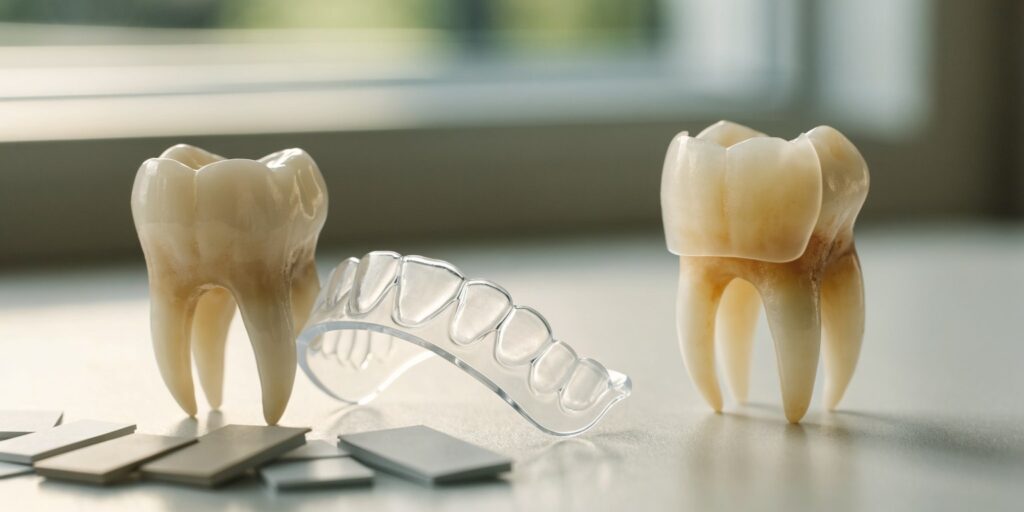



Porcelain Crowns Shade Selection is one of the most important steps in creating a natural-looking smile. Porcelain crowns transform the smile not only through their shape and proportions but also through their color, brightness, translucency, and harmony with the surrounding teeth. When the shade is selected correctly, the result can look balanced, natural, and well …


Porcelain Crowns Shade Selection is one of the most important steps in creating a natural-looking smile. Porcelain crowns transform the smile not only through their shape and proportions but also through their color, brightness, translucency, and harmony with the surrounding teeth. When the shade is selected correctly, the result can look balanced, natural, and well integrated with the face. When it is selected poorly, even a high-quality ceramic restoration may appear too white, too warm, or artificial. The difference between shades such as A1 and BL2 becomes especially important when deciding between a natural tooth color and a brighter bleach shade. In this guide, we explain how porcelain crown shades are evaluated in the clinic, what affects the final color, and how dentists choose a shade that complements the teeth, lips, skin tone, and overall smile.
How to Read the Shade Guide for Porcelain Crowns
When choosing a shade for Porcelain Crowns, the decision is not based only on how white the tooth appears. Dentists evaluate several characteristics together, including hue, value (brightness), chroma (color intensity), translucency, and how the shade interacts with the surrounding teeth and facial features.
- A range: Warm, reddish-brownish tooth shades commonly seen in natural dentition.
- A1: One of the lighter shades in the A family. It usually has a light ivory appearance with a soft, warm tone.
- B range: Reddish-yellowish shades that can appear slightly brighter or more yellow than corresponding A shades.
- C range: More neutral, greyish shades.
- D range: Reddish-grey shades with a more neutral and subdued appearance.
- BL range (bleach shades): Extra-bright shades used when a noticeably whiter smile is desired, especially in cosmetic smile makeovers.
- BL2: A bright bleach shade that appears noticeably whiter than natural shades such as A1, while still being slightly softer than the brightest bleach options.
In the clinic, shade selection is usually performed under lighting that is as close as possible to natural daylight. The shade guide is positioned close to the patient’s teeth and lips so the dentist can evaluate the restoration together with the surrounding teeth, skin tone, lip color, and overall facial appearance.
The final shade of Porcelain Crowns should not be selected in isolation. Ceramic thickness, translucency, the color of the prepared tooth underneath, and the cement used can all influence the final result. For this reason, a physical shade guide, clinical photographs, and digital smile planning may be used together before the final restoration is produced.
A1 Shade: Natural and Soft Smiles

A1 is a shade we often see in healthy, well-cared-for teeth in everyday life. Not yellow, but not “Hollywood white” either. It sits in a balanced middle ground.
We especially prefer A1 in these situations:
- When a single tooth or just a few teeth are being crowned
- When the neighboring teeth are natural and have not been whitened
- When the skin tone is medium, darker, or has warm undertones
- When the patient wants a “well-groomed but not attention-grabbing” smile
When Porcelain Crowns are made in A1, we use proper layering to add slight translucency to the tooth and achieve an even more natural effect. Overly opaque A1 shades reflect light back and can make the tooth look “plastic.” That’s why we always evaluate both the shade code and the structure of the porcelain together.
BL2 Shade: White, Noticeable, and Eye-Catching

BL2 is clearly whiter than classic A1. It makes the teeth stand out in photos, videos, and on social media. However, this level of whiteness does not suit everyone in the same way.
We tend to like BL2 more in this type of profile:
- When multiple Porcelain Crowns or a full smile makeover is planned in the upper front area
- When the patient wants a clearly noticeable whitening effect
- When their profession puts their smile in the spotlight (presenter, influencer, etc.)
- When lip color has cooler undertones and the skin tone is light or neutral
The most critical point when choosing BL2 is managing the contrast with the natural lower teeth. If the upper teeth are BL2 and the lower teeth are left dark and natural, the mismatch between the upper and lower jaws will be noticeable every time the person talks. For this reason, when we use Porcelain Crowns, we also plan whitening or minimal treatments for the lower teeth when needed.
A1 or BL2? Clinical Evaluation Steps for Porcelain Crowns
You shouldn’t choose a shade by asking “which one is whiter,” but by asking “which one belongs to this face.” In our clinic, when we decide between A1 and BL2, we look at the following points one by one:
- Single Crown or Multiple Crowns?
- Single crown:
Matching the surrounding teeth is the top priority. In this case, we usually choose A1 or the closest shade to the neighboring teeth for Porcelain Crowns. - Full front-tooth crowns:
We have more freedom. Shades like BL2 can look more natural when the entire block changes together.

- 2. Skin, Lip, and Eye Color
- Darker or warm skin tones:
Very white BL shades can sometimes make the teeth look “separate” from the rest of the face. A1 provides a softer and more realistic contrast. - Lighter or cool skin tones:
BL2 can support the overall brightness of the face. Even then, we still consider lip color and the brightness of the eyes.
- 3. Age and Personality
When choosing a shade for Porcelain Crowns, we also take age into account.
- In younger patients, BL2 can be more compatible and carried well with the overall dynamism of the face.
- In older patients with thin lips and little lip volume, very white shades can look harsh. A1 tends to look more refined in this group.
Personality matters too. Some patients like being noticed; others don’t want anyone to say, “You had your teeth done.” We make the choice together with these expectations in mind.
- 4.Existing Treatments and Habits
- In patients who have long-term tea, coffee, or smoking habits, very light shades like BL2 will make small stains that appear over time more noticeable.
- If there are existing composite fillings, veneers, or implant-supported Porcelain Crowns, all of them must be planned to match each other. We never decide based only on the front teeth.
A1 vs BL2 Porcelain Crown Shade Comparison
Choosing between A1 and BL2 depends on whether the goal is a natural-looking restoration or a noticeably brighter cosmetic smile. The table below summarizes the main differences to consider during Porcelain Crowns Shade Selection.
| Feature | A1 Shade | BL2 Shade |
|---|---|---|
| Overall appearance | Light, warm and natural ivory | Bright, noticeably whiter bleach shade |
| Shade category | Natural A shade family | Bleach shade family |
| Brightness | Bright but natural-looking | Higher brightness and stronger white effect |
| Best suited for | Natural-looking crowns and restorations | Cosmetic smile makeovers and brighter smiles |
| Single crown | Often easier to blend with neighboring natural teeth | May appear too bright unless surrounding teeth are similarly white |
| Multiple crowns / veneers | Creates a softer, natural smile | Can create a brighter and more uniform smile |
| Visual effect | Subtle and harmonious | Clean, bright and more noticeable |
| Main consideration | Matching existing teeth | Achieving a whiter overall smile |
Common Mistakes When Choosing Shades for Porcelain Crowns
A wrong shade choice can make even a well-made restoration look unsuccessful. Based on our clinical experience, here are the mistakes we see most often:
- Only asking for “the whitest one”:
Going straight for BL shades without looking at the rest of the face can ruin a natural look. - Choosing BL2 for a single tooth while neighboring teeth are A2–A3:
That one front tooth will look like an “artificial implant cap.” - Relying only on the operatory light:
A shade chosen only under the dental light can look completely different in daylight. Whenever possible, it should be checked near a window and from different angles. - Ignoring the gums and lip line:
In patients who show a lot of gum when they smile, an extremely white shade can exaggerate the contrast between the gums and the teeth. - Not using patient photos:
Not testing how the color will look in real life with photos is a major oversight when choosing a shade for Porcelain Crowns.

Seeing the Shade in Advance with Digital Planning and Try-Ins
Today, the shade decision doesn’t have to be made only “in the chair with a hand mirror.”
For Porcelain Crowns, these steps make the process more comfortable for both the patient and the dentist:
- Digital smile design:
We can prepare a digital simulation using photos and videos with the proposed shades. We can show the difference between A1 and BL2 on the same screen. - Temporary crowns:
Living with temporary Porcelain Crowns in a similar shade for a few days shows how the color feels in daily life. - Photo and video testing:
Before treatment and during the temporary phase, the brightness of the teeth is evaluated in photos—especially in side profiles and while smiling. - Shade softening if needed:
If BL2 looks too “clinical,” we can soften the final result with very light characterization (small changes in opacity or translucency, for example).
Porcelain Crown Shade Guide
A visual comparison of common A–D tooth shades used for porcelain crowns and restorations.
A1
A2
A3
A3.5
A4
B1
B2
B3
B4
C1
C2
C3
C4
D2
D3
D4
Note: Digital shade colors are approximate and intended for visual comparison only.
Actual tooth shades may vary depending on lighting, ceramic material, translucency and screen calibration.
Final shade selection should be performed clinically using a professional physical shade guide.
Frequently Asked Questions About Porcelain Crown Shades
What is the most natural-looking shade for porcelain crowns?
There is no single shade that looks natural for everyone. A1 is often chosen for a soft, natural appearance because it is light without looking extremely white. However, the best porcelain crown shade depends on the color of the surrounding teeth, skin tone, lip color, age, and whether one tooth or several teeth are being restored. For a single crown, matching the neighboring teeth is usually more important than choosing the lightest shade.
Is A1 or B1 whiter?
B1 is generally perceived as a bright natural shade, while A1 has a slightly warmer and creamier appearance. Both are natural-looking shades, but they belong to different shade families. B shades have a more yellowish character, while A shades are warmer and slightly more reddish-brown in the classical shade system. The difference can be subtle and should be assessed with a physical shade guide under suitable lighting.
Is BL2 whiter than A1?
Yes. BL2 is a bleach shade and normally appears noticeably whiter and brighter than A1. A1 is designed to resemble a light natural tooth color, while BL2 creates a more prominent whitening effect. BL2 may work well for full smile makeovers, while A1 is often easier to blend with untreated natural teeth.
What is the difference between A1 and A2 tooth shades?
A1 is lighter than A2 and usually appears brighter and less saturated. A2 has a slightly warmer and deeper ivory appearance. Both are commonly used natural tooth shades. The choice depends on the surrounding teeth and the desired level of brightness rather than the shade number alone.
What is the difference between A1 and B2 tooth shades?
A1 and B2 differ in both brightness and underlying color character. A1 is generally lighter and has a warm ivory appearance. B2 is usually slightly deeper and more yellow in tone. The difference can become more visible when the shades are placed next to each other on a professional dental shade guide.
Which tooth shade is best for a Hollywood Smile?
Bleach shades such as BL1, BL2, BL3, and BL4 are commonly considered when a patient wants a noticeably bright Hollywood Smile. BL1 is among the brightest options, while BL2 and BL3 can provide a slightly softer result. The ideal shade should still be selected according to facial features, lip color, skin tone, and the number of teeth being treated.
Do porcelain crowns change color over time?
High-quality porcelain crowns are generally more resistant to staining than natural enamel. However, surface deposits from coffee, tea, tobacco, and other staining substances can affect their appearance over time. The underlying porcelain shade itself does not whiten with conventional tooth-whitening treatments, which is why shade planning before treatment is important.
Can porcelain crowns be whitened after treatment?
No. Traditional tooth-whitening products do not change the intrinsic color of porcelain crowns. Whitening can lighten natural teeth but not the ceramic restoration itself. If natural teeth are going to be whitened, this is usually planned before the final crown shade is selected so the restoration can be matched to the new tooth color.
Why can the same tooth shade look different in photos?
Tooth color can appear different because of lighting, camera settings, screen calibration, surrounding colors, and the translucency of the dental material. A shade that looks very white under artificial light may appear warmer in daylight. For this reason, dentists use physical shade guides and evaluate the teeth under controlled lighting conditions.
Does porcelain translucency affect the final shade?
Yes. The final appearance of a porcelain crown is influenced by more than the shade code. Ceramic thickness, translucency, opacity, the color of the prepared tooth underneath, and the cement used can all affect the visible result. Two crowns labeled with the same shade may therefore look slightly different depending on their material and construction.
How is the final porcelain crown shade selected?
The dentist normally compares physical shade tabs with the natural teeth and evaluates the smile under suitable lighting. The surrounding teeth, skin tone, lips, gums, facial features, and treatment area are considered together. Photographs, digital smile planning, and temporary restorations may also be used before the final porcelain crown shade is confirmed. nivaesthetic.com
Is it better to choose the whitest porcelain crown shade?
Not necessarily. The whitest shade can look attractive in a full smile makeover, but it can look artificial when used for only one or two teeth next to darker natural teeth. A successful shade should create harmony with the entire smile rather than simply being as white as possible. nivaesthetic.com