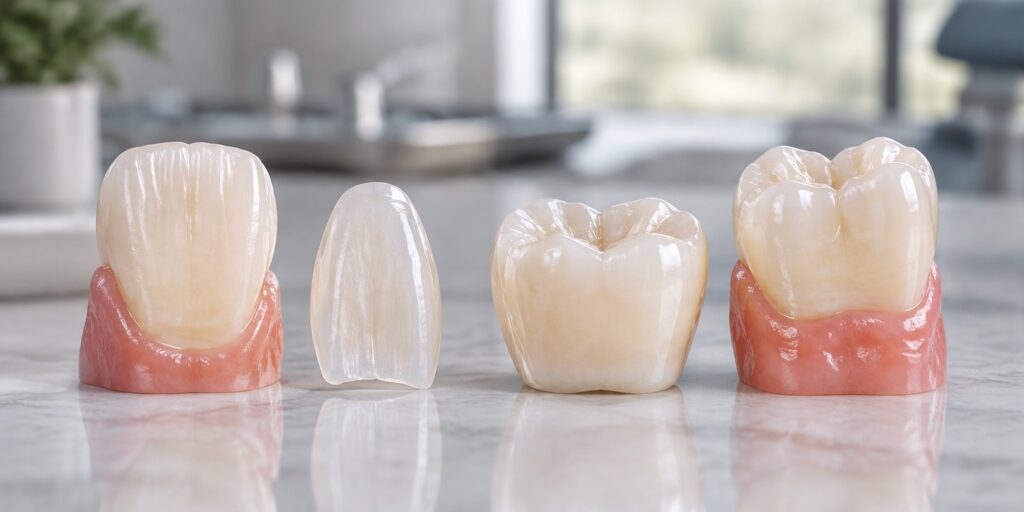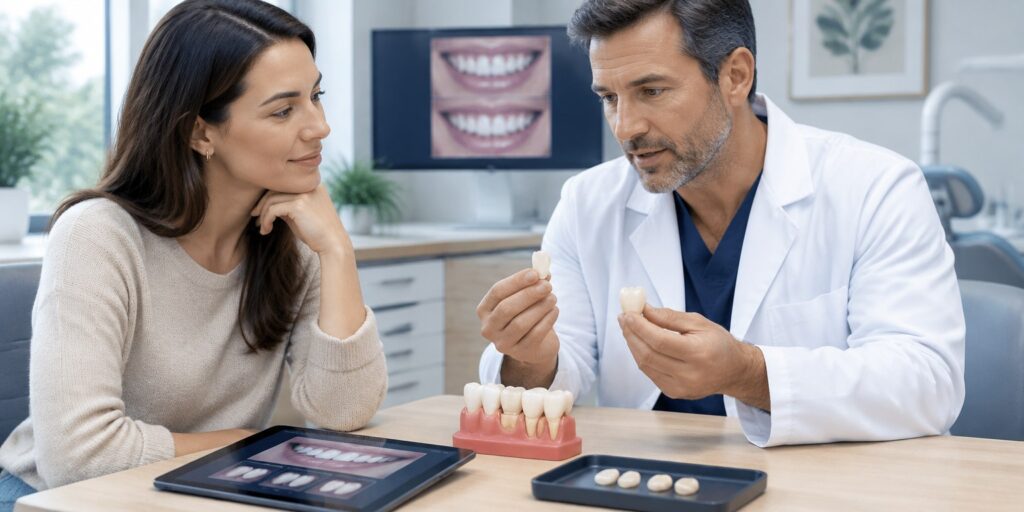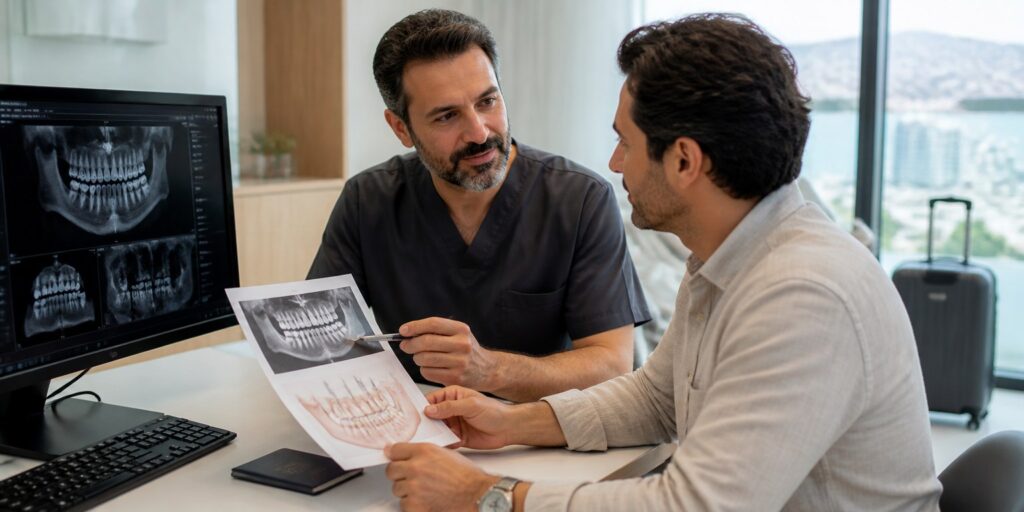



Hollywood Smile for crooked teeth may involve veneers, orthodontics, or both. Learn how tooth position, bite, and tooth preparation affect the choice.

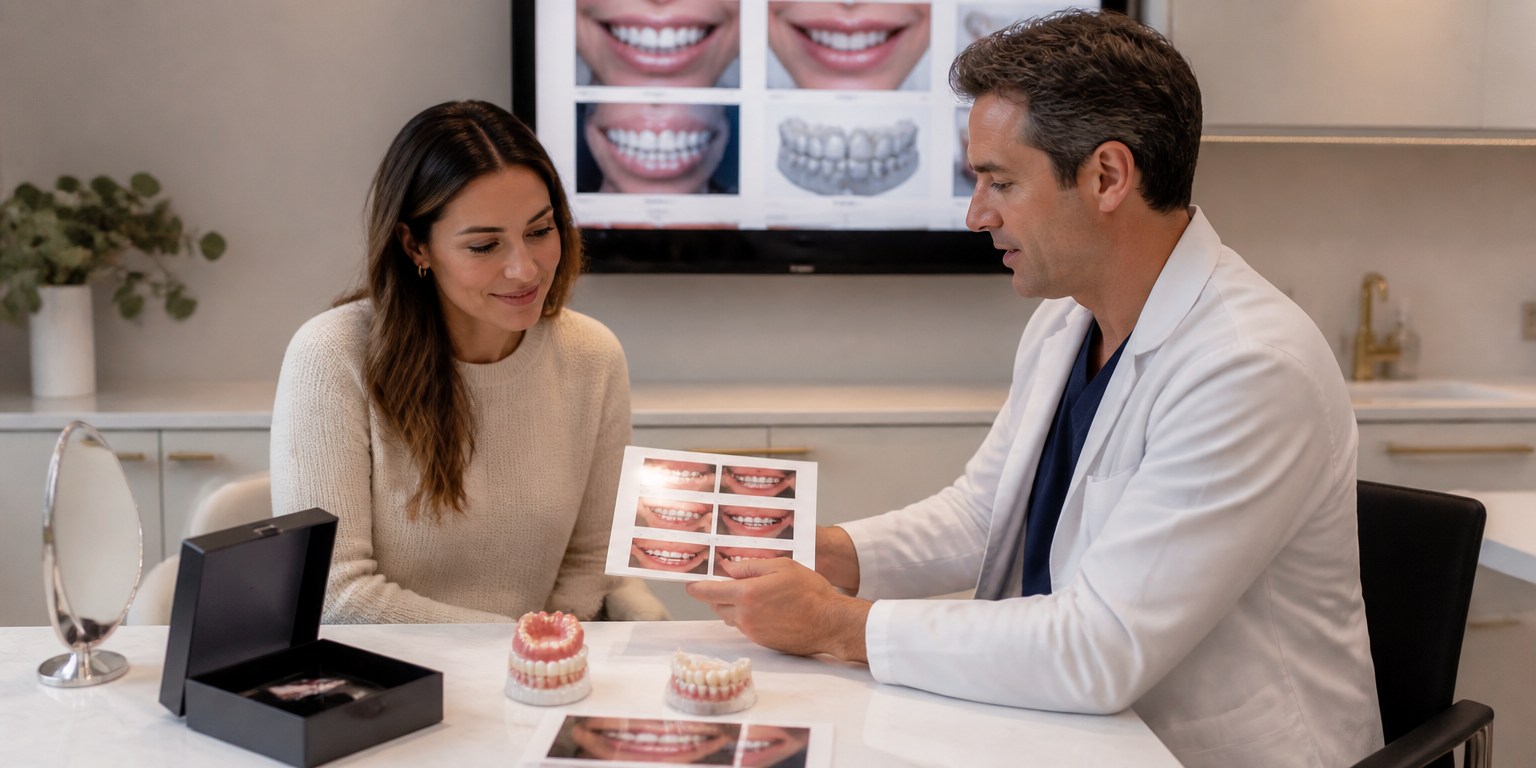
Yes, crooked teeth can be included in a Hollywood Smile plan. But veneers and orthodontics solve different problems.
Orthodontic treatment moves teeth. Dental veneers do not. Veneers change the visible shape, shade, proportions, and surface of selected teeth. Orthodontics changes tooth position and alignment.
That distinction matters. A Hollywood Smile for crooked teeth may involve veneers, orthodontic treatment, bonding, whitening, or a combination. The appropriate approach depends on the amount and type of misalignment, the bite, available enamel and tooth structure, cosmetic goals, and how much tooth preparation a veneer would require.
A clinical assessment is needed before deciding whether crooked teeth should be moved, cosmetically reshaped, or treated with both approaches.
Hollywood Smile for Crooked Teeth: Quick Answer
| Question | Veneers | Orthodontics |
|---|---|---|
| Do they move teeth? | No | Yes |
| Can they change tooth color? | Yes, the visible surface color | No, not directly |
| Can they change tooth shape? | Yes | Tooth position changes, not ceramic reshaping |
| Can they address crowding? | May visually camouflage selected mild irregularities | Can physically move crowded teeth |
| Can they address rotation? | Selected mild visual rotation may sometimes be camouflaged | Can physically correct tooth position when appropriate |
| Do they require tooth preparation? | Often some preparation; amount varies | Not for the purpose of placing a veneer |
| Can bite affect treatment? | Yes | Yes |
| Treatment time | Often shorter than orthodontic treatment | Varies by orthodontic problem |
| Best use | Shape, shade, proportion, selected cosmetic surface concerns | Tooth position, alignment, spacing, selected bite problems |
| Can they be combined? | Yes | Yes |
The most useful first question is not “Which looks better?” It is “Is the main problem tooth position, tooth shape/color, or both?”
Can Crooked Teeth Get a Hollywood Smile?
Yes. Crooked teeth can be part of a personalized Hollywood Smile plan, but the treatment should address function as well as appearance.
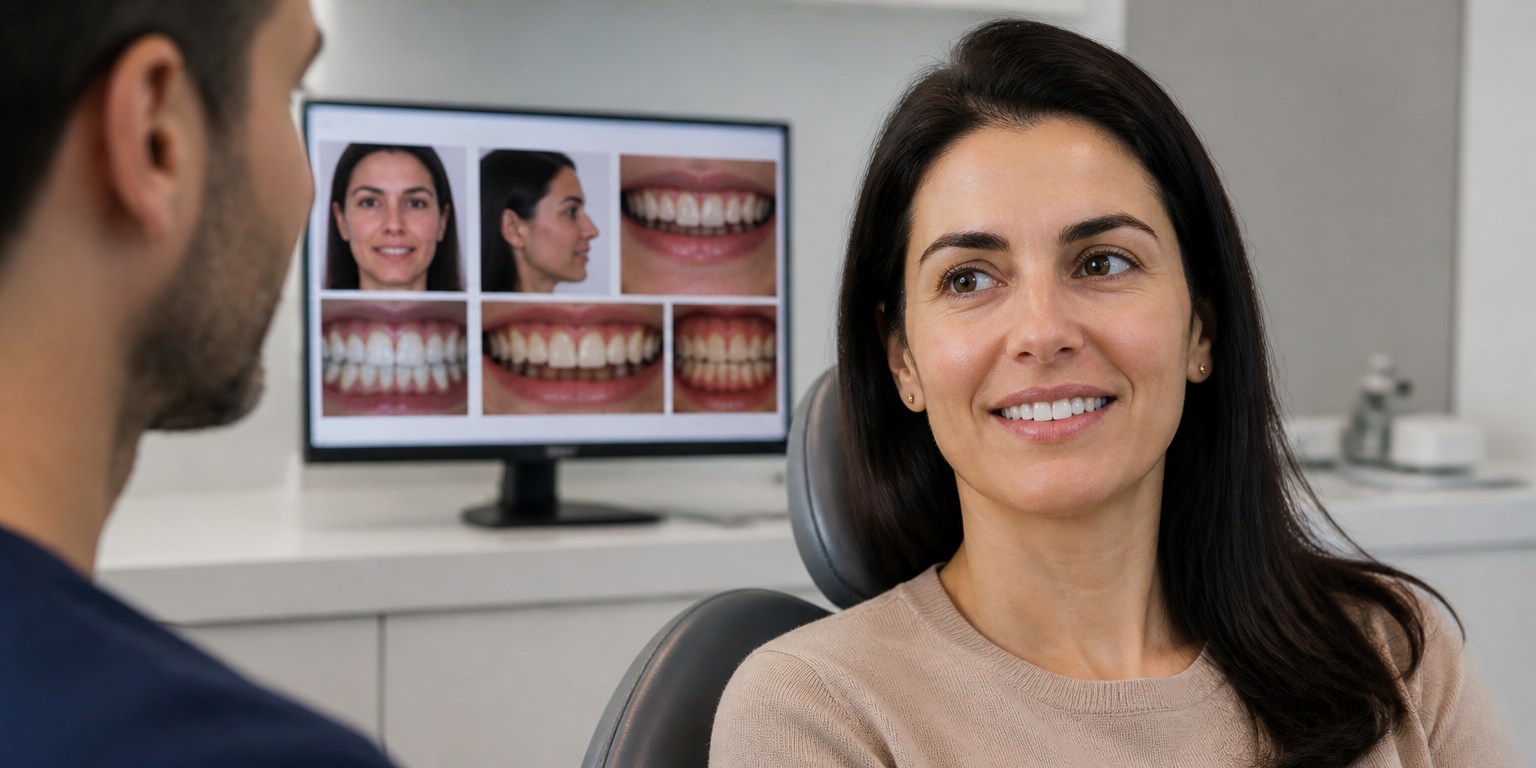
“Mildly crooked” can describe rotation, crowding, protrusion, or spacing, and those problems do not require the same solution. Niva’s Hollywood Smile in Turkey guidance therefore emphasizes individualized assessment rather than choosing a fixed cosmetic package from photographs alone.
Can Veneers Straighten Crooked Teeth?
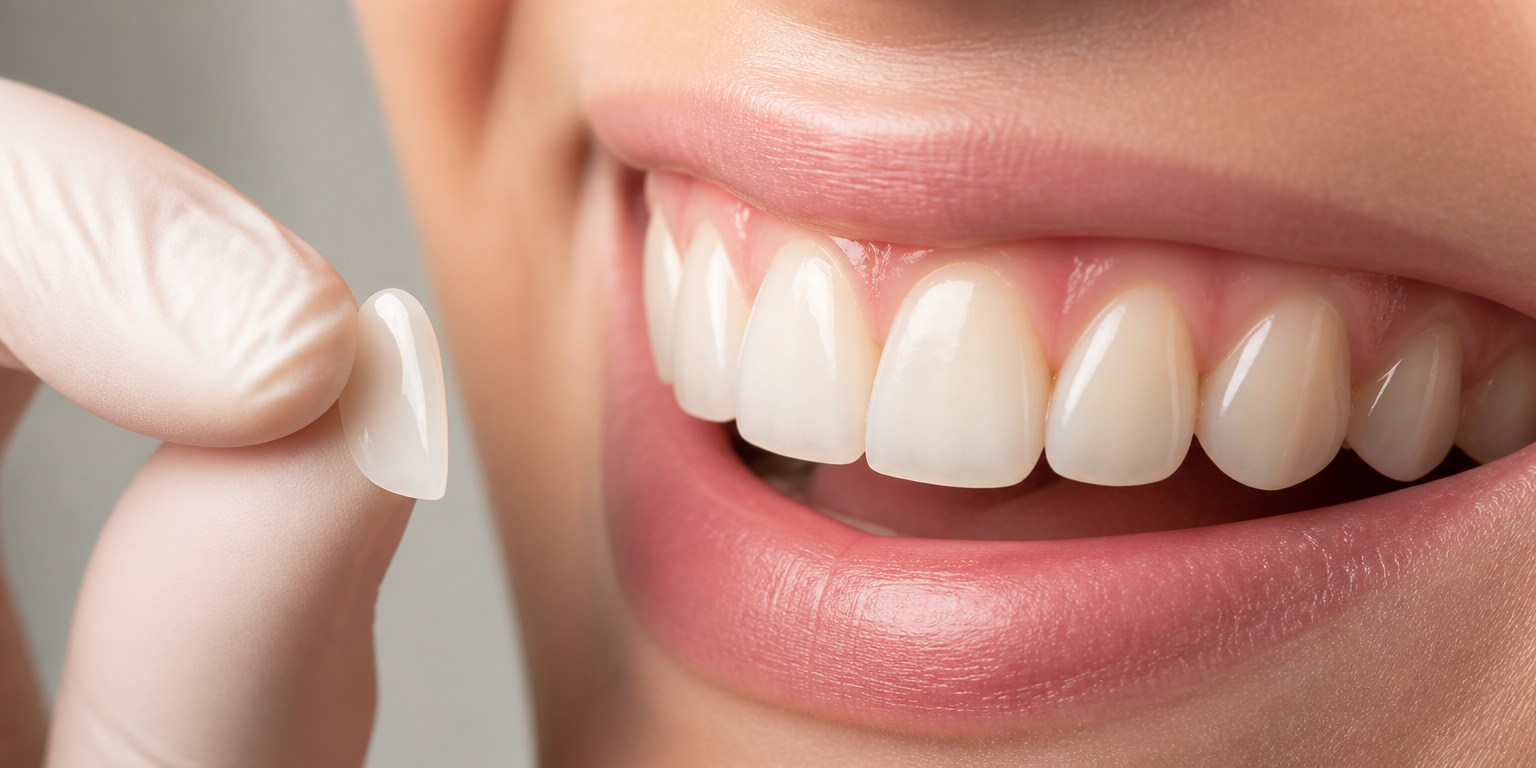
No. Veneers do not physically straighten teeth or move tooth roots. They cover the visible tooth surface.
The American Dental Association notes that veneers can improve the appearance of crooked or misshapen teeth, but that is cosmetic camouflage rather than orthodontic movement.
Can Veneers Be Used on Rotated or Crowded Teeth?
Sometimes, in selected mild cases. Suitability depends on tooth position, restorative space, enamel, bite, and the contour required. Greater rotation or crowding may require more preparation or create excessive thickness, which is why orthodontic assessment may be more appropriate.
What About Protruding Teeth?
Adding restorative material to an already prominent tooth can create excessive thickness. If balanced contours would require substantial reduction, orthodontic repositioning may provide a more conservative foundation.
Can Orthodontics Create a Hollywood Smile?
Yes. Orthodontic treatment can form part of a Hollywood Smile plan by changing tooth position, spacing, and alignment.
Braces and clear aligners apply controlled forces that move teeth. The American Association of Orthodontists notes that aligners gradually reposition teeth but are not suitable for every orthodontic problem.
Orthodontics does not directly whiten enamel or redesign tooth shape, so whitening, bonding, or veneers may still be considered afterward if needed.
Veneers vs Orthodontics: What Is the Main Difference?
The main difference is simple:
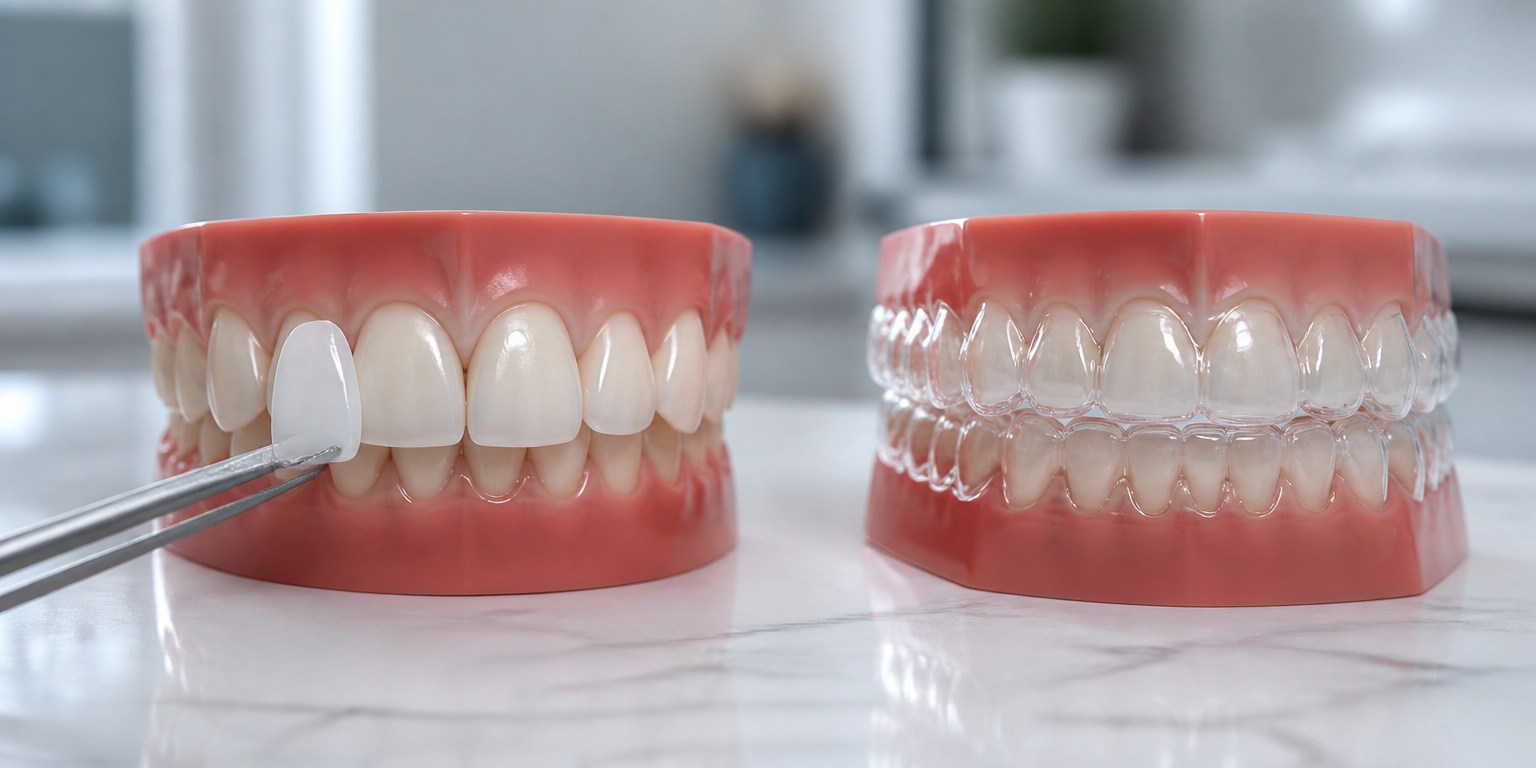
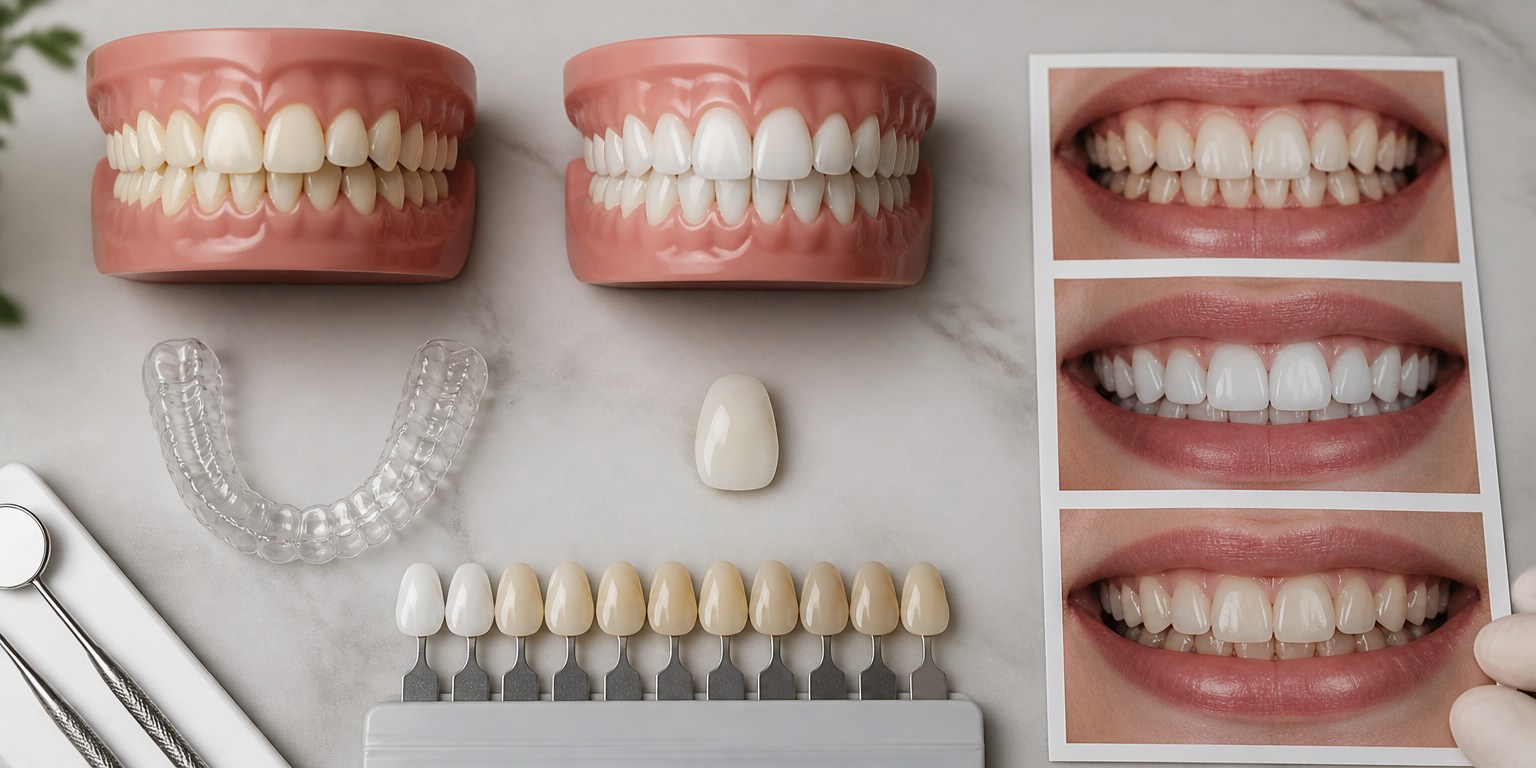
Veneers change the visible surface of teeth. Orthodontics moves teeth.
| Feature | Veneers | Orthodontics |
|---|---|---|
| Primary purpose | Cosmetic/restorative surface change | Tooth movement and alignment |
| Changes root position | No | Yes |
| Changes shade | Yes, through the restoration | No |
| Changes visible shape | Yes | Not in the same restorative sense |
| Addresses bite | Does not replace orthodontic bite correction | May correct selected bite relationships |
| Tooth preparation | May be irreversible | Does not require veneer preparation |
| Maintenance | Restorations may need repair or replacement over time | Alignment usually requires retention after active treatment |
This is why veneers and orthodontics should not be presented as interchangeable versions of the same treatment.
When Might Veneers Be Considered for Crooked Teeth?
Veneers may be considered when the clinical problem is mainly cosmetic and the tooth can be restored without excessive preparation.
Examples may include selected cases involving:
- a mild visible irregularity,
- limited rotation,
- tooth-shape differences,
- discoloration combined with a shape concern,
- favorable bite relationships,
- sufficient enamel and healthy tooth structure.
These are not self-diagnosis criteria. A dentist must evaluate the tooth position, enamel, gums, bite, and planned restoration before deciding whether a veneer is appropriate.
When Might Orthodontics Be More Appropriate?
Orthodontic treatment may be more appropriate when tooth position itself is the main problem.
Possible situations include more significant crowding, rotation, protrusion, spacing, bite concerns, or cases where veneer camouflage would require extensive tooth reduction.
Orthodontics is not automatically required for every irregular tooth. The decision should be based on diagnosis, not simply on whether the patient wants a fast cosmetic result.
Can Clear Aligners Be Used Before a Hollywood Smile?
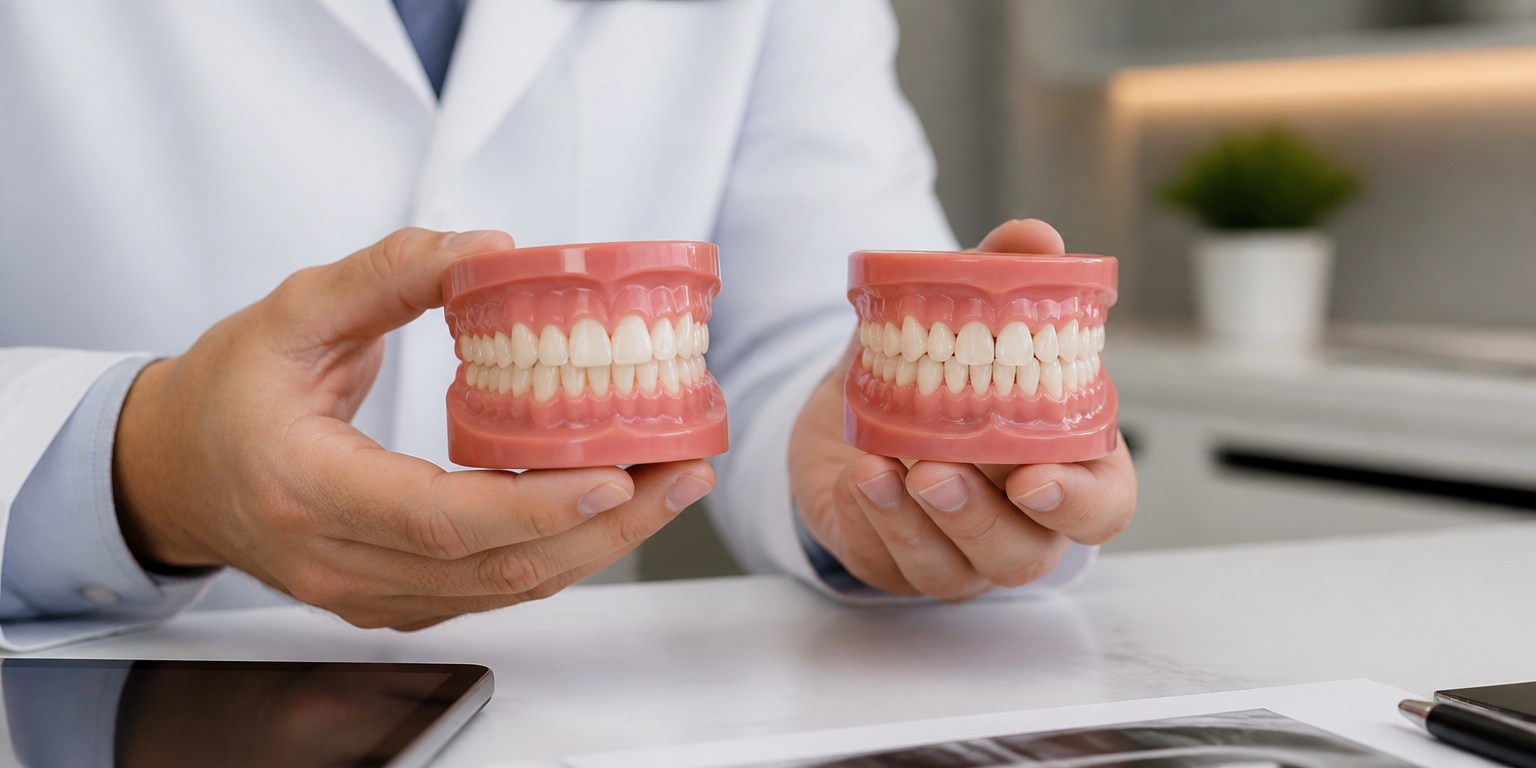
Yes, in suitable orthodontic cases. Clear aligners may improve tooth position before cosmetic treatment.
Better alignment can sometimes reduce restorative camouflage. After orthodontics, a patient may need fewer veneers, more conservative veneers, bonding, whitening, or no restorations at all.
Clear aligners are not appropriate for every patient or movement. Braces may be more suitable in some cases.
Can Orthodontics Reduce Tooth Shaving?
Potentially. Moving a tooth into a more favorable position can sometimes reduce contour correction for a veneer. It does not guarantee zero preparation because final preparation still depends on tooth shape, enamel, color, bite, and restorative space.
Can You Get a Hollywood Smile With Aligners Only?
Possibly. If alignment is the main concern and tooth color and shape are acceptable, orthodontic treatment alone may produce the desired improvement. Cosmetic treatment can be considered afterward only if another concern remains.
Can You Get a Hollywood Smile With Veneers Only?
Possibly, in selected cases. Veneer-only treatment may be reasonable when the main concerns involve shape, shade, proportion, or limited cosmetic irregularity and the bite and tooth position are suitable.
Veneers should not be used simply to mask significant crowding, protrusion, rotation, or bite problems when doing so would require excessive preparation or compromise the final contour.
Can Veneers and Orthodontics Be Combined?
Yes. Some patients may benefit from orthodontic tooth movement followed by limited cosmetic treatment.
A possible sequence is:
- improve tooth position with orthodontics,
- reassess the smile,
- use whitening, bonding, or veneers only where a cosmetic concern remains.
This sequence is not universal. Treatment order should follow the clinical problem and final restorative plan.

Why Orthodontics First May Allow More Conservative Veneers
Better tooth position can create a more favorable starting point for restorative dentistry.
If a tooth is rotated or prominent, a veneer designed to make it appear aligned may need additional reduction in some areas or extra thickness in others. Orthodontic movement can sometimes reduce that discrepancy before the restoration is designed.
Preserving enamel matters. A 2024 systematic review of ceramic veneers found better survival and success patterns when veneers were bonded predominantly to enamel than when substantial dentin exposure was involved. This supports a conservative approach to preparation where clinically possible.
Does Bite Matter When Choosing Between Veneers and Orthodontics?
Yes. Bite should be evaluated before cosmetic restorations are placed.
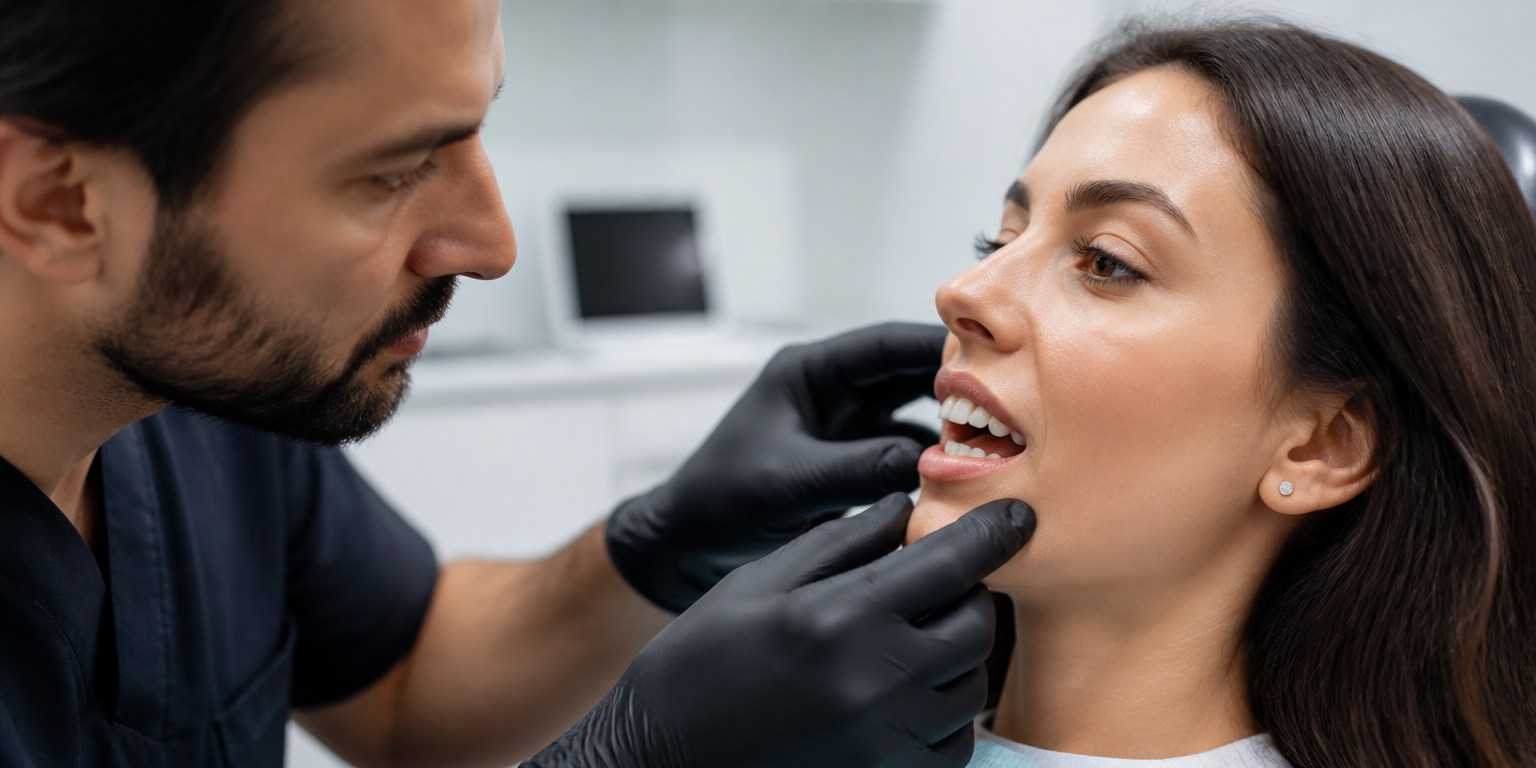
The way upper and lower teeth contact can affect restorative forces, veneer design, tooth wear, and long-term stability. Veneers can change visible tooth shape, but they do not replace orthodontic treatment when an underlying bite relationship requires tooth movement.
Aesthetic planning should therefore include occlusion, not just the appearance of the front teeth.
Does Bruxism Affect the Decision?
Yes. Grinding or clenching can influence both restorative risk and treatment planning.
The ADA notes that patients who clench or grind their teeth, or who have certain deep bites, may not be ideal veneer candidates without additional evaluation. Bruxism does not automatically exclude veneers or orthodontics, but it should be discussed before treatment.
Niva also publishes separate guidance on night guards for grinding and clenching.
Which Option Preserves More Natural Tooth Structure?
When alignment is the primary problem, orthodontics may preserve more intact natural tooth structure because it moves the teeth rather than covering them with restorations.
That does not make orthodontics risk-free or automatically better. Orthodontic treatment has its own considerations, including oral hygiene, gum health, root response, treatment compliance, and retention.
For veneers, the amount of preparation varies. The ADA states that conventional veneer treatment is irreversible when enamel is removed. That is why healthy tooth structure should be preserved whenever clinically appropriate.
Do Veneers for Crooked Teeth Require More Shaving?
They may. A tooth that is significantly rotated, protruded, or out of alignment can require more contour correction to create space for a veneer.
This is one reason orthodontic repositioning may be considered before restorative treatment. Preparation should be driven by biology and restorative design, not by a promise to finish treatment quickly.
Can No-Prep Veneers Fix Crooked Teeth?
Only in selected cases.
No-prep or additive veneers require enough space to add material without making the tooth look bulky or creating poor contours. Protrusion, crowding, rotation, or limited restorative space can make an additive approach unsuitable.
“No-prep” should therefore not be treated as a universal solution for crooked teeth.
Veneers vs Orthodontics: Naturalness, Speed, Cost, and Longevity
There is no universal winner.
Naturalness: Orthodontics keeps natural tooth surfaces, while veneers can change color, shape, texture, and proportion.
Speed: Veneers may sometimes be completed sooner, but speed should not override clinical appropriateness.
Cost: Either approach can cost more depending on complexity, tooth count, materials, and whether treatment is combined.
Longevity: These treatments are not directly comparable. Orthodontic results usually require retention, while veneers may need future maintenance, repair, or replacement. The British Orthodontic Society states that retainers are essential in almost all cases to reduce relapse.
Can Bonding or Whitening Help After Orthodontics?
Sometimes. Orthodontic treatment may solve the position problem while leaving smaller cosmetic concerns.
Composite bonding may be considered for selected shape or spacing issues. Whitening may be considered when tooth color remains a concern. Neither bonding nor whitening moves teeth.
A patient who wants straighter and whiter teeth may therefore benefit from a staged plan rather than assuming every visible tooth requires a veneer.
Niva also publishes information on teeth whitening and Digital Smile Design, both of which can be relevant to broader smile planning.
What If Your Teeth Are Crooked but Otherwise Healthy?
Healthy tooth structure should not automatically be removed simply to avoid orthodontic treatment.
A conservative plan should compare tooth movement with restorative camouflage, how much veneer preparation would be required, whether color or shape also needs treatment, the bite, and long-term maintenance. Veneers may still be appropriate in selected cases, but alternatives should be discussed before irreversible preparation.
What If You Already Have Crowns or Veneers?
Existing restorations can affect orthodontic and cosmetic planning but do not automatically prevent treatment. Their condition, bite, bonding surfaces, and possible need for adjustment or replacement should be evaluated clinically.
What Should a Dentist Evaluate Before Recommending Veneers or Orthodontics?
A responsible plan should assess:
- crowding, rotation, protrusion, and spacing,
- bite relationships,
- enamel and remaining tooth structure,
- gum health,
- existing restorations,
- bruxism,
- cosmetic goals,
- treatment-time preferences,
- and how much preparation restorative camouflage would require.
Photos can support preliminary discussion, but they cannot reliably show every factor needed for a final treatment decision.
Veneers or Orthodontics: A Decision Framework
| Clinical or Aesthetic Issue | Veneers May Be Considered | Orthodontics May Be Considered | Important Note |
|---|---|---|---|
| Minor shape irregularity | Yes | Usually not for shape alone | Bonding may also be an option |
| Mild visible rotation | Sometimes | Yes | Amount of preparation matters |
| Significant crowding | Limited role | Often | True tooth movement may be needed |
| Protrusion | May create bulk if space is limited | Often worth assessing | Position should be evaluated first |
| Spacing | Sometimes | Sometimes | Cause and size of spaces matter |
| Bite problem | Not a substitute for correction | May be appropriate | Requires clinical diagnosis |
| Discoloration | Yes | No | Whitening may be another option |
| Tooth proportion concern | Yes | No | Restorative design may help |
| Healthy teeth with alignment concern | May require unnecessary preparation | Often worth considering | Tooth preservation is important |
| Combined color + alignment concern | Possible | Possible | Combined treatment may be most conservative |
This table is a discussion framework, not a treatment prescription.
Questions to Ask Before Choosing Veneers or Orthodontics
Before choosing veneers instead of orthodontics, ask:
- Is my main problem tooth position or tooth shape?
- Could orthodontics address the alignment first?
- How much tooth preparation would veneers require?
- Could the veneers look bulky because of my current tooth position?
- Could tooth movement reduce the amount of preparation?
- Does my bite affect veneer suitability?
- Could bonding or whitening be used after orthodontics?
- Do I need veneers on every visible tooth?
- What maintenance should I expect?
Before choosing orthodontics, ask:
- What alignment problem is being treated?
- Are clear aligners suitable for my case?
- Would braces be more predictable for the planned movement?
- What cosmetic concerns may remain after orthodontics?
- Could I still need bonding or veneers?
- What retention will be needed?
- How does my bite affect the plan?
How to Choose a Clinic for Crooked-Teeth Hollywood Smile Planning
Choose a clinic that explains alternatives rather than selling a fixed restoration package.
Look for a full dental examination, orthodontic assessment when needed, bite evaluation, conservative treatment planning, transparent discussion of preparation, realistic expectations, case documentation, and a written plan.
If veneers are recommended for crooked teeth, ask why orthodontic movement is or is not being considered.
Hollywood Smile for Crooked Teeth at Niva Aesthetic
Niva’s current Hollywood Smile guidance describes a Hollywood Smile as a personalized treatment concept rather than a fixed package. It states that treatment may involve veneers, crowns, bonding, whitening, orthodontics, gum treatment, or a combination depending on the patient’s condition and goals.
The same page emphasizes preserving healthy natural tooth structure where possible and notes that severely misaligned teeth may sometimes be better treated orthodontically first.
Niva publicly lists E-max veneers as a dental treatment and publishes Digital Smile Design content. During this research, a dedicated Niva orthodontics or clear-aligner service page could not be verified. Patients whose main concern is tooth position should therefore ask whether orthodontic assessment and treatment are provided directly by Niva or coordinated through another provider.
If crooked teeth are the main concern, the first question should be whether the teeth need to be moved, reshaped, or both. A clinical assessment can determine whether orthodontics, veneers, bonding, whitening, or a combined approach is appropriate.
Hollywood Smile for Crooked Teeth FAQ
Can crooked teeth get a Hollywood Smile?
Yes. The plan may involve orthodontics, veneers, bonding, whitening, or a combination, depending on tooth position, bite, tooth structure, and cosmetic goals.
Can veneers straighten crooked teeth?
No. Veneers do not move teeth. They may cosmetically camouflage selected mild irregularities by changing visible tooth contour.
Are veneers better than aligners for crooked teeth?
Not universally. Aligners move teeth; veneers change the tooth surface. The right choice depends on the actual problem and the amount of preparation required.
Can aligners create a Hollywood Smile?
Yes, when alignment is an important part of the goal and the patient is suitable for aligner treatment. Aligners do not directly whiten or reshape teeth.
Can veneers fix crowded or rotated teeth?
Selected mild cases may be visually modified, but veneers do not correct underlying tooth position. More significant crowding or rotation may benefit from orthodontic assessment.
Can orthodontics reduce the need for veneers?
Sometimes. Better tooth position may leave fewer cosmetic concerns and reduce the amount of restorative camouflage needed.
Can aligners help avoid tooth shaving?
Potentially. Tooth movement may create a better position for conservative restorative treatment, but it does not guarantee zero preparation.
Should I straighten my teeth before getting veneers?
Sometimes. Orthodontics may be considered first when position, crowding, rotation, protrusion, or bite is the main concern.
Which is faster, veneers or orthodontics?
Veneers may sometimes be completed sooner, but speed should not determine treatment when tooth movement is clinically important.
Which is more conservative, veneers or orthodontics?
When healthy teeth mainly need alignment, orthodontics may preserve more intact tooth structure because it moves rather than covers teeth. Individual risks and suitability still matter.