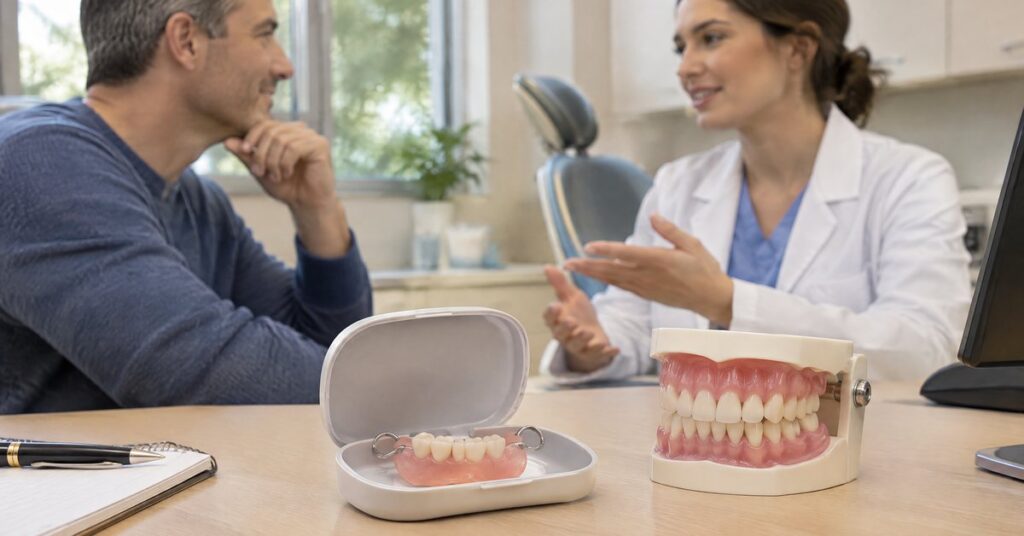


Turkey teeth explained: what the term means, which crowns and veneers it refers to, how a conservative plan differs and what to check before you book.

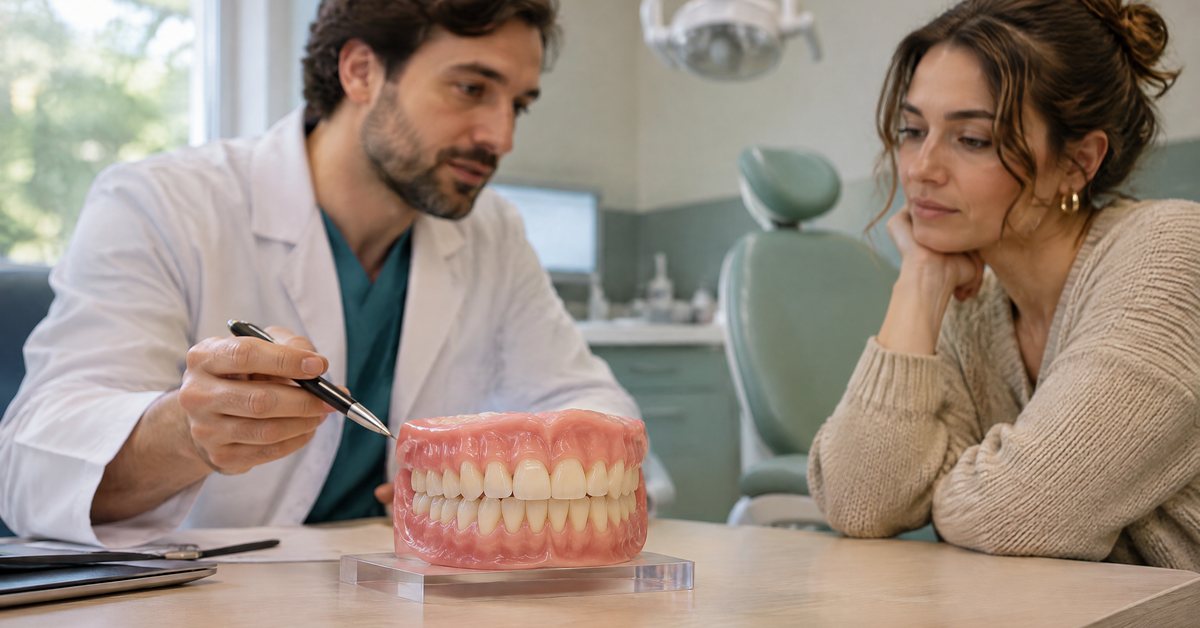
Turkey teeth is an informal label for a full set of very white, uniform crowns or veneers fitted during a short trip abroad, most often to Turkey. The label is not a dental diagnosis or a single procedure: it can describe thin veneers on lightly prepared teeth or full crowns on heavily reshaped teeth. A veneer covers the front of a tooth, while a crown covers the whole tooth. [2]
This guide explains where the phrase comes from, which treatments sit behind it, why tooth preparation is the detail that matters most, and what to check before cosmetic dental treatment abroad.
Key takeaways
- The phrase is slang, not a clinical term. It usually describes a look (very white, very even teeth) and a route (a short treatment trip).
- The treatment behind the look is normally a set of crowns, a set of veneers, or a mix of both. The two are not the same thing.
- A crown covers the whole tooth and a veneer covers the front surface, so the amount of natural tooth that is reshaped can differ a great deal. [2]
- Preparing a tooth for a veneer or crown is not reversible, because enamel is removed. [4]
- A conservative plan starts with an examination, treats decay and gum problems first, and restores only the teeth that need it. [4]
- Before travelling, ask who will treat you, what will be done to each tooth and what aftercare is included. [6]
What are Turkey teeth, and what does the term mean?
Turkey teeth means cosmetic dental work, usually many crowns or veneers placed at once, that a person has had done in Turkey or on a similar treatment trip abroad. The phrase spread through social media and UK press coverage, and people use it in two ways. Some use it for any new smile created in Turkey. Others use it only for a specific result: teeth that look very white, square and identical.
If you searched for “what is Turkey teeth” or “Turkey teeth meaning”, the short answer is that the term tells you where the work was done and how it looks. The term does not tell you what was done to the teeth underneath, so the label alone cannot show whether the work was careful or excessive.
Dental treatment is one of the most common reasons people travel abroad for care, alongside cosmetic surgery, and the UK government notes that the standard of facilities and treatment can vary widely between countries and within one country. [7] That variation is the real subject behind the nickname. If you are comparing options, the Hollywood Smile treatment page at Niva Dental describes how a smile design is planned tooth by tooth.
Which procedures does the label usually refer to: crowns or veneers?
In most cases the label refers to crowns, veneers or a combination of the two, placed on the teeth that show when you smile.
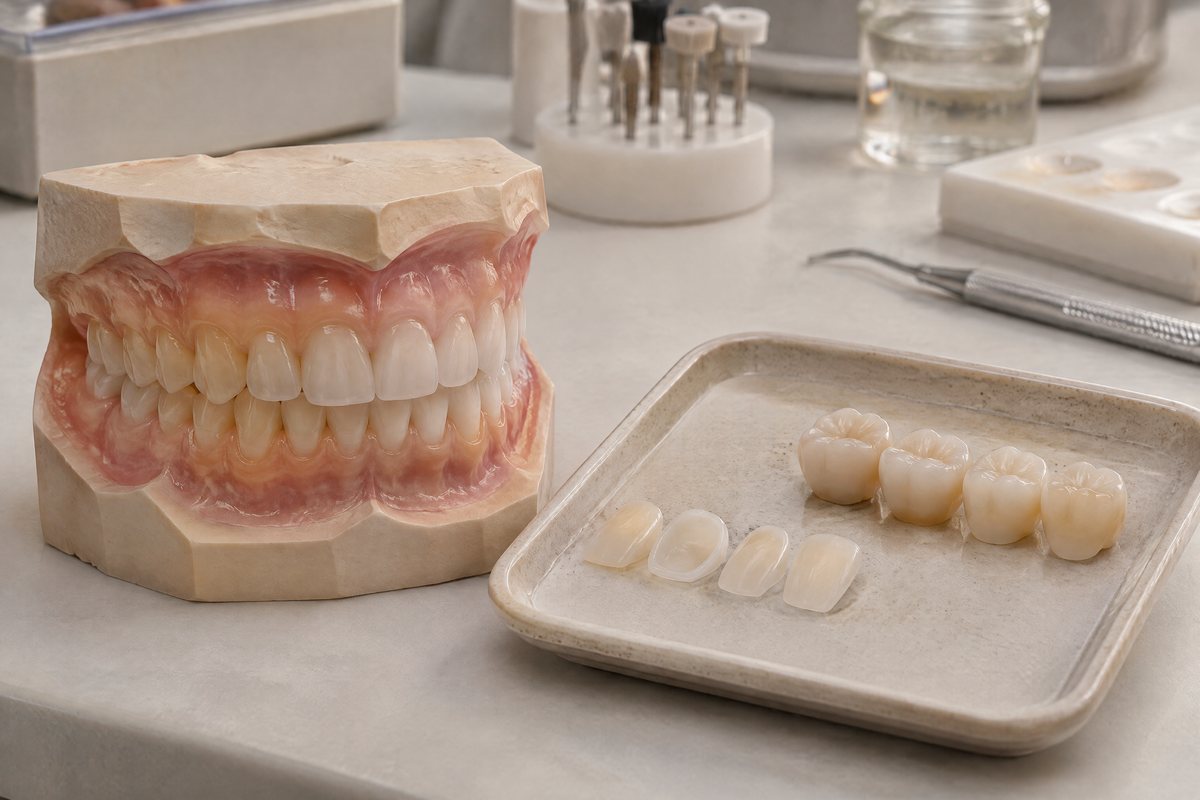
A veneer is a thin, custom-made covering bonded to the front surface of a tooth to change its colour or shape. A crown is a cap that completely covers a real tooth, and the tooth has to be shaped so that the crown can be fixed on to it. [3] Crowns are generally used to restore teeth that are decayed, broken, weak or worn down, while veneers disguise a discoloured or chipped tooth. [3][5]
| Feature | Veneer | Crown |
|---|---|---|
| What it covers | The front surface of the tooth [2] | The entire tooth [2] |
| Main purpose | Appearance: colour, shape, small chips [3] | Strength and protection for a damaged or weak tooth [5] |
| Tooth preparation | A small amount of enamel is removed from the front and sides; not all veneers need this [3][4] | The tooth is shaped to make space for a cap that covers it [8] |
| Can it be undone? | Treatment is not reversible once enamel is removed [4] | A crown is fixed in place and cannot be taken out [8] |
| Typical materials | Porcelain or composite [4] | Ceramic, porcelain bonded to metal, or metal [8] |
Are Turkey teeth veneers or crowns?
Either is possible. The word “veneers” is sometimes used loosely for any tooth-coloured covering, including full crowns. Ask the clinic to state in writing, tooth by tooth, whether each restoration is a veneer or a crown, and which material will be used. Niva’s comparison of Emax veneers and crowns explains the difference in more detail.
Why does tooth preparation matter so much?
Tooth preparation matters because it is permanent: enamel that has been removed does not grow back, so the tooth will always need some kind of covering afterwards. The American Dental Association states that veneer treatment is not reversible because tooth enamel is removed to place a veneer. [4]
Tooth preparation means reshaping the natural tooth with a dental drill so that a veneer or crown can sit over it without looking or feeling bulky. For a veneer, the preparation is limited to the front and sides of the tooth, and not all veneers need it. [3][4] For a crown, the tooth is shaped to make room for a cap that covers it completely. [8]
The Oral Health Foundation, a UK charity, notes that dental standards and approaches vary between countries, including how much natural tooth is removed and how willing a dentist is to extract teeth instead of saving them. [1] The same request (“I want whiter, straighter teeth”) can be answered with a light plan or a heavy one, and photographs of the final smile do not show which was chosen.
Preparation also has short-term effects. Teeth may become more sensitive to heat and cold after veneers, and a crown may cause sensitivity, especially in the first few weeks. [2][5] The detailed risk picture is covered in Niva’s separate guide to the risks of heavy tooth preparation and how to protect your natural teeth, so it is not repeated here.
Why did Turkey teeth become a talking point?
The phrase became a talking point because many people shared the same recognisable result online, and some later reported problems after returning home.
Three practical concerns sit behind the headlines:
- Extent of treatment. Reported problems after treatment abroad include treatment that was more extensive than the patient expected. [1]
- Fit and comfort. The Oral Health Foundation lists infection, ongoing pain and broken or poorly fitting crowns, veneers or bridges among the issues people have reported. [1]
- Follow-up. Getting follow-up care can be difficult once the patient is far from the clinic that did the work. [1]
None of this means that every person who has cosmetic dental treatment in Turkey has a poor result. The nickname groups careful and careless dentistry together. The useful question is not “Should I avoid teeth in Turkey?” but “What exactly is being proposed for my teeth, and why?”
How does a conservative plan differ from heavy tooth preparation?
A conservative plan changes as little natural tooth as possible to reach the agreed result, and it begins with a diagnosis instead of a fixed package. A conservative approach usually has these features:
- Examination first. You are assessed by a qualified dentist, with a full medical history, before you receive a treatment plan and cost estimate. [6]
- Health before appearance. Decay and gum disease are treated first, because placing veneers over unhealthy teeth may worsen existing problems. [4]
- The lightest suitable option. Teeth whitening lightens tooth colour without a covering, and composite veneers may need less enamel removal than porcelain veneers. [3][4]
- Crowns only where a tooth needs one. A crown is mainly a restoration for a decayed, broken, weak or worn-down tooth. [5]
- A number of teeth chosen by your smile, not by a package. Only the teeth that show, and that need changing, are included.
- Bite and habits checked. Veneers may not be a good choice for people who clench or grind their teeth, so this should be assessed beforehand. [4]
If you want veneers specifically (often searched as “Turkey teeth veneers”), ask whether your teeth are suitable for veneers at all, and what would make the dentist recommend crowns instead. Niva’s guides on whether teeth have to be shaved for a Hollywood Smile and on a Hollywood Smile without crowns go through these choices step by step.
What should you check before getting teeth done in Turkey?
Check the dentist, the diagnosis and the aftercare before you check the price. The General Dental Council (GDC), which regulates dental professionals in the UK, advises patients to research how dentistry is regulated in the destination country and to ask the provider direct questions before committing. [6]
Questions worth asking any clinic abroad include:
- Who will carry out my treatment, and what qualifications do they have? [6]
- Are you regulated by a professional body, and are you registered with it? [6]
- How many of my teeth will be prepared, and will each one receive a veneer or a crown?
- What aftercare do you provide, and who can I contact for advice after treatment? [6]
- What happens if I am unhappy with the result, and who pays for extra flights, hotels and remedial work? [6]
The UK government also advises people to do their own research, because private companies have a financial interest in booking treatment. [7] Niva’s checklist on how to choose a dental clinic in Turkey expands on these points.
What should you plan if you are travelling from the UK or abroad?
Plan the treatment as healthcare first and as a trip second. Both the GDC and the Oral Health Foundation recommend speaking to your own dentist before you decide, so that someone who knows your dental history can comment on the proposal and is aware of your plans if you need help later. [1][6]
Points to settle before booking flights:
- Records. Send recent X-rays, a list of medicines and details of any medical conditions before you travel, and ask what further imaging will be done on arrival.
- Time. Fitting a crown usually takes two visits, with a temporary crown in between, although some ceramic crowns can be made and fitted on the same day. [8] Ask how many days your own plan needs and whether a second trip is expected.
- Insurance. The European and Global Health Insurance Cards are not valid in Turkey, so check that your travel insurance is appropriate. [7]
- Care at home. Ask the clinic for a copy of your records and the materials used, and decide in advance which dentist at home you would see for a check or an urgent problem.
A dentist at home may need these records before adjusting or repairing teeth done in Turkey, so collect them before you leave.
What should a written treatment plan include?
A written plan should let another dentist understand exactly what is proposed. Ask for these items before you pay a deposit:
- Tooth-by-tooth list. Which teeth are included and what each will receive: veneer, crown, whitening or no treatment.
- Reason for each crown. Why a crown is recommended for that tooth instead of a veneer or a lighter option.
- Materials and preparation. The material of each restoration, and how the dentist will limit the amount of tooth removed.
- Preparatory treatment. Any fillings, gum treatment or root canal treatment needed first.
- Appointments and days. The number of visits and the temporary restorations you will wear.
- Aftercare and remakes. Written terms for adjustments, repairs and remakes, including who pays for travel.
- Total cost. What is included and what is not.

Frequently asked questions
What is Turkey teeth in simple terms?
The phrase is a nickname for a set of crowns or veneers, usually very white and even, that someone has had fitted in Turkey or on a similar dental trip abroad. The nickname describes the look and the place. It does not say whether the natural teeth were lightly or heavily prepared, which is the detail that matters most.
Are Turkey teeth veneers?
Sometimes. The term is used for veneers, for full crowns and for a mix of both. A veneer covers only the front surface of a tooth, while a crown covers the entire tooth, so the two involve different amounts of preparation. [2] Ask the clinic to confirm in writing which one is planned for each tooth.
What are Turkey teeth made of?
Veneers are usually made of porcelain or tooth-coloured composite. [4] Crowns may be ceramic, porcelain bonded to a metal base, or metal, depending on the tooth and the plan. [8] The nickname does not refer to one material, so ask for the material of every restoration to be named in your written treatment plan.
Can you get Turkey teeth with gum disease?
Gum disease and decay need to be treated before cosmetic work is considered. The American Dental Association notes that a dentist must first treat problems such as decay or gum disease, and that placing veneers over unhealthy teeth may worsen existing dental problems. [4] A dentist needs to examine your gums before any plan is agreed.
Is getting teeth done in Turkey always heavy treatment?
No. The amount of treatment depends on the plan, not the country. To fit some veneers the front of the tooth is drilled away a little, and not all veneers need this, while a crown requires the tooth to be shaped for a cap. [3] Ask how many teeth will be prepared, and how, before you agree to anything.
Discuss a conservative smile plan with Niva Dental
Niva Dental is a dental clinic in Bakırköy, Istanbul. If you are considering veneers, crowns or a smile makeover and want to understand what the Turkey teeth label would mean for your own teeth, ask for an examination and a written, tooth-by-tooth plan before you decide. At Niva Dental, zirconia crowns start from €185 per tooth and E-max veneers from €260 per tooth. These are starting prices; the exact figure is set in your written plan after an examination and imaging. Niva’s guide to Turkey teeth cost explains how a quote is built. You can read about Hollywood Smile treatment at Niva Dental and see how appointments are organised on the Niva Dental patient journey page.
This article provides general information and cannot determine your suitability, treatment plan or costs. Consult a dentist for an individual assessment.
Medically reviewed by Dt. Efsun Esen, dentist at Niva Dental. Last reviewed: November 2026.
Medical sources
- Oral Health Foundation: Going Abroad for Dental Treatment Risks.
- Cleveland Clinic: Dental Veneers.
- NHS: Dental treatments.
- American Dental Association (MouthHealthy): Veneers.
- Cleveland Clinic: Dental Crowns.
- General Dental Council: Going abroad for dental treatment.
- GOV.UK: Turkey travel advice: Health.
- Oral Health Foundation: Crowns.