


Do teeth have to be shaved for a Hollywood Smile? Not always. Learn how veneers, crowns, minimal-prep options, and conservative planning differ.

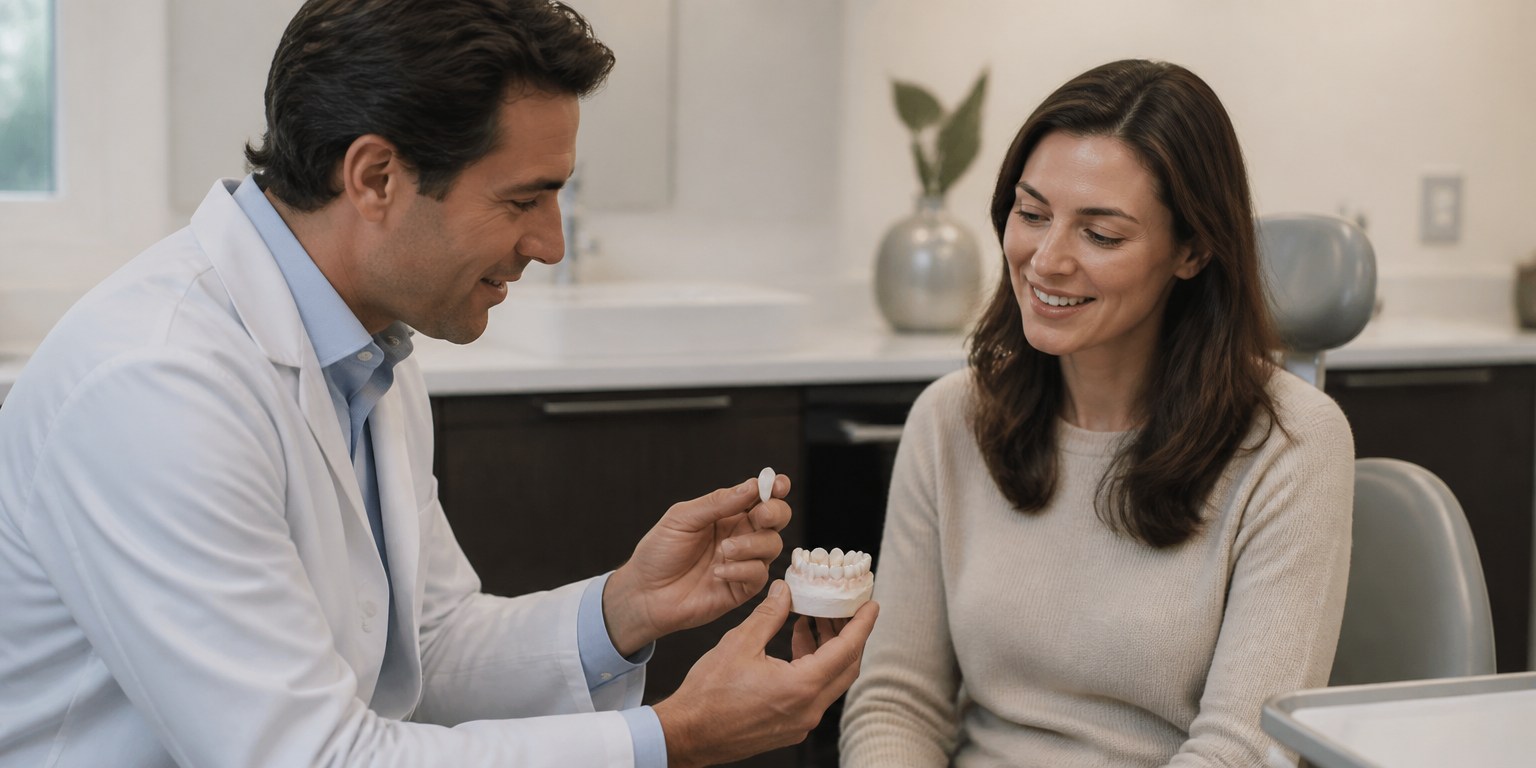
Not always. A Hollywood Smile does not automatically require every tooth to be filed, shaved, or reduced.
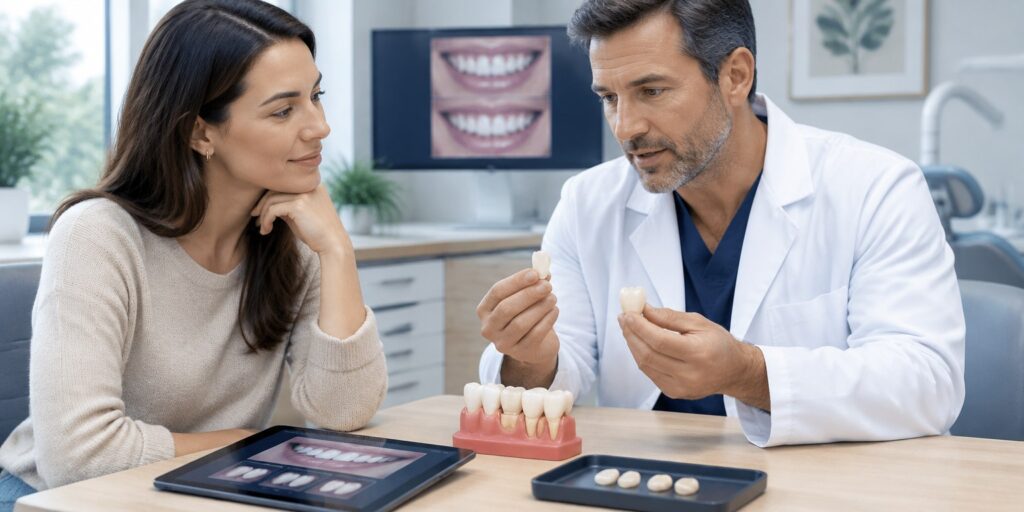
A Hollywood Smile is a personalized smile makeover rather than one standardized procedure. Depending on the condition of the teeth and the desired result, treatment may involve veneers, crowns, bonding, whitening, orthodontics, gum treatment, or a combination.
The amount of tooth preparation depends on the restoration, tooth position, enamel, bite, existing dental work, and the final shape being planned. Some veneer cases may need minimal preparation. Selected cases may allow little or no intentional reduction. Crowns generally require more tooth preparation because they cover substantially more of the tooth.
The goal should be to preserve healthy natural tooth structure wherever clinically appropriate.
Do Teeth Have to Be Shaved for a Hollywood Smile? Quick Answer
| Question | Short Answer |
|---|---|
| Does every Hollywood Smile require shaving? | No. Treatment and preparation are individualized. |
| Do veneers require preparation? | Sometimes. The amount varies by tooth and veneer design. |
| Do crowns require more preparation? | Generally, yes, because a crown covers much more of the tooth. |
| Can some veneers be minimal-prep? | Yes, in suitable cases. |
| Are no-prep veneers suitable for everyone? | No. Tooth position, space, bite, color, and other factors matter. |
| Is tooth reduction reversible? | No. Removed natural enamel or tooth structure does not grow back. |
What Does “Shaving Teeth” Actually Mean?
“Tooth shaving” is a common non-clinical phrase. Dentists more often use terms such as tooth preparation, tooth reduction, or enamel reduction.
Preparation means carefully reshaping part of a tooth so a restoration can be placed with the intended thickness, contour, margin, and bite relationship.
The amount of preparation can range from little or none in selected additive cases to substantially more when a full-coverage crown is clinically required.
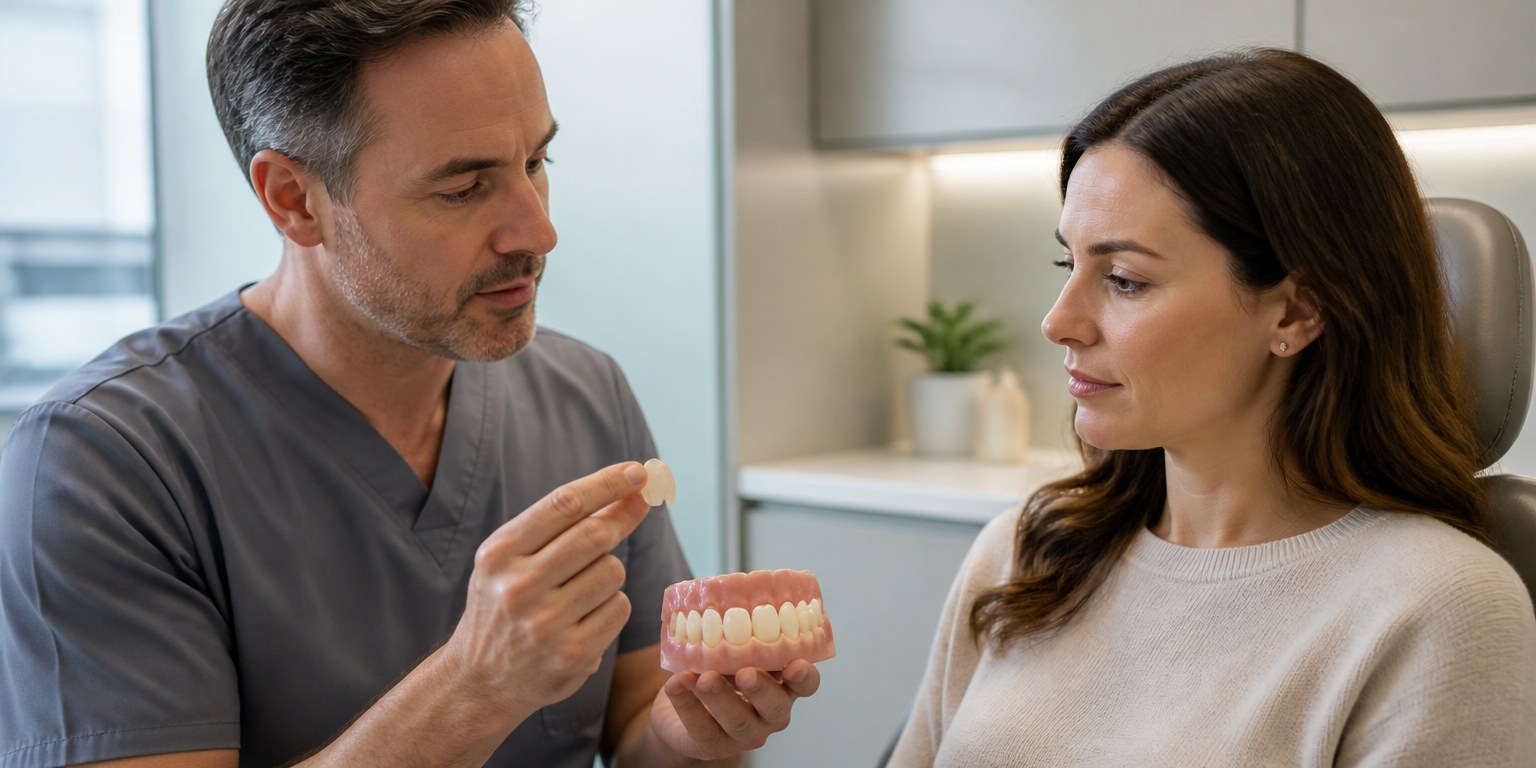
Why Might Teeth Need Preparation for a Hollywood Smile?
Tooth preparation may be needed to create appropriate space for a restoration.
Depending on the tooth, preparation can help:
- prevent an overcontoured or bulky restoration,
- create a more natural final contour,
- provide an appropriate margin,
- manage an unfavorable tooth position,
- accommodate restorative material,
- restore damaged or weakened tooth structure.
These reasons do not apply to every patient or every tooth. A Hollywood Smile should be planned tooth by tooth rather than from a fixed package.
Do Veneers Require Teeth to Be Shaved?
Sometimes, but not always to the same degree. Veneer preparation depends on the tooth and the planned restoration.
The American Dental Association’s official veneer guidance explains that porcelain veneers typically involve removing a small amount of enamel from the front and sides of a tooth. It also describes conventional porcelain veneer treatment as irreversible because enamel is removed.
Traditional Veneers
Traditional veneer treatment usually involves controlled preparation of the visible tooth surface. The amount depends on tooth position, shape, color, restorative material, and the final contour.
Minimal-Prep Veneers
Minimal-prep veneers use limited preparation where space or contour correction is needed. “Minimal” does not mean unnecessary. The aim is to remove only the amount of tooth structure required for the treatment plan.
No-Prep Veneers
Selected cases may allow an additive veneer approach with little or no intentional tooth reduction.
No-prep is not automatically better. If the tooth is already prominent, rotated, crowded, or lacks restorative space, adding material without creating space may compromise thickness or contour.
Do Crowns Require More Tooth Reduction Than Veneers?
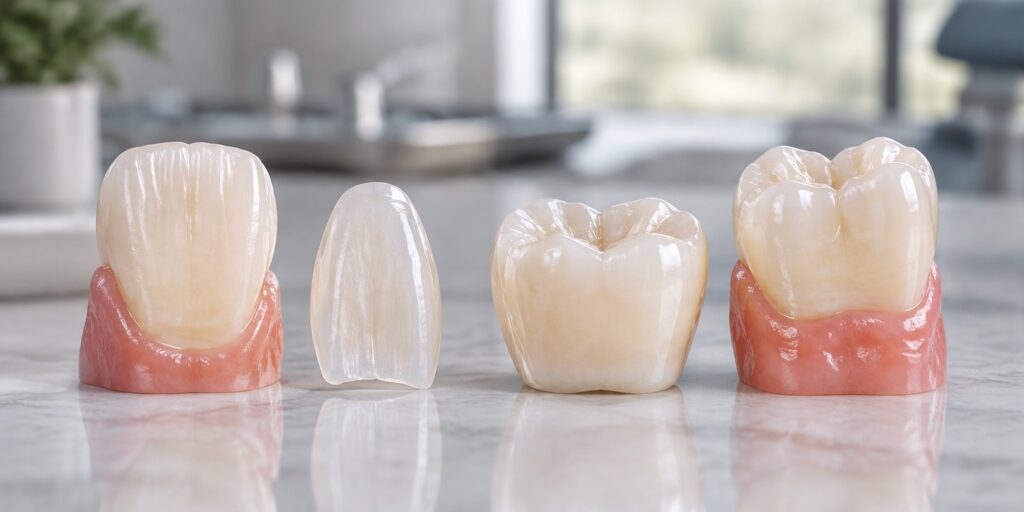
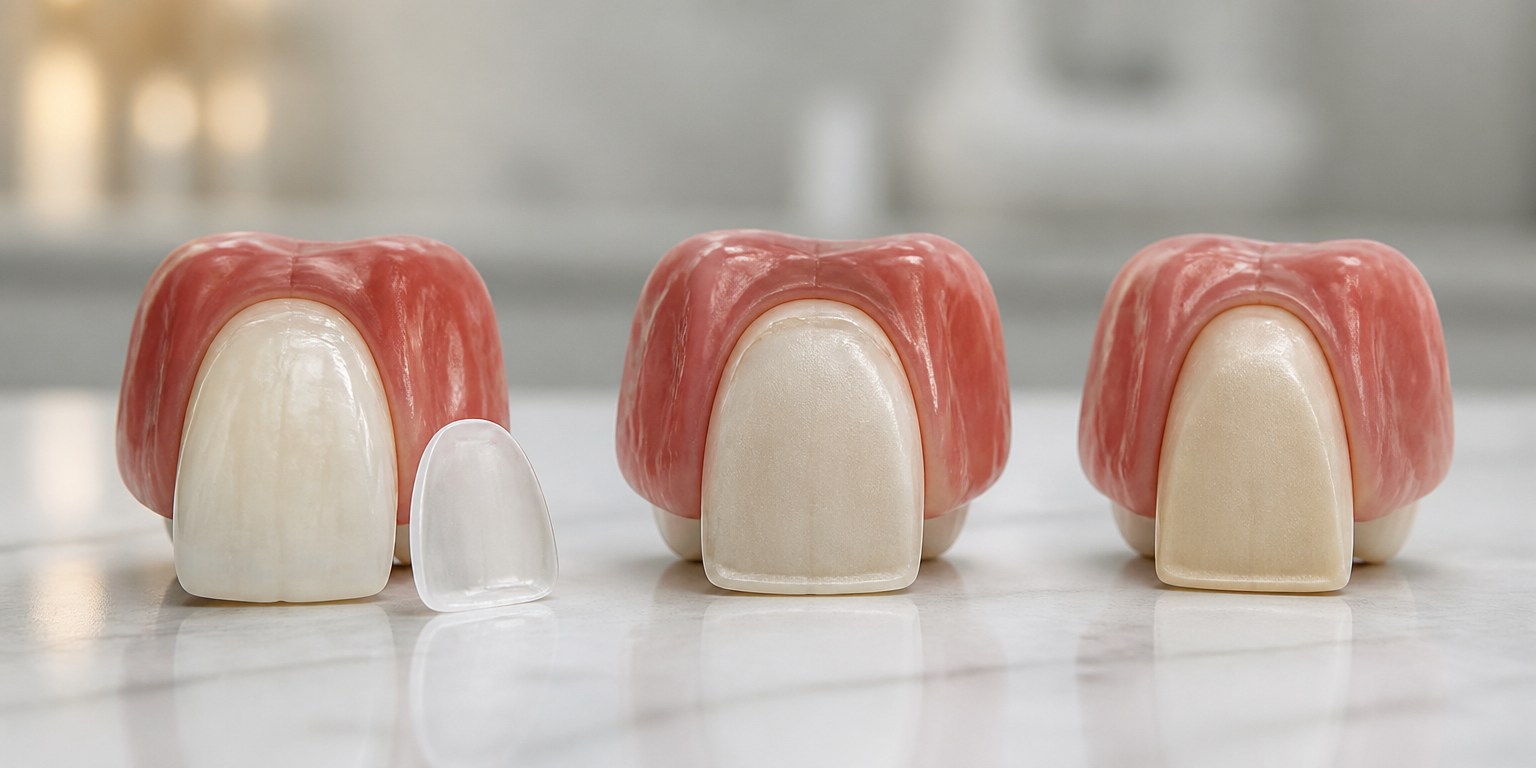
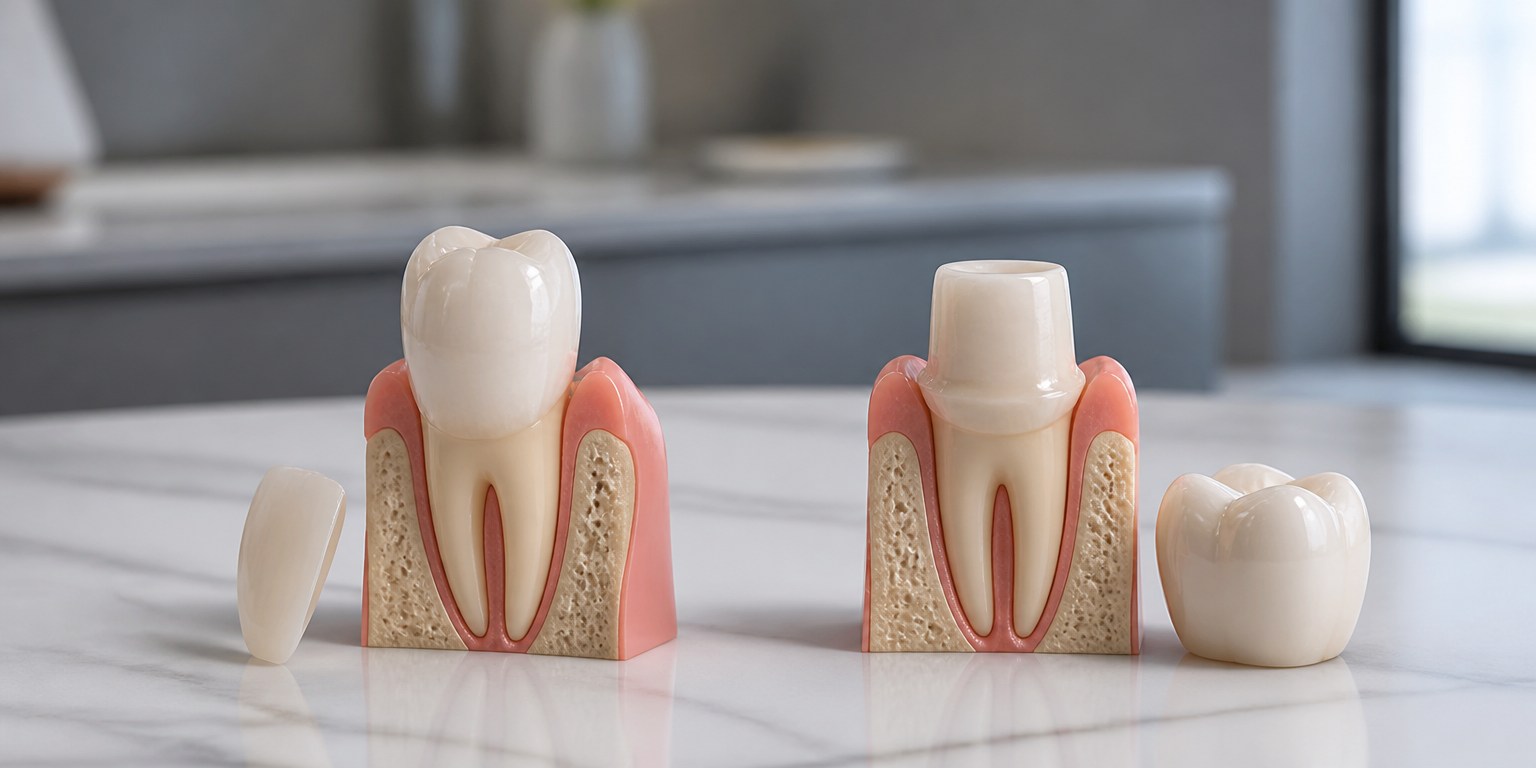
Generally, yes. Veneers primarily cover the visible front surface of a suitable tooth, while crowns provide much broader coverage around the prepared tooth.
A crown therefore usually requires more circumferential tooth preparation. This does not make crowns “bad.” Full coverage can be clinically appropriate when a tooth is substantially damaged, weakened, heavily restored, fractured, or otherwise requires broader structural protection.
A healthy tooth should not automatically receive a crown simply because a patient wants a Hollywood Smile.
Veneers vs Crowns: How Much Tooth Structure Is Preserved?
| Feature | Veneer | Crown |
|---|---|---|
| Tooth coverage | Mainly the visible front surface | Covers substantially more of the prepared tooth |
| Typical preparation | Variable; may be minimal in suitable cases | Generally greater and circumferential |
| Natural tooth preservation | Usually preserves more tooth structure when appropriate | Removes more structure because broader coverage is needed |
| Common role | Cosmetic/restorative surface change | Structural restoration plus appearance when full coverage is indicated |
| Reversibility | Preparation involving enamel removal is irreversible | Crown preparation is irreversible |
| Best question to ask | Can the goal be achieved conservatively with a veneer? | Does this tooth actually need full coverage? |
Current evidence also supports preserving enamel where possible. A 2025 systematic review and meta-analysis found better survival and success patterns when ceramic veneers were bonded predominantly to enamel compared with cases involving greater dentin exposure.
Can You Get a Hollywood Smile Without Shaving Your Teeth?
Sometimes, in selected cases. A smile makeover may include treatments that require no tooth reduction at all.
Possible conservative approaches include:
- whitening for color,
- composite bonding for selected small shape changes,
- orthodontic treatment for tooth position,
- gum treatment where the gingival frame is part of the concern,
- selected no-prep veneers,
- minimal-prep veneers,
- leaving healthy teeth untreated.
Whether preparation is necessary can only be decided after examining the teeth, bite, existing restorations, and treatment goals.
Who May Be Suitable for Minimal-Prep or No-Prep Veneers?
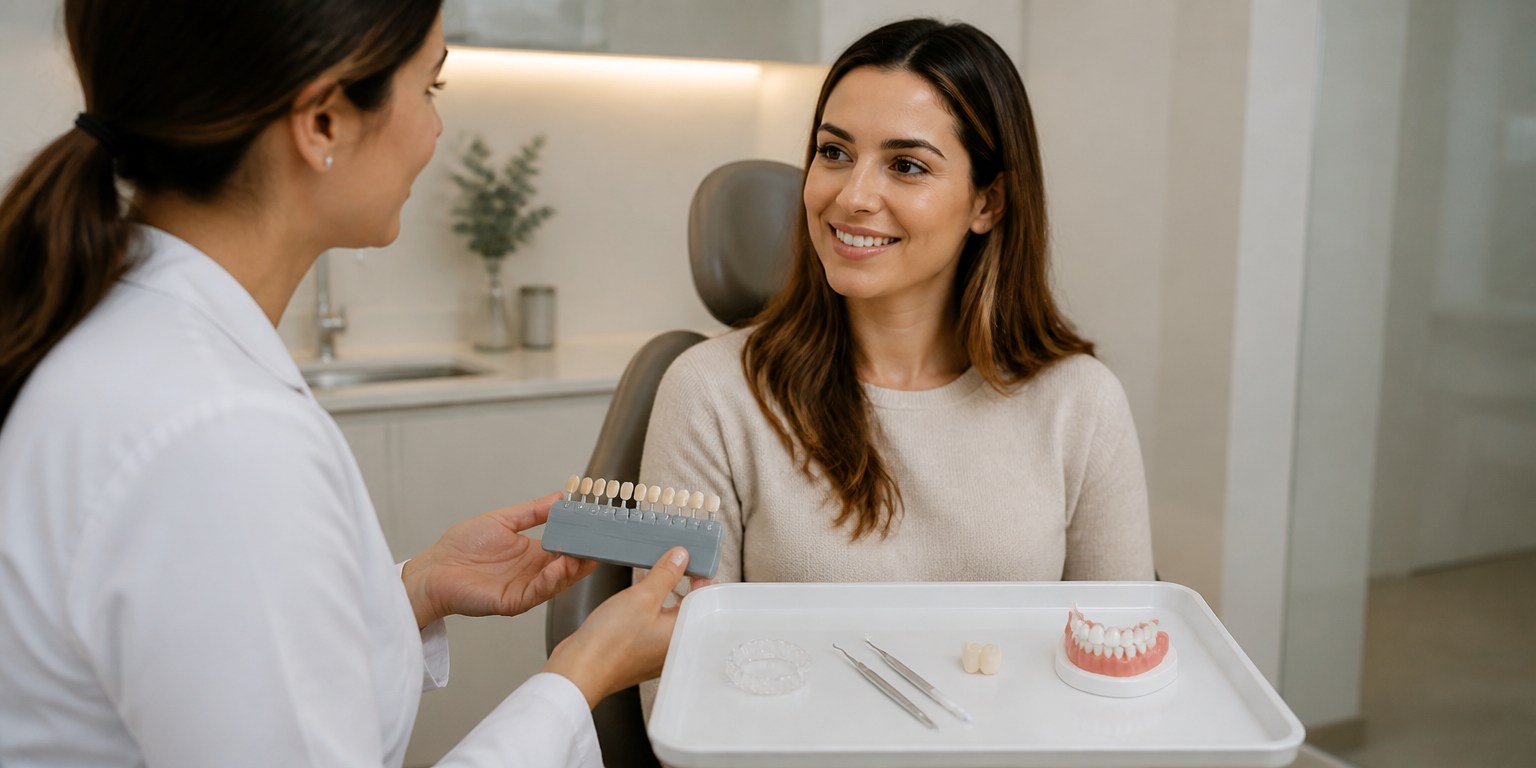
Suitability depends on the individual tooth.
Factors a dentist may evaluate include:
- tooth position,
- available restorative space,
- tooth size and shape,
- enamel,
- bite,
- degree of alignment,
- existing restorations,
- desired color change,
- intended final contour.
A small or slightly inward-positioned tooth may provide more additive space than a tooth that already projects outward. This is why no-prep treatment cannot be promised from photographs alone.
When Might More Tooth Preparation Be Necessary?
More preparation may be required when the tooth itself needs greater structural restoration or when the planned restoration requires additional space.
Examples can include:
- substantial structural damage,
- large existing restorations,
- significant wear,
- fracture,
- a tooth requiring full coverage,
- unfavorable tooth position,
- restorative masking needs in selected cases,
- bite or contour requirements.
Preparation should not be increased simply for cosmetic convenience. The clinical reason should be clear for each tooth.
Is Tooth Shaving for a Hollywood Smile Irreversible?
Yes, when natural enamel or tooth structure is removed, that tissue does not grow back.
That does not mean all tooth preparation is inappropriate. It means the decision deserves careful planning before an irreversible step is taken.
The ADA’s veneer guidance specifically describes conventional porcelain veneer treatment as irreversible when enamel is removed. Patients should understand which teeth will be prepared, why, and what alternatives exist before treatment begins.
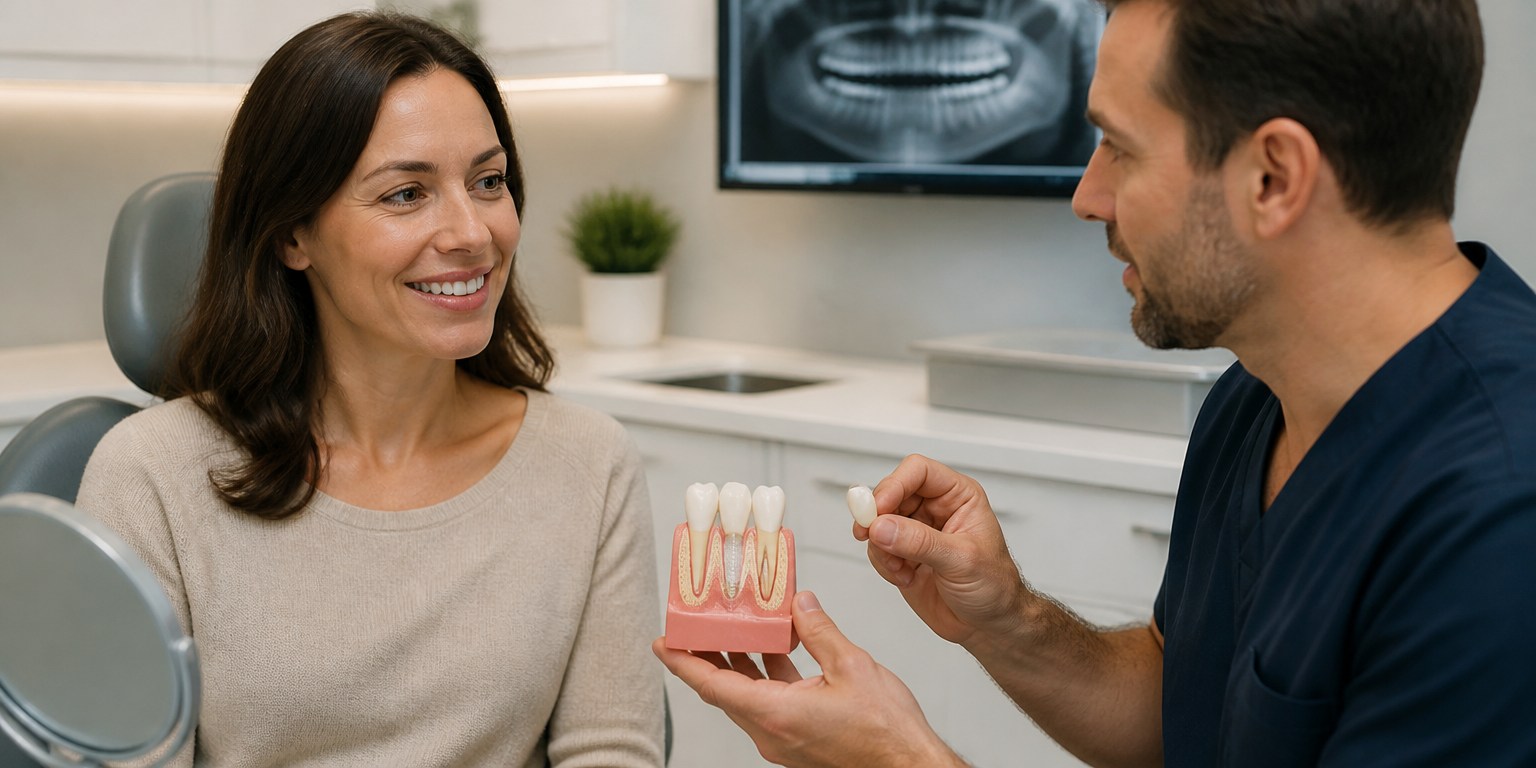
Does Shaving Teeth Damage Them?
There is no useful one-word answer.
Clinically indicated tooth preparation is part of many established restorative treatments. The concern is whether the amount removed is appropriate for that tooth and whether healthy tissue is being preserved wherever possible.
Unnecessary or excessive reduction can increase biological intervention. At the same time, refusing all preparation when restorative space is needed can produce poor contour, thickness, margins, or bite relationships.
The correct goal is appropriate preparation, not maximum preparation and not zero preparation at any cost.
What Are the Risks of Excessive Tooth Reduction?
Excessive or unnecessary reduction can have long-term consequences.
Potential concerns include:
- irreversible loss of healthy tooth structure,
- sensitivity,
- greater dentin exposure,
- increased biological stress,
- possible pulpal complications in more invasive situations,
- greater restorative dependency,
- future maintenance or replacement needs.
The risk depends on how much structure is removed, the starting condition of the tooth, the restoration, and other clinical factors.
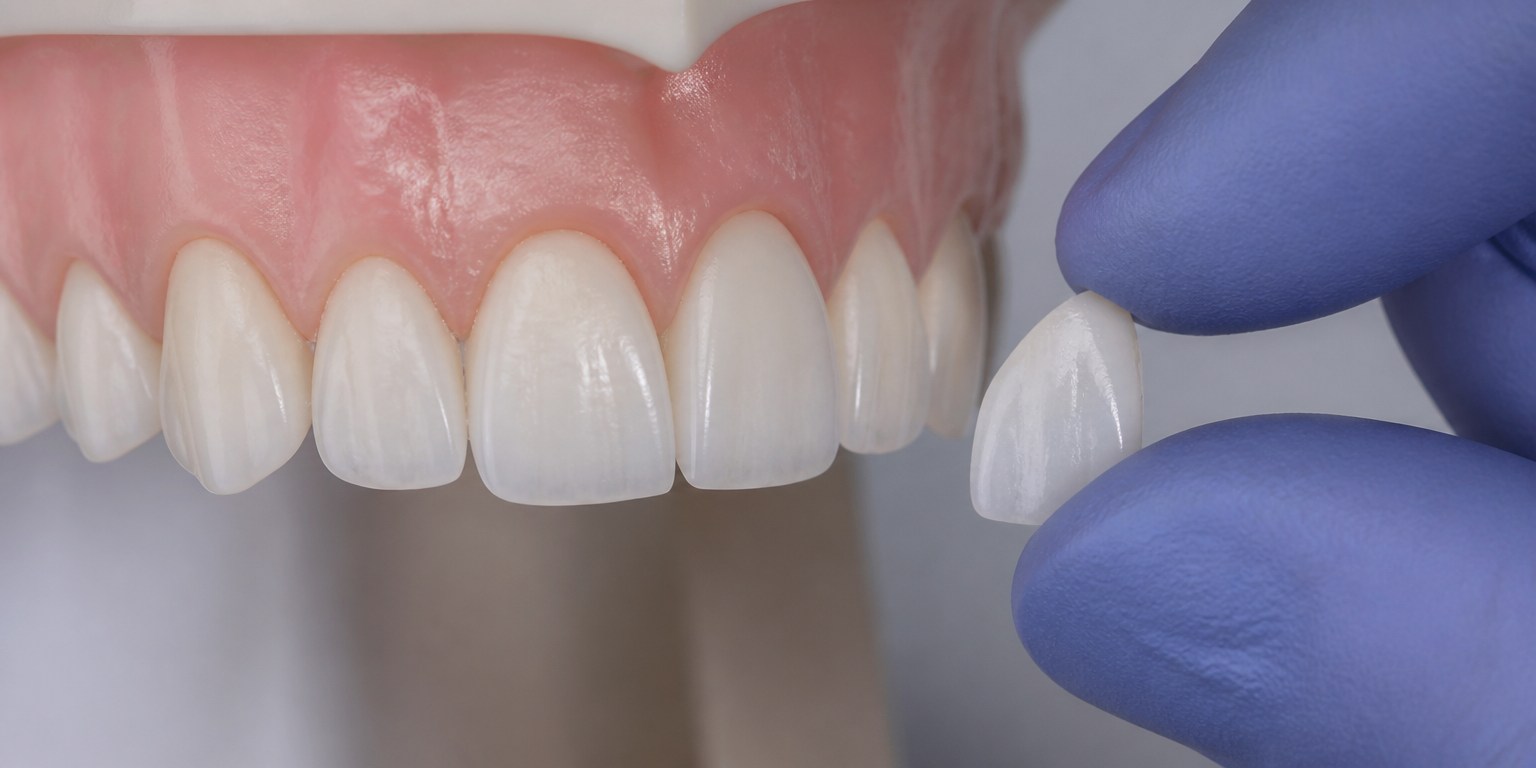
What Does “Turkey Teeth” Mean?
“Turkey Teeth” is an informal social-media and media phrase. It is not a dental diagnosis, restoration type, or formal procedure.
The phrase is often used to describe highly uniform cosmetic dental work performed in Turkey, especially cases shown online where teeth appear to have been heavily reduced for crowns.
That should not be confused with all Turkish dentistry or with the definition of a Hollywood Smile. Treatment quality should be evaluated by diagnosis, dentist qualifications, restoration choice, tooth preservation, clinical rationale, informed consent, and aftercare—not by country alone.
Hollywood Smile vs “Turkey Teeth”: Why the Terms Are Not the Same
A Hollywood Smile describes an aesthetic treatment goal.
“Turkey Teeth” is an informal cultural phrase.
A Hollywood Smile can involve veneers, whitening, bonding, orthodontics, crowns when clinically required, gum treatment, or untreated natural teeth. It does not inherently require aggressive full-coverage crown preparation.
The two terms should therefore not be treated as synonyms.
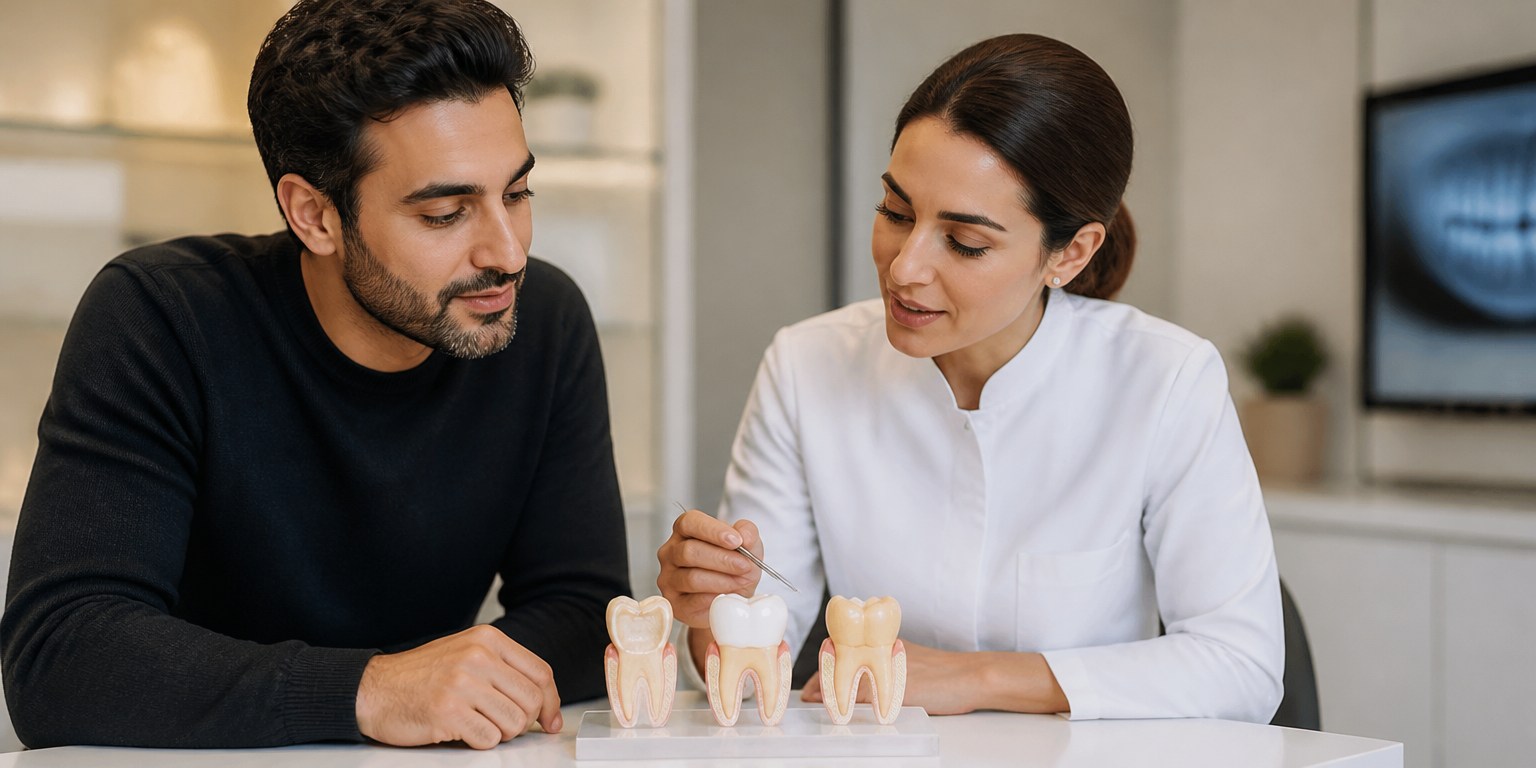
How Should a Dentist Decide Whether Teeth Need Preparation?
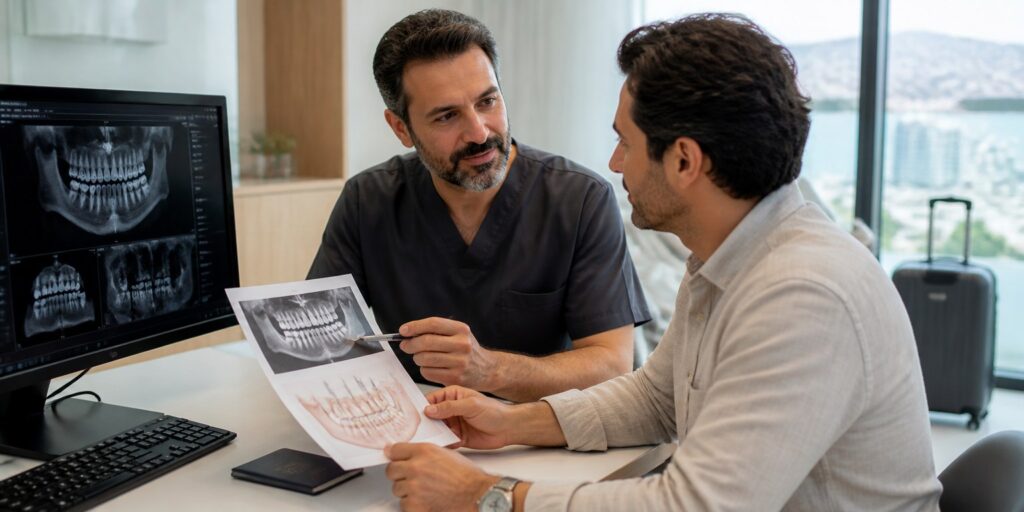
The decision should follow clinical examination and treatment planning.
Important factors include:
- tooth structure and enamel,
- decay or existing restorations,
- bite,
- tooth position,
- smile line,
- gum health,
- facial proportions,
- desired color and shape,
- restorative material,
- treatment alternatives,
- radiographs when clinically indicated.
The key question is not “How many teeth should be shaved?” It is “What does each tooth actually need?”
Niva’s Hollywood Smile in Turkey page follows the same tooth-specific principle and states that restoration type, number of teeth, and treatment sequence should be determined after clinical assessment rather than from a pre-set package.
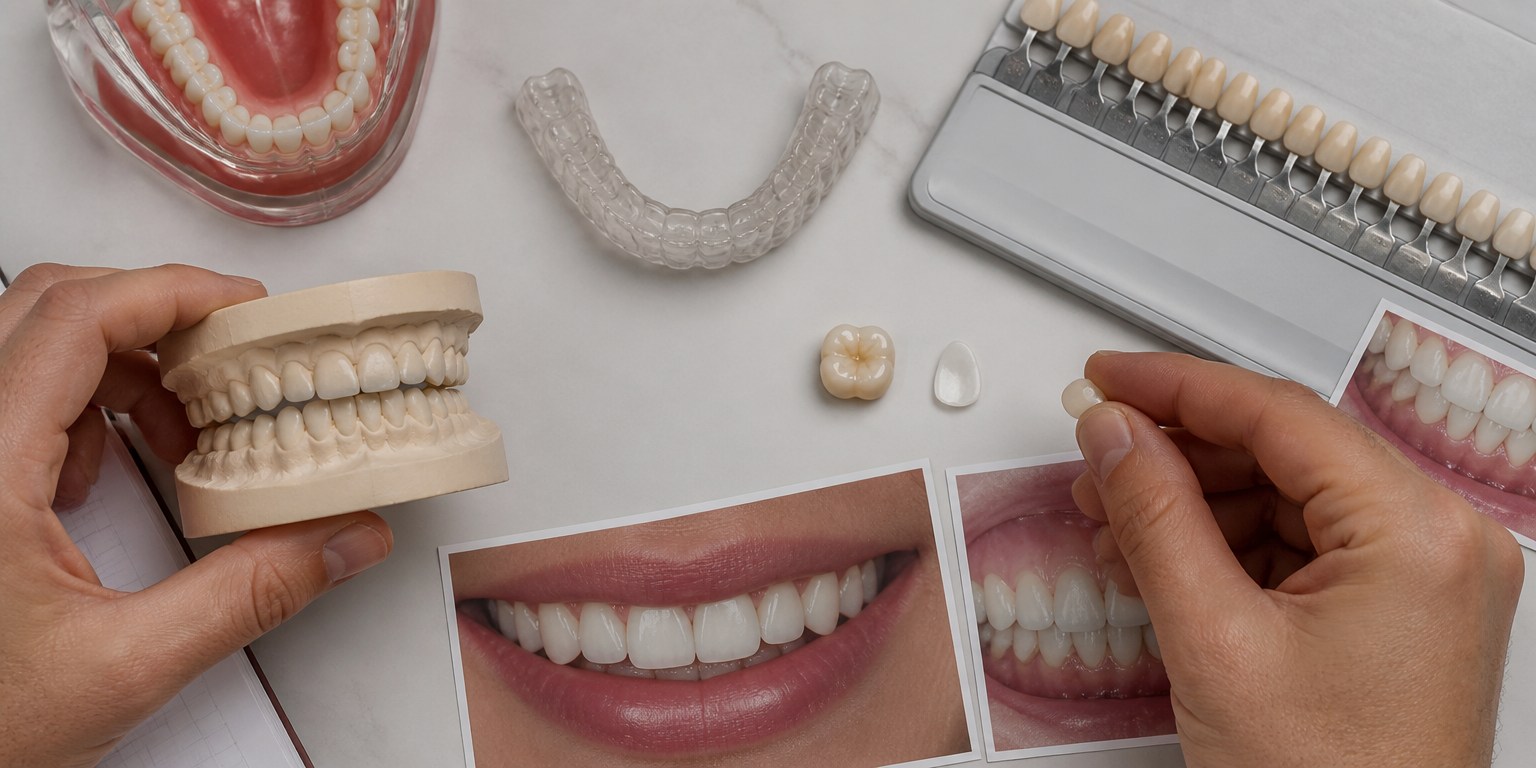
Questions to Ask Before Allowing Teeth to Be Prepared
Before agreeing to irreversible treatment, ask:
- Why does this specific tooth need preparation?
- Are you recommending a veneer or a crown?
- Why is that restoration appropriate?
- How much natural tooth structure is expected to be removed?
- Is minimal preparation possible?
- Is a no-prep approach realistic or would it create excessive bulk?
- Could orthodontics, bonding, or whitening reduce the need for preparation?
- Does this tooth actually need treatment?
- What material is planned?
- What are the long-term maintenance implications?
- Can I see comparable documented cases?
Clear answers are a useful part of informed consent.
How to Choose a Conservative Hollywood Smile Clinic in Turkey
Look for a clinic that explains why each restoration is recommended.
Useful signs include:
- individual examination,
- tooth-by-tooth planning,
- clear veneer-versus-crown explanations,
- preservation of healthy natural tooth structure,
- discussion of alternatives,
- bite assessment,
- transparent materials,
- realistic expectations,
- documented patient cases,
- aftercare planning.
Avoid treating a fixed number of crowns or veneers as a clinical diagnosis.
Tooth Preparation for a Hollywood Smile at Niva Aesthetic
Niva’s current official Hollywood Smile page states that a Hollywood Smile is not a fixed package of crowns. It describes the treatment as a personalized smile makeover and emphasizes preserving healthy natural tooth structure where possible.
Niva also states that some veneer cases may involve minimal preparation, while selected veneers may require little or no removal from certain areas. Its current page distinguishes veneers from crowns and explains that crowns generally require more tooth reduction.
Niva publicly lists E-max veneers among its dental treatments and states that restoration type and treatment sequence should follow clinical assessment.
For broader treatment information, see Niva’s Hollywood Smile in Turkey service page.
Whether your own teeth require preparation cannot be determined from a generic package. A clinical assessment is needed to decide whether each tooth should be left untreated, whitened, bonded, moved orthodontically, veneered, crowned, or treated another way.
Do Teeth Have to Be Shaved for a Hollywood Smile? FAQ
Do all Hollywood Smile treatments require tooth shaving?
No. Hollywood Smile treatment may use whitening, bonding, orthodontics, gum treatment, veneers, crowns where appropriate, or no treatment on some teeth. Preparation depends on the individual plan.
How much do teeth have to be shaved for veneers?
There is no universal amount. Preparation depends on tooth position, enamel, color, material, restorative thickness, bite, and the final shape. Avoid relying on fixed measurements given without a clinical examination.
Can veneers be fitted without shaving teeth?
Sometimes. Selected no-prep veneers may be possible where tooth position and restorative space allow an additive approach. No-prep treatment is not suitable for everyone.
Are no-prep veneers better?
Not automatically. A no-prep approach can preserve tooth structure, but insufficient restorative space may produce excessive contour or thickness. The least invasive appropriate treatment is the goal.
Do crowns require more shaving than veneers?
Generally, yes. Crowns cover substantially more of the tooth and usually require broader preparation. They may still be the appropriate restoration for a tooth that needs full coverage.
Can a Hollywood Smile be done without crowns?
Yes, in selected cases. A Hollywood Smile may use veneers, bonding, whitening, orthodontics, gum treatment, natural untreated teeth, or a combination. Crowns should be used when clinically indicated rather than automatically.
Does tooth enamel grow back after shaving?
No. Natural enamel that has been removed does not grow back. This is why preparation involving enamel removal is considered irreversible.
Can crooked teeth get veneers without shaving?
Sometimes, but tooth position affects restorative space. Adding material to already rotated, crowded, or protrusive teeth can create excessive contour. Orthodontic assessment may be more conservative in some cases.
Are “Turkey Teeth” the same as a Hollywood Smile?
No. “Turkey Teeth” is an informal media phrase, while a Hollywood Smile is a broad aesthetic treatment concept. A Hollywood Smile does not inherently require aggressive tooth reduction or full crowns.
How can I avoid unnecessary tooth shaving?
Ask why each tooth needs treatment, whether a veneer or crown is planned, what alternatives exist, how much structure is expected to be removed, and whether healthy teeth can remain untreated.
Can I know from photos whether my teeth need preparation?
Not reliably. Photos are useful for preliminary discussion but do not fully show enamel condition, bite, restorative space, decay, existing restorations, or other clinical factors that can change the plan.