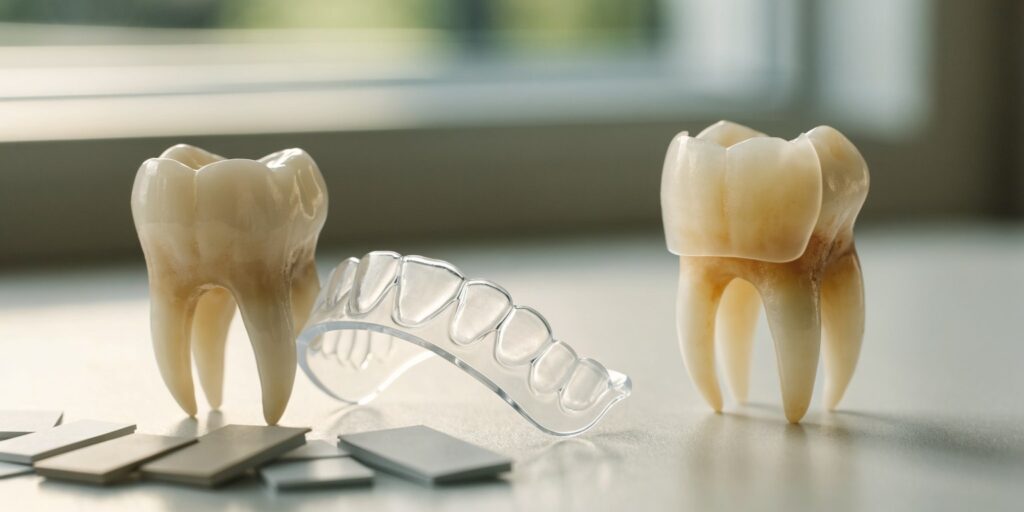



Bone loss does not automatically rule out dental implants. The amount and location of remaining bone, gum health, nearby anatomy, and the planned restoration determine whether implants can be placed directly or whether additional treatment may be needed.


Yes, dental implants with bone loss may still be possible, but bone loss changes how treatment must be planned. A dental implant needs enough healthy jawbone to achieve initial stability and heal through osseointegration—the biological process in which bone forms a close connection with the implant surface.
When the jaw has lost height, width, or volume, a dentist may consider bone grafting, ridge augmentation, a sinus lift in the upper back jaw, a different implant size or position, or an alternative restorative design. The right option depends on the location and pattern of bone loss rather than one universal measurement.
For that reason, being told that you have “not enough bone” is not automatically the same as being told that implants are impossible. It means the remaining bone, gum condition, nearby anatomical structures, medical history, and final tooth-replacement plan need to be assessed together.
Can You Get Dental Implants With Bone Loss?
In many cases, yes. Bone loss does not automatically exclude a patient from implant treatment. What matters is whether enough suitable bone remains to support the planned implant or whether the site can be predictably modified before or during implant placement.
The American Academy of Periodontology explains that implant planning depends on the quantity and quality of bone at the treatment site. It also describes sinus augmentation and ridge modification as procedures that may be used when the available bone is insufficient.
The important distinction is that “bone loss” is not one diagnosis with one treatment. One patient may have a narrow ridge after a single extraction. Another may have reduced vertical bone beneath the maxillary sinus. A third may have generalized bone loss associated with periodontal disease. These situations can require very different treatment plans.
If you are comparing implant options, Niva Dental’s main guide to dental implant treatment in Istanbul explains the broader implant process. This article focuses specifically on how reduced jawbone volume changes candidacy and planning.
Why Does Jawbone Matter for a Dental Implant?
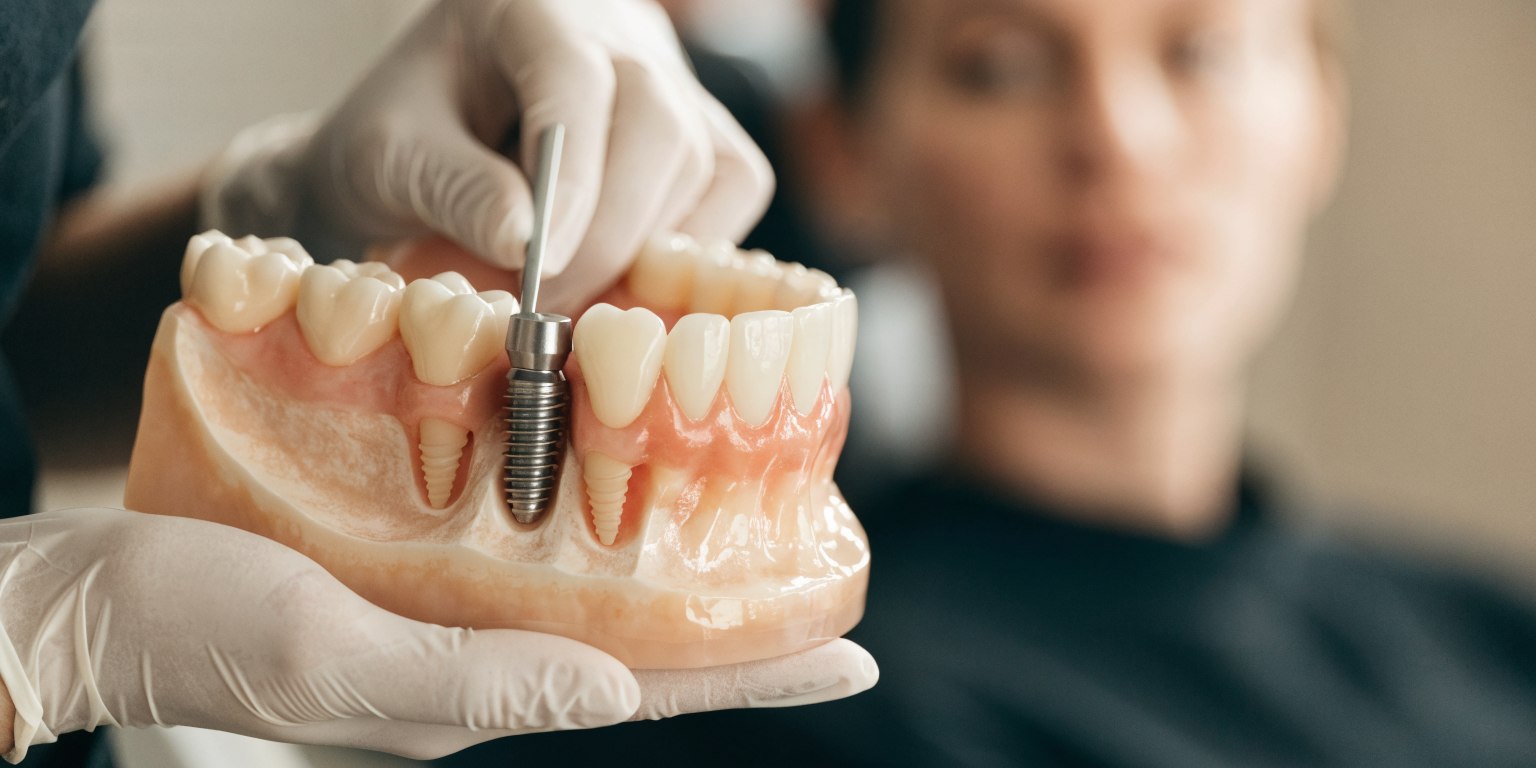
A dental implant is placed into the jawbone and acts as an artificial tooth root. The bone therefore has two jobs: it must help stabilize the implant at placement, and it must provide the biological environment in which the implant can heal.
Osseointegration is the healing process in which bone forms a close structural connection with the implant surface. According to Mayo Clinic’s dental implant surgery guidance, the condition of the jawbone helps determine how implant surgery is performed, and bone grafting may be needed when the jaw is not thick enough or is too soft to provide a reliable foundation.
Dentists therefore assess more than whether bone is simply “present.” They consider:
- the height of the available ridge;
- the width of the ridge;
- bone quality and anatomy at the site;
- the planned implant position and dimensions;
- the location of the maxillary sinus in the upper jaw;
- the position of the inferior alveolar nerve in the lower jaw;
- gum and periodontal health;
- the bite and the type of restoration the implant will support.
There is no medically responsible universal rule such as “X percent of bone loss means implants are impossible.” Implant feasibility is site-specific and treatment-specific.
Why Does Bone Loss Happen Before Implant Treatment?
Jawbone volume can decrease for several reasons, and the cause matters because active disease may need to be controlled before implant treatment.
Bone remodeling after tooth loss
The alveolar ridge is the part of the jaw that supports the teeth. After extraction, the socket heals while the ridge also changes shape and volume. Systematic reviews show that ridge-preservation procedures can reduce some of these dimensional changes, although they do not eliminate normal remodeling. A tooth that has been missing for a long time may therefore leave less bone available for later implant placement.
Periodontal disease
Periodontitis can damage the tissues supporting natural teeth, including bone. When tooth loss is related to periodontal disease, implant planning must consider both the remaining bone and current periodontal health.
Infection, trauma, or long-term toothlessness
Previous infection, trauma, difficult extraction, or years without teeth can alter ridge height and width. In full-arch cases, the available bone must also be considered together with the position and cleansability of the planned bridge or denture.
How Does a Dentist Check Whether You Have Enough Bone?
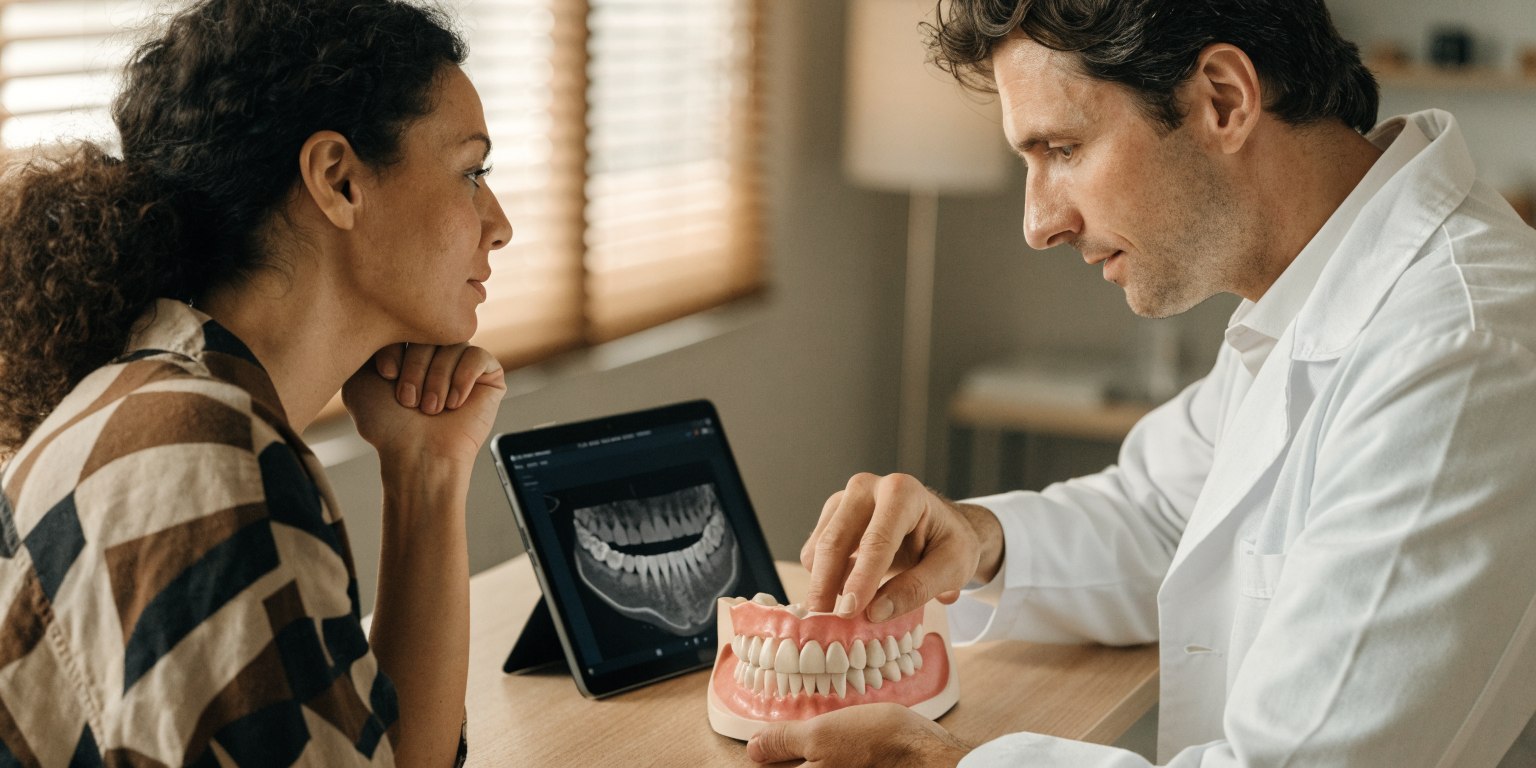
A dentist determines implant feasibility by combining a clinical examination with dental imaging and restorative planning. A scan is important, but the scan alone does not decide candidacy.
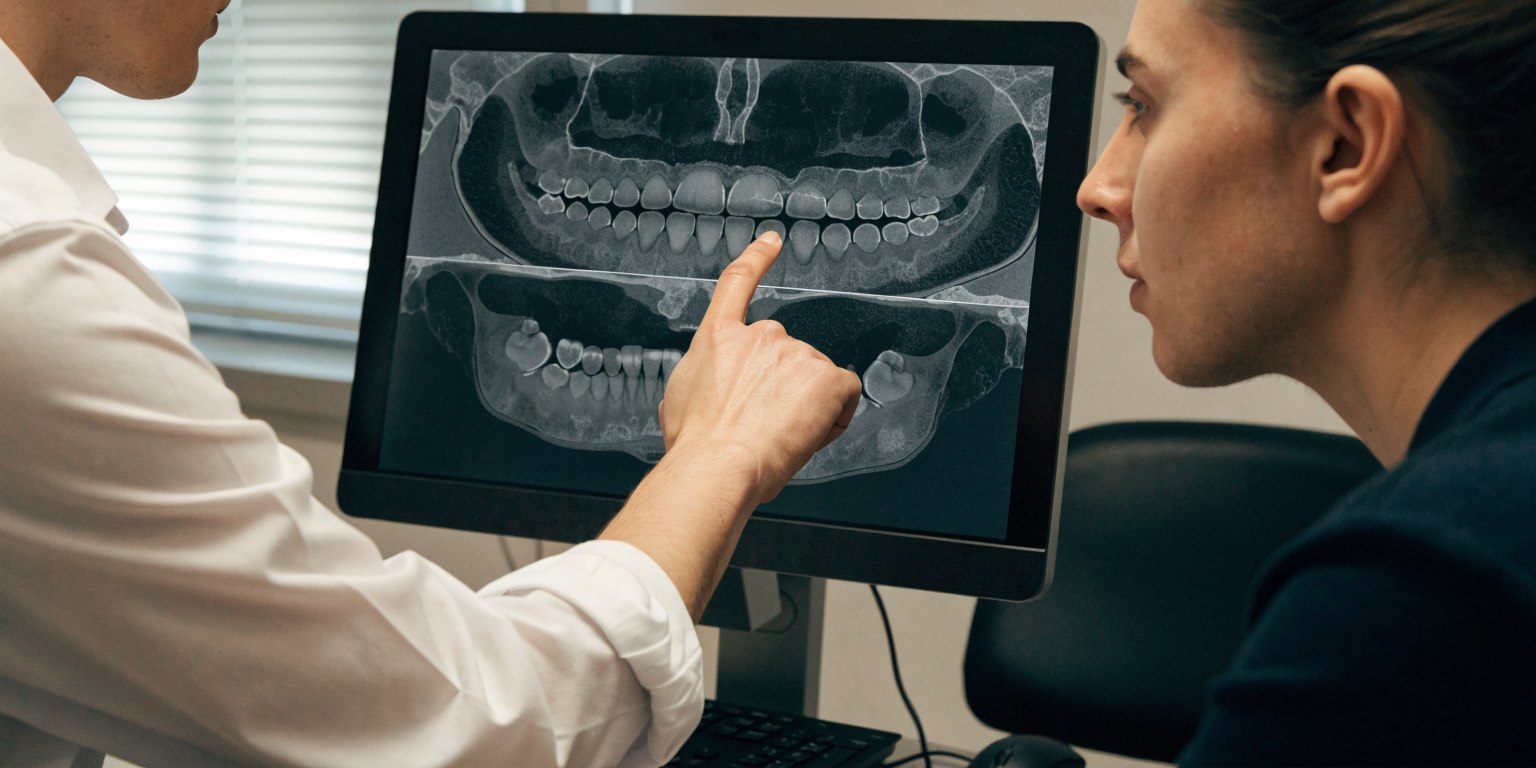
Initial assessment may include standard dental X-rays. When three-dimensional information is clinically needed, cone-beam computed tomography (CBCT) can show the proposed implant site in relation to structures such as the maxillary sinus or lower-jaw nerve canal.
The assessment must also ask: Where does the replacement tooth need to be? Implant position should support the intended crown, bridge, or full-arch restoration rather than simply follow the area where the most bone happens to remain.
| Assessment factor | Why it matters |
|---|---|
| Bone height | Helps determine whether there is enough vertical space for the planned implant without encroaching on the sinus or nerve canal. |
| Bone width | Determines whether the implant can be surrounded by adequate bone in the intended position. |
| Bone quality | Influences initial stability and surgical planning, although it is only one part of the assessment. |
| Maxillary sinus | Reduced bone in the upper posterior jaw may make sinus augmentation relevant. |
| Inferior alveolar nerve | The nerve canal limits implant depth in parts of the lower jaw. |
| Gum and periodontal health | Active inflammation or uncontrolled periodontal disease can affect treatment planning and long-term maintenance. |
| Planned crown, bridge, or full-arch restoration | Implant placement must support a functional and cleansable final restoration. |
| General health and risk factors | Smoking, healing capacity, medications, and medical conditions may influence surgical risk and healing. |
A remote review of recent X-rays or a CBCT scan can be useful for preliminary discussion, particularly for international patients, but it should not be treated as a substitute for an appropriate clinical examination before surgery.
What Are the Main Options When There Is Not Enough Bone?
There is no single “bone-loss implant technique.” The option depends on whether the deficiency is small or large, horizontal or vertical, in the upper or lower jaw, and whether the implant can achieve appropriate stability at the same visit.
Minor bone augmentation or guided bone regeneration
A small local defect may sometimes be augmented when the implant is placed. Guided bone regeneration uses grafting and barrier techniques to help create bone in a deficient area. Cambridge University Hospitals notes in its bone grafting guidance for dental implants that minimal grafting may be performed at implant placement, while more extensive grafting is generally staged.
Staged bone grafting or ridge augmentation
When the ridge is too deficient for predictable implant placement, grafting may be performed first and allowed to heal. A staged plan therefore includes graft healing before implant placement, followed by implant healing and restorative treatment.
Sinus lift in the upper back jaw
In the posterior maxilla, the maxillary sinus can limit the vertical bone available for implants. A sinus lift, also called sinus augmentation, raises the sinus floor and creates space for bone development where clinically indicated.
A sinus lift is therefore a location-specific solution. It is not the standard answer to every type of jawbone loss.

Short implants or different implant positioning in selected cases
Short implants may sometimes reduce the need for vertical augmentation when sufficient residual bone is available. A 2021 systematic review found them to be a possible alternative to standard-length implants placed after augmentation in selected atrophic sites.
A 2026 systematic review adds useful caution: implants 6 mm or shorter may be viable long-term options, but the pooled 10-year survival was slightly lower than for standard implants. Short implants should therefore be viewed as one planning option—not a universal replacement for bone grafting.
Full-arch designs in selected patients
For people missing most or all teeth in an arch, a full-arch design may use available bone differently from a tooth-by-tooth plan. Angled implant placement can help work around some anatomical limitations in selected cases, but bone quantity remains important.
Niva Dental describes its All-on-4 and All-on-6 treatment for full-arch cases. Whether a full-arch design can reduce augmentation still requires individual clinical and imaging assessment.
| Possible approach | When it may be considered | Key limitation |
|---|---|---|
| Implant placement without grafting | Adequate bone remains in the correct restorative position | Bone must still provide suitable support and anatomy |
| Minor simultaneous grafting | Localized deficiency with conditions that allow implant stability | Not appropriate for every defect |
| Staged bone graft / ridge augmentation | More substantial width or volume deficiency | Adds a separate healing stage |
| Sinus lift | Limited vertical bone beneath the maxillary sinus | Relevant mainly to the upper posterior jaw |
| Short implant | Selected sites with limited vertical height | Not a universal substitute for augmentation |
| Full-arch angled implant design | Selected patients missing most or all teeth | Requires sufficient strategically located bone and prosthetic planning |
Can a Bone Graft and Dental Implant Be Done at the Same Time?
Sometimes. For dental implants with bone loss, a dentist may place a graft and implant during the same procedure when the remaining bone can provide adequate implant stability and the defect can be managed predictably around the implant.
If the deficiency is more extensive, grafting may need to be completed first. The graft is then allowed to heal before implant placement. Mayo Clinic similarly notes that minor grafting can sometimes be performed together with implant surgery, while larger grafts may need months of healing before the implant is placed.
This distinction matters for international treatment planning. A person who needs a staged graft may require a different number of visits and a longer overall timeline than someone who needs only minor simultaneous augmentation.
How Much Longer Can Bone Grafting Make Implant Treatment?
Bone grafting can extend treatment by several months when it is performed as a separate stage, but there is no one timeline that applies to every graft.
Guy’s and St Thomas’ NHS Foundation Trust states that bone grafting may add approximately four to six months to its implant pathway in cases where grafting is required before implant placement. Cambridge University Hospitals likewise explains that more extensive grafting is generally performed months before implants.
Those time frames should be treated as general clinical examples rather than a promise for an individual case. Healing depends on the size and type of graft, anatomical site, surgical technique, medical factors, and whether implant placement is simultaneous or staged.
For an international patient, the most useful planning question is therefore not simply “How many days do I need in Istanbul?” but “Is my case a direct-placement, simultaneous-graft, or staged-graft case?”
What If the Bone Loss Is Severe?
Severe bone loss requires a more detailed assessment, but it does not automatically mean that every implant-based option is unavailable. The clinician needs to determine what bone remains, whether augmentation is predictable, whether alternative implant dimensions or positions are reasonable, and what type of final restoration is being planned.
In some cases, extensive reconstruction may add surgical complexity that a patient does not want or is not an appropriate candidate for. Alternative options may include a different implant-supported design, a removable prosthesis, or a conventional bridge depending on the clinical situation.
Replacing one missing tooth and rebuilding a completely toothless arch are different restorative problems. The plan should reflect function, hygiene access, anatomy, and patient preferences—not simply the number of implants.
Is Bone Loss Before an Implant the Same as Bone Loss Around an Existing Implant?
No. Bone loss before implant placement and progressive bone loss around an implant that is already in function are different clinical problems.
Pre-implant bone deficiency concerns whether there is enough suitable bone to place and support an implant. Bone loss around an existing implant can be associated with peri-implant disease or other biological and mechanical factors and requires its own examination.
The American Academy of Periodontology’s information on peri-implant diseases describes peri-implantitis as inflammation around an implant accompanied by deterioration of the supporting bone. Red or tender tissue, bleeding around an implant, or other changes should therefore not be self-diagnosed as “normal bone loss.”
This article addresses bone deficiency before or during implant planning, not treatment of peri-implantitis.
What Should International Patients Send for an Initial Implant Assessment?
International patients can often begin a preliminary discussion by sharing recent dental imaging, information about missing teeth, previous dental treatment, and relevant medical history. The treating dentist decides whether CBCT or other imaging is clinically appropriate.
Niva Dental’s patient journey includes an online consultation and treatment-planning stage. In bone-loss cases, this early review can help identify likely treatment pathways and travel requirements, but it is not final medical clearance. Definitive grafting and implant decisions require appropriate clinical assessment.

Frequently Asked Questions
Can you get dental implants if you have severe bone loss?
Possibly. Severe bone loss makes implant planning more complex but does not create one universal outcome. Depending on the location and pattern of the deficiency, options may include staged bone augmentation, sinus augmentation, selected short implants, a full-arch design, or a non-implant alternative. The decision requires examination and imaging rather than a percentage-based rule.
How do I know if I have enough bone for a dental implant?
You cannot reliably determine this yourself. A dentist evaluates the implant site clinically and with appropriate imaging, considering bone height, width, anatomy, periodontal health, and the position required for the final restoration. In some cases a CBCT scan is used to provide three-dimensional information for planning.
Do all patients with bone loss need a bone graft?
No. Some patients have enough strategically located bone for an implant without grafting, while others may need minor simultaneous augmentation or a separate grafting procedure. Selected cases may also be considered for different implant dimensions or restorative designs. The treatment depends on the specific defect and intended restoration.
Can a dental implant be placed at the same time as a bone graft?
Yes, in selected cases. Simultaneous implant placement and grafting may be considered when the remaining bone can provide adequate implant stability and the defect can be managed at the same procedure. More extensive deficiencies may require a staged graft that heals before the implant is placed.
Can you get dental implants without a bone graft if you have bone loss?
Sometimes. A graft may not be necessary when enough bone remains in an appropriate position, or when another evidence-based implant or restorative strategy is suitable for that anatomy. Short implants or full-arch designs may reduce augmentation in selected cases, but neither is a universal graft-free solution.
Does a sinus lift mean I have severe bone loss?
Not necessarily. A sinus lift is used for a specific anatomical problem in the upper back jaw: inadequate vertical bone beneath the maxillary sinus for the planned implant. The need for sinus augmentation depends on local anatomy and implant planning, not simply on whether overall jawbone loss is described as mild or severe.
Does bone grafting guarantee that an implant will succeed?
No. Bone grafting can create or improve the foundation for implant placement, but it cannot guarantee osseointegration or long-term implant health. Outcomes depend on multiple factors, including the grafted site, surgical healing, implant position, oral hygiene, periodontal health, smoking, medical factors, and long-term maintenance.
What if I already have an implant and was told there is bone loss around it?
That is a different issue from having insufficient bone before implant placement. Bone loss around an existing implant may be associated with peri-implantitis or other implant-related complications. It requires professional evaluation rather than assuming that a new bone graft is automatically the correct treatment.
Bone Loss Does Not Automatically End the Implant Conversation
Having reduced jawbone volume does not by itself answer whether you can receive a dental implant. The clinically useful question is what bone remains, where it is located, and what treatment is needed to create a stable, maintainable restoration.
Some patients can proceed without grafting, while others may need simultaneous augmentation, a staged bone graft, sinus augmentation, or another implant design. Each pathway has different clinical and travel implications.
If you are considering dental implants with bone loss, an initial review of your dental records and imaging can help clarify likely options, but final suitability requires an in-person clinical assessment. You can also review Niva Dental’s main page on dental implants in Turkey to understand the broader implant treatment pathway.
Medical References
- American Academy of Periodontology. Dental Implant Procedures.
https://www.perio.org/for-patients/periodontal-treatments-and-procedures/dental-implant-procedures/ - Mayo Clinic. Dental Implant Surgery.
https://www.mayoclinic.org/tests-procedures/dental-implant-surgery/about/pac-20384622 - Cambridge University Hospitals NHS Foundation Trust. Bone Grafting for Dental Implants.
https://www.cuh.nhs.uk/patient-information/bone-grafting-for-dental-implants/ - Guy’s and St Thomas’ NHS Foundation Trust. Having a Dental Implant.
https://www.guysandstthomas.nhs.uk/health-information/dental-implants/having-dental-implant - American Academy of Periodontology. Peri-Implant Diseases.
https://www.perio.org/for-patients/periodontal-treatments-and-procedures/dental-implant-procedures/peri-implant-diseases/ - Bitinas D, Bardijevskyt G. Short implants without bone augmentation vs. long implants with bone augmentation: systematic review and meta-analysis. Australian Dental Journal. 2021.
https://pubmed.ncbi.nlm.nih.gov/34037243/ - Ten-year outcomes of short dental implants (≤6 mm): a systematic review and sensitivity meta-analysis. 2026.
https://pubmed.ncbi.nlm.nih.gov/42226287/ - Jacobs R, et al. Cone beam computed tomography in implant dentistry: recommendations for clinical use.
https://pubmed.ncbi.nlm.nih.gov/29764458/ - Wei YP, et al. Alveolar Ridge Preservation at Molar Extraction Sites: A Systematic Review and Meta-Analysis. Journal of Evidence-Based Dental Practice. 2025.
https://pubmed.ncbi.nlm.nih.gov/39947777/