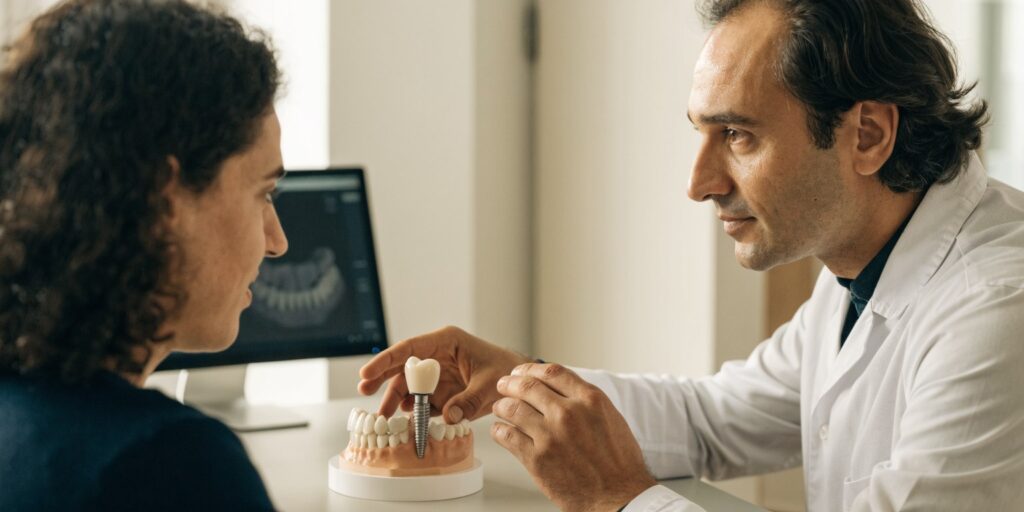



Emax veneers tooth shaving varies by tooth position and treatment goals. Learn when enamel reduction is needed, when no-prep may work, and key risks.

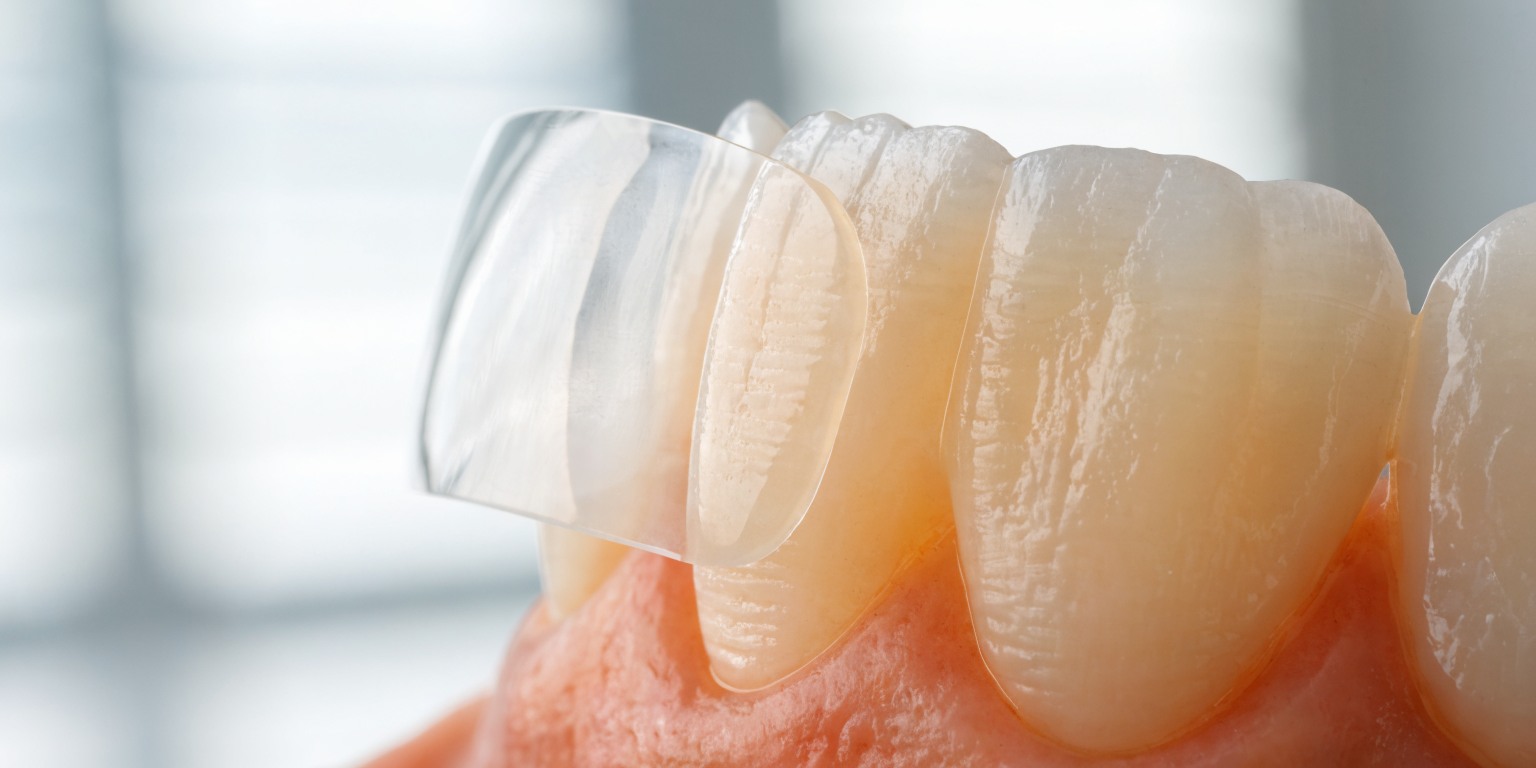
E-max veneers may require a small amount of tooth preparation, but not every patient needs the same amount of enamel reduction. The phrase “emax veneers tooth shaving” is commonly used by patients, while dentists usually call the process tooth preparation or enamel reduction. Some carefully selected cases may be suitable for minimal-prep or no-prep veneers, while other teeth need more preparation to create space, correct contour, mask color, or prevent the veneer from looking bulky. If enamel is removed, that change is irreversible, so the amount of healthy tooth structure preserved should be part of the treatment decision from the beginning.
Quick Answer: Do E-max Veneers Require Tooth Shaving?
| Question | Direct answer |
|---|---|
| Do E-max veneers always require tooth shaving? | No. Preparation varies by tooth position, desired shape, color change, bite, existing restorations, and the space available for ceramic. |
| What does “tooth shaving” mean? | Dentists usually call it tooth preparation or enamel reduction: controlled removal of tooth structure to create the correct space and contour for a restoration. |
| Can E-max veneers be no-prep? | In selected cases, a veneer may require little or no preparation, but no-prep treatment is not suitable for every tooth. |
| Is veneer preparation reversible? | If enamel or other tooth structure is removed, the preparation itself is irreversible. |
| Is less preparation always better? | Preserving enamel is important, but under-preparing a tooth can also create bulky contours, poor aesthetics, or hygiene problems. The goal is appropriate, conservative preparation-not automatically “zero prep.” |
| Are veneers the same as crowns? | No. Veneers mainly cover the visible surface of selected teeth; crowns cover substantially more tooth structure and generally require more extensive preparation. |
Patients considering E-max veneer treatment at Niva Dental should ask not only which ceramic is proposed, but also how each tooth will be prepared and why.
What Does “Tooth Shaving” Actually Mean for Veneers?
“Tooth shaving” is a nontechnical phrase. In restorative dentistry, the more accurate terms are tooth preparation, enamel reduction, or veneer preparation.
The purpose is not to make the tooth unnecessarily small. Preparation is performed to create the amount and shape of space required for the planned restoration. A well-planned veneer should have enough room to achieve appropriate contour, shade, strength, margin design, and bite relationship without creating an overbulked result.
The American Dental Association explains that porcelain veneer placement commonly involves removing a small amount of enamel from the front and sides of the tooth. The ADA also states that veneer treatment is not reversible when enamel has been removed.
That does not mean every tooth should be reduced by the same amount.
Enamel thickness differs from one tooth to another and even across different areas of the same tooth. Tooth position, wear, previous treatment, desired final contour, and the planned ceramic thickness can all change the preparation design.
Do All E-max Veneers Need the Same Amount of Enamel Removal?
No. There is no medically responsible universal amount of enamel that should be removed for every E-max veneer. Preparation should be designed around the final restoration and the individual tooth.
A specialist consensus on minimally invasive aesthetic tooth preparation described ceramic veneer reduction as a variable process rather than a fixed number. It discussed preparation ranges of roughly 0.3-0.7 mm in selected veneer designs and tooth regions, while also emphasizing that enamel can be much thinner in some cervical areas. The same paper warned that even apparently conservative preparation can expose dentin if natural enamel is thin.
This is why a treatment plan that simply promises “we shave 0.5 mm from every tooth” is not truly individualized.
The clinically important questions are:
- Where is the tooth positioned within the dental arch?
- How much enamel is present?
- Is the tooth already worn, chipped, filled, or restored?
- Is the planned veneer adding volume or reducing existing prominence?
- How much color change is needed?
- Does the bite create heavy contact on the planned veneer?
- Can the final contour be created without overbuilding the tooth?
- Can the preparation remain mainly in enamel?
The desired endpoint is the least invasive preparation that still allows a functional, cleansable, and aesthetically appropriate restoration.
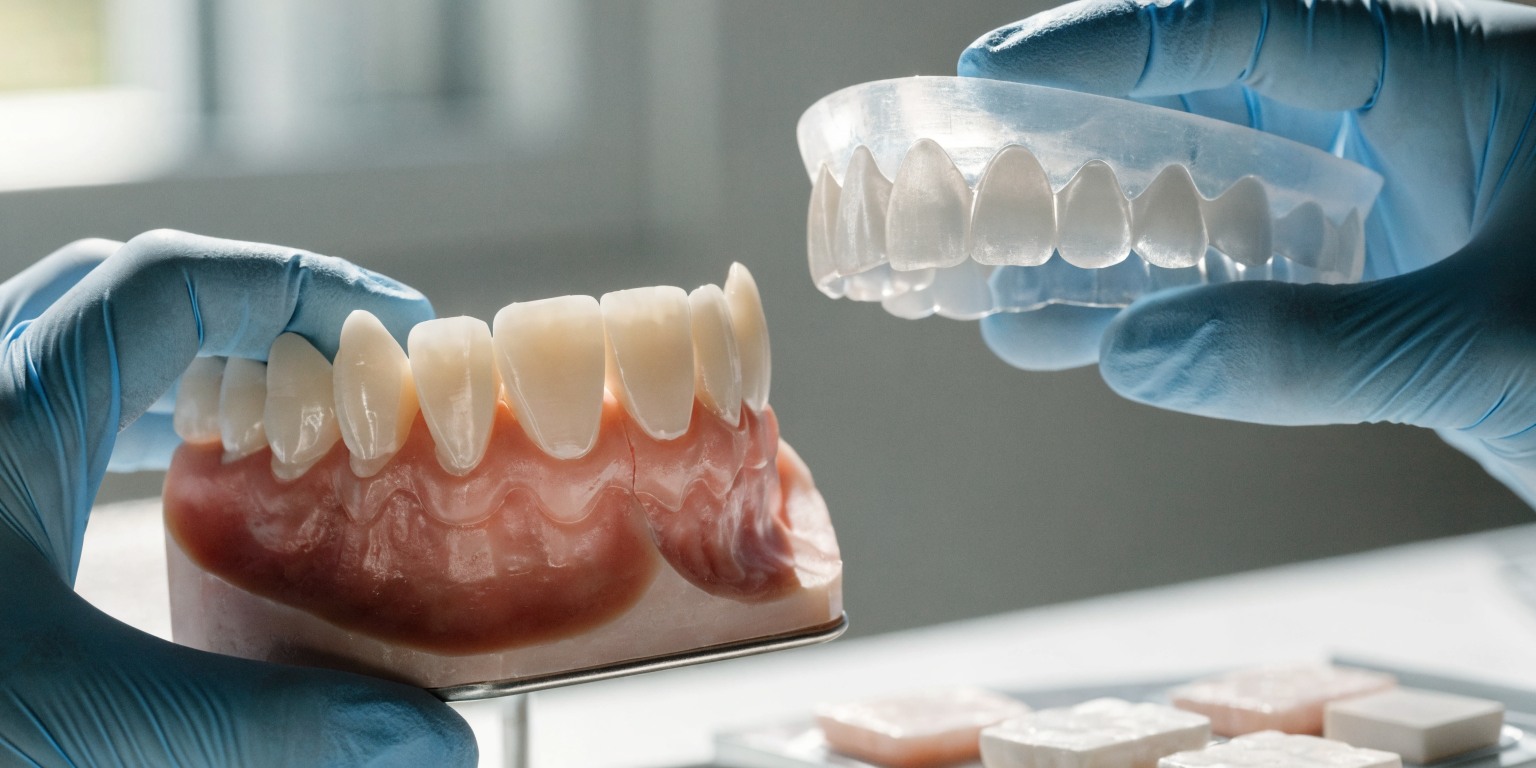
Why Might a Dentist Need to Prepare a Tooth for an E-max Veneer?
Tooth preparation may be needed to create space for the veneer and control the final shape, color, margin, and bite. The reason should be specific to the tooth rather than based on a standard cosmetic package.
To avoid a bulky result
If a veneer is bonded directly over a tooth that already projects forward, adding ceramic thickness can make the tooth look too prominent. Controlled preparation may create space for the final contour.
To change tooth position visually
A mildly rotated or irregular tooth may sometimes be improved with a veneer, but doing so can require more preparation on prominent areas. If the position discrepancy is significant, orthodontics may preserve more healthy tooth structure than trying to camouflage the problem with ceramic.
To manage discoloration
A strongly discolored tooth can require a different ceramic opacity, thickness, or preparation design than a tooth that only needs a small shape correction. No-prep treatment can be less suitable when the underlying color must be substantially masked.
To establish an appropriate margin
The dentist needs a predictable finish area where the veneer transitions into natural tooth structure. Margin position and contour can influence bonding, gum health, cleaning, and how natural the restoration looks.
To manage the bite
The contact between upper and lower teeth matters. Preparation design may need to account for incisal contacts, deep overbite, edge-to-edge relationships, or grinding habits.
In other words, preparation is part of restorative design. The goal is not maximum cutting or zero cutting; it is controlled treatment based on anatomy and function.
Can You Get E-max Veneers Without Shaving Your Teeth?
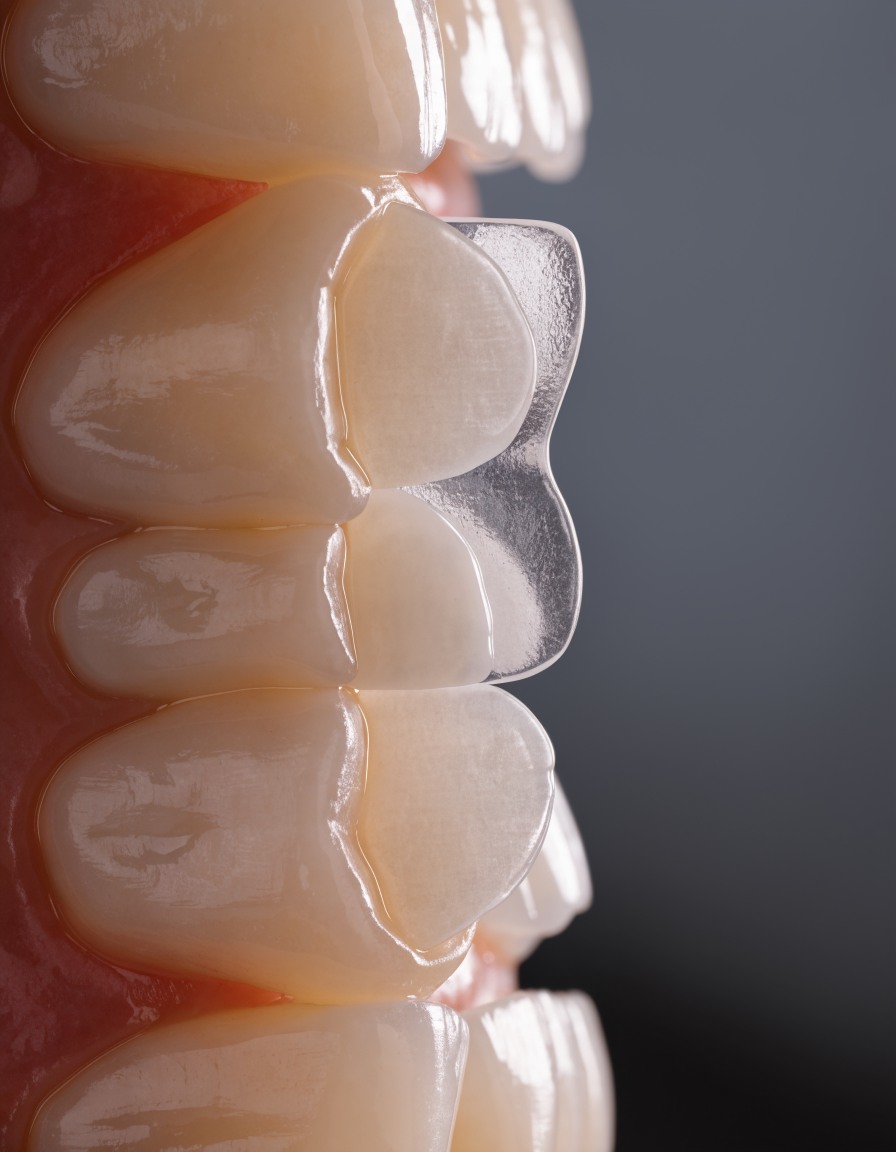
Sometimes, but true no-prep veneers are appropriate only for selected patients. A no-prep or very-low-prep approach is most realistic when the desired restoration can be added mostly outside the existing tooth contour without creating excessive thickness.
Examples may include selected teeth that are:
- relatively small;
- slightly set back;
- separated by a small gap;
- missing volume in a way that can be added rather than reduced;
- appropriately aligned for an additive design;
- suitable in color for a thin restoration.
A 2026 peer-reviewed review comparing no-preparation and conventional veneers found that no-prep veneers can provide favorable outcomes in well-selected cases while preserving enamel. The review also noted that they are not ideal for every situation, particularly when significant discoloration, misalignment, or major shape correction is present.
“No-prep” therefore should not be treated as a product that any patient can choose from a menu.
It is a clinical indication.
When Might More Veneer Preparation Be Needed?
A tooth may require more preparation when the final restoration needs to move inward relative to the existing contour, when color masking requires additional restorative space, or when the starting tooth shape is unfavorable.
Examples can include:
- teeth positioned too far facially;
- more pronounced rotation;
- prominent tooth contours;
- significant intrinsic discoloration;
- existing composite restorations that affect the design;
- old veneers that need replacement;
- damaged tooth structure;
- changes in tooth length that alter bite contacts.
Even in these situations, a dentist should consider whether a veneer is still the most conservative option.
If achieving the desired cosmetic result would require aggressive removal of healthy tooth structure, alternatives such as orthodontics, whitening, composite bonding, or a revised aesthetic goal may be more appropriate.
Why Does Preserving Enamel Matter?
Enamel preservation matters because ceramic veneers generally bond most predictably when substantial bonding surface remains in enamel. Removing unnecessary enamel also increases the biological cost of an elective cosmetic procedure.
A 2025 retrospective clinical study followed 672 ceramic veneers for up to 15 years and evaluated outcomes according to dentin exposure. Estimated survival was 96.7% in the enamel-only group and 93.9% when more than 30% of the bonding surface involved dentin. The authors reported that dentin exposure was associated with a higher risk of failure and concluded that enamel preservation is important for optimizing bonded veneer outcomes.
These figures should not be interpreted as a guarantee for an individual patient. The study was retrospective and involved treatment by a single clinician and ceramist. However, it reinforces an important clinical principle: when possible, preserving enamel is valuable for both biology and bonding.
This is one reason treatment planning should happen before irreversible preparation begins.
Is E-max a Veneer Type or a Material?
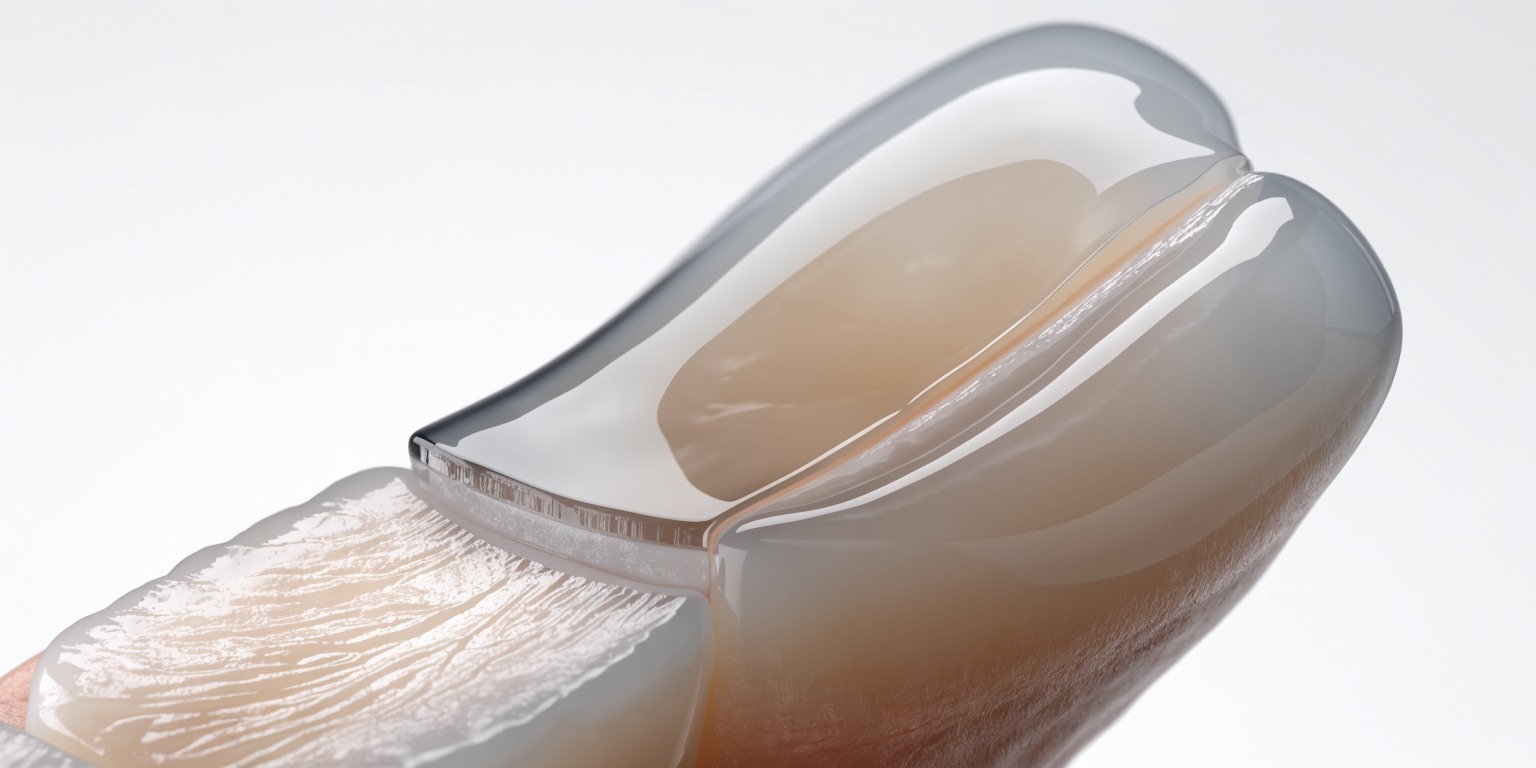
A veneer is a restoration type; E-max / IPS e.max is ceramic material-system terminology. The terms should not be used as though they mean exactly the same thing.
Ivoclar describes IPS e.max CAD as a lithium-disilicate glass-ceramic that can be used for several restoration types, including veneers, inlays, onlays, crowns, and selected bridges. IPS e.max Press is also based on lithium-disilicate glass-ceramic but is manufactured using a different processing method.
This distinction matters because:
- not every ceramic veneer is E-max;
- not every E-max restoration is a veneer;
- the amount of tooth preparation depends on the restoration design and clinical situation, not simply on the word “E-max.”
Niva Dental should not be assumed to use a specific branded Ivoclar product in every case unless that material is confirmed in the individual treatment plan.
E-max Veneer Preparation vs Crown Preparation
Veneer preparation and crown preparation are not the same. A veneer primarily covers the visible surface of the tooth, while a crown surrounds substantially more of it.
| Feature | E-max-style veneer treatment | Full crown treatment |
|---|---|---|
| Main coverage | Primarily front/visible surface, with design variation | Substantially more of the tooth, generally around its circumference |
| Typical purpose | Selected aesthetic and minor restorative corrections | Structural restoration when broader coverage is needed |
| Tooth reduction | Usually more conservative when a veneer is genuinely indicated | Generally more extensive because more surfaces must be prepared |
| Enamel preservation | Often an important objective | Greater tooth reduction may extend beyond enamel depending on the tooth |
| Reversibility after preparation | Irreversible if tooth structure is removed | Irreversible |
| Appropriate for every cosmetic case? | No | No |
This distinction is especially important for patients researching cosmetic dentistry abroad. A treatment described casually as “veneers” should not automatically be assumed to mean that only a thin facial layer of tooth structure will be prepared.
If the proposed plan requires full-coverage preparation, ask whether the restoration is actually a crown and why that amount of coverage is clinically justified.
For a broader comparison, see E-max Veneers vs Crowns.
What Are the Risks of Tooth Preparation for Veneers?
Veneer preparation is usually conservative compared with full crown preparation, but it is still a dental procedure with potential risks and long-term consequences.
Possible considerations include:
- irreversible enamel loss;
- temporary or persistent sensitivity;
- dentin exposure if preparation extends beyond enamel;
- pulpal irritation in deeper preparations;
- veneer fracture or chipping;
- debonding;
- marginal discoloration;
- gum irritation if contours or margins are unfavorable;
- secondary decay around restoration margins;
- future repair or replacement.
The ADA also notes that veneers may chip, crack, wear, or loosen over time and that patients who clench or grind their teeth or have a deep overbite may not be ideal candidates without further evaluation.
The correct response to these risks is not fear; it is careful case selection, conservative planning, appropriate bonding, and realistic long-term maintenance.
Could Another Treatment Avoid Tooth Preparation?
Yes. If the main concern can be solved without ceramic veneers, another treatment may preserve more natural tooth structure.
Depending on the problem, alternatives may include:
Professional teeth whitening
If the main concern is color and the teeth are otherwise healthy, whitening may be more conservative than covering the teeth.
Composite bonding
Selected chips, small gaps, or shape changes may sometimes be treated with additive composite resin and little or no tooth reduction.
Orthodontics or clear aligners
If tooth position is the main problem, moving the teeth may be more conservative than removing enamel to disguise crowding or rotation.
No cosmetic treatment
Aesthetic treatment is elective. If the teeth are healthy and the concern is minor, choosing no intervention is also a reasonable option.
Crown treatment when structurally necessary
A crown may be appropriate when a tooth is already heavily damaged or restored and requires greater structural coverage. That is a different indication from choosing a crown simply to create a cosmetic color change.
What Should You Ask Before Getting E-max Veneers in Turkey?
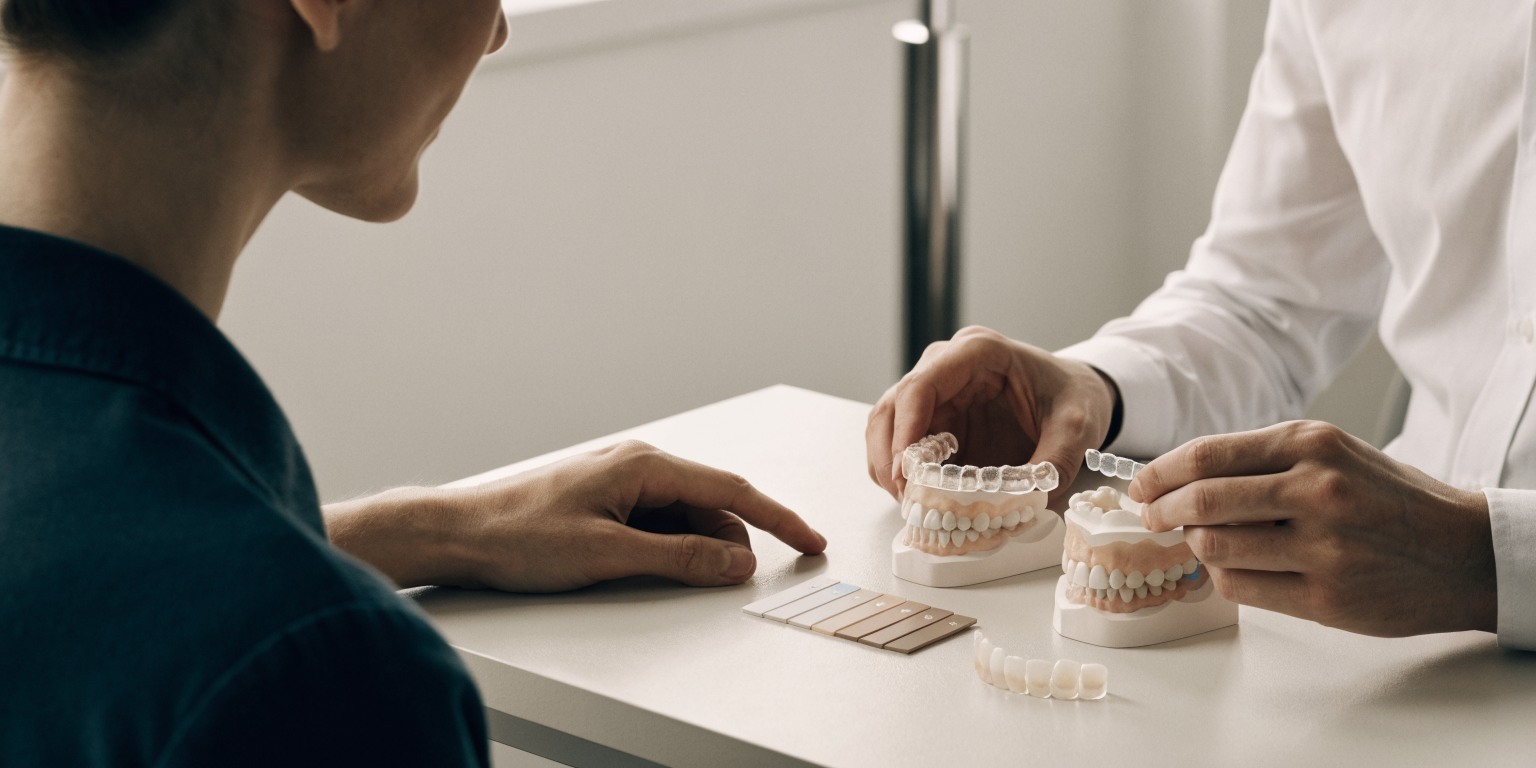
International patients considering treatment in Istanbul should understand the preparation plan before irreversible treatment begins.
Ask the clinic:
- Am I being offered veneers or crowns on each tooth?
- Why does each tooth need treatment?
- How much preparation do you expect for each tooth, and what factors could change that plan?
- Can the preparation remain primarily in enamel?
- Would orthodontics, whitening, or bonding allow a more conservative result?
- Is a no-prep or minimal-prep approach genuinely suitable for my tooth position and color?
- What happens if the in-person examination changes the preliminary treatment plan?
- Which ceramic material is being proposed?
- If the term E-max is used, which exact material will be used in my case?
- How will my bite and any clenching or grinding be assessed?
Photos and scans can help with preliminary planning, but they cannot fully replace a clinical examination. Decay, cracks, gum health, bite relationships, enamel thickness, existing restorations, and sensitivity can affect the final recommendation.
Patients traveling to Niva Dental in Bakirkoy, Istanbul can also review the Niva Dental patient journey when planning treatment and travel.
How to Think About Emax Veneers Tooth Shaving
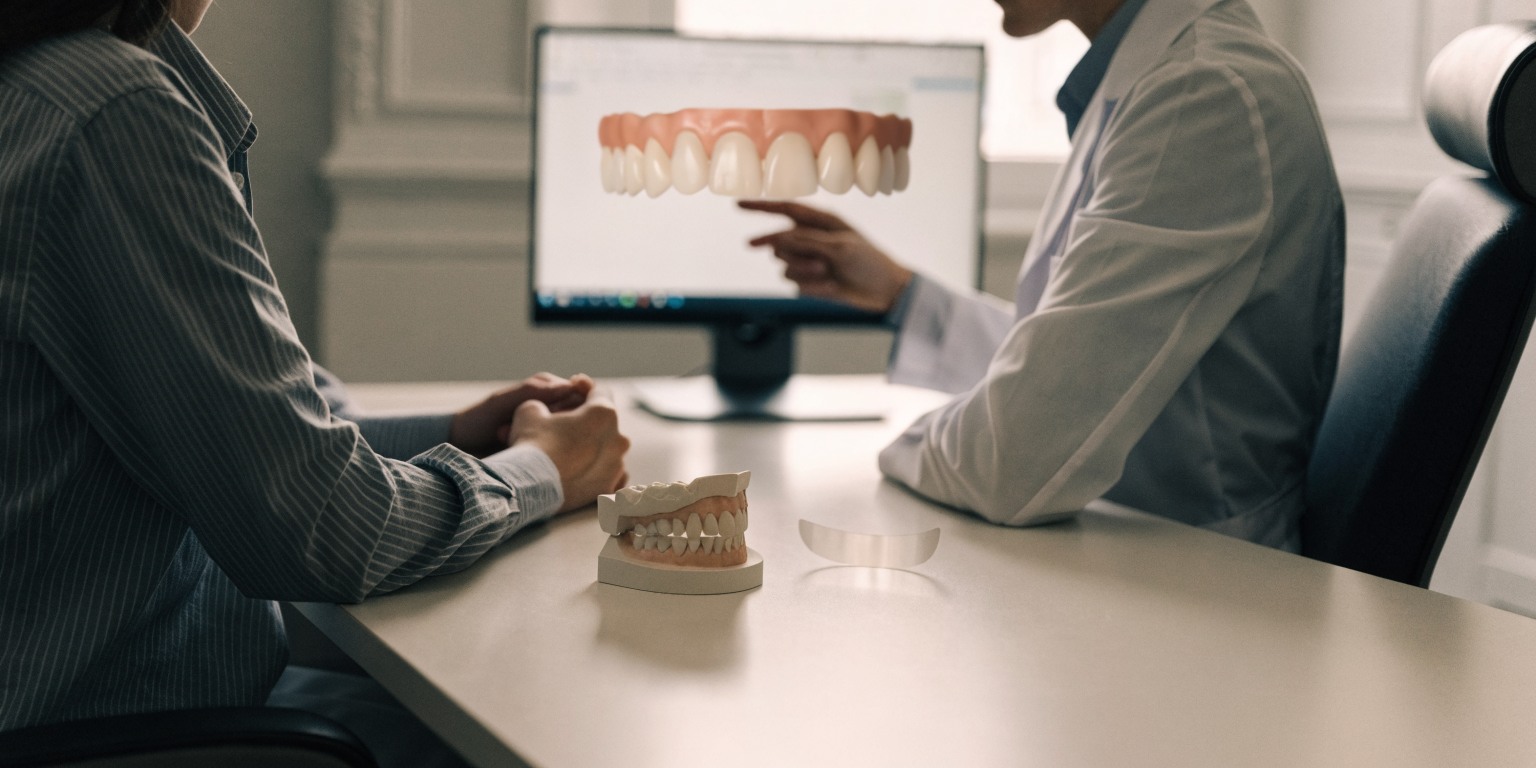
The most useful way to think about emax veneers tooth shaving is not “How little can a clinic promise to remove?” but “What is the least invasive preparation that can produce a healthy, functional, and natural restoration in my case?”
Some patients may need almost no reduction. Others may need controlled enamel preparation. If significant tooth reduction would be required to achieve the requested appearance, the dentist should explain why and discuss reasonable alternatives.
For elective cosmetic treatment, preserving healthy natural tooth structure is a meaningful long-term priority.
Frequently Asked Questions
Do E-max veneers always require tooth shaving?
No. Some E-max veneer cases require controlled enamel reduction, while selected additive cases may be suitable for minimal-prep or no-prep treatment. The amount depends on tooth position, color, shape, bite, existing restorations, and the final veneer contour. A dentist should determine preparation tooth by tooth rather than applying one standard amount to every patient.
How much tooth is shaved for E-max veneers?
There is no universal amount that is correct for every tooth. Published minimally invasive veneer literature often discusses fractions of a millimeter, but enamel thickness and required restorative space vary by tooth and region. A specialist consensus has described approximate preparation ranges around 0.3-0.7 mm in selected designs, while warning that fixed-depth preparation can expose dentin in naturally thin enamel.
Can I get E-max veneers with no shaving at all?
Possibly, but only if your teeth and treatment goals suit an additive design. No-prep veneers are more realistic when teeth are relatively small, slightly set back, or need added volume. Significant discoloration, protrusion, rotation, or major shape correction can make no-prep treatment unsuitable or create a bulky result.
Is tooth shaving for veneers permanent?
If enamel or dentin is removed, the physical change to the tooth is irreversible. The veneer itself may later need repair or replacement, but the removed natural tooth structure does not grow back. This is why treatment planning should consider whether a less invasive option can meet the same goal.
Does shaving teeth for veneers damage the teeth?
Tooth preparation intentionally removes tooth structure, so it should not be described as having zero biological effect. Conservative preparation can be clinically appropriate in selected patients, but deeper or unnecessary reduction increases biological cost. Preserving enamel where possible is important for bonding and long-term restorative planning.
What is the difference between minimal-prep and no-prep veneers?
Minimal-prep veneers involve some controlled removal of tooth structure, usually to create space or refine contour. No-prep veneers are designed to be added with little or no conventional reduction. The terms do not guarantee a specific amount of preparation; suitability depends on the tooth position, desired result, material thickness, color, and bite.
Are E-max veneers better than crowns if I want to preserve my teeth?
A veneer may preserve more natural structure than a full crown when a tooth is healthy enough for a partial-coverage restoration. However, a crown may be appropriate when a tooth is heavily restored, fractured, or structurally weak. The correct restoration should be selected according to the condition of the tooth rather than cosmetic preference alone.
Can crooked teeth get E-max veneers without shaving?
Mild irregularities may sometimes be managed conservatively, but teeth that protrude or rotate significantly can require more preparation to create a straight-looking veneer contour. Orthodontics or clear aligners may preserve more enamel when tooth position is the primary problem. An examination is needed to compare these options.
Can veneers cause sensitivity after tooth preparation?
Sensitivity can occur after veneer preparation, particularly when dentin is exposed or the tooth is otherwise sensitive. Symptoms vary by patient and preparation depth. Persistent or severe sensitivity should be assessed by a dentist rather than assumed to be a normal long-term effect.
Patients considering E-max veneers can contact Niva Dental in Bakirkoy, Istanbul for an initial assessment of tooth condition, alignment, color, bite, and preparation requirements. A preliminary remote review may help with planning, but the final decision about minimal-prep, conventional preparation, no-prep treatment, or an alternative should follow an individual dental examination.