
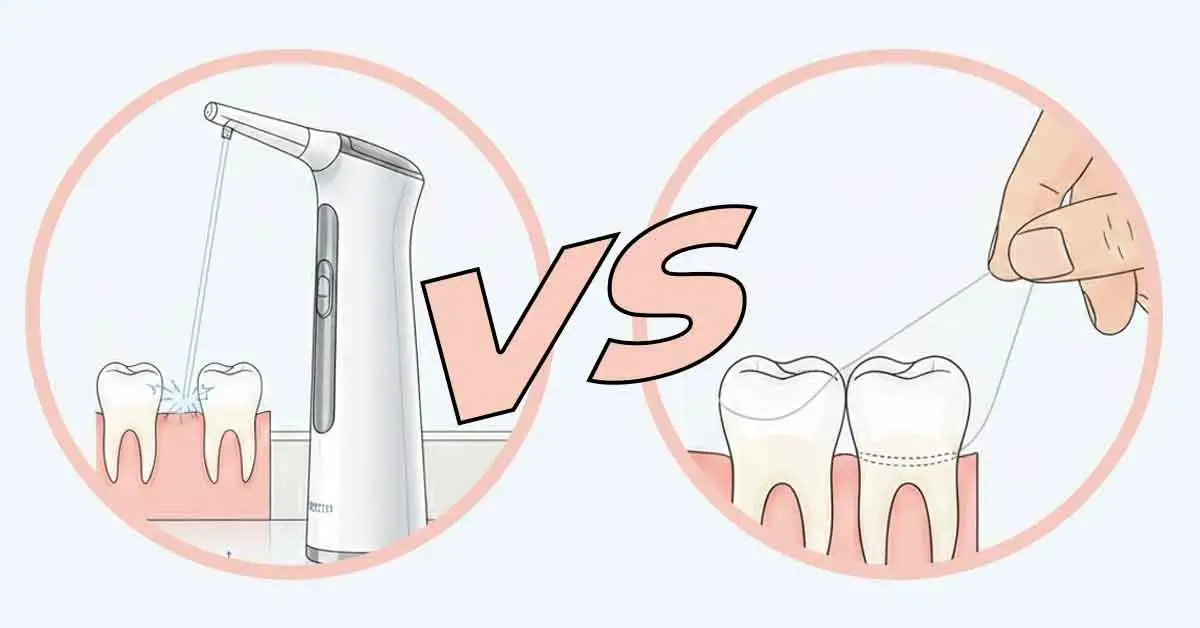
Brushing alone is not enough for daily oral care. When we fail to reach between our teeth and below the gum line, plaque quietly accumulates. Over time, this increases the risk of gum bleeding, bad breath, cavities, and even bone loss. This is where two essential tools come into play: the water flosser and dental floss. So, which one is better for whom? Let’s clarify this based on what we see in clinical practice. Most of the interproximal cavities we see during examinations occur precisely when these two tools are neglected. Therefore, which method you choose directly affects the longevity of your dental treatments.
What is an Oral Irrigator and How Does it Work?
An oral irrigator is a device that sprays pressurized water or an antiseptic solution. The water jet, which comes out of a thin nozzle, is directed between the teeth and along the gum line. It targets plaque, food debris, and bacterial buildup, especially in hard-to-reach areas. This provides mechanical and hydrodynamic cleaning even in narrow spaces that a toothbrush cannot reach.
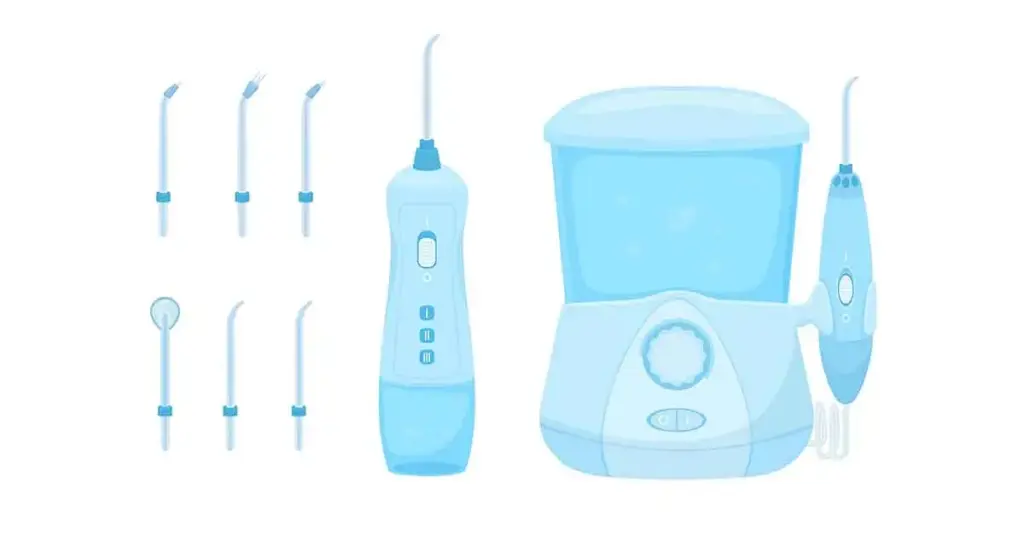
When the pressure setting is chosen correctly, it also provides a massaging effect on the gums. We use lower pressure for sensitive gums. In complex structures such as implants, bridges, and orthodontic brackets, the oral irrigator carries water into small spaces that the brush cannot reach. This facilitates biofilm control around the gum line. Especially in patients with a history of gingivitis and periodontitis, the oral irrigator becomes a powerful support for maintaining oral hygiene discipline.
What is Dental Floss and What Does it Do?
Dental floss is one of the best tools for mechanical contact in tight areas where teeth touch. It has a thin but durable fiber structure. By wrapping it around the tooth surface in a C shape, gently inserting it under the gum line, and moving it up and down, we physically remove plaque. Dental floss is still very valuable, especially for cleaning the thin plaque layer around the enamel-cementum junction.
When used with the correct technique, dental floss remains the gold standard for preventing interproximal cavities and gum disease. We achieve highly effective cleaning with dental floss, especially in young individuals with good manual dexterity and narrow tooth spacing. However, there is one condition: the technique must be correct, and use must be consistent. Otherwise, dental floss is merely “pushed through,” and true plaque control cannot be achieved. This leads to the patient’s misconception that “I’m using it, but it’s not working.”
Oral Irrigator or Dental Floss? Clinical Differences
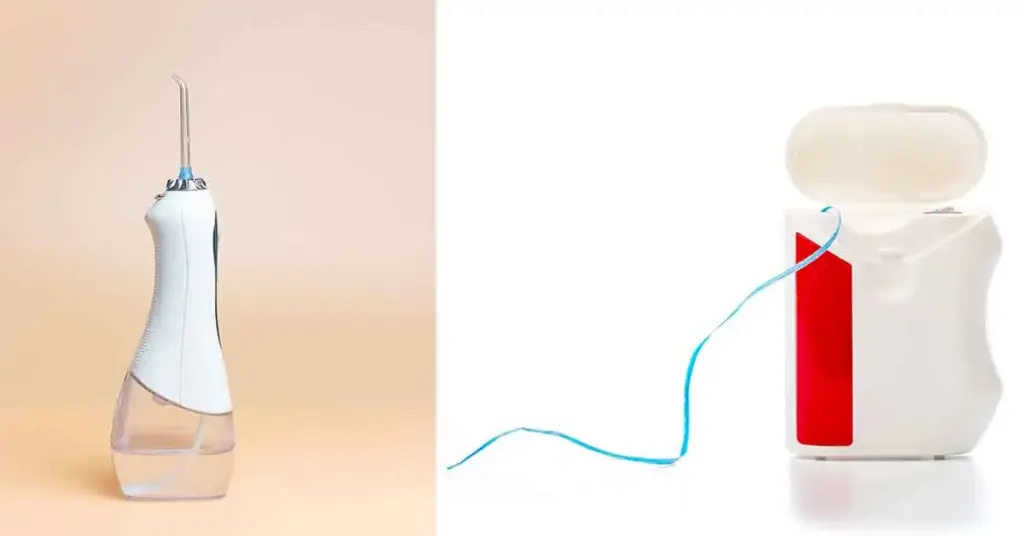
Although oral irrigators and dental floss target the same area, the mechanism is different. Even in the same patient, we sometimes prioritize one and use the other as a supplement.
- Mechanical contact:
- Dental floss makes direct contact with the tooth surface. This contact provides more effective plaque removal, especially in areas where teeth are very close together.
- Oral irrigators, on the other hand, use water pressure instead of contact. This effect can be sufficient when plaque is still soft and the daily routine is consistent. However, we do not expect oral irrigators alone to clean very hard, long-accumulated plaque.
- Gum sensitivity:
- Patients with bleeding and sensitive gums may struggle with dental floss in the early stages. There is a risk of trauma to the gums with incorrect technique.
- When used at the correct pressure, the oral irrigator causes less discomfort to sensitive gums. It can be a more comfortable transition for this group. Oral irrigators offer a gentler start, especially in areas that have recently been treated, sutured, or have chronic inflammation.
- Learning curve:
- When flossing technique is not learned, the floss is simply moved between the teeth; actual cleaning is inadequate. Without technical training, patient motivation drops very quickly.
- The oral irrigator, on the other hand, is a method that can be adopted more quickly when the correct angle and sequence are observed. It can increase compliance, especially in patients with low motivation. This makes it possible to establish the habit with the oral irrigator initially and then add dental floss to the routine later.
In conclusion, if we want perfect plaque control, oral irrigators and dental floss are not competitors. It is more accurate to think of them as two complementary tools. Which one to use and to what extent is determined during the examination based on your risk profile.
Oral Irrigators and Dental Floss in Orthodontics, Implants, and Bridges
Braces, wires, implants, and bridges complicate oral care. For these patients, oral irrigators are a lifesaver. This is because the plaque that forms around these structures is not easily removed with classic brushing.

- Orthodontic treatment:
- Food debris accumulating around braces and under arch wires increases the risk of cavities and white spots. Oral irrigators are very effective in reducing plaque buildup around braces.
- In addition, using orthodontic floss specially designed for under braces further enhances cleaning between teeth. This combination increases the likelihood of having both straight teeth and healthy gums at the end of treatment.
- Around implants:
- Plaque control is critical to reduce the risk of gum and bone loss around implants. Traditional dental floss can sometimes make traumatic contact with the implant neck.
- When gently directed around the implant, a soft-tipped oral irrigator supports the hygiene of the peri-implant mucosa. In some cases, we prefer the combination of a special interproximal brush + oral irrigator for implants over dental floss. This combination plays an important role in reducing the risk of reinfection, especially in patients who have experienced peri-implantitis in the past.
- Fixed bridge:
- It is difficult to reach under the bridge body with conventional dental floss. In these areas, the combination of superfloss (special dental floss with a stiff tip) and an oral irrigator is very useful.
- While the oral irrigator carries water under the body and removes food debris, dental floss performs a complementary role on the contact surfaces of the supporting teeth. This ensures that both the underside of the bridge body and the interproximal surfaces of the supporting teeth are not neglected.
Can Oral Irrigators and Dental Floss Be Used Together?
Yes, in fact, we recommend this approach for many of our patients. The routine can proceed in the following order:
- Brushing teeth (manual or electric toothbrush).
- General cleaning and gumline massage with the oral irrigator.
- Detailed cleaning of critical surfaces with dental floss.
This combination reduces both gum disease risk and the risk of surface decay. It is a safer approach to plan a routine combining an oral irrigator and dental floss, especially for individuals with a history of gum disease, who have implants, or who are undergoing orthodontic treatment. We can comfortably say that we see less tartar buildup and less bleeding during check-up appointments.
Who is an Oral Irrigator More Suitable For, and Who is Dental Floss More Suitable For?
We do not recommend the same oral care routine for every patient. We evaluate manual dexterity, current treatments, gum condition, and motivation level together when choosing between oral irrigators and dental floss. This makes it possible to create a routine that is both applicable and sustainable.
Groups suitable for oral irrigators:
- Patients with limited manual dexterity (elderly individuals, certain neurological conditions).
- Those undergoing orthodontic treatment.
- Those with multiple implants.
- Those with multiple fixed prostheses such as bridges or crowns.
- Those who are new to dental treatment and feel “distant” from flossing.
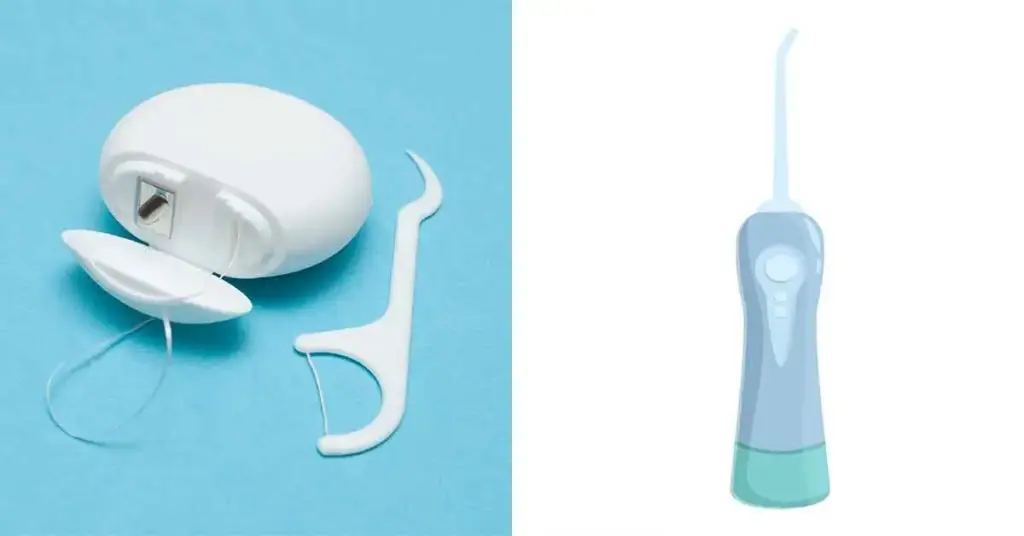
For these groups, oral irrigators can be considered a gateway to oral care. As patients become accustomed to this routine in their daily lives, flossing and interdental brushes can be added to the plan as needed.
Groups suitable for dental floss:
- Young individuals with good hand control.
- Those with narrow and crowded teeth.
- Those at high risk of interdental caries.
- Those who do not yet have implants, bridges, or orthodontic systems and have a mouth structure with mostly natural teeth.
The ideal solution for many patients is a personalized plan. During the examination, we evaluate gum pockets, interdental spaces, and existing restorations, and clarify the use of oral irrigators and dental floss accordingly. This way, the oral care routine becomes “personalized,” like a prescription.