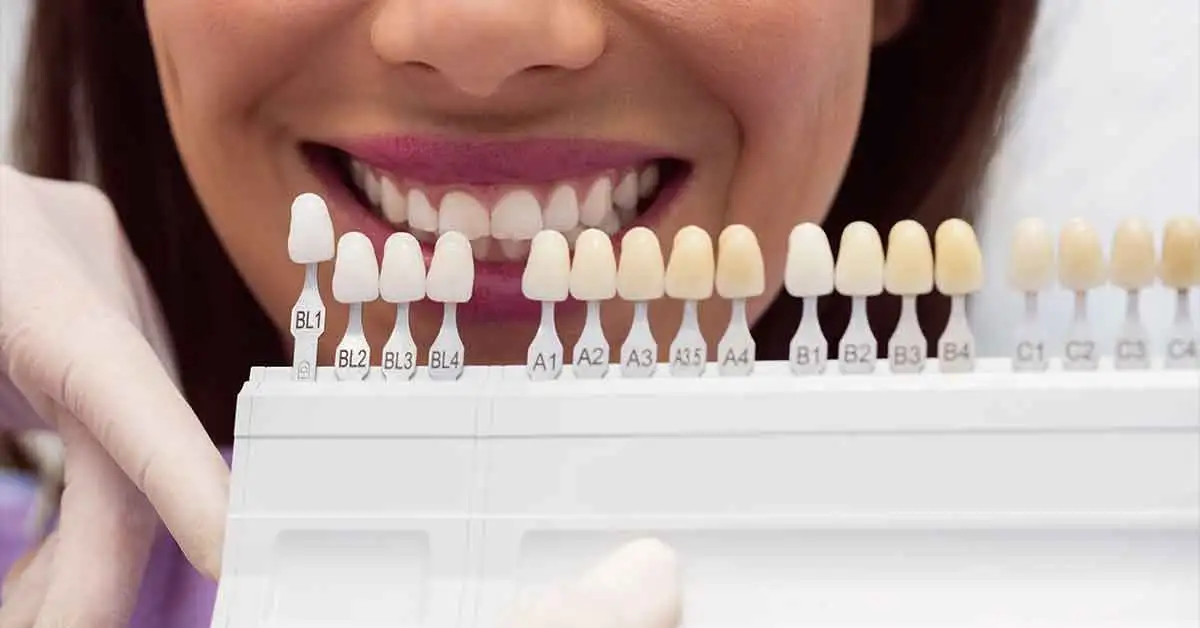
Porcelain Crowns transform your smile not only with their shape but also with their color. When the shade is chosen correctly, it creates an expression that is harmonious with the face, calm, and confidence-boosting. When it’s chosen poorly, even the highest-quality material can look fake. The difference between A1 and BL2 becomes very clear at this point. In this article, let’s walk through the logic we use step by step when talking with our patients in the clinic.
How to Read the Shade Guide for Porcelain Crowns
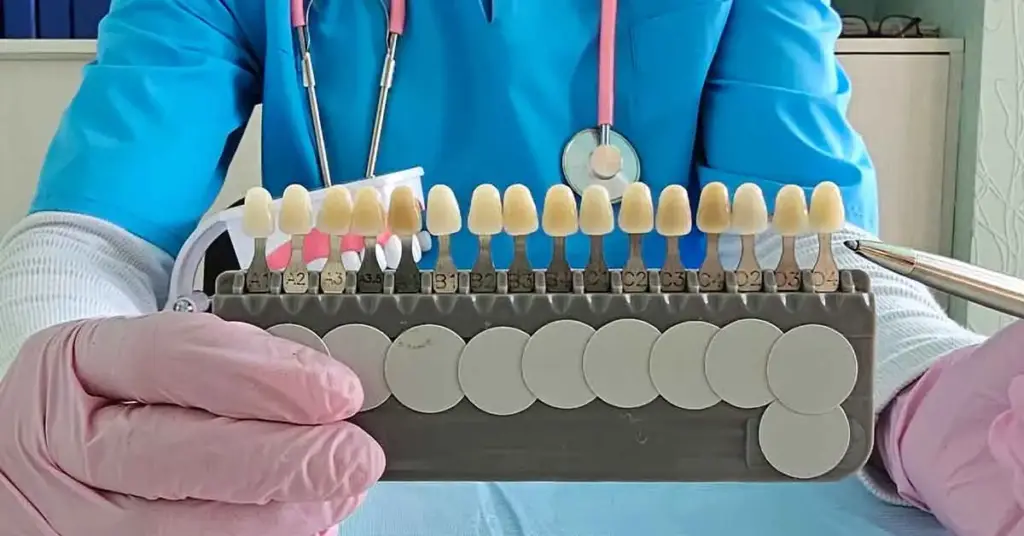
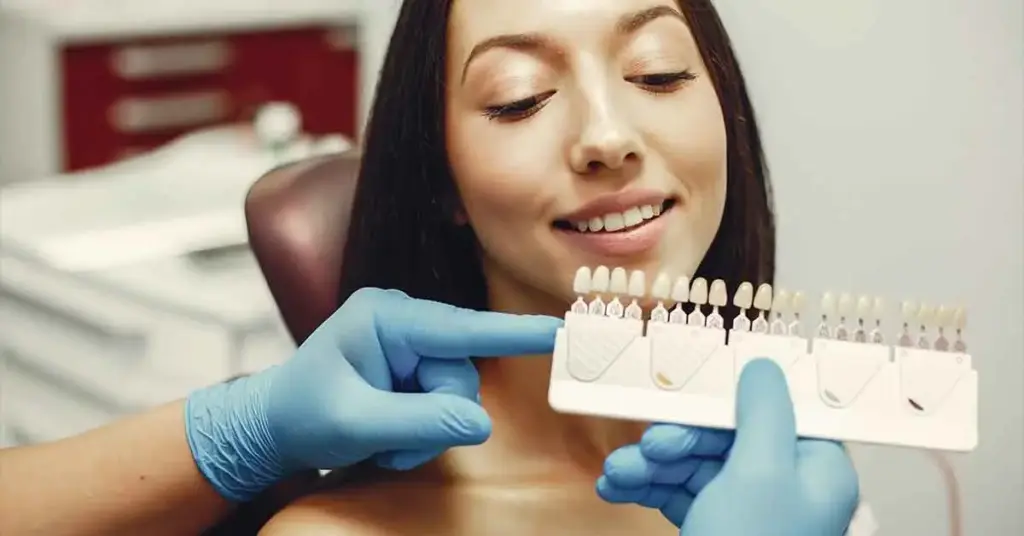
When choosing a color, our guide is not just “how white” the tooth is. On the shade guide we use for Porcelain Crowns, hue, brightness, and saturation are evaluated together.
- A range: A more yellowish-white group that is closer to natural tooth shades.
- A1: One of the lightest shades in this group. Slightly creamy, slightly ivory.
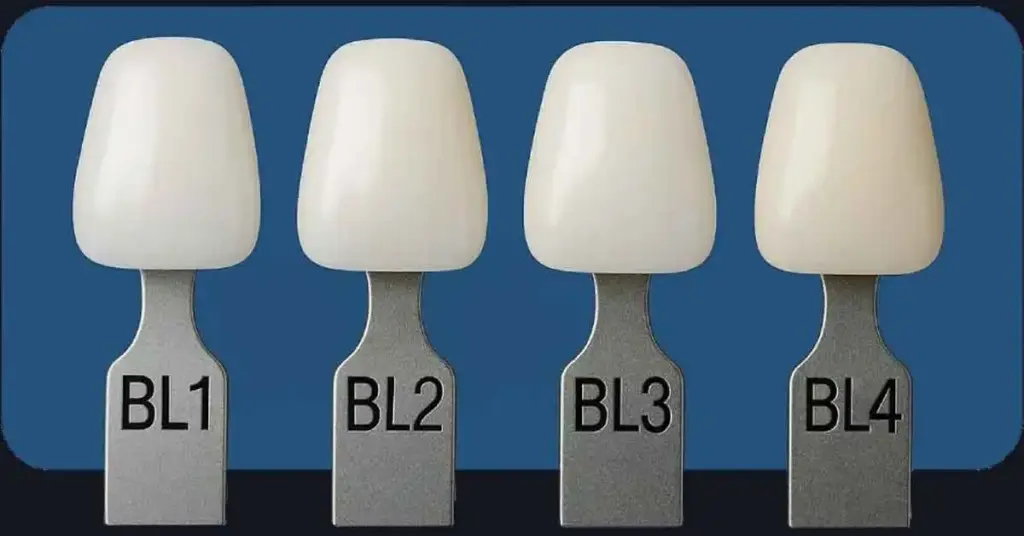
- BL range (bleach shades): The group that imitates the “very white” smiles seen after in-office whitening.
- BL2: Not the brightest white of all, but still clearly a “bleach” shade.
In the clinic, we hold the shade guide at lip level under lighting that is as close as possible to natural daylight. Before choosing the final shade for Porcelain Crowns, we make sure to see both the face and lip color in the same frame. A tooth can’t be evaluated independently from the other colors in the mouth and on the face.
A1 Shade: Natural and Soft Smiles
A1 is a shade we often see in healthy, well-cared-for teeth in everyday life. Not yellow, but not “Hollywood white” either. It sits in a balanced middle ground.

We especially prefer A1 in these situations:
- When a single tooth or just a few teeth are being crowned
- When the neighboring teeth are natural and have not been whitened
- When the skin tone is medium, darker, or has warm undertones
- When the patient wants a “well-groomed but not attention-grabbing” smile
When Porcelain Crowns are made in A1, we use proper layering to add slight translucency to the tooth and achieve an even more natural effect. Overly opaque A1 shades reflect light back and can make the tooth look “plastic.” That’s why we always evaluate both the shade code and the structure of the porcelain together.
BL2 Shade: White, Noticeable, and Eye-Catching
BL2 is clearly whiter than classic A1. It makes the teeth stand out in photos, videos, and on social media. However, this level of whiteness does not suit everyone in the same way.
We tend to like BL2 more in this type of profile:
- When multiple Porcelain Crowns or a full smile makeover is planned in the upper front area
- When the patient wants a clearly noticeable whitening effect
- When their profession puts their smile in the spotlight (presenter, influencer, etc.)
- When lip color has cooler undertones and the skin tone is light or neutral
The most critical point when choosing BL2 is managing the contrast with the natural lower teeth. If the upper teeth are BL2 and the lower teeth are left dark and natural, the mismatch between the upper and lower jaws will be noticeable every time the person talks. For this reason, when we use Porcelain Crowns, we also plan whitening or minimal treatments for the lower teeth when needed.
GET INFORMATION FAST!
A1 or BL2? Clinical Evaluation Steps for Porcelain Crowns
You shouldn’t choose a shade by asking “which one is whiter,” but by asking “which one belongs to this face.” In our clinic, when we decide between A1 and BL2, we look at the following points one by one:
- Single Crown or Multiple Crowns?
- Single crown:
Matching the surrounding teeth is the top priority. In this case, we usually choose A1 or the closest shade to the neighboring teeth for Porcelain Crowns. - Full front-tooth crowns:
We have more freedom. Shades like BL2 can look more natural when the entire block changes together.
- Skin, Lip, and Eye Color
- Darker or warm skin tones:
Very white BL shades can sometimes make the teeth look “separate” from the rest of the face. A1 provides a softer and more realistic contrast. - Lighter or cool skin tones:
BL2 can support the overall brightness of the face. Even then, we still consider lip color and the brightness of the eyes.
- Age and Personality
When choosing a shade for Porcelain Crowns, we also take age into account.
- In younger patients, BL2 can be more compatible and carried well with the overall dynamism of the face.
- In older patients with thin lips and little lip volume, very white shades can look harsh. A1 tends to look more refined in this group.
Personality matters too. Some patients like being noticed; others don’t want anyone to say, “You had your teeth done.” We make the choice together with these expectations in mind.
- Existing Treatments and Habits
- In patients who have long-term tea, coffee, or smoking habits, very light shades like BL2 will make small stains that appear over time more noticeable.
- If there are existing composite fillings, veneers, or implant-supported Porcelain Crowns, all of them must be planned to match each other. We never decide based only on the front teeth.
Common Mistakes When Choosing Shades for Porcelain Crowns
A wrong shade choice can make even a well-made restoration look unsuccessful. Based on our clinical experience, here are the mistakes we see most often:
- Only asking for “the whitest one”:
Going straight for BL shades without looking at the rest of the face can ruin a natural look. - Choosing BL2 for a single tooth while neighboring teeth are A2–A3:
That one front tooth will look like an “artificial implant cap.” - Relying only on the operatory light:
A shade chosen only under the dental light can look completely different in daylight. Whenever possible, it should be checked near a window and from different angles. - Ignoring the gums and lip line:
In patients who show a lot of gum when they smile, an extremely white shade can exaggerate the contrast between the gums and the teeth. - Not using patient photos:
Not testing how the color will look in real life with photos is a major oversight when choosing a shade for Porcelain Crowns.
Seeing the Shade in Advance with Digital Planning and Try-Ins
Today, the shade decision doesn’t have to be made only “in the chair with a hand mirror.”
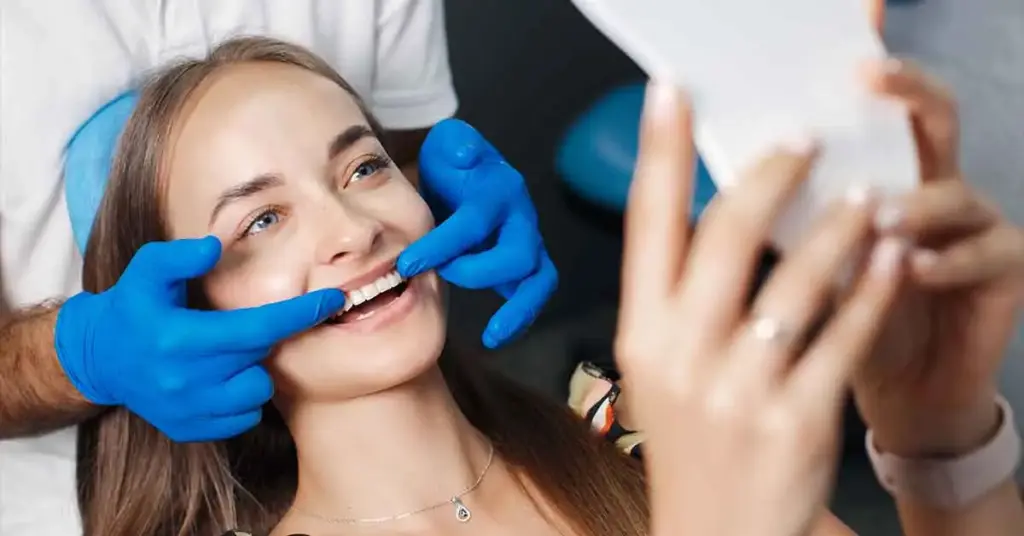
For Porcelain Crowns, these steps make the process more comfortable for both the patient and the dentist:
- Digital smile design:
We can prepare a digital simulation using photos and videos with the proposed shades. We can show the difference between A1 and BL2 on the same screen. - Temporary crowns:
Living with temporary Porcelain Crowns in a similar shade for a few days shows how the color feels in daily life. - Photo and video testing:
Before treatment and during the temporary phase, the brightness of the teeth is evaluated in photos—especially in side profiles and while smiling. - Shade softening if needed:
If BL2 looks too “clinical,” we can soften the final result with very light characterization (small changes in opacity or translucency, for example).
Frequently Asked Questions (FAQ)
What is the most natural shade for Porcelain Crowns?
There’s no single “most natural” shade. Naturalness is evaluated together with skin tone, lip color, age, and the color of the surrounding teeth. A1 is a well-groomed, realistic option for many patients. But for some, A2 or slightly customized shades may look more balanced. The key is that someone looking at your smile shouldn’t be able to immediately pick out which tooth is artificial.
Is A1 or BL2 more popular?
In recent years, interest in BL2 and similar white shades has increased due to social media. However, we don’t automatically approve every BL2 request in the clinic. When choosing a shade for Porcelain Crowns, we first discuss harmony with natural teeth, facial balance, and the patient’s long-term satisfaction. After the try-in phase, many patients decide to switch to A1 or a softer shade.
Does BL2 always look fake?
Not in every patient. In young, light-skinned patients with good lip volume and a full set of Porcelain Crowns on the front teeth, BL2 can look quite balanced. But if only one tooth is done in BL2 and the neighboring teeth are darker, the shade difference will stand out immediately. That’s why we mostly prefer BL2 in multiple restorations.
Do Porcelain Crowns change color over time?
High-quality porcelain is much more resistant to staining than natural tooth structure. Still, habits like tea, coffee, and smoking can cause slight discoloration at the gum line, on neighboring natural teeth, and on the surface. This is usually managed with polishing and regular maintenance. We don’t expect a dramatic darkening in the base color of the porcelain itself.
How do you approach a patient who wants white teeth but is afraid of looking fake?
First, we show the difference between A1 and BL2 both in the mouth and digitally. For Porcelain Crowns, we suggest in-between options—such as designs close to A1 but with a brighter surface. A short trial period with temporary crowns helps the patient get used to seeing themselves in the mirror. This way, the final decision is based on real-life experience, not just theory.
Is it a good idea to choose BL2 for a single tooth?
Choosing BL2 for one tooth is usually risky if the neighboring teeth are not the same shade. Especially in the upper front area, one hyper-white tooth can throw off the entire balance of the smile. When Porcelain Crowns are planned for a single tooth, the first criterion is maximum harmony with the adjacent tooth. If needed, we can first plan whitening for the entire front area and then consider a lighter shade for the crown.
