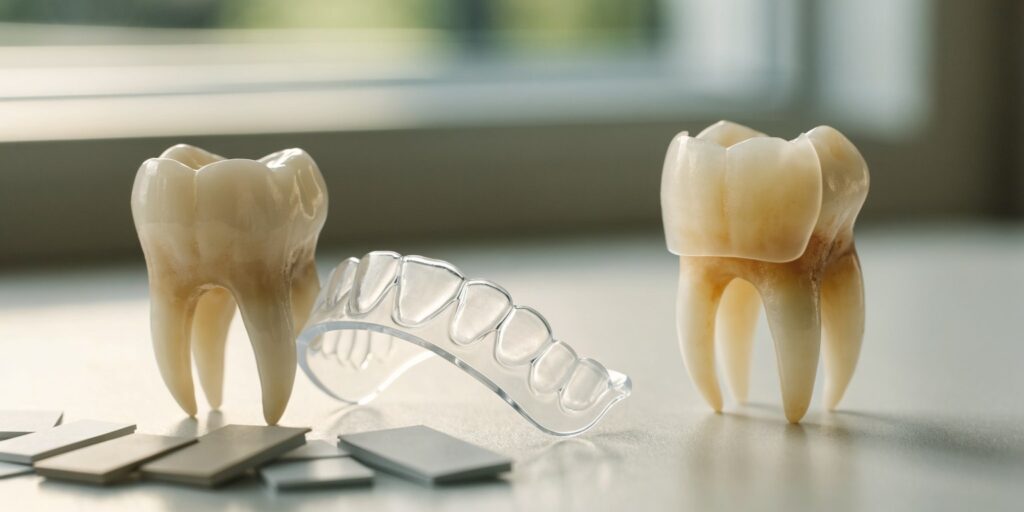


A sinus lift can create additional bone beneath the maxillary sinus when the upper back jaw does not provide enough support for a dental implant. This guide explains when it may be needed, how dentists assess the area, open and closed techniques, healing, risks, and alternatives.

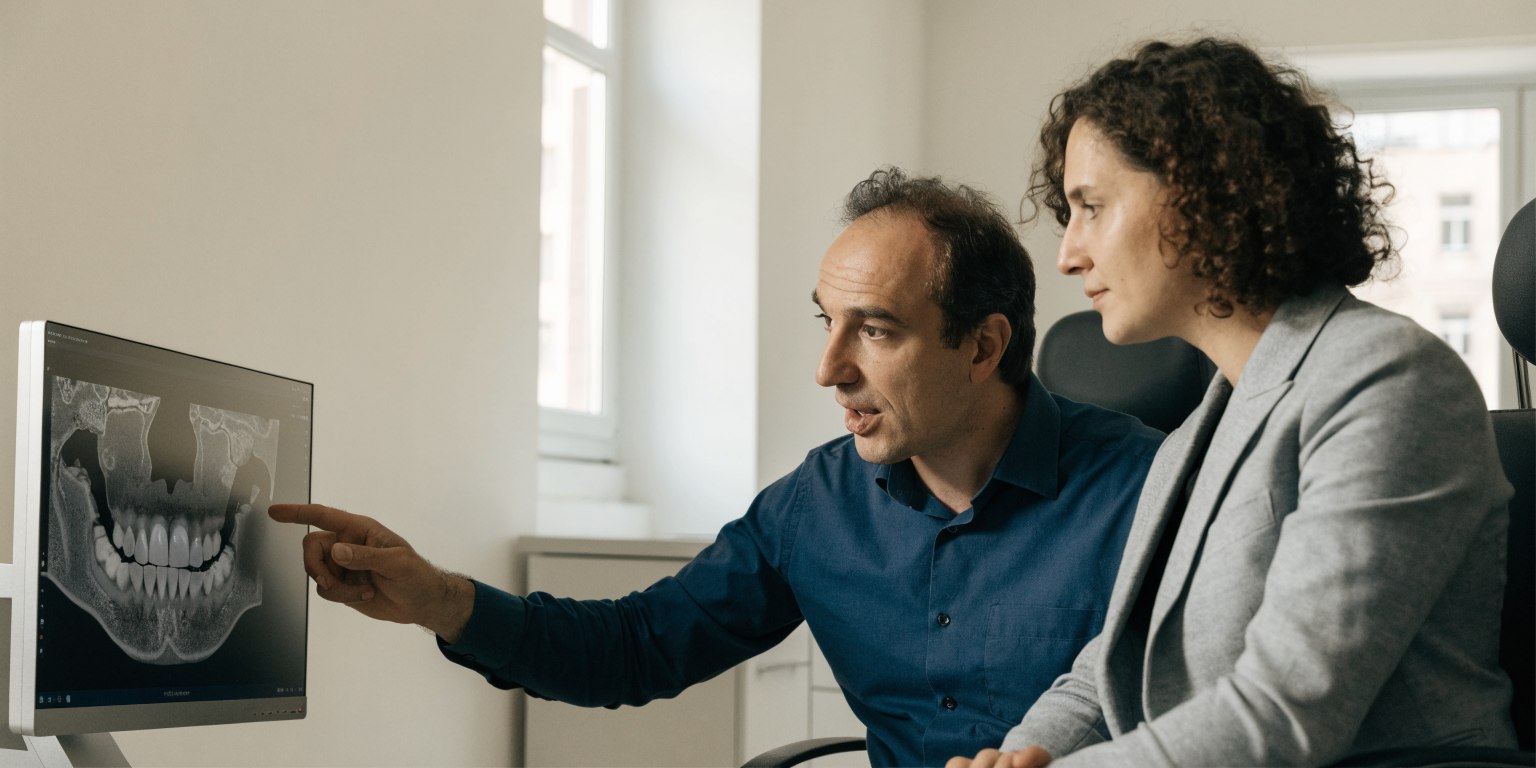
A sinus lift may be recommended when there is not enough vertical bone in the upper back jaw to place a dental implant in a stable, anatomically appropriate position. The procedure raises the membrane lining the maxillary sinus and creates space for bone graft material beneath it. As the grafted area heals, it can provide additional bone for implant placement.
A sinus lift dental implant plan is therefore not a routine requirement for every implant patient. It is a site-specific surgical option used mainly around the upper premolar and molar region, where the maxillary sinus sits close to the jawbone.
The decision should be based on a clinical examination and dental imaging rather than on photographs alone. For an overview of the wider implant process, see Niva Dental’s dental implant treatment in Istanbul.
What Is a Sinus Lift and How Does It Relate to Dental Implants?
A sinus lift, also called sinus augmentation or maxillary sinus floor elevation, is a bone-augmentation procedure performed beneath the maxillary sinus. The maxillary sinuses are air-filled spaces located above the upper back teeth. When the available bone between the mouth and sinus is too limited, a conventional implant may not have enough bone around it for appropriate placement.
During a sinus lift, the sinus membrane is carefully elevated. Bone graft material is placed in the space created between the membrane and the existing upper jawbone. The goal is not to “fill the sinus,” but to increase the bone volume available below the sinus floor.
The American Academy of Periodontology’s sinus augmentation guidance describes this procedure as a way to develop bone for implants when the upper back jaw has insufficient bone quantity and is close to the sinus.
This distinction matters: a sinus lift is a supporting surgical procedure, not the dental implant itself. The implant fixture, abutment, and final crown or bridge are separate parts of treatment.
When Is a Sinus Lift Dental Implant Plan Needed?
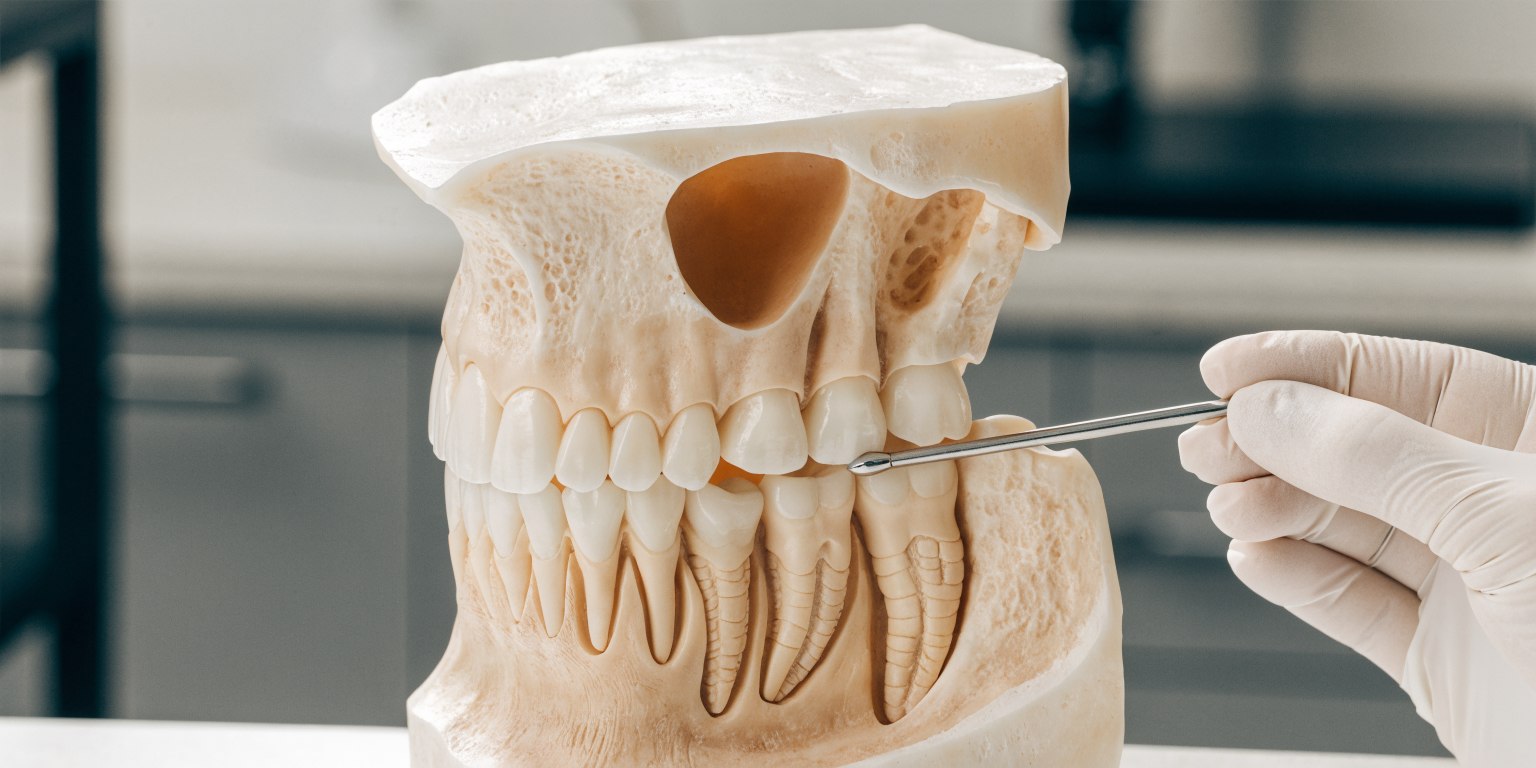
A sinus lift dental implant plan may be considered when the upper posterior jaw does not have enough usable bone height for the implant position being proposed. Tooth loss, natural bone remodeling, periodontal disease, previous surgery, and individual sinus anatomy can all influence the amount of bone available.
After a back tooth is lost, the jawbone in that area can gradually reduce in volume because it is no longer being loaded in the same way. At the same time, the sinus may extend farther downward into the area that previously supported the tooth roots. These changes can leave a relatively thin layer of bone between the mouth and sinus.
A sinus lift may enter the treatment discussion when upper premolars or molars are missing and imaging shows limited bone height beneath the sinus, including after long-term tooth loss, extraction, or previous surgery.
Insufficient bone does not automatically mean that dental implants are impossible or that a sinus lift is the only solution. The available bone, number of missing teeth, bite, implant design, restoration plan, and alternatives need to be considered together.
For a broader look at how reduced jawbone affects implant planning, see dental implants with bone loss.
How Does a Dentist Decide Whether You Need a Sinus Lift?
The decision is usually based on the relationship between the planned implant site, the remaining jawbone, and the maxillary sinus. Dental imaging is therefore central to planning.
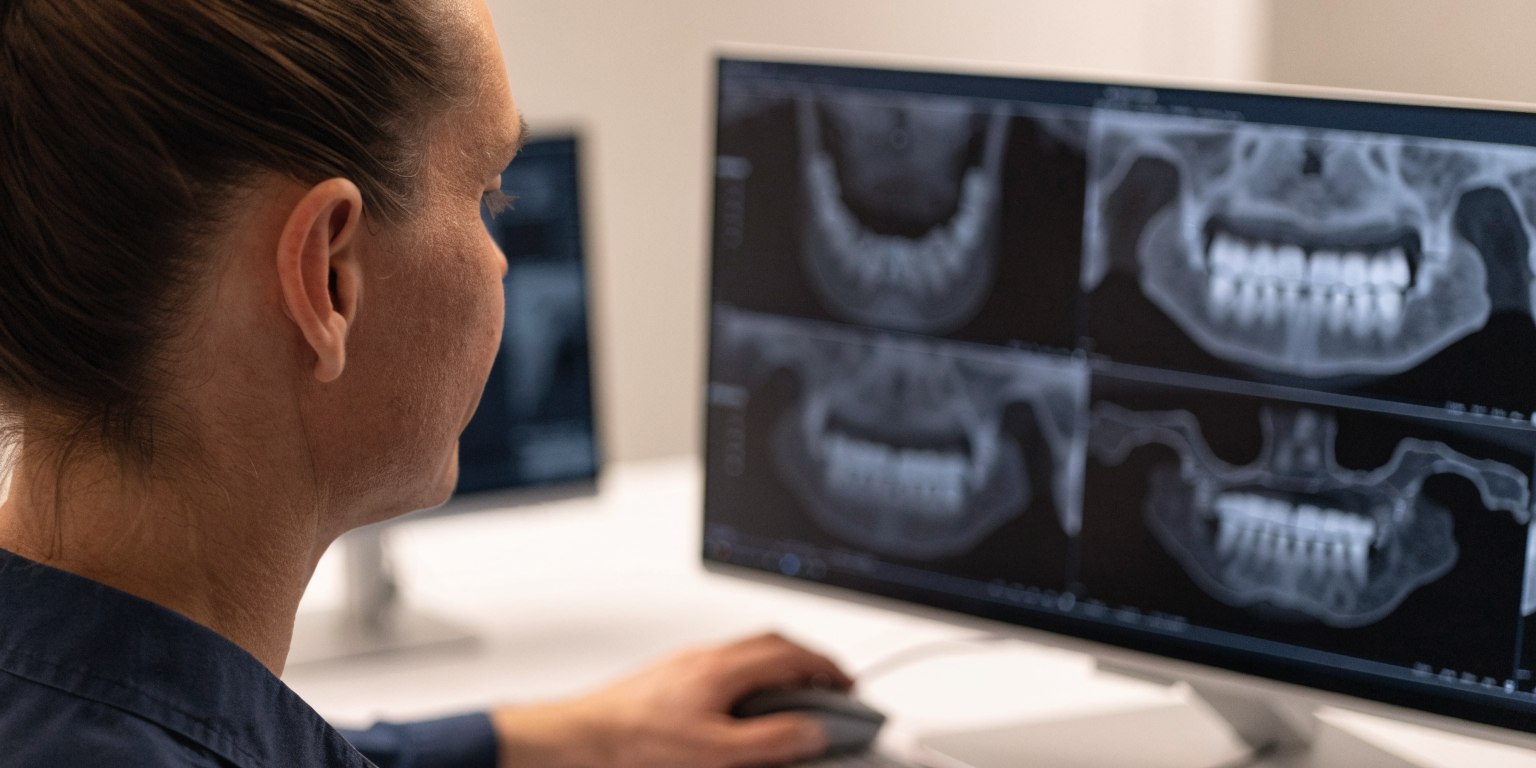
The American Association of Oral and Maxillofacial Surgeons explains that evaluation before sinus augmentation includes an examination and dental imaging to assess both the jawbone and the sinuses. In many implant cases, cone-beam computed tomography (CBCT) is used because it provides three-dimensional information about bone dimensions and nearby anatomy.
A proper assessment may consider:
| Planning factor | Why it matters |
|---|---|
| Remaining bone height | Influences whether a standard implant can be placed and whether augmentation may be needed |
| Bone width and shape | Implant planning depends on three-dimensional bone volume, not height alone |
| Sinus anatomy | The sinus floor, membrane, and internal anatomy can affect surgical access and complexity |
| Number and position of missing teeth | Replacing one molar is a different problem from restoring an entire upper arch |
| Implant dimensions and position | Different implant designs may require different bone conditions |
| Gum and periodontal health | Active disease may need to be managed before implant surgery |
| Medical and smoking history | Healing and complication risks can vary between patients |
| Final restoration | Implant placement should be planned around the intended crown, bridge, or full-arch restoration |
There is no single millimeter measurement that should be used online to tell every patient that they “definitely need” a sinus lift. Different surgical techniques and implant strategies exist, and the safest plan depends on the full clinical picture.
A remote consultation can help collect records and identify questions before travel, but it should not be treated as a substitute for an appropriate in-person dental examination and imaging when surgical treatment is being finalized.
Open vs. Closed Sinus Lift: What Is the Difference?
The two commonly discussed approaches are a lateral window sinus lift and a crestal or internal sinus lift. Both aim to create additional space beneath the sinus membrane, but they access the site differently.
| Feature | Lateral window / open approach | Crestal / internal approach |
|---|---|---|
| Surgical access | Through a small opening made in the side of the upper jawbone | Through the implant preparation site in the ridge |
| Typical use | When a larger amount of augmentation is required | When a more limited elevation is required and enough existing bone is present |
| Implant timing | May be simultaneous or staged, depending on primary stability and anatomy | Commonly combined with implant placement in selected cases |
| Surgical extent | Usually more extensive | Usually more limited |
| Decision basis | Residual bone, sinus anatomy, graft requirement, implant plan | Residual bone, required lift, implant stability, anatomy |
The AAOMS patient guidance on sinus augmentation describes both a lateral-window approach and a vertical osteotome approach. The correct technique should be selected after imaging rather than chosen simply because one sounds “less invasive.”
A closed sinus lift is not automatically better, and an open sinus lift is not automatically more appropriate. The relevant question is which method can create adequate bone while fitting the planned implant position and the patient’s anatomy.

Can a Sinus Lift and Dental Implant Be Done at the Same Time?
Yes, in selected cases a sinus lift and implant placement can be performed during the same surgical appointment. In other cases, the grafted area needs to heal first and the implant is placed at a later stage.
The main issue is whether the implant can achieve adequate primary stability in the existing bone at the time of surgery. Primary stability means the mechanical stability of the implant immediately after it is inserted, before biological healing and osseointegration have occurred.
If enough native bone remains to stabilize the implant, simultaneous placement may be considered. If the residual bone is too limited or the augmentation is more extensive, a staged approach may be safer.
This is an important distinction for international patients: same-day sinus lift and implant placement does not mean a same-day final tooth. Biological healing may still be required before the definitive restoration is loaded.
The American Academy of Periodontology notes that bone development may take several months and that implants can sometimes be placed at the same time as sinus augmentation. Exact timing varies by case.
How Long Does a Sinus Lift Take to Heal?
Initial soft-tissue recovery is much faster than graft maturation. Swelling, bruising, pressure, and soreness are postoperative effects that typically improve over days to a few weeks, while the grafted bone may require several months to mature sufficiently for the next implant stage.
Cambridge University Hospitals’ patient information on sinus lift procedures notes that swelling can be most noticeable around the second day and that patients may take a few weeks to feel fully back to normal. The same guidance describes several months of graft healing before implant placement in staged external procedures.
The American Academy of Periodontology states that, depending on individual needs, bone may be allowed to develop for roughly four to 12 months before implant placement, although some implants are placed simultaneously.
For planning purposes, it helps to separate three timelines:
- Early recovery: swelling, bruising, soreness, and wound healing.
- Graft maturation: new bone develops and integrates with the grafted area.
- Implant osseointegration: after implant placement, the bone heals closely around the implant surface before final loading when required.
These stages can overlap when the implant and sinus lift are performed together.
What Are the Risks of Sinus Lift Surgery?
Sinus lift surgery is an established implant-related procedure, but it is still surgery and has potential complications. The most recognized procedure-specific complication is perforation or tearing of the Schneiderian membrane, the thin membrane lining the maxillary sinus.
Other possible problems include:
- postoperative pain, swelling, or bruising;
- bleeding or occasional nose bleeding;
- infection;
- temporary sinus pressure or congestion;
- graft exposure or loss;
- insufficient new bone formation;
- communication between the mouth and sinus;
- the need to delay or repeat a procedure if the membrane cannot be repaired or the graft does not heal as planned.
Cambridge University Hospitals identifies membrane perforation as the main immediate risk and advises patients to seek review if pain or swelling worsens rather than improves, bleeding does not settle, fever develops, or they feel generally unwell.
A 2024 systematic review and meta-analysis found that anatomical features such as sinus septa can be associated with a higher risk of membrane perforation during lateral sinus lift surgery. This is another reason three-dimensional assessment and surgical planning matter.
Postoperative instructions are individualized. Patients should follow the treating clinician’s advice about oral hygiene, nose blowing, sneezing, exercise, medications, and review appointments rather than relying on a generic online timetable.
Are There Alternatives to a Sinus Lift?
Sometimes. A sinus lift is not the only possible strategy for every patient with reduced upper-jaw bone. Alternatives depend on how much bone remains, which teeth are missing, the restoration being planned, and the clinician’s assessment.
Possible options include short implants, different implant positions or angulations, a conventional bridge, a removable denture, or—in selected severe upper-jaw cases—specialized zygomatic or other advanced implant approaches. In some situations, accepting a gap may also be discussed.
These options are not interchangeable. Replacing one upper molar presents a different restorative problem from rebuilding a full arch.
Evidence is evolving around short implants. A 2022 systematic review and meta-analysis comparing short implants with standard-length implants placed at sinus-augmented sites found similar implant survival in the included studies, with some advantages in postoperative burden for short implants. Longer-term evidence and case selection still matter.
For patients missing most or all teeth in an arch, angled full-arch implant concepts can sometimes reduce the need for posterior grafting. Niva Dental also has information on Smile All-on-4 / All-on-6 treatment. This is a different treatment concept from replacing one or two missing upper molars and should not be presented as a universal substitute for a sinus lift.

What Should International Patients Ask Before Traveling for Treatment?
International patients should clarify whether the proposed implant plan is preliminary or final, what imaging is required, whether a sinus lift is expected, and whether the graft and implant are planned for the same visit.
Useful questions include:
- What scan finding suggests that sinus augmentation may be needed?
- Is the plan an open or closed sinus lift, and why?
- Will the implant be placed at the same time or after graft healing?
- What graft material is proposed?
- How many surgical and restorative visits are expected?
- What follow-up and travel precautions apply after I return home?
Niva’s patient journey information states that dental X-rays, photographs, or previous records may be collected during pre-treatment consultation. Those records can support initial planning, but final surgical decisions may still depend on examination and appropriate imaging in the clinic.
A transparent treatment plan should clearly separate the sinus lift, implant placement, healing phase, and final prosthetic stage so that travel dates are not built around an unrealistic “one-visit” assumption.
Frequently Asked Questions
Is a sinus lift always required for upper-jaw dental implants?
No. Many upper-jaw implants can be placed without a sinus lift. Sinus augmentation is considered when the planned implant site lacks enough usable bone beneath the maxillary sinus. Imaging, implant position, restoration design, and alternative techniques all affect the decision.
Is a sinus lift painful?
The procedure is generally performed with local anesthesia, so the surgical area is numbed during treatment. Postoperative soreness, swelling, bruising, or sinus pressure can occur afterward. The intensity varies between patients and techniques. Pain that progressively worsens or is accompanied by fever or increasing swelling should be assessed by the treating clinician.
Can the implant be placed at the same time as the sinus lift?
Yes, sometimes. Simultaneous placement may be possible when enough native bone remains to provide adequate initial implant stability. When bone is more limited or a larger graft is required, the sinus lift may be performed first and the implant placed after a healing period.
How long after a sinus lift can a dental implant be placed?
When treatment is staged, the graft often needs several months to mature before implant placement. Patient guidance from major dental organizations describes healing periods that can extend from roughly four to 12 months depending on the individual situation. Some implants are placed during the sinus lift itself, so there is no single timetable for every patient.
Can a sinus lift fail?
Yes. A graft may become infected, fail to generate enough usable bone, or require modification or repeat surgery. Sinus membrane perforation can also occur during the procedure. A complication does not automatically mean the entire implant plan has failed, but it may change the timing or surgical approach.
Are short implants a better option than a sinus lift?
Not automatically. Short implants may avoid sinus augmentation in selected patients and systematic reviews have reported comparable survival in some studied groups. However, implant length is only one part of planning. Bone volume, bite forces, implant position, restoration design, follow-up period, and the clinician’s experience all matter.
How do I know whether I need an open or closed sinus lift?
You cannot reliably determine this from symptoms or photographs. The choice depends on residual bone, the amount of elevation required, sinus anatomy, implant stability, and the planned restoration. A dentist or appropriately trained surgical clinician should make the decision after examination and imaging.
A Sinus Lift Should Be Planned Around the Implant — Not Added Automatically
A sinus lift can make implant placement possible when the upper back jaw does not provide enough bone beneath the maxillary sinus. It is not an automatic step for every implant patient, and it should not be recommended from a photograph or a package description alone.
The key questions are how much usable bone remains, where the implant needs to be positioned, whether adequate primary stability is possible, and whether a less invasive alternative is appropriate. A sinus lift dental implant plan may involve grafting and implant placement at the same appointment or separate surgical stages.
If you are considering dental implants in Turkey, ask for a treatment plan that clearly identifies whether sinus augmentation is expected, which technique is proposed, and how it affects the number of visits and healing timeline. Final suitability requires individual dental assessment and imaging.
Medical References
- Cambridge University Hospitals — Sinus lift procedures — patient guidance on indications, techniques, recovery, risks, alternatives, and postoperative warning signs.
- American Academy of Periodontology — Sinus Augmentation — explanation of sinus augmentation, grafting, and implant timing.
- American Association of Oral and Maxillofacial Surgeons — Sinus Augmentation: Preparing Sinuses for Dental Implants — evaluation, imaging, techniques, graft materials, and healing.
- PubMed — Short versus standard implants at sinus augmented sites: a systematic review and meta-analysis — randomized-trial evidence comparing short implants with longer implants plus sinus augmentation.
- PubMed — Association between sinus septa and lateral wall thickness with risk of perforation during maxillary sinus lift surgery — systematic review and meta-analysis of anatomical factors related to membrane perforation.