



Emax veneers vs composite bonding: compare tooth preparation, durability, staining, repairability, cost, risks, and which option may fit your teeth.

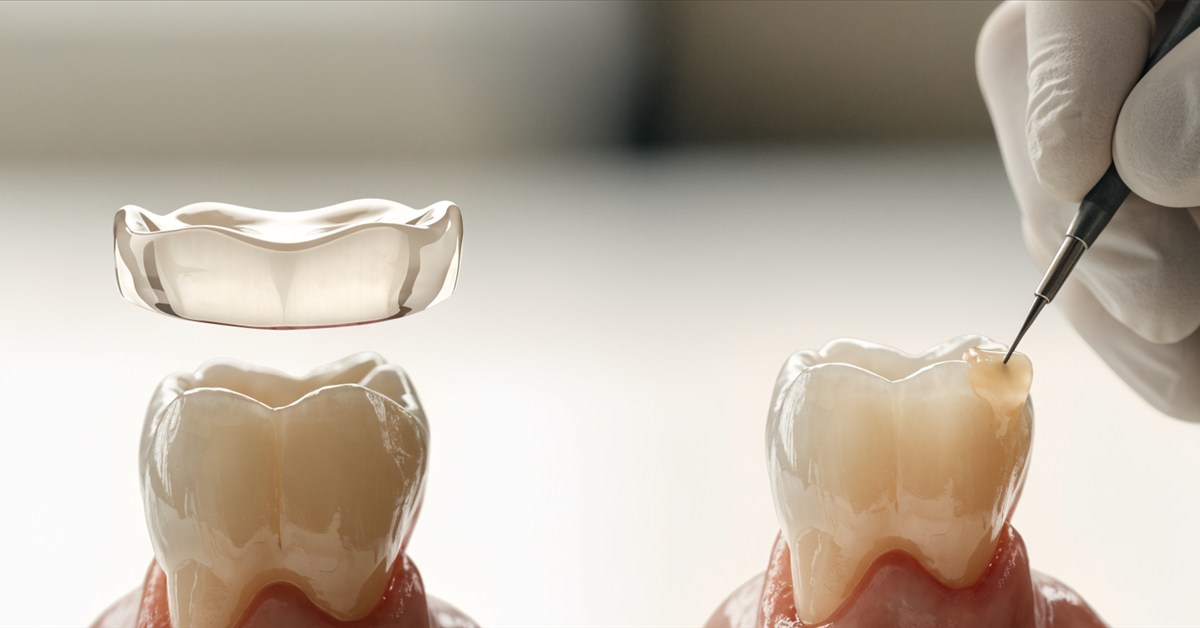
Emax veneers vs composite bonding is not a choice with one universal winner. Composite bonding adds tooth-colored resin directly to selected teeth and can often make small shape, edge, or gap corrections with little or no tooth reduction. E-max veneers are thin indirect ceramic restorations—typically lithium-disilicate when a true IPS e.max material is used—and may be better suited to larger, more consistent changes in shape or color when a ceramic veneer is clinically appropriate. Veneers usually involve a greater long-term commitment because any enamel removed during preparation is irreversible.
The most conservative option is the one that solves the actual problem while preserving healthy tooth structure. For patients exploring E-max veneer treatment at Niva Dental, the decision should be made tooth by tooth after assessing enamel, bite, gum health, existing restorations, and the size of the desired cosmetic change.
Quick Answer: E-max Veneers vs Composite Bonding
| Feature | E-max Veneers | Composite Bonding |
|---|---|---|
| Main material | Lithium-disilicate glass-ceramic when a true E-max system is used | Tooth-colored resin composite |
| How it is made | Indirect restoration fabricated outside the mouth, then bonded to the tooth | Usually sculpted directly on the tooth and light-cured chairside |
| Best suited to | Selected larger or multi-tooth changes in color, shape, proportion, and surface appearance | Selected small chips, gaps, edge wear, localized shape changes, and additive corrections |
| Tooth preparation | Often some enamel preparation; amount varies | Often little or no preparation, but not always completely no-prep |
| Reversibility | If tooth structure is removed, treatment is irreversible | More reversible when completely additive and no enamel is altered |
| Stain/color stability | Ceramic generally has greater color stability | Composite can stain, roughen, or discolor over time |
| Repairability | Small defects may sometimes be repaired, but significant damage can require replacement | Often easier to add, polish, reshape, or repair chairside |
| Longevity evidence | Strong long-term evidence for ceramic veneers, including lithium disilicate | Good clinical usefulness, but direct composite veneers generally need more maintenance over time |
| Treatment workflow | Usually requires planning, fabrication, try-in, and bonding stages | Often completed directly without a laboratory stage |
| Upfront cost | Usually higher because of indirect ceramic/laboratory workflow | Often lower because it is usually direct and does not require a ceramic laboratory restoration |
| Universal “better” option? | No | No |
What Is the Main Difference Between E-max Veneers and Composite Bonding?
The main difference is that an E-max veneer is an indirect ceramic restoration, while composite bonding uses resin applied directly to the tooth.
A veneer is a restoration type. E-max / IPS e.max is ceramic material-system terminology. Ivoclar identifies IPS e.max CAD as lithium-disilicate glass-ceramic and lists veneers among its clinical applications.
Composite bonding uses resin-based composite. The American Dental Association describes resin composite as a tooth-colored direct restorative material that can be used for veneers and other restorations. Direct materials are generally placed directly onto tooth structure rather than being fabricated in a dental laboratory.
This difference affects:
- how much tooth structure may need to be altered;
- how the restoration is made;
- how easily it can be repaired;
- its color stability;
- its surface wear over time;
- treatment workflow;
- and the long-term commitment involved.
Which Preserves More Natural Tooth Structure?
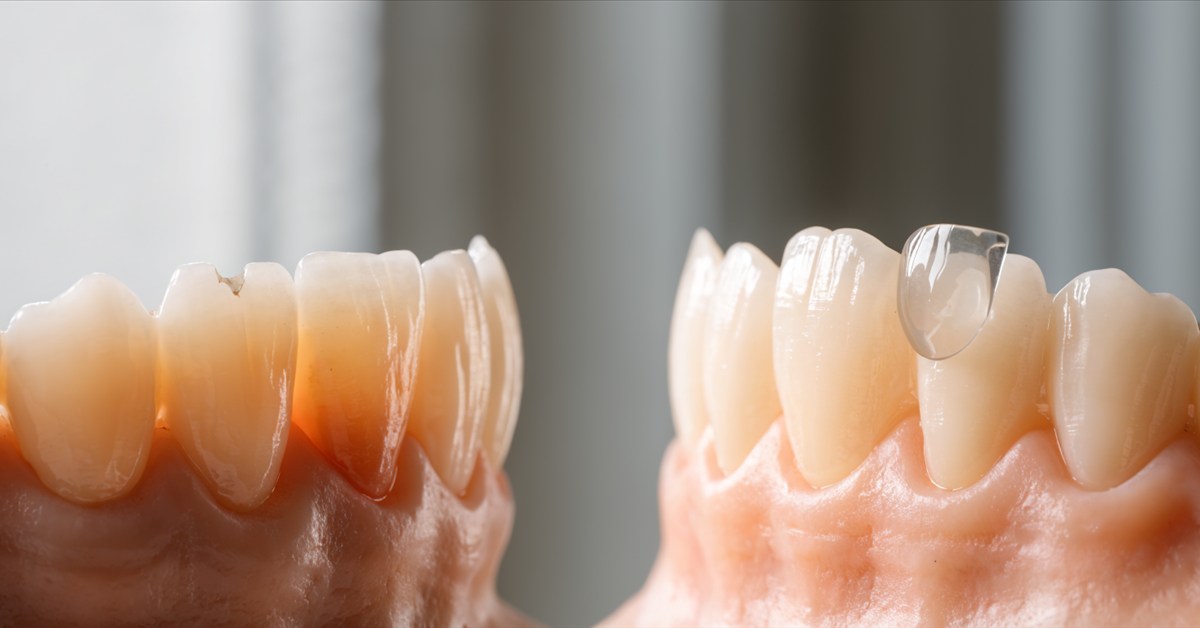
Composite bonding is often the more conservative option when the desired change can be created additively without removing enamel.
For example, bonding may be suitable for:
- rebuilding a small chipped corner;
- adding length to a worn edge;
- closing a small gap;
- increasing the width of an undersized tooth;
- making a limited contour change.
In these situations, resin can sometimes be added directly to intact enamel.
However, composite bonding should not automatically be called “100% reversible.” If enamel is reshaped, roughened substantially, or otherwise altered during treatment, removing the composite later will not return the tooth to an untouched original state.
E-max veneers may also be conservative compared with full crowns, but ceramic veneers often require controlled enamel preparation to create restorative space and avoid an overbulked contour. The American Dental Association explains that porcelain veneer treatment commonly involves removing a small amount of enamel and is irreversible once enamel has been removed.
Current evidence also supports preserving enamel when ceramic veneers are planned. A systematic review and meta-analysis found higher survival and success rates for ceramic veneers bonded predominantly to enamel than for those bonded to surfaces with more substantial dentin exposure.
For a dedicated preparation discussion, see Do E-max Veneers Require Tooth Shaving? What Patients Should Know.
Emax Veneers vs Composite Bonding: Detailed Comparison
| Decision Factor | E-max Veneers | Composite Bonding |
|---|---|---|
| Restoration type | Indirect ceramic veneer | Direct resin restoration / additive bonding |
| Typical material | Lithium-disilicate glass-ceramic when using true E-max | Resin matrix with inorganic filler particles |
| Common aesthetic use | More extensive color, shape, proportion, and surface changes | Small-to-moderate localized shape, edge, gap, or contour changes |
| Enamel reduction | Often required to some degree; varies by case | Often minimal or none in additive cases |
| Laboratory stage | Usually yes | Usually no |
| Color stability | Generally higher | More susceptible to staining and discoloration |
| Surface wear | Ceramic is wear-resistant but can chip or fracture | Composite can wear, roughen, chip, and need repolishing or repair |
| Repair | Possible in selected defects; larger damage may require replacement | Often relatively straightforward to add or repair chairside |
| Long-term maintenance | Reviews, hygiene, bite monitoring, possible repair/replacement | Reviews, polishing, repair, possible reshaping/replacement |
| Bruxism considerations | Grinding can increase fracture/chipping risk | Grinding can increase wear/chipping and maintenance needs |
| Cost structure | Usually higher upfront due to indirect ceramic fabrication | Usually lower upfront because it is direct and laboratory-free |
| Appropriate for every patient? | No | No |
The comparison should end with the tooth—not the material. If a small additive change solves the problem, composite may preserve more natural structure. If a larger and more stable ceramic change is required, an E-max veneer may be more appropriate.
Which Looks More Natural?
Both treatments can look natural, but they achieve aesthetics differently.
Lithium-disilicate ceramic is valued for optical properties that can reproduce enamel-like translucency, surface texture, and controlled shade. Ceramic also maintains a polished surface and color relatively well over time.
Composite resin can also produce highly aesthetic results, especially for localized corrections where the dentist can layer and sculpt the material directly against neighboring natural enamel. The result depends heavily on:
- material selection;
- shade matching;
- layering technique;
- surface texture;
- polishing;
- tooth hydration and lighting;
- and the clinician’s restorative skill.
The important difference is long-term surface behavior.
A systematic review and meta-analysis of resin composite laminate veneers reported that surface roughness, color mismatch, and marginal discoloration were among the most commonly reported complications. The ADA also lists staining and discoloration as disadvantages of resin-based composite materials.
So “ceramic always looks better” is too absolute. A small, well-executed composite repair can be extremely natural. But when several front teeth require a consistent long-term ceramic surface, E-max veneers may offer advantages in color stability and surface finish.
Which Lasts Longer: Composite Bonding or Ceramic Veneers?
Long-term evidence generally favors ceramic veneers for durability, but the size and quality of the evidence differ by treatment type and clinical situation.
A 2022 practice-based study followed 1,459 ceramic and direct composite veneers for up to 10 years. Ceramic veneers showed better survival and success than direct composite veneers. Composite veneers had a higher risk of both failure and the need for repair or intervention.
A 2024 randomized clinical trial provides useful balance. In patients receiving treatment for multiple diastema closure, 60 direct composite veneers and 60 IPS e.max Press ceramic veneers were followed for two years. Survival was 93.4% for direct composite and 95% for ceramic, with no statistically significant difference over that short follow-up period.
This shows why treatment duration matters:
- short-term outcomes can be similar in selected cases;
- longer-term observational evidence suggests ceramic requires fewer interventions and replacements;
- composite remains clinically useful because it is conservative and repairable.
A 2023 systematic review and meta-analysis of resin composite laminate veneers reported an 88% pooled survival rate in randomized controlled trials, with follow-up ranging from 24 to 97 months.
For lithium-disilicate ceramic veneers, a 2025 systematic review and meta-analysis reported 96.81% pooled survival at a mean follow-up of approximately 10.4 years.
These percentages should not be compared as a direct head-to-head score because they come from different studies, populations, follow-up periods, and methods. The dedicated 10-year practice-based comparison is more informative for the relative trend.
For a deeper evidence review, see How Long Do E-max Veneers Last?
Which Is Easier to Repair?
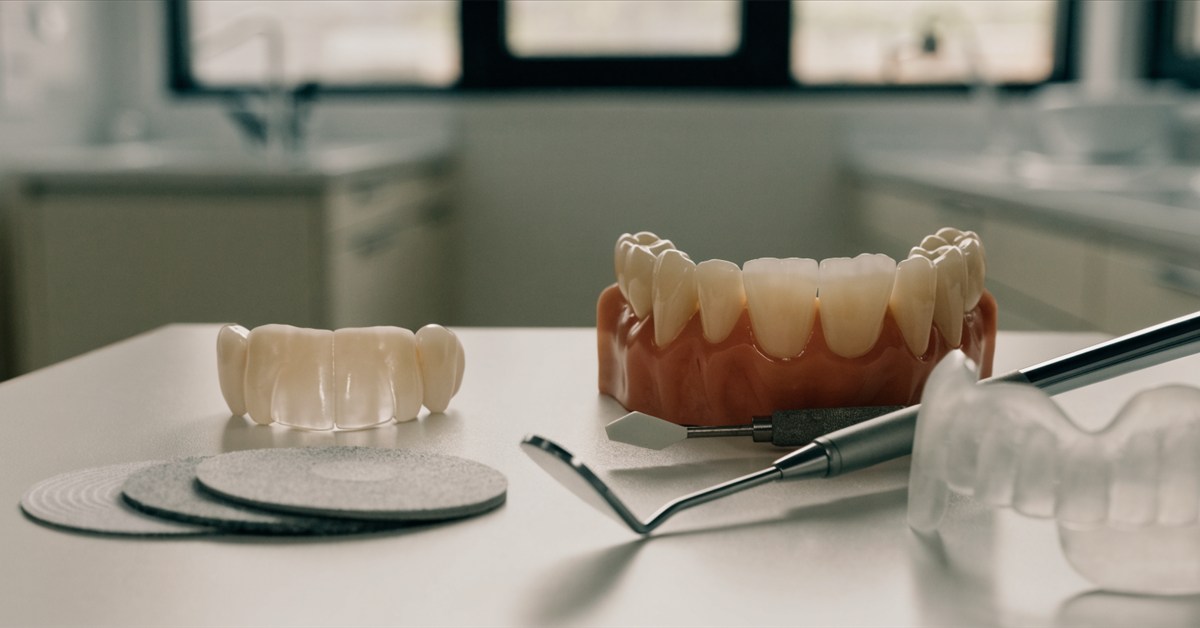
Composite bonding is usually easier to repair or modify because additional resin can often be added directly to the existing restoration.
If composite:
- chips;
- loses a small amount of edge length;
- develops local roughness;
- needs reshaping;
- or develops a limited color/surface problem,
the dentist may be able to polish, add material, or repair the area without replacing the entire restoration.
Ceramic can also be repaired in selected situations, often using resin-based restorative materials and appropriate surface treatment, but the feasibility depends on:
- the size and location of the defect;
- whether the ceramic is fractured or debonded;
- the remaining restoration;
- the underlying tooth;
- the bite;
- and the aesthetic zone.
A substantial ceramic fracture or an unacceptable veneer margin may require full replacement.
Repairability is one reason composite can be attractive for young patients, small defects, and people who want a lower-commitment first step.
Which Stains More: Bonding or E-max Veneers?
Composite resin is generally more susceptible to staining and color change than dental ceramic.
The ADA identifies potential staining and discoloration as disadvantages of resin-based composite. Clinical composite-veneer research also commonly reports color mismatch and marginal discoloration over time.
Ceramic materials are more chemically stable and generally maintain color better, although the overall appearance of a veneered smile can still change because:
- natural neighboring teeth can darken;
- gum levels can change;
- margins can stain;
- plaque or deposits can accumulate;
- the underlying tooth can change;
- surface damage can affect reflection and gloss.
Neither material eliminates the need for hygiene and maintenance.
Patients should also remember that whitening affects natural teeth differently from restorations. If whitening is part of the plan, it may need to be completed before final shade matching.
Is Composite Bonding Better for Small Chips and Gaps?
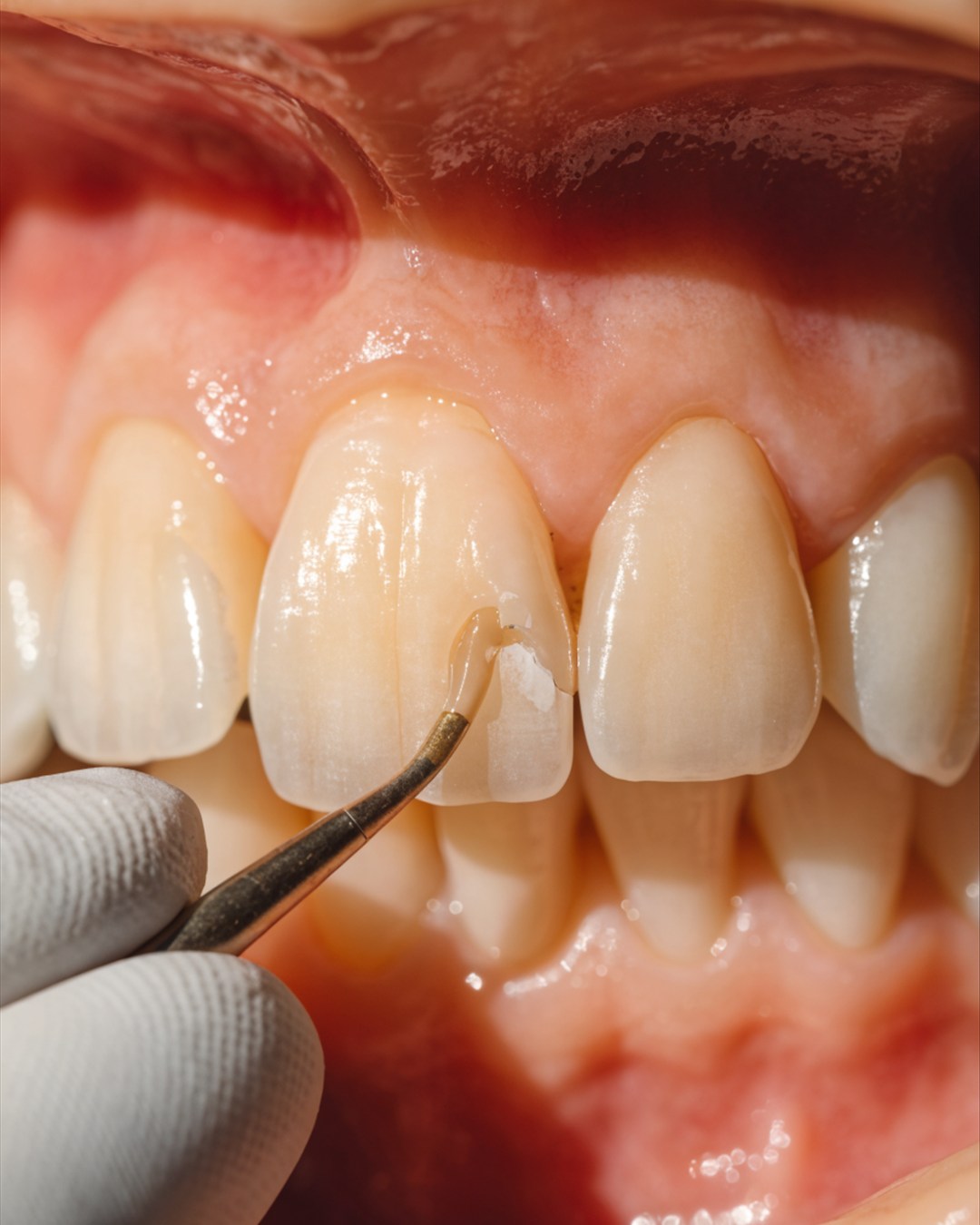
Often, yes—when the defect is small and the tooth can be restored additively, composite bonding may be the more conservative first option.
A small chipped edge does not automatically justify preparing the entire facial surface of a healthy tooth for a ceramic veneer.
Bonding may be especially useful for:
- one localized chip;
- a small diastema;
- a slightly short tooth;
- minor asymmetry;
- isolated edge wear;
- a patient who wants to test a modest shape change.
A 2024 randomized trial specifically examined multiple diastema closure and found similar two-year survival between direct composite and IPS e.max Press veneers in that selected patient group.
However, closing a large gap with composite alone can make teeth look disproportionately wide. Orthodontics may be a more conservative option when tooth position or space distribution is the underlying issue.
When Might E-max Veneers Be More Appropriate?
E-max veneers may be more appropriate when several visible teeth need a controlled and consistent change in color, shape, proportion, or surface appearance that would be difficult to maintain with extensive direct composite.
Potential situations include selected patients with:
- significant discoloration that cannot be managed adequately with whitening;
- several teeth with inconsistent shape or proportion;
- broader enamel-surface defects;
- multiple existing aesthetic restorations requiring a coordinated ceramic plan;
- a desire for greater long-term color stability;
- enough suitable tooth structure for conservative adhesive veneer treatment.
But a bigger cosmetic request does not automatically justify more tooth preparation.
If the teeth are crowded, protruded, structurally compromised, or affected by active disease, the first step may be orthodontics, restorative treatment, periodontal treatment, or another approach.
Patients should also understand that a veneer is different from a crown. If a tooth requires full-coverage structural restoration, the treatment plan has moved beyond a simple veneer decision. See E-max Veneers vs Crowns for that distinction.
What If You Grind or Clench Your Teeth?
Bruxism can affect both treatments and should be assessed before choosing either ceramic veneers or composite bonding.
Grinding and clenching can increase:
- composite wear;
- edge chipping;
- ceramic fracture;
- debonding;
- bite-related sensitivity;
- and the need for repair.
The ADA notes that patients who clench or grind, or who have a deep overbite, may not be ideal candidates for porcelain veneers without further assessment.
Composite may be easier to repair if damage occurs, but that does not make uncontrolled bruxism harmless.
A treatment plan may need:
- bite analysis;
- management of active dental disease;
- assessment of tooth wear;
- realistic discussion of maintenance;
- and, in selected patients, a protective night guard.
Which Costs More: E-max Veneers or Composite Bonding?
Composite bonding usually has a lower upfront cost because it is generally performed directly without a separate ceramic laboratory restoration. E-max veneers usually cost more because they involve indirect ceramic fabrication and additional clinical stages.
However, cost comparison should include more than the first appointment.
Composite may need:
- repolishing;
- repair;
- addition or reshaping;
- replacement over time.
Ceramic veneers may have a higher initial fee but also require maintenance and can eventually chip, debond, or need replacement.
Exact fees depend on the individual case and should be confirmed in a personalized, itemized quote after assessment. For the E-max side of the decision, see E-max Veneers Cost in Turkey: What Affects the Price?
What Should International Patients Ask Before Choosing Bonding or Veneers in Turkey?
International patients should first confirm what restoration is actually being proposed and how much natural tooth structure will be changed.
Ask the clinic:
- Is the plan direct composite bonding, a full composite veneer, a ceramic veneer, or a crown?
- Which teeth actually need treatment?
- Can the desired change be created additively with composite?
- If ceramic veneers are proposed, how much enamel preparation is expected?
- Is “E-max” the actual ceramic material specified for the case?
- What are the likely maintenance needs of each option?
- If composite chips or stains, can it be repaired locally?
- If a ceramic veneer fractures or debonds, what is the repair/replacement plan?
- How will grinding, clenching, or the bite be assessed?
- Should whitening or orthodontics happen before cosmetic restorative treatment?
- What follow-up care will be needed after returning home?
Niva Dental in Bakırköy, Istanbul presents E-max veneers as one of its dental treatment areas. Its broader Hollywood Smile approach also describes smile planning as potentially involving veneers, bonding, whitening, orthodontics, gum treatment, or combinations of treatments rather than one fixed procedure.
Patients traveling for treatment can also review the Niva Dental patient journey when planning consultation and follow-up.
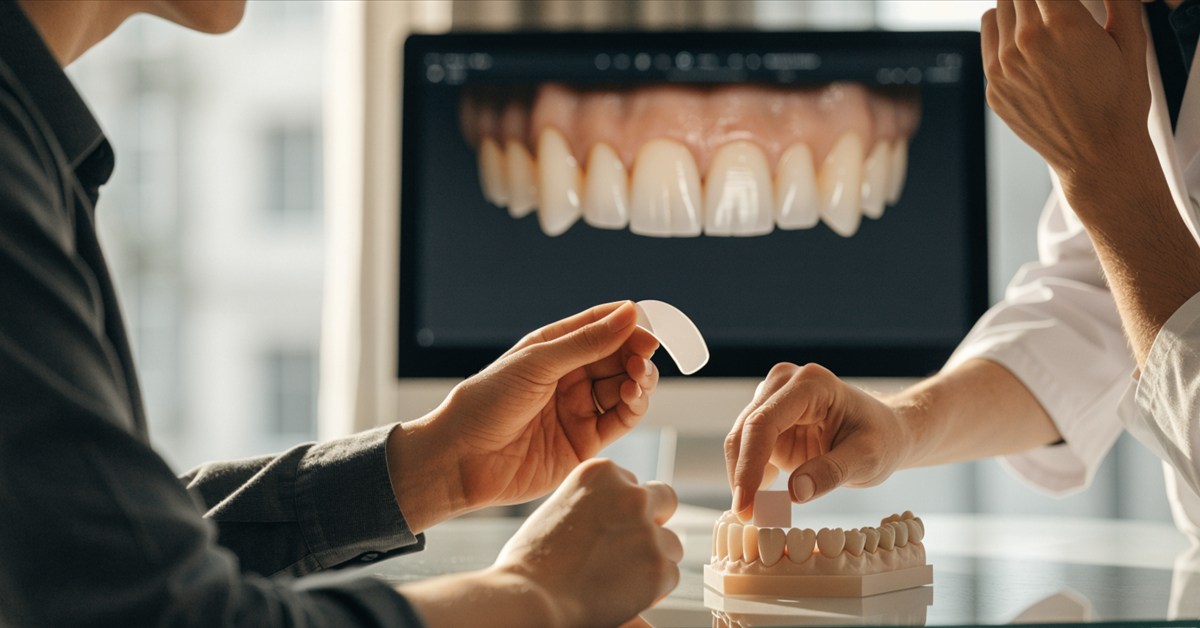
Emax Veneers vs Composite Bonding: Which May Fit Which Situation?
For emax veneers vs composite bonding, a practical framework is:
Composite bonding may fit better when:
- the change is small and localized;
- healthy enamel can remain untouched;
- a chip, edge, small gap, or slight contour issue is the main concern;
- repairability is a priority;
- the patient prefers a lower initial commitment;
- the patient accepts that polishing, staining, wear, or repair may occur sooner.
E-max veneers may fit better when:
- several front teeth need a more consistent ceramic surface;
- greater color change is required;
- long-term color stability is a major priority;
- the tooth structure and bite support adhesive ceramic treatment;
- the patient understands that any enamel preparation is irreversible;
- the patient accepts the higher initial treatment commitment and potential future replacement.
Another treatment may fit better when:
- active decay or gum disease is present;
- significant crowding or protrusion is the main concern;
- the tooth is structurally too damaged for a veneer;
- uncontrolled bruxism creates excessive risk;
- whitening alone could solve the color concern;
- no cosmetic treatment is medically necessary.
The right option is the least invasive predictable treatment that solves the patient’s actual problem.
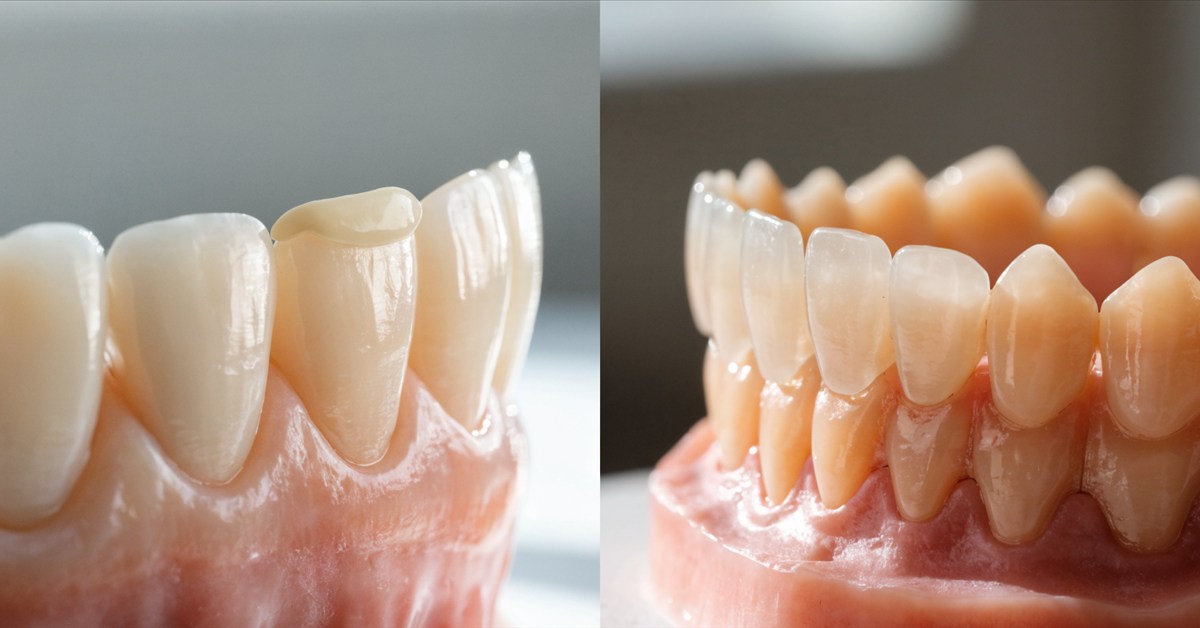
Frequently Asked Questions
Is composite bonding better than E-max veneers?
Neither is universally better. Composite bonding is often more conservative and easier to repair, making it useful for small chips, gaps, and additive shape changes. E-max veneers may provide greater long-term color stability and may suit larger multi-tooth aesthetic changes. The choice depends on enamel, bite, tooth position, oral health, and treatment goals.
Does composite bonding require tooth shaving?
Often it does not, especially when resin is simply being added to an intact tooth. However, some cases involve contouring or alteration of enamel, so bonding should not automatically be described as completely reversible. The dentist should explain whether any natural tooth structure will be changed before treatment begins.
Do E-max veneers last longer than composite bonding?
Long-term evidence generally favors ceramic veneers. A 10-year practice-based study found ceramic veneers had better survival and success than direct composite veneers. A two-year randomized trial in diastema cases, however, found similar short-term survival between direct composite and IPS e.max Press veneers. Individual outcomes still depend on case selection and maintenance.
Which stains more, composite bonding or E-max veneers?
Composite resin is generally more susceptible to staining and discoloration. The ADA lists staining/discoloration as a disadvantage of resin-based composite, and clinical composite-veneer reviews commonly report color mismatch and marginal discoloration. Ceramic usually maintains color more predictably, although margins and surrounding natural teeth can still change over time.
Is composite bonding easier to repair?
Usually, yes. Dentists can often add fresh composite, reshape an edge, polish roughness, or repair a limited chip directly. Ceramic repairs are possible in selected cases, but larger fractures or unacceptable veneer fit may require replacement. Repairability is one of composite bonding’s main practical advantages.
Is composite bonding cheaper than E-max veneers?
Composite bonding is usually less expensive initially because it is commonly performed directly without a separate ceramic laboratory stage. E-max veneers generally involve scanning or impressions, ceramic fabrication, try-in, and bonding. Exact prices vary by clinic and case, and long-term repair or replacement costs should also be considered.
Can I replace composite bonding with E-max veneers later?
Sometimes, yes. Patients may move from composite to ceramic later, but the underlying enamel, existing composite, bite, tooth position, and reason for replacement need evaluation first. Previous composite can affect the bonding substrate for ceramic veneers, so changing treatment is not simply a matter of removing one material and attaching another.
Is bonding better for young patients?
Composite can be attractive when a conservative additive correction is possible because it may preserve more natural tooth structure and is easier to modify. Age alone does not determine treatment, however. Enamel, bite, oral health, growth, expectations, and the long-term need for maintenance or retreatment should all be considered.
Can composite bonding close gaps as well as veneers?
It can close selected small gaps effectively. A 2024 randomized trial of multiple diastema closure found similar two-year survival for direct composite and ceramic veneers. Larger spaces require careful proportion analysis; if closing the gap would make teeth too wide, orthodontics may be more appropriate.
Can you combine composite bonding and E-max veneers?
Yes, selected treatment plans can combine restorations when different teeth have different needs. For example, one tooth may need a ceramic veneer while a neighboring tooth only needs a small additive composite correction. Shade, texture, bite, and maintenance should be coordinated so the result remains visually and functionally consistent.
Patients deciding between E-max veneers and composite bonding can contact Niva Dental in Bakırköy, Istanbul for an initial assessment of tooth structure, enamel, gum health, bite, existing restorations, and aesthetic goals. The most appropriate treatment may be ceramic, composite, another conservative option, or no cosmetic restoration at all; final suitability should be confirmed after an individual dental examination.
Medical References and Sources
- American Dental Association / MouthHealthy — Veneers
- American Dental Association — Materials for Direct Restorations
- Klein P, et al. — Survival and Complication Rates of Ceramic Laminate Veneers (PubMed)
- Alqutaibi AY, et al. — Clinical survival and complication rate of ceramic veneers bonded to different substrates (PubMed)
- Survival and complication rates of resin composite laminate veneers (PubMed)
- 10-year practice-based evaluation of ceramic and direct composite veneers (PubMed)
- Elkaffas AA, et al. — Randomized Clinical Trial on Direct Composite and Indirect Ceramic Laminate Veneers in Multiple Diastema Closure Cases (PubMed)
- Ivoclar — IPS e.max CAD