


How long do Emax veneers last? Review long-term survival evidence, what shortens veneer lifespan, warning signs, maintenance, and replacement risks.

How long do Emax veneers last? Current long-term evidence suggests that lithium-disilicate ceramic veneers can remain functional for well over a decade in many appropriately selected cases, but there is no guaranteed individual lifespan. A 2025 systematic review and meta-analysis reported a 96.81% pooled survival rate for lithium-disilicate laminate veneers at an average follow-up of approximately 10.4 years. That figure is population-level research, not a promise that every veneer will last 10 years or remain complication-free. Tooth preparation, enamel preservation, bonding, bite forces, bruxism, oral hygiene, trauma, and maintenance all affect how long an individual restoration may last.
For patients considering E-max veneer treatment at Niva Dental, longevity should be discussed as part of treatment planning—not as a fixed expiration date.
Quick Answer: How Long Can E-max Veneers Last?
| Question | Evidence-based answer |
|---|---|
| Is there a fixed E-max veneer lifespan? | No. There is no universal replacement date or guaranteed lifespan. |
| What does long-term research show? | A 2025 meta-analysis reported 96.81% pooled survival for lithium-disilicate laminate veneers at a mean follow-up of about 10.4 years. |
| Does “survival” mean the veneer stayed perfect? | No. A restoration can survive while still developing a technical, aesthetic, or biological complication that may require monitoring or treatment. |
| What most affects longevity? | Tooth condition, enamel preservation, bonding substrate, preparation, bite, grinding/clenching, trauma, oral hygiene, decay risk, and maintenance. |
| Can veneers last longer than 10 years? | Yes, some do, but no dentist can responsibly guarantee how long an individual veneer will last. |
| Do veneers eventually need replacement? | They may. Veneers can fracture, debond, develop marginal problems, or require replacement because the tooth or surrounding tissues change. |
What Does the Research Actually Say About E-max Veneer Longevity?
The strongest recent evidence supports high long-term survival for lithium-disilicate laminate veneers, while also showing that complications and failures still occur.
The most useful current benchmark comes from a 2025 systematic review and meta-analysis of ceramic laminate veneers. Twenty-nine clinical studies were included. For lithium-disilicate veneers, the pooled survival rate was 96.81% at an average observation period of approximately 10.4 years.
The same review reported estimated long-term complication rates for lithium-disilicate veneers of approximately:
- 6.1% technical complications;
- 1.9% aesthetic complications;
- 0.45% biological complications;
at the same long-term observation point.
These numbers should be interpreted carefully. They are pooled research estimates across different studies, clinicians, patients, preparation designs, bonding protocols, and follow-up conditions. They do not tell a dentist exactly how long one person’s veneer will last.
An earlier systematic review involving 6,500 porcelain laminate veneers reported an estimated 10-year cumulative survival of 95.5% across ceramic veneer types. Fracture was the most frequently identified failure mechanism, followed by debonding.
Taken together, the evidence supports a more useful answer than the common marketing claim of “10–15 years”: ceramic veneers can show high survival beyond a decade, but lifespan is individual and depends on biological, mechanical, and maintenance factors.
Survival Is Not the Same as Success or a Guaranteed Lifespan
A veneer can be classified as “surviving” in a study even if it has required monitoring, polishing, repair, or management of a complication.
This distinction matters when patients see a survival percentage online.
In dental research:
- survival usually means the restoration is still present and functioning according to the study’s definition;
- success may apply stricter criteria and require the restoration to remain free from certain complications or interventions;
- failure may include events such as fracture, loss of the veneer, or replacement, depending on the study protocol.
A survival figure is therefore not the same as saying:
- every veneer still looks exactly as it did on day one;
- every veneer remains free of small defects;
- no maintenance is needed;
- replacement will never be required.
The goal of treatment planning is not to promise a number of years. It is to reduce avoidable risk and create conditions that support long-term function.
What Factors Can Shorten the Lifespan of E-max Veneers?
E-max veneer longevity depends on the entire tooth-restoration system, not only on the ceramic. A strong material cannot compensate for poor case selection, unfavorable bonding conditions, untreated disease, or excessive forces.
1. Loss of enamel during tooth preparation
Preserving enamel can be important for bonded ceramic veneer performance.
A 2025 retrospective clinical study followed 672 ceramic veneers for periods of 1 to 15 years. Veneers were grouped according to the amount of dentin exposed at the bonding surface. Teeth with greater dentin exposure showed a higher risk of failure, and the authors concluded that enamel preservation is important for optimizing veneer outcomes.
A separate 2025 systematic review and meta-analysis of ceramic veneers bonded to different substrates also found the strongest survival and success estimates for veneers bonded predominantly to enamel compared with surfaces with more substantial dentin exposure.
This does not mean that a veneer touching dentin will automatically fail. It means that unnecessary removal of enamel can change the bonding environment and should be avoided when clinically possible.
2. Bruxism and heavy bite forces
Clenching or grinding can expose veneers to repeated nonfunctional forces.
The American Dental Association notes that patients who clench or grind their teeth may not be ideal veneer candidates without further assessment. The ADA also states that a dentist may recommend a night guard for people who grind their teeth.
Evidence specifically quantifying the effect of sleep bruxism on all ceramic restorations is limited and heterogeneous. A systematic review found very low-certainty evidence overall, although some anterior-veneer data suggested greater risk. The responsible conclusion is therefore not that bruxism guarantees failure, but that bruxism deserves individual bite assessment and risk management before and after veneer treatment.
3. Poor bonding conditions
Ceramic veneers rely heavily on adhesive treatment.
Contamination, inadequate isolation, unsuitable substrate, inappropriate surface treatment, unfavorable preparation, and problems with cementation can affect retention and marginal quality. Bonding is a clinical process, not simply a property of the ceramic.
4. Decay and gum disease
A veneer cannot prevent the natural tooth from developing disease.
The ADA states that cavities can still develop under or around a veneer and recommends treating decay or gum disease before veneer placement. Long-term maintenance therefore includes care of the natural tooth and gingival margin—not just protection of the ceramic surface.
5. Trauma and damaging habits
Biting fingernails, chewing ice or very hard objects, opening packages with the teeth, contact sports without a mouthguard, and accidental facial trauma can damage natural teeth and restorations.
A veneer is a durable dental restoration, not protective armor.

Does E-max Material Itself Determine How Long a Veneer Lasts?
No. Lithium disilicate is an important part of the restoration, but material alone does not determine clinical longevity.
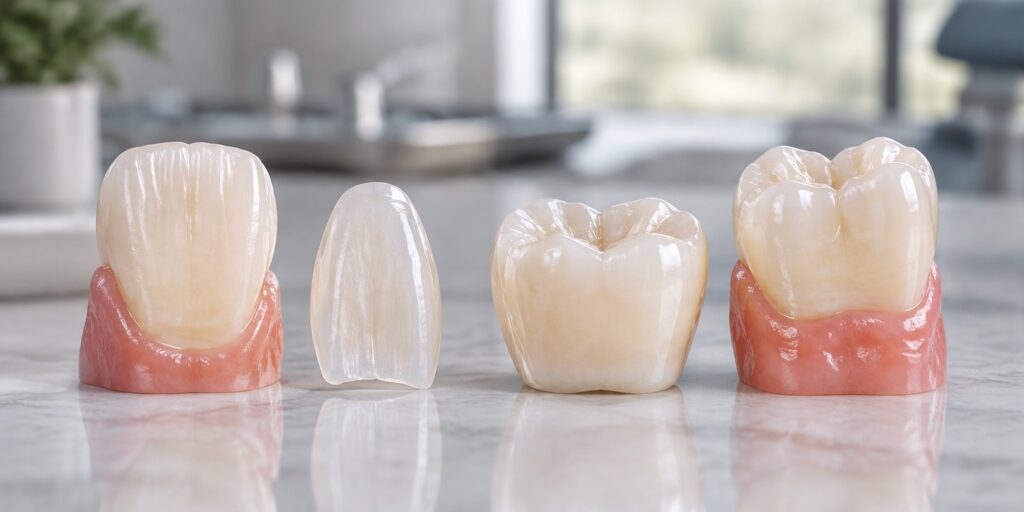
E-max / IPS e.max is ceramic material-system terminology. IPS e.max CAD and IPS e.max Press are based on lithium-disilicate glass-ceramic. Lithium disilicate can be used for several restoration types, including veneers and crowns, depending on indication.
A 2025 systematic review examining milled versus pressed lithium-disilicate veneers found favorable clinical performance for both workflows but also highlighted limited evidence quality and heterogeneity. The review reported some advantages for heat-pressed restorations in marginal adaptation and longer-term survival in the included studies, while CAD/CAM offered workflow and internal-fit benefits.
That evidence should not be turned into a universal rule that one fabrication method will always outlast the other. Veneer performance also depends on:
- case selection;
- preparation design;
- enamel availability;
- ceramic thickness;
- laboratory execution;
- bonding;
- occlusion;
- maintenance.
Niva Dental should not be assumed to use a specific branded E-max product or fabrication workflow in every case unless confirmed in an individual treatment plan.
What Problems Can Develop as E-max Veneers Age?
The most relevant long-term issues include fracture, chipping, debonding, marginal changes, decay around the restoration, gum-related problems, and aesthetic changes.
Possible events include:
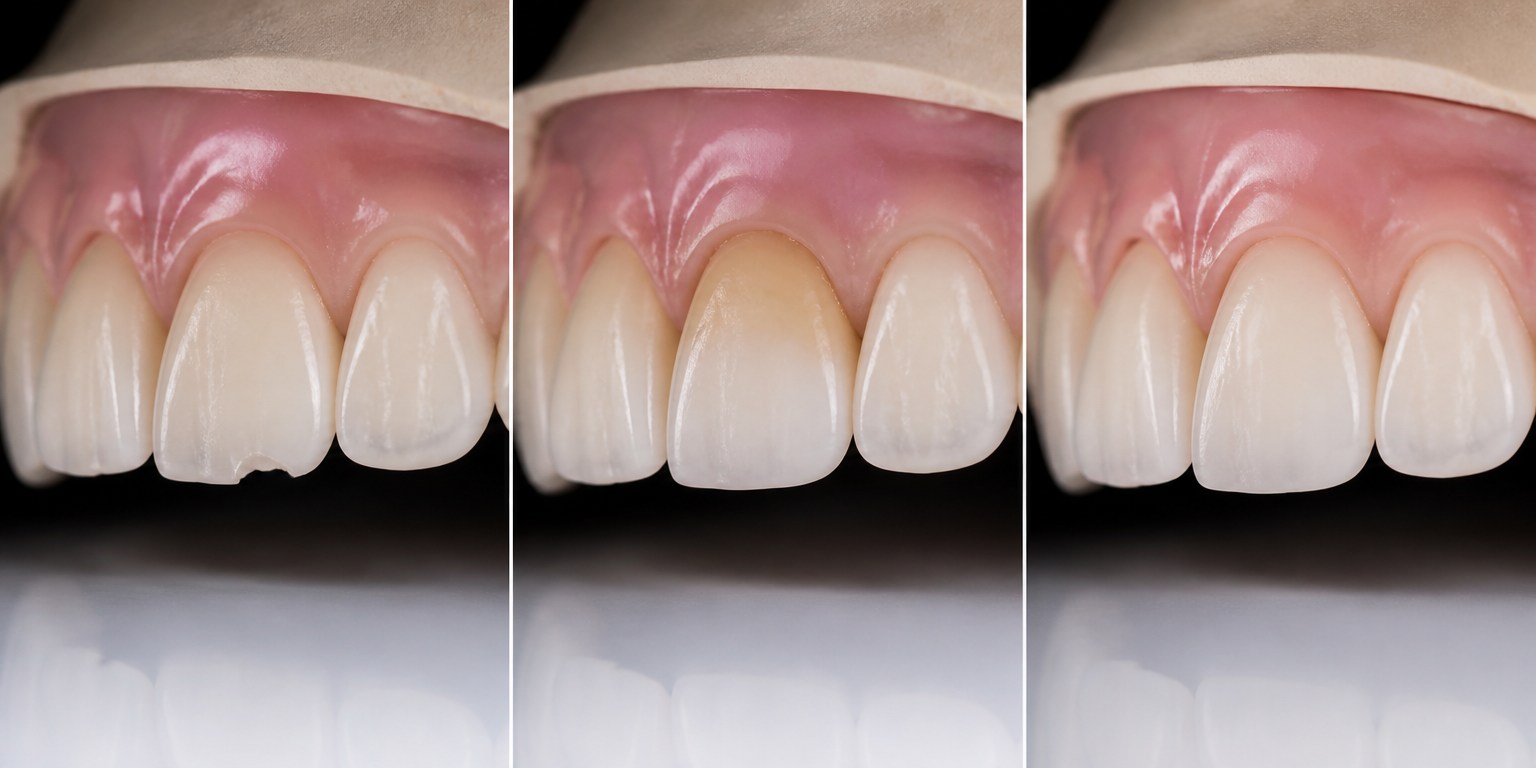
Chipping or fracture
A veneer can develop a small chip or a more significant fracture. The extent of damage, location, bite, and remaining ceramic determine whether repair is reasonable or replacement is needed.
Debonding
A veneer can partially or completely lose retention. Re-bonding may be possible in selected situations, but the dentist must first determine why the veneer detached and whether the restoration and tooth remain suitable.
Marginal discoloration
The edge where ceramic meets natural tooth can change over time. Marginal staining does not automatically mean that the veneer has failed, but it should be assessed if it is new or progressing.
Secondary decay
The ceramic itself does not develop a cavity, but the natural tooth can develop decay at or around the restoration margin.
Gum changes
Gingival inflammation, recession, changes in papillae, or changes in the visible margin can affect appearance and maintenance. These changes can relate to plaque control, periodontal health, restoration contour, aging, or other patient-specific factors.
Shade mismatch over time
Ceramic color is relatively stable, but surrounding natural teeth, dental work, and soft tissues can change. Whitening natural teeth later can also create a mismatch because ceramic restorations do not respond to whitening in the same way as natural enamel.
How Can You Help E-max Veneers Last Longer?
Good maintenance cannot guarantee a lifespan, but it can reduce preventable biological and mechanical risks.
The American Dental Association recommends the following core care for veneers:
- brush twice daily with fluoride toothpaste;
- clean between the teeth every day;
- avoid biting fingernails or chewing hard objects;
- use appropriate mouth protection for activities that risk dental injury;
- discuss grinding or clenching with a dentist;
- maintain regular dental care.
Brush the tooth, not just the veneer
The restoration covers only part of the natural tooth. Plaque can accumulate around margins and between teeth, so oral hygiene protects the supporting tooth and gums.
Clean between veneered teeth
Daily interdental cleaning helps control plaque where a toothbrush cannot clean effectively. The technique should avoid snapping floss aggressively into the gums.
Do not use teeth as tools
Opening packaging, biting hard objects, or repeatedly chewing ice creates unnecessary stress on ceramic edges and natural teeth.
Manage grinding or clenching
If a dentist identifies bruxism or significant wear, a custom night guard may be considered. A night guard does not guarantee that a veneer cannot fail, but it may help protect teeth and restorations from damaging forces.
Attend follow-up examinations
Dental reviews can identify bite changes, margin problems, decay, gum inflammation, small fractures, or other issues before they become larger problems.
The appropriate recall interval varies according to oral health, decay risk, periodontal condition, restoration history, and individual clinical needs.
What Are the Warning Signs That an E-max Veneer Needs Dental Review?
A veneer should be assessed if something changes in its feel, appearance, fit, bite, or surrounding tooth and gum tissue.
Contact a dentist if you notice:
- new movement or looseness;
- a visible crack or chip;
- sharp ceramic edges;
- pain when biting;
- persistent sensitivity;
- a change in the way your teeth meet;
- new darkening or staining at a margin;
- gum swelling, bleeding, or persistent irritation around the restoration;
- food repeatedly trapping around one veneer;
- signs that a veneer has partially detached.
A small aesthetic issue does not always require full replacement. Depending on the cause, treatment may involve polishing, repair, bite adjustment, re-bonding, treating the underlying tooth, periodontal care, or replacement.
When Do E-max Veneers Need to Be Replaced?
E-max veneers do not have a routine replacement date. They are replaced when the restoration, tooth, margin, function, or aesthetics can no longer be managed predictably with maintenance or repair.
Replacement may be considered when:
- the veneer has fractured beyond predictable repair;
- repeated debonding indicates a deeper problem;
- decay affects the underlying tooth;
- the margin is no longer clinically acceptable;
- the tooth has changed structurally;
- gum recession has created an unacceptable margin or aesthetic problem;
- the bite or tooth position has changed;
- the patient and dentist agree that an aesthetic problem justifies retreatment after discussing the biological cost.
Replacement is not biologically neutral. Removing an existing ceramic restoration can place the underlying tooth at risk of additional preparation or damage. This is another reason to avoid treating veneers as temporary fashion items.
Do E-max Veneers Stain or Change Color Over Time?
Lithium-disilicate ceramic generally has good color stability, but the overall smile can still change over time.
A veneer may appear different because of:
- staining or discoloration at margins;
- plaque or surface deposits;
- changes in the natural teeth beside the veneer;
- gum recession;
- changes in the underlying tooth;
- aging of adjacent restorations;
- surface roughness or damage.
The ADA advises patients with veneers to be cautious with foods and beverages that may stain or discolor dental restorations and to maintain routine oral hygiene.
If a veneer looks darker, lighter, or less glossy than before, the correct treatment depends on the cause. Polishing may help a surface issue, while a true shade mismatch or structural problem can require a different approach.
What Should International Patients Ask About Veneer Longevity in Turkey?
Patients traveling for E-max veneers should ask how the clinic plans for long-term maintenance and complications, not only how many years the veneers are said to last.
Useful questions include:
- Which teeth are actually suitable for veneers?
- How much enamel is expected to remain after preparation?
- What ceramic material is proposed?
- How will clenching, grinding, deep bite, or other occlusal risks be assessed?
- How will decay and gum health be evaluated before treatment?
- What types of veneer complications can occur?
- What problems can be repaired and what would usually require replacement?
- What follow-up care should be arranged after returning home?
- What should I do if a veneer chips, loosens, or becomes painful?
- Will I need a night guard or other protective strategy?
Patients planning care in Bakırköy, Istanbul can also review the Niva Dental patient journey for broader treatment and travel planning.
Long-term dental care continues after the return flight. International patients should maintain access to a local dentist for routine examinations, hygiene care, emergencies, and monitoring.

How Long Do Emax Veneers Last? The Practical Answer
The evidence does not support a single expiration date.
For how long do Emax veneers last, the most defensible current benchmark is that lithium-disilicate laminate veneers showed approximately 96.81% pooled survival at a mean follow-up of 10.4 years in a 2025 systematic review and meta-analysis. Some individual veneers last longer; others experience complications or fail earlier.
What matters most is whether treatment begins with:
- the right patient and tooth;
- conservative preparation;
- favorable bonding conditions;
- a manageable bite;
- controlled disease risk;
- realistic expectations;
- long-term maintenance.
A veneer should be viewed as a long-term dental restoration that may eventually require repair or replacement—not as permanent, maintenance-free treatment.
Frequently Asked Questions
Do E-max veneers last 10 to 15 years?
They can, but “10 to 15 years” should not be treated as a guaranteed lifespan. A 2025 meta-analysis reported 96.81% pooled survival for lithium-disilicate laminate veneers at a mean follow-up of about 10.4 years. Individual outcomes vary according to preparation, bonding, bite forces, bruxism, hygiene, decay risk, trauma, and maintenance.
Can E-max veneers last 20 years?
Some ceramic veneers may remain functional for very long periods, but current evidence does not justify promising every patient 20 years. Long-term clinical research supports high survival beyond a decade for lithium-disilicate veneers, while individual restorations can fail earlier or require intervention. A dentist should discuss risk factors rather than guarantee a specific number.
What is the most common reason veneers fail?
Fracture and debonding are important technical causes reported in long-term ceramic veneer literature. Other problems include marginal discoloration, secondary decay, gum-related issues, and loss of retention. The relative risk depends on tooth condition, preparation, bonding substrate, ceramic design, bite forces, habits, and follow-up.
Does grinding shorten the life of E-max veneers?
Grinding or clenching may increase mechanical stress on veneers, but the evidence is not strong enough to predict an exact reduction in lifespan for an individual patient. The ADA advises patients who grind or clench to discuss veneer suitability with a dentist. Bite assessment and, in selected patients, a night guard may be considered.
Can cavities develop under E-max veneers?
Yes. The ceramic itself cannot develop tooth decay, but the natural tooth can develop a cavity at or around restoration margins. Brushing with fluoride toothpaste, daily interdental cleaning, dietary risk control, and regular dental examinations remain important after veneers are placed.
Do E-max veneers need special toothpaste?
Most patients do not need a unique “veneer toothpaste.” The ADA recommends brushing twice daily with fluoride toothpaste and cleaning between the teeth daily. If a product is highly abrasive or you have specific sensitivity, gum, or restoration concerns, ask your dentist which products are appropriate for your mouth.
Can an E-max veneer be repaired instead of replaced?
Sometimes. A small chip, surface defect, or selected debonding problem may be repairable, but repairability depends on the location and size of the damage, the tooth beneath it, the bite, and why the problem occurred. Large fractures, recurrent decay, or an unacceptable fit may require replacement.
Does the color of E-max veneers change with age?
Lithium-disilicate ceramic is generally color-stable, but the appearance of the smile can still change because of marginal discoloration, deposits, gum recession, surface wear, underlying tooth changes, or changes in neighboring natural teeth. Whitening also affects natural teeth differently from ceramic restorations.
How often should E-max veneers be checked?
There is no one recall interval for every patient. The appropriate schedule depends on decay risk, gum health, bruxism, previous dental history, restoration condition, and other clinical factors. Regular dental examinations allow the dentist to monitor margins, bite, gum tissues, the underlying teeth, and any early ceramic damage.
Do E-max veneers eventually have to be replaced?
Many veneers eventually require repair or replacement, but there is no fixed replacement date. Replacement is based on the condition of the veneer and tooth—not the age of the restoration alone. A stable, functional veneer should not automatically be replaced simply because it has reached a particular anniversary.
Appropriate CTA
Patients considering E-max veneers can contact Niva Dental in Bakırköy, Istanbul for an initial assessment of tooth condition, enamel preservation, bite, gum health, and other factors that can affect long-term performance. No veneer lifespan can be guaranteed; final treatment suitability and maintenance planning should follow an individual dental examination.
Medical References and Sources
| Source | What It Supports |
|---|---|
| Klein P, et al. — Survival and Complication Rates of Feldspathic, Leucite-Reinforced, Lithium Disilicate and Zirconia Ceramic Laminate Veneers — PMID 39523553 | 2025 systematic review/meta-analysis reporting 96.81% pooled survival for lithium-disilicate laminate veneers at a mean follow-up of approximately 10.4 years and material-specific complication estimates. |
| Alenezi A, et al. — Long-Term Survival and Complication Rates of Porcelain Laminate Veneers in Clinical Studies — PMID 33807504 | Systematic review of 6,500 porcelain laminate veneers reporting 95.5% estimated 10-year cumulative survival and identifying fracture and debonding as important failure mechanisms. |
| Etienne O, et al. — Survival of Ceramic Veneers: Impact of Dentin Exposure and Tooth Vitality After 1 to 15 Years of Follow-Up — PMID 40755189 | 2025 clinical evidence associating greater dentin exposure with increased failure risk and supporting enamel preservation. |
| Alqutaibi AY, et al. — Clinical survival and complication rate of ceramic veneers bonded to different substrates — PMID 38604905 | Systematic review/meta-analysis supporting the importance of bonding substrate and showing stronger outcomes when ceramic veneers are predominantly bonded to enamel. |
| American Dental Association / MouthHealthy — Veneers | Veneer care, irreversibility, risk of chipping/cracking/loosening, cavities around veneers, oral-hygiene guidance, and caution for patients who grind or clench. |
| Sudharson NA, et al. — Clinical Performance and Survival Outcomes of Milled Versus Pressed Lithium Disilicate Veneers — PMID 41024714 | 2025 systematic review comparing CAD/CAM and heat-pressed lithium-disilicate veneer performance while highlighting evidence-quality limitations and heterogeneity. |