


An Emax veneers candidate should have stable oral health and suitable enamel. Learn who may qualify, who should treat problems first, and key alternatives.

A good Emax veneers candidate generally has stable teeth and gums, enough suitable tooth structure for predictable bonding, cosmetic concerns that a thin ceramic restoration can realistically correct, and a bite that can be managed safely. Untreated decay, active gum disease, severe structural damage, uncontrolled grinding, or major tooth-position problems may need treatment before veneers—or may make another option more appropriate. E-max / IPS e.max is lithium-disilicate ceramic material-system terminology; a veneer is the restoration type. Final eligibility should be determined tooth by tooth after an individual dental examination.
Patients considering E-max veneer treatment at Niva Dental should expect the decision to depend on oral health and tooth structure rather than on a cosmetic goal alone.
Quick Answer: Are You a Good Candidate for E-max Veneers?
| Clinical factor | What it may mean for E-max veneer candidacy |
|---|---|
| Healthy teeth and stable gums | Generally favorable |
| Cosmetic discoloration, small chips, worn edges, gaps, or shape concerns | Often compatible with veneer treatment if the tooth is otherwise suitable |
| Adequate enamel / healthy tooth structure | Favorable for adhesive bonding and conservative treatment |
| Untreated decay or active gum disease | Treat disease first before elective veneers |
| Severe tooth fracture or major structural loss | A crown or another restorative approach may be more appropriate |
| Mild tooth-position irregularity | Veneers may help selected cases, but orthodontics may preserve more tooth structure |
| Severe crowding or protrusion | Orthodontic treatment may be preferable before or instead of veneers |
| Bruxism / clenching | Requires risk assessment; uncontrolled heavy forces may make veneers less suitable |
| Deep or unstable bite | Requires careful occlusal assessment and possibly another treatment sequence |
| Desire for “zero shaving” | No-prep is only suitable for selected tooth positions and aesthetic goals |
| Realistic expectations and commitment to maintenance | Important for long-term care |
What Makes Someone a Strong Candidate for E-max Veneers?
The strongest candidates usually need a primarily cosmetic change on teeth that are already biologically and structurally stable. Veneers are not designed to hide untreated dental disease.
Potentially suitable concerns include:
- persistent discoloration that does not respond adequately to whitening;
- small chips or worn incisal edges;
- minor shape or proportion concerns;
- small spaces between teeth;
- selected mild positional irregularities;
- replacement of an existing veneer when the underlying tooth remains suitable.
The American Dental Association advises that decay and gum disease should be treated before veneers are placed. The ADA also notes that veneers may chip, crack, wear, loosen, or require repair or replacement over time.
A good candidate therefore has more than a cosmetic complaint. The tooth, gum tissue, bite, existing restorations, and long-term maintenance plan must all support the proposed restoration.
Why Healthy Enamel and Tooth Structure Matter
Preserving enamel is an important part of ceramic veneer treatment because adhesive bonding is generally most favorable when substantial enamel remains.
A 2025 clinical study followed 672 ceramic veneers for 1 to 15 years. Estimated survival was 96.7% when veneers were bonded to enamel-only preparations, compared with 93.9% when more than 30% of the bonding surface involved dentin. The study found significantly greater failure risk with dentin exposure and concluded that enamel preservation is important for optimizing outcomes.
A separate 2025 systematic review and meta-analysis also found the strongest survival and success estimates for ceramic veneers bonded to enamel compared with restorations bonded to surfaces with more extensive dentin exposure.
These findings do not create a simple rule that dentin exposure makes veneer treatment impossible. They support a more careful principle:
The more healthy enamel that can be preserved while still creating a functional, aesthetic restoration, the more favorable the bonding environment may be.
This is why candidacy and tooth preparation are closely connected. A patient may want veneers, but if achieving the desired result would require extensive removal of healthy tooth structure, another strategy may be more conservative.
For a deeper preparation discussion, see Do E-max Veneers Require Tooth Shaving? What Patients Should Know.
Which Cosmetic Concerns Can E-max Veneers Address?
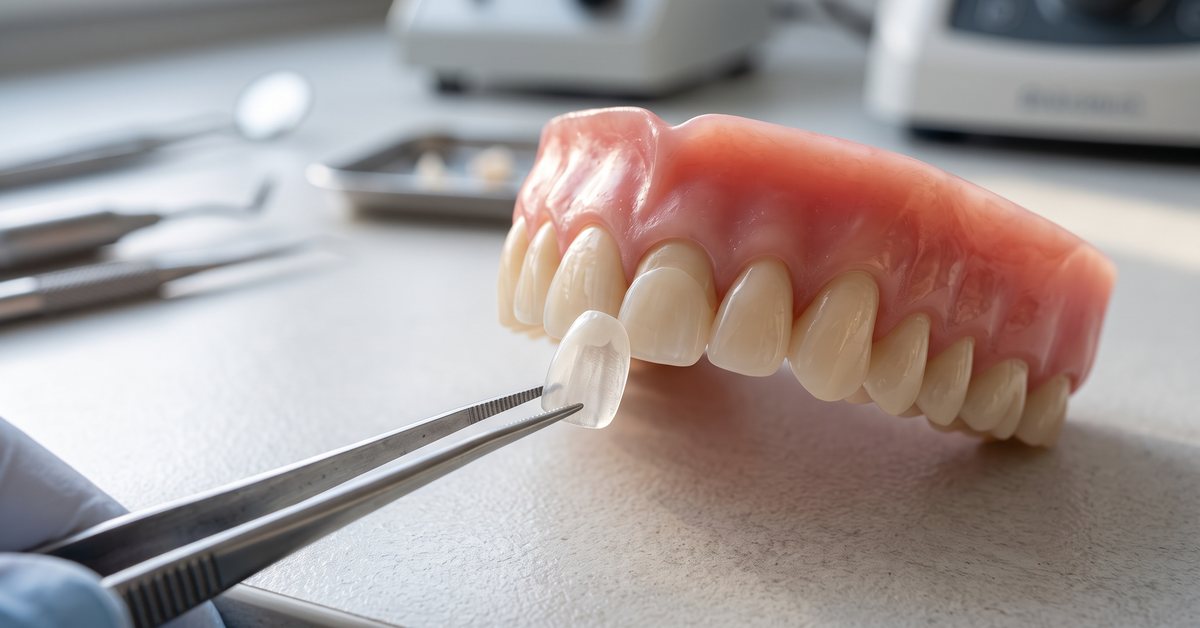
E-max-style lithium-disilicate veneers may be considered for selected color, shape, proportion, edge, spacing, and mild alignment concerns when the underlying tooth is suitable.
Discoloration
Veneers can alter the visible color of a tooth when whitening cannot provide the desired correction. However, severe intrinsic discoloration can require greater masking, different ceramic opacity, or additional restorative space. A highly translucent veneer is not automatically ideal for every dark tooth.
Small chips and worn edges
A veneer may restore contour when the defect is limited and the remaining tooth is stable. If damage is extensive, a crown or another restorative design may provide more appropriate coverage.
Small gaps
Selected spaces can sometimes be closed by adding ceramic volume. The dentist must consider tooth proportions and the number of teeth involved so that closing a gap does not produce unnaturally wide teeth.
Shape or proportion concerns
Veneers can modify visible tooth form, but the desired change must be compatible with the bite, gum line, facial proportions, and available restorative space.
Mild tooth-position irregularity
Ceramic can sometimes create the appearance of improved alignment in selected mild cases. Significant rotation, crowding, or protrusion is different: correcting position with ceramic alone may require unnecessary tooth reduction.
Who May Need Dental Treatment Before Getting Veneers?
A patient with active oral disease is generally not an immediate candidate for elective veneer treatment. The disease should be diagnosed and stabilized first.
The ADA specifically advises treating dental problems such as decay and gum disease before placing veneers.
Conditions that may need treatment first include:
- untreated cavities;
- active periodontal disease;
- persistent gum inflammation;
- dental infection;
- poor plaque control;
- unresolved sensitivity or pain;
- unstable existing restorations;
- untreated bite-related trauma.
Treating the underlying problem does not necessarily mean the patient can never receive veneers. It means cosmetic treatment should not be placed over unstable disease.
Healthy-looking teeth in photographs are also not enough to establish candidacy. A clinical examination may reveal decay between teeth, cracks, periodontal problems, large existing fillings, previous endodontic treatment, or bite issues that change the plan.
Can You Get E-max Veneers If You Grind or Clench Your Teeth?
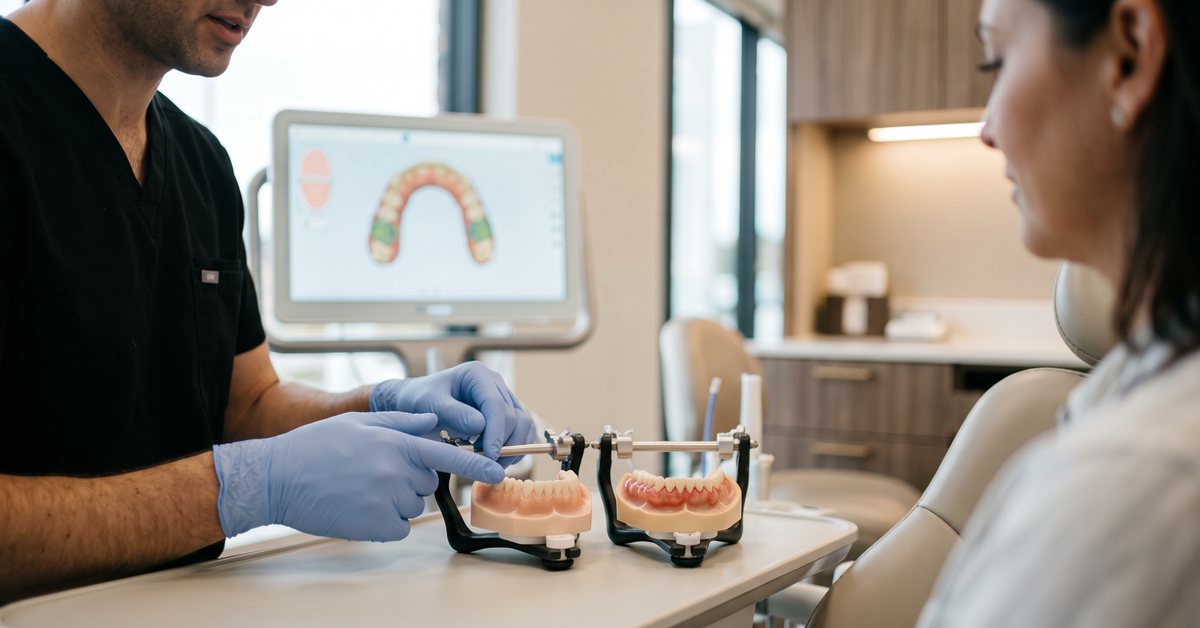
Bruxism does not automatically exclude every patient from veneer treatment, but uncontrolled or heavy grinding can increase concern about mechanical complications and requires individual risk assessment.
The ADA states that people who clench or grind their teeth, or who have a deep overbite, may not be good veneer candidates.
A systematic review and meta-analysis examining sleep bruxism and ceramic restoration failure found very low-quality evidence overall. In the subgroup of anterior ceramic veneers, some included data suggested higher failure risk, but the authors emphasized the limited evidence and methodological problems.
The responsible clinical approach is therefore to assess:
- signs of tooth wear;
- history of ceramic fracture or chipping;
- jaw-muscle symptoms;
- bite contacts;
- deep bite or edge-to-edge relationships;
- parafunctional habits;
- whether a protective appliance may be appropriate.
A night guard may be considered for selected patients, but it does not turn an otherwise unsuitable case into a guaranteed safe one.
Are E-max Veneers Suitable for Crooked or Protruding Teeth?
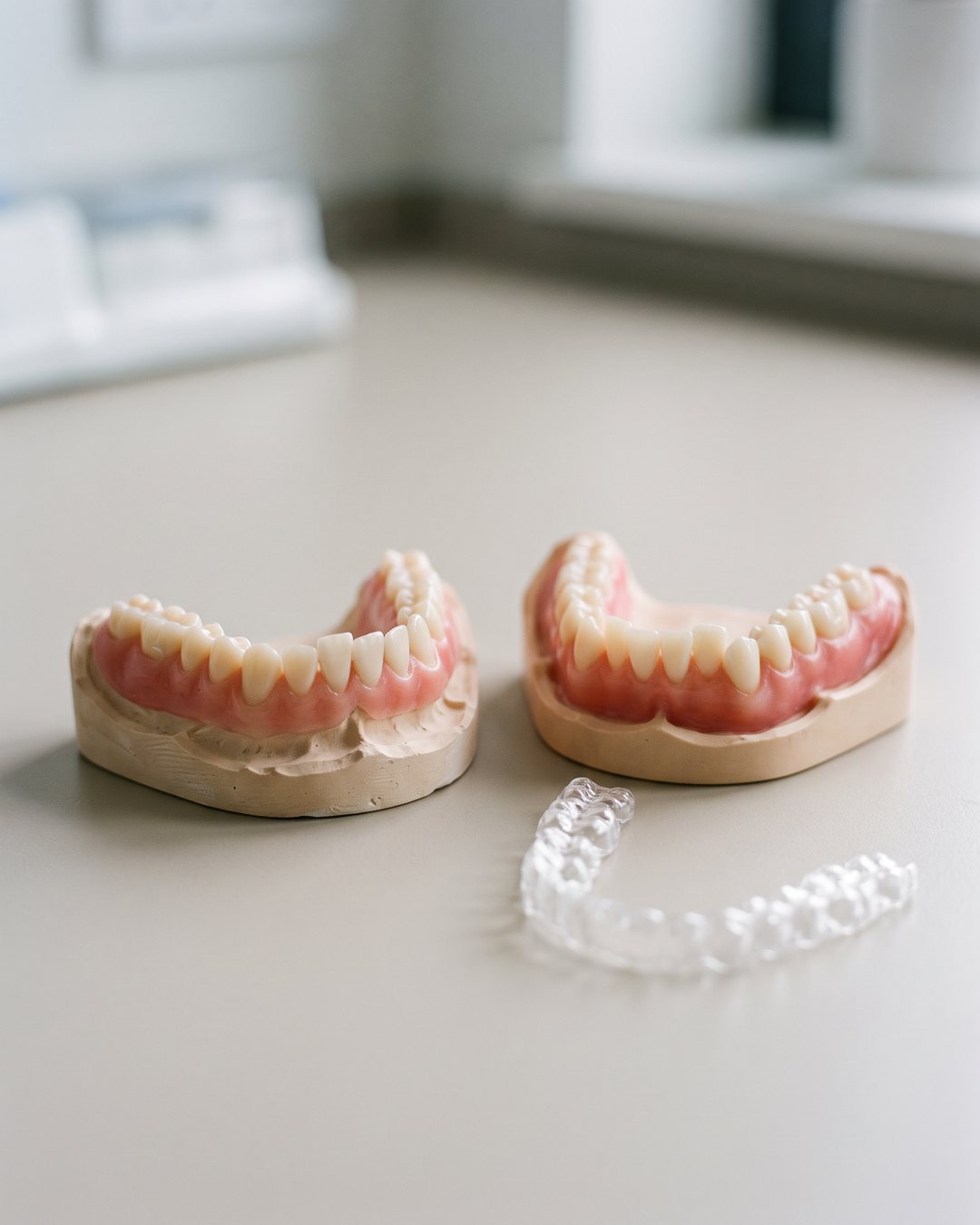
Mild irregularities may sometimes be managed with veneers, but significant crowding, rotation, or protrusion may be better treated orthodontically before ceramic treatment.
This distinction matters because a veneer adds ceramic to a tooth. If the tooth is already positioned too far forward, creating a straight-looking result may require more preparation to make space for the restoration.
Orthodontics can move the tooth itself rather than disguising its position by removing enamel.
A patient may therefore be a poor immediate veneer candidate but a good future candidate after alignment.
This is one of the clearest examples of why “Can veneers make my teeth look straight?” and “Are veneers the most conservative way to manage my alignment?” are different questions.
What About No-Prep or Minimal-Prep E-max Veneers?
No-prep or minimal-prep treatment is most suitable when the desired result can be created by adding controlled volume rather than removing significant tooth structure.
A 2026 review of no-preparation versus conventional porcelain veneers reported favorable outcomes for well-selected no-prep cases and emphasized enamel preservation. It also stated that no-prep veneers are less suitable when there is substantial intrinsic discoloration, misalignment, or major shape discrepancy.
Potentially favorable no-prep situations may include selected teeth that are:
- slightly small;
- mildly set back;
- separated by small spaces;
- lacking volume that can be added aesthetically;
- positioned so that added ceramic will not create an overbulked contour.
No-prep is therefore not a premium upgrade or a promise that can be applied to every patient. It is a case-selection decision.
For more detail, see Do E-max Veneers Require Tooth Shaving? What Patients Should Know.
When Might a Crown Be More Appropriate Than a Veneer?
A crown may be more appropriate when the tooth needs structural protection that a thin facial veneer cannot provide.
Examples may include a tooth with:
- extensive loss of natural structure;
- a very large existing filling;
- a substantial fracture;
- severe wear;
- major pre-existing preparation;
- selected root-canal-treated conditions;
- a combination of structural weakness and severe discoloration.
The ADA describes crowns as restorations that can strengthen teeth with large fillings, protect weak teeth from breaking, and restore teeth that are already broken.
A crown is more invasive than a veneer because it covers substantially more tooth structure. That greater coverage should therefore be justified by the condition of the tooth rather than chosen simply because a patient wants a uniform cosmetic result.
For a focused comparison, see E-max Veneers vs Crowns: What Is the Difference?.
When Might Whitening, Bonding, or Orthodontics Be Better?
A good veneer candidate is not simply someone who can technically receive veneers; it is someone for whom veneers are a reasonable choice compared with less invasive alternatives.
Teeth whitening
If the primary concern is color and the tooth structure is otherwise healthy, professional whitening may be more conservative. Whitening does not correct shape or major structural defects.
Composite bonding
Small chips, selected gaps, and modest shape changes can sometimes be managed with additive composite resin. Bonding may require less or no tooth preparation in suitable cases, although maintenance and material behavior differ from ceramic veneers.
Orthodontics or clear aligners
If tooth position is the main problem, orthodontic movement may avoid removing healthy tooth structure to create a straighter appearance.
No treatment
Cosmetic treatment is elective. If teeth are healthy and the concern is minor, deciding not to alter the teeth is also a valid outcome.
A conservative treatment plan should compare these options before irreversible ceramic preparation.
E-max Veneer Candidate Checklist for International Patients
International patients should treat an online assessment as preliminary. Final E-max veneer eligibility should be confirmed after an in-person dental examination.
Before traveling, ask the clinic to review:
- recent clear photographs of the teeth and full smile;
- available dental X-rays or records;
- previous fillings, crowns, root canal treatments, or veneers;
- history of gum disease;
- sensitivity, pain, cracks, or recent dental problems;
- grinding or clenching;
- the main cosmetic goal;
- whether orthodontics or whitening has already been considered.
At the in-person examination, ask:
- Are my teeth and gums stable enough for elective veneers?
- Which teeth actually need treatment?
- Is there enough suitable enamel for a conservative bonded restoration?
- How much preparation is expected on each tooth?
- Do any teeth need crowns instead of veneers?
- Could whitening, orthodontics, or bonding meet my goals with less tooth alteration?
- Is the material truly lithium disilicate / E-max, and what exact material is proposed?
- How will my bite and bruxism risk be managed?
- How should I maintain the restorations after returning home?
Patients traveling to Niva Dental in Bakırköy, Istanbul can review the Niva Dental patient journey for broader treatment and travel planning.

Emax Veneers Candidate: A Practical Decision Framework
The question “Am I an Emax veneers candidate?” is best answered in three stages:
Likely favorable for assessment
You have stable oral health, enough suitable tooth structure, manageable bite forces, and cosmetic concerns that can be corrected with partial-coverage ceramic restorations.
Treat or stabilize another problem first
You have active decay, gum disease, infection, poor plaque control, or another condition that should be treated before elective cosmetic dentistry.
Consider another treatment or sequence
You have major structural damage, severe malposition, substantial protrusion, uncontrolled bruxism, or a cosmetic goal that would require excessive removal of healthy tooth structure.
The best candidate is not the person willing to receive the most veneers. It is the patient whose dental condition, aesthetic goals, bite, and long-term maintenance needs are compatible with a conservative veneer plan.
Frequently Asked Questions
Who is a good candidate for E-max veneers?
A good candidate generally has healthy or stabilized teeth and gums, enough suitable tooth structure for bonding, realistic cosmetic goals, and a bite that can support thin ceramic restorations. Common suitable concerns include selected discoloration, small chips, worn edges, gaps, and shape problems. Final candidacy requires an individual dental examination.
Can I get E-max veneers if I have cavities?
Untreated decay should generally be treated before elective veneers are placed. The ADA advises addressing cavities and gum disease first because placing veneers over unhealthy teeth may worsen existing problems. After the tooth is restored and stable, a dentist can reassess whether a veneer, crown, bonding, or another treatment is appropriate.
Can I get veneers if I have gum disease?
Active gum disease should be diagnosed and treated before cosmetic veneers. Inflamed or unstable gum tissues can affect margins, appearance, hygiene, and long-term maintenance. A previous history of gum disease does not automatically prevent veneers, but periodontal stability and ongoing maintenance are important before irreversible restorative treatment.
Can people who grind their teeth get E-max veneers?
Some patients with bruxism may still be candidates, but grinding or clenching increases the need for careful bite and risk assessment. The ADA notes that people who grind or clench may not be good candidates in some situations. A dentist may discuss protective strategies such as a night guard when clinically appropriate.
Are E-max veneers suitable for crooked teeth?
Selected mild irregularities may be managed with veneers, but significant crowding, protrusion, or rotation may be better treated with orthodontics. Using veneers to camouflage major tooth-position problems can require more natural tooth reduction. A dentist should compare orthodontic and restorative options before recommending irreversible preparation.
Do I need a lot of enamel for E-max veneers?
There is no single enamel measurement that determines eligibility, but preserving suitable enamel is valuable for adhesive bonding. Current clinical evidence associates greater dentin exposure with higher veneer failure risk. Tooth position, existing restorations, enamel quality, and the required preparation all influence whether a veneer is a predictable option.
Can root-canal-treated teeth get E-max veneers?
A root-canal-treated tooth is not automatically excluded, but its remaining structure, color, previous restorations, fracture risk, and preparation must be assessed carefully. Some structurally compromised teeth may need broader crown coverage rather than a veneer. The restoration choice should be based on the condition of the individual tooth.
Am I a candidate for no-prep E-max veneers?
Only selected patients are suitable for no-prep treatment. Favorable cases are generally additive: for example, a slightly small or set-back tooth where ceramic volume can be added without creating excessive bulk. Significant discoloration, protrusion, rotation, or major shape correction may require preparation or another treatment.
Is there an age limit for E-max veneers?
Age alone does not establish candidacy. The more important questions are tooth development, oral health, enamel and tooth structure, bite, restorative history, expectations, and long-term maintenance. Cosmetic treatment in younger patients deserves particularly conservative planning because any removed tooth structure is irreversible and restorations may need future replacement.
Can I know if I am a candidate from photos before traveling to Turkey?
Photos can support a preliminary review, but they cannot confirm final eligibility. An in-person examination may identify decay, gum disease, cracks, bite problems, enamel limitations, or existing restorations that are not fully visible in photographs. Final treatment planning should be confirmed clinically before irreversible preparation.
Patients considering E-max veneers can contact Niva Dental in Bakırköy, Istanbul for an initial assessment of their cosmetic goals and dental history. Final candidacy should be confirmed through an individual dental examination that evaluates tooth structure, enamel, decay, gum health, existing restorations, bite, and whether a more conservative alternative would better meet the patient’s needs.
Medical References and Sources
| Source | What It Supports |
|---|---|
| American Dental Association / MouthHealthy — Veneers | Veneers cover the front of teeth; enamel removal is irreversible; decay and gum disease should be treated first; clenching, grinding, and deep overbite can affect candidacy. |
| Etienne O, et al. — Survival of Ceramic Veneers: Impact of Dentin Exposure and Tooth Vitality After 1 to 15 Years of Follow-Up — PMID 40755189 | 2025 clinical evidence showing higher failure risk with greater dentin exposure and supporting enamel preservation and careful patient selection. |
| Alqutaibi AY, et al. — Clinical survival and complication rate of ceramic veneers bonded to different substrates — PMID 38604905 | Systematic review/meta-analysis supporting stronger survival and success outcomes for enamel-bonded veneers compared with severe dentin exposure or existing composite substrates. |
| Chandode A, et al. — No-preparation and conventional veneers in esthetic dentistry: Clinical considerations — PMID 42145353 | 2026 evidence on no-prep case selection and limitations in patients with intrinsic discoloration, misalignment, or major morphological discrepancies. |
| Melo G, et al. — Association of sleep bruxism with ceramic restoration failure — PMID 28967401 | Systematic review/meta-analysis showing limited and very low-quality evidence overall, with a signal of increased risk in anterior veneers; supports cautious bruxism assessment rather than absolute exclusion. |
| Ivoclar — IPS e.max CAD | Technical confirmation that IPS e.max CAD is lithium-disilicate glass-ceramic and is indicated for multiple restoration types including veneers; used only for material terminology. |