


Choosing a dental implant clinic in Turkey should be based on verifiable clinical and legal information, not price or marketing alone. This guide explains what international patients should check before booking implant treatment.

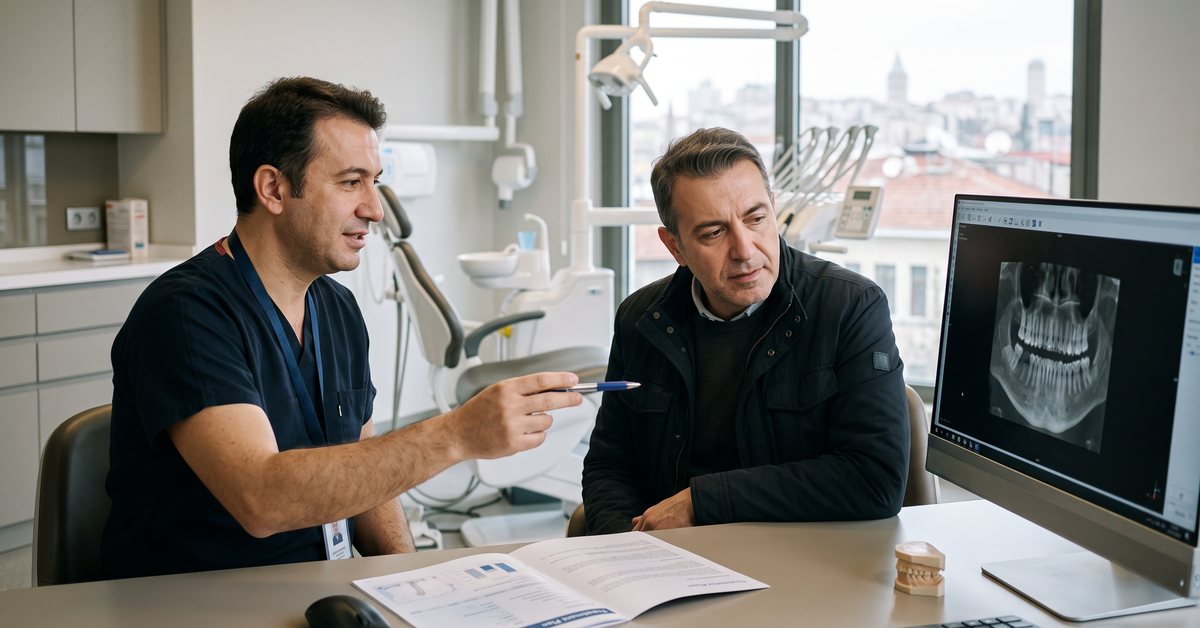
Choosing a clinic for implant treatment abroad is a medical decision before it is a travel decision. If you are researching how to choose a dental implant clinic in Turkey, focus first on evidence you can verify: whether the healthcare provider is authorized to treat international patients, who will actually perform your treatment, how your case will be assessed, what implant system and restorative components are planned, and what happens after you return home.
A polished website, hotel package, low headline price, or social-media following cannot answer those questions. They do not replace clinical planning.
Compare clinics by separating three things often blended in dental tourism marketing: the legal healthcare provider, the treating clinician, and your individual treatment plan. All three should make sense before you pay a deposit or book a flight.
1. Verify the Clinic as a Healthcare Provider, Not Just a Brand

A dental clinic’s marketing name is not enough. International patients should ask for the exact legal name of the healthcare facility providing treatment and verify its status through official sources.
Türkiye regulates international health tourism. Under the International Health Tourism and Tourist Health Regulation published on April 26, 2025, healthcare facilities and intermediary organizations must obtain authorization to operate in international health tourism. The Turkish Ministry of Health also publishes current lists of healthcare providers authorized by the Ministry.
As of August 20, 2026, the Ministry’s Health Tourism Department had published updated authorized-provider lists. A clinic should therefore be able to tell you the legal entity under which treatment will be provided so you can compare that name with the official list.
Authorization matters, but it should not be treated as a guarantee of a particular clinical result. It confirms a regulatory status; it does not replace the need to evaluate the clinician, diagnosis, treatment plan, materials, or aftercare.
Before booking, ask:
- What is the exact legal name of the healthcare facility?
- Does that name appear on the current Ministry of Health authorized-provider list?
- Is the address on the authorization consistent with the facility where treatment will occur?
- If a coordinator or travel company is involved, which organization is the healthcare provider and which is the intermediary?
This distinction is particularly important when a brand name, clinic name, and legal entity are not identical.
2. Find Out Who Will Actually Treat You
A clinic can have an impressive team page, but implant treatment is performed by individual clinicians. Ask for the full name of the dentist expected to examine you, place the implant, and complete or supervise the prosthetic stage.
Request verifiable information about the dentist’s qualification, professional registration, relevant postgraduate training, and experience with implant cases similar in complexity to yours. Be cautious with broad labels such as “implant expert” when the clinic does not explain what the title represents.
Complex care may involve more than one clinician. Implant placement, bone augmentation, bite planning, and the final crown or bridge can require different skills. That can be appropriate, but responsibility for each stage should be clear.
Ask:
- Who performs the implant surgery?
- Who fits or supervises the final restoration?
- Will I meet the treating dentist before the final plan is approved?
- What relevant training and experience do they have?
- Will I be told if another clinician takes over a stage?
A useful answer identifies people and roles, not only “our expert team.”
3. Judge the Diagnostic Process Before You Judge the Treatment Plan
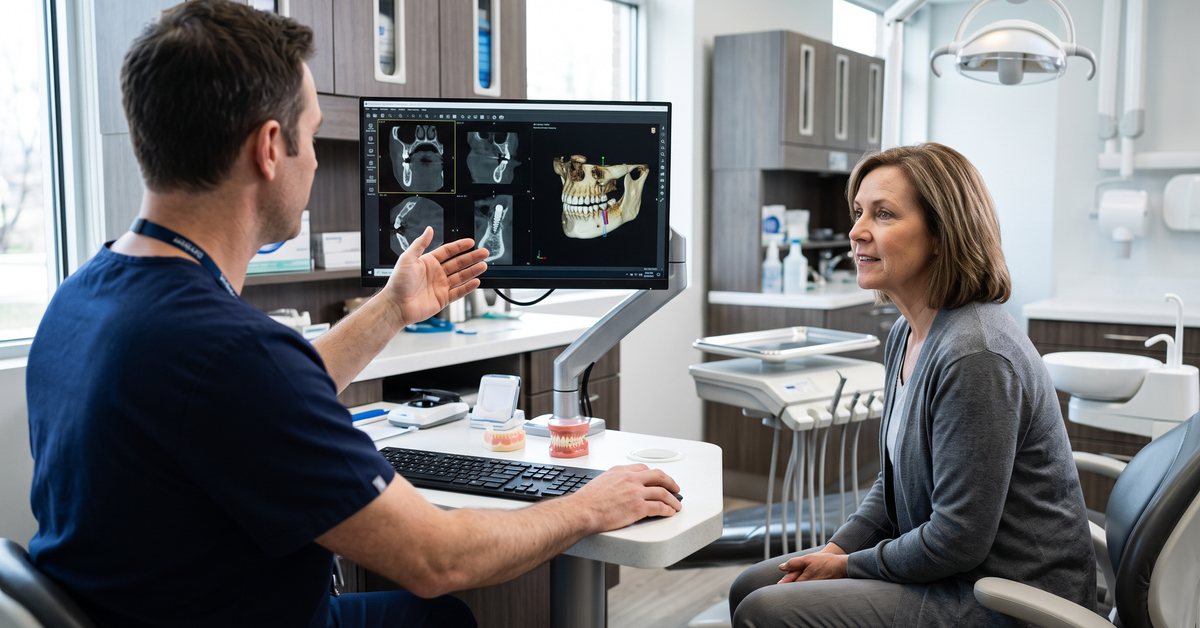
A strong clinic should explain how it reaches a diagnosis, not simply send a fast package price.
Implant planning may involve clinical examination, dental and medical history, assessment of the gums and bite, and appropriate radiographic imaging. Cone beam computed tomography (CBCT) can provide three-dimensional information about bone and nearby anatomy when clinically indicated. The International Team for Implantology states that CBCT use should follow clinical assessment and individual need. See the ITI consensus guidance on CBCT in implant dentistry.
A remote consultation is useful for preliminary planning. Photos, existing X-rays, a medication list, and dental history may help estimate likely treatment before travel. It should not be presented as a final diagnosis when an in-person examination or updated imaging could change the plan.
What a careful preliminary plan should explain
Before travel, you should understand:
- which areas are being considered for implants;
- whether extractions or bone procedures may become relevant;
- whether the restoration is a crown, bridge, overdenture, or full-arch prosthesis;
- which parts remain provisional until examination;
- how many clinical stages or trips may be needed.
The more invasive the proposal, the more important it is that the clinical reasoning is explained.
4. Make Sure You Understand What Is Being Placed in Your Mouth
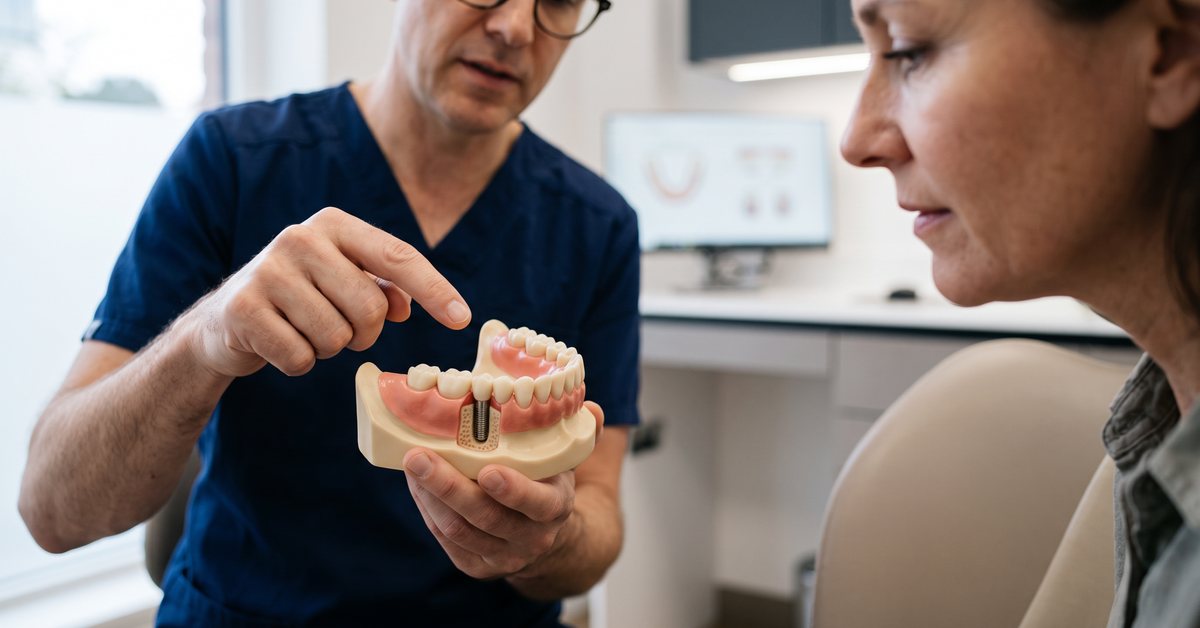
“Dental implant” can describe more than one component. The implant fixture sits in the bone, an abutment or prosthetic connection may attach above it, and a crown or bridge forms the visible restoration.
Ask for the exact implant system proposed rather than accepting a vague phrase such as “premium implant.” Brand alone should not determine clinic choice, but knowing the system is practical because future maintenance may require compatible components.
Ask:
- What manufacturer and implant system are planned?
- Will the system be confirmed in writing?
- What documentation will identify the implant and components used?
- Which crown or bridge material is proposed?
- Can another qualified dentist identify the system later from my records?
The clinic should also explain why the chosen system and restoration fit your case.
For full-arch treatment, the number and position of implants, temporary teeth, final prosthesis, and maintenance plan all matter. Niva Dental’s Smile All-on-Four/Six treatment page explains the general full-arch concept; individual suitability still requires clinical assessment.
5. Compare Written Treatment Plans, Not Package Headlines
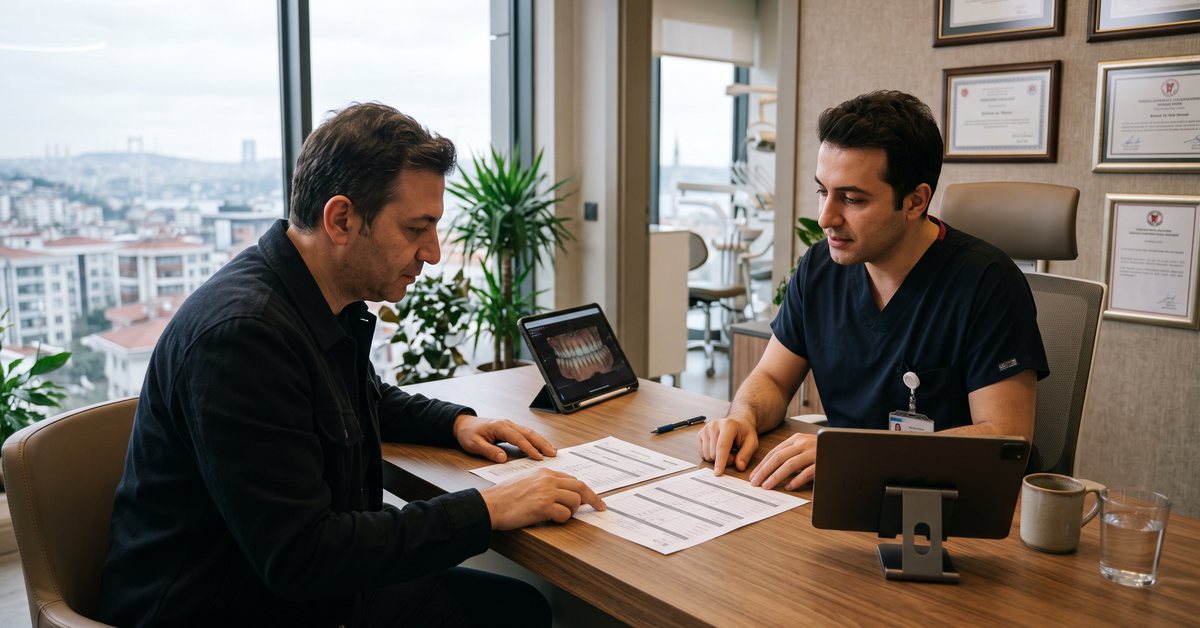
Two clinics can quote very different prices while describing different treatments. Before deciding that one clinic is cheaper, make sure the plans are clinically comparable.
An implant quote may refer only to the implant fixture, or it may include the abutment, final restoration, imaging, surgery, temporary teeth, laboratory work, follow-up, or additional procedures. That is why a written, itemized treatment plan matters more than a headline package number.
| What to compare | What should be clear in writing | Why it matters |
|---|---|---|
| Implant treatment | Number and location of planned implants | Prevents comparisons between different treatment scopes |
| Implant system | Manufacturer/system planned | Helps with traceability and future maintenance |
| Restoration | Crown, bridge, overdenture, or full-arch prosthesis | The visible/prosthetic stage is not the same as the implant fixture |
| Additional procedures | Possible extraction, grafting, sinus procedure, or periodontal treatment | These may change complexity, timing, and cost |
| Temporary teeth | Whether a temporary restoration is planned and under what conditions | Temporary and final teeth are not interchangeable terms |
| Treatment stages | What happens on each visit | Implant placement and final restoration may occur at different times |
| Clinical fees | Imaging, anesthesia, laboratory work, reviews, adjustments | Helps reveal exclusions from a headline price |
| Aftercare | Scheduled reviews and support after returning home | Dental implant care continues after surgery |
A lower quote is not automatically worse, and a higher quote is not automatically better. The useful comparison is like for like.
For a closer look at what drives implant pricing, see Dental Implants Turkey Cost 2026: What Affects the Price.
6. Check the Timeline: Fast Treatment Is Not the Same as Rushed Treatment
International patients naturally care about how many days they need to stay in Türkiye. A clinic should therefore explain the difference between procedure time, early recovery, biological healing, and final restoration timing.
Osseointegration is the biological process in which the jawbone heals closely around the implant surface. That process does not occur simply because a patient has a short travel window.
Some patients may be candidates for immediate implant placement or an immediate temporary restoration. Others may need delayed treatment, bone augmentation, or a different loading schedule. These decisions depend on clinical findings, implant stability, anatomy, infection status, and the prosthetic plan.
Be cautious if a clinic promises the same timeline to every patient before reviewing appropriate diagnostic information.
Ask:
- Is the proposed timeline preliminary or final?
- What clinical findings could change it?
- Am I receiving a temporary restoration or the final one?
- If the implant does not have the required stability, what is the alternative plan?
- How long should I remain locally for review before flying home?
A responsible plan includes a backup option rather than treating the travel itinerary as more important than the biology.
7. Treat Aftercare as Part of the Implant Treatment

Cross-border aftercare is one of the biggest practical differences between treatment near home and treatment abroad.
The NHS treatment-abroad checklist advises patients to understand possible complications, recovery time, and how aftercare will be coordinated. The CDC Yellow Book guidance on medical tourism also recommends arranging follow-up and obtaining overseas medical records for continuity of care.
Before paying a deposit, ask:
- Who do I contact after returning home?
- Which problems require prompt local assessment?
- Are remote reviews scheduled?
- What records and implant-system information will I receive?
- If adjustment or corrective treatment is needed, where will it occur?
- Which costs are covered, and what is the patient’s responsibility?
- What happens if I cannot return to Türkiye?
A commercial “warranty” is not the same as medical aftercare. It cannot guarantee healing or replace professional assessment.
Niva Dental describes final checks, aftercare guidance, and remote support within its Patient Journey. Patients should still ask how those services apply to their individual implant plan.
8. Use Reviews as Supporting Evidence, Not Clinical Proof
Patient reviews can reveal patterns about communication, scheduling, unexpected charges, aftercare, and how a clinic responds to problems. They cannot prove that a treatment plan is medically appropriate for you.
Look beyond the average rating. Read reviews across time and prioritize detailed accounts from patients who had similar implant treatment.
Useful signals include:
- whether reviewers name the treatment they received;
- whether they describe follow-up months later, not only the first week;
- how the clinic responds to critical reviews;
- whether patients mention changes to the plan after examination;
- whether unexpected fees or additional procedures are explained;
- whether aftercare communication continued after the patient returned home.
Before-and-after photographs have similar limitations. They may demonstrate a clinic’s aesthetic style, but they do not show the original diagnosis, bone condition, bite, medical history, X-rays, complications, or long-term maintenance.
9. Know the Red Flags Before You Pay a Deposit
One concern does not automatically prove that a clinic is unsafe, but several warning signs together should make you seek more information or a second opinion.
Red flags worth taking seriously
- The clinic will not provide its exact legal healthcare-provider name.
- Authorization claims cannot be matched with an official source.
- You are not told who will perform the implant surgery.
- A final treatment plan is issued from a few photos without explaining its limitations.
- Every patient appears to receive the same number of implants or the same timeline.
- The clinic refuses to identify the implant system or restoration material.
- A large deposit is pushed before your questions are answered.
- Risks, alternatives, or possible changes to the plan are not discussed.
- Marketing promises “100% success,” “risk-free,” “permanent forever,” or another guaranteed medical result.
- Hotel, transfer, and tourism benefits receive more attention than diagnosis and aftercare.
- The clinic cannot explain what happens if a complication develops after you fly home.
The NHS specifically lists hard-selling, pressure to make a quick decision, lack of information, no discussion of possible complications, and no mention of aftercare as warning signs when considering treatment abroad.
For a broader safety checklist, see Are Dental Implants in Turkey Safe? What Patients Should Check.
A Practical Clinic Comparison Scorecard
A practical answer to how to choose a dental implant clinic in Turkey is to compare every provider against the same evidence. When several clinics look similar online, use the same questions for each one. A standardized comparison helps prevent price, luxury travel services, or a persuasive coordinator from dominating a medical decision.
| Evidence layer | Stronger signal | Reason to investigate further |
|---|---|---|
| Legal provider | Exact entity is independently verifiable | Only a brand name or logo is supplied |
| Treating clinician | Named dentist with clear, verifiable role | Anonymous “expert team” |
| Diagnosis | Preliminary remote review plus in-person confirmation | Final diagnosis from photos alone |
| Imaging | Imaging is selected and explained according to clinical need | No explanation of bone/anatomy assessment |
| Implant system | Manufacturer/system and documentation are disclosed | “Premium implant” with no identifiable system |
| Treatment plan | Itemized, staged, and written | One-line package quote |
| Timeline | Healing and alternative pathways are explained | Same rapid schedule promised to everyone |
| Consent | Risks, alternatives, and possible changes are discussed | Only benefits are emphasized |
| Aftercare | Named contact, records, reviews, and complication pathway | Vague “message us if needed” support |
| Reviews | Detailed, treatment-specific, longer-term feedback | Only curated testimonials |
The goal is the clinic that gives clear, verifiable answers and explains uncertainty appropriately.
Frequently Asked Questions
How do I know if a dental clinic in Turkey is legitimate?
For patients asking how to choose a dental implant clinic in Turkey, legitimacy should be checked before marketing claims or package details.
Ask for the clinic’s exact legal healthcare-provider name and check it against the Turkish Ministry of Health’s current authorized-provider list. Verify the treating dentist’s identity and professional credentials separately. Legal authorization is an important first filter, but it does not prove that a specific implant plan is appropriate for you.
Should I choose a dental implant clinic in Turkey based on price?
Compare price only after the treatment scope is clear. Quotes may include different numbers of implants, systems, restorations, imaging, bone procedures, temporary teeth, laboratory work, or aftercare. Itemized plans make it possible to compare equivalent treatment instead of headline package prices.
Do I need a CBCT scan before dental implant treatment?
CBCT can provide three-dimensional information about the implant site and nearby anatomy when clinically needed. Imaging should be selected according to individual assessment rather than automatically. Ask how bone volume, anatomical structures, and implant position will be evaluated in your case.
Can a clinic give me a final implant plan through WhatsApp or video consultation?
A remote consultation can support a preliminary plan, especially when recent imaging is available, but it does not reproduce a full in-person examination. Gum condition, bite, mobility, updated imaging, and other findings may change the plan after arrival. The clinic should clearly state what remains provisional.
Does the implant brand matter when choosing a clinic?
The implant system matters, but it is only one part of treatment quality. Knowing the manufacturer and system can help with component identification and future maintenance. A recognized brand does not compensate for weak diagnosis, planning, prosthetic design, hygiene, or aftercare.
What should I ask about the dentist who will place my implants?
Ask for the dentist’s full name, professional qualifications, relevant implant training or experience, and role in your treatment. If the case involves grafting or complex prosthetic work, ask who manages those stages too.
What happens if I have an implant problem after returning home?
The clinic should provide an aftercare and complication pathway before treatment. It should explain who to contact, which records you receive, when local assessment is necessary, how remote follow-up works, and what costs or return visits may be involved. Arrange local follow-up options before travel.
Choosing a Clinic Should End With Clearer Questions, Not Bigger Promises
Learning how to choose a dental implant clinic in Turkey is mainly about separating verifiable clinical information from marketing. Confirm the legal healthcare provider, identify the dentist who will treat you, understand how diagnosis and imaging shape the plan, ask what implant and restoration will actually be used, compare itemized treatment rather than package headlines, and resolve aftercare before you travel.
No checklist can determine whether dental implants are appropriate for an individual patient; that requires clinical assessment.
If you are comparing treatment at Niva Dental, review its dental implant treatment in Istanbul and Patient Journey information, then use the verification questions in this guide. A remote consultation can begin the discussion, but final suitability should be confirmed clinically.
Medical References
-
Republic of Türkiye, Official Gazette. International Health Tourism and Tourist Health Regulation. Published April 26, 2025.
https://resmigazete.gov.tr/eskiler/2025/04/20250426-2.htm -
Republic of Türkiye Ministry of Health, Health Tourism Department. Healthcare Providers Authorized by the Ministry. Updated August 20, 2026.
https://shgmturizmdb.saglik.gov.tr/EN-69063/healthcare-providers-authorized-by-the-ministry.html -
International Team for Implantology (ITI). Cone Beam Computed Tomography (CBCT): Consensus Statements and Treatment Guidelines.
https://academy.iti.org/academy/consensus-database/consensus-statement/-/consensus/cone-beam-computed-tomography-cbct-/1212 -
NHS. Treatment Abroad Checklist.
https://www.nhs.uk/using-the-nhs/healthcare-abroad/going-abroad-for-treatment/treatment-abroad-checklist/ -
Centers for Disease Control and Prevention. CDC Yellow Book: Medical Tourism.
https://www.cdc.gov/yellow-book/hcp/health-care-abroad/medical-tourism.html