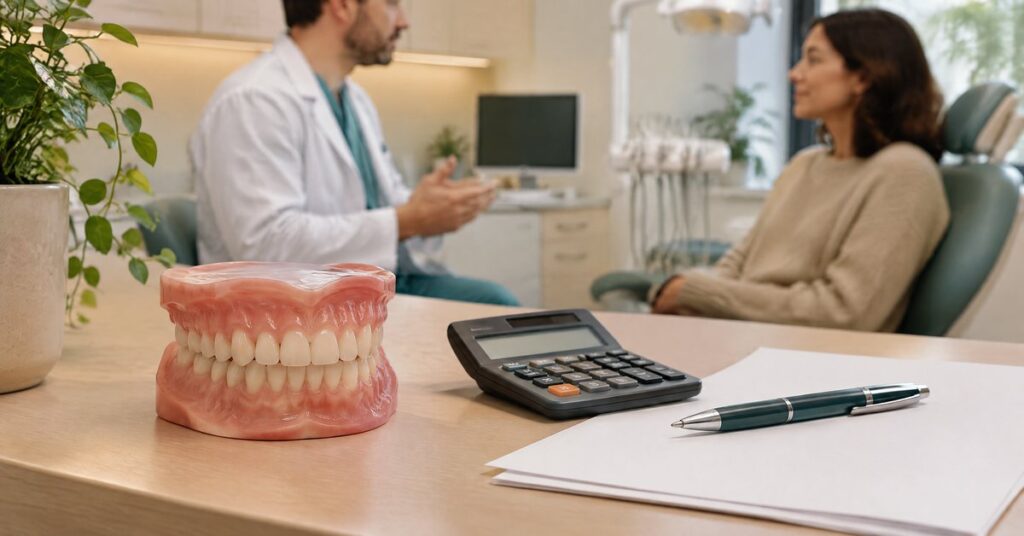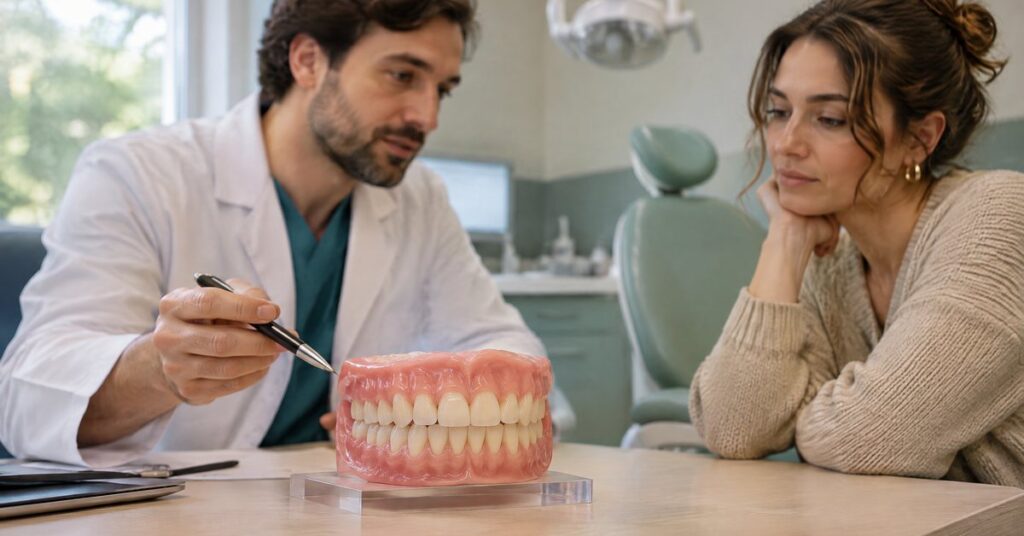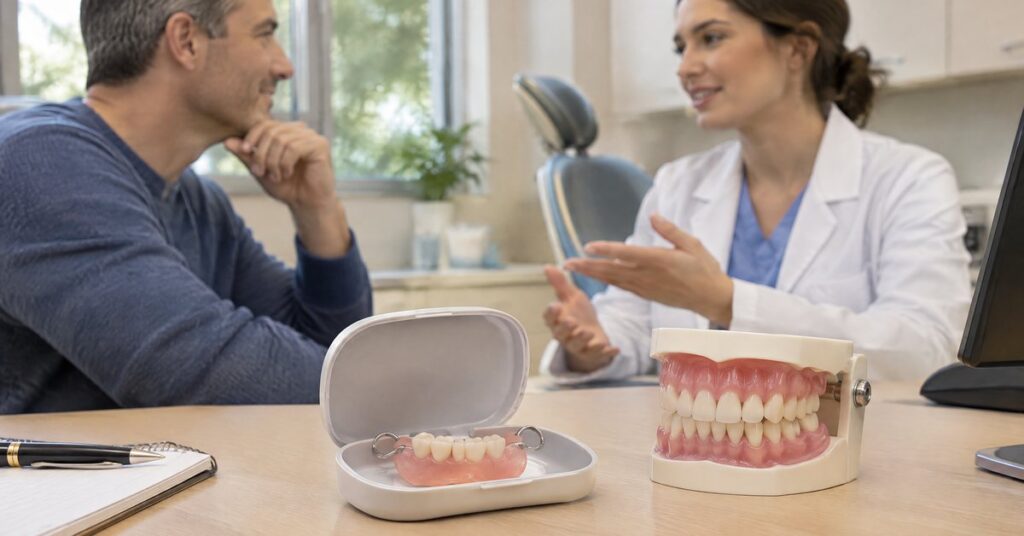


A patient-focused guide to dental implant safety in Turkey, including how to check clinic authorization, dentist credentials, treatment planning, implant risks, timing and aftercare before traveling.

Are dental implants in Turkey safe? They can be, but the country alone cannot determine whether an individual treatment plan is safe or appropriate. Dental implant surgery has recognized risks wherever it is performed. What changes from clinic to clinic is the quality of diagnosis, the qualifications of the treating team, infection-control systems, treatment timing, the implant and prosthetic plan, informed consent, and what happens if you need care after returning home.
For international patients, a useful safety decision is therefore not simply “Turkey versus another country.” It is one specific clinic, one treating dentist, one written treatment plan, and one follow-up pathway.
Turkey also has a formal regulatory framework for international health tourism. Patients can use Ministry of Health resources to verify authorized facilities rather than relying only on advertisements, social media, reviews, or package prices.
Are Dental Implants in Turkey Safe?
Yes, dental implants in Turkey can be performed safely in appropriately selected patients when treatment is provided by qualified dental professionals in a properly authorized facility using suitable diagnostic, surgical, restorative, infection-control, and follow-up processes. That does not make implant surgery risk-free, and it does not mean every clinic, treatment plan, or patient has the same risk profile.
A dental implant is a fixture placed in the jawbone to support a crown, bridge, or other prosthetic restoration. The bone then heals around the implant in a process called osseointegration. According to Mayo Clinic guidance on dental implant surgery, implant treatment can involve several stages and may carry risks such as infection, injury to nearby structures, nerve problems, and sinus-related complications in selected upper-jaw cases.
The important point is that these are implant-surgery risks, not risks created simply by crossing a national border. Traveling for care does, however, add practical questions about provider verification, communication, medical records, recovery time, insurance, and continuity of care.
What Actually Makes Dental Implant Treatment Safer?
Dental implant safety depends on a chain of decisions rather than one brand name, one piece of technology, or one “success rate.”
Before surgery, the dental team should determine whether implant treatment is appropriate, whether active disease needs to be managed first, how much bone is available, where important anatomical structures are located, and what type of restoration the implant will support. A patient’s medical history, medications, smoking status, gum health, bite forces, and previous dental history may also affect planning.
A safe treatment pathway usually includes:
- a clinical dental examination before the final plan is approved;
- appropriate dental imaging based on the individual case;
- review of relevant medical conditions, medications, allergies, and smoking history;
- a written treatment plan explaining the number and location of implants;
- a clear prosthetic plan for the crown, bridge, or full-arch restoration;
- explanation of alternatives and material risks;
- infection-prevention and sterilization procedures;
- realistic healing and loading timelines;
- written aftercare instructions;
- a defined plan for follow-up and complications.
A remote consultation can help with preliminary planning, especially for international patients, but photographs and messages alone cannot reveal every clinical factor needed to finalize implant surgery.
How Is Dental Treatment for International Patients Regulated in Turkey?
Turkey regulates international health tourism through the Ministry of Health. The Regulation on International Health Tourism and Tourist Health, published on April 26, 2025, sets authorization and service standards for healthcare facilities and intermediary organizations serving international health tourists.

The Ministry also publishes updated lists of healthcare facilities holding international health tourism authorization. The page checked for this article states that the lists were updated on August 20, 2026. Patients can use the Ministry of Health authorization-list update page as a starting point for verification.
A May 2026 Ministry notice also states that, under the 2025 regulation, authorized hospitals, medical centers, laboratories, and dialysis centers must obtain TÜSKA accreditation by December 31, 2026, while other healthcare facilities such as practices and polyclinics must obtain the applicable Ministry certificate by that date.
For patients, the practical step is to ask for the exact legal name of the healthcare facility and its current authorization details, then verify them against official Ministry information. A marketing name, facilitator, or travel package should not substitute for the identity of the facility providing treatment.
| Safety check | What to ask for | Why it matters |
|---|---|---|
| Healthcare facility | Legal facility name and authorization details | Enables official verification |
| Treating dentist | Full name, qualification, and clinical role | Identifies who is responsible for care |
| Diagnosis | Examination and appropriate imaging | Supports anatomy-based planning |
| Written plan | Implant locations, stages, restoration, and alternatives | Prevents a package label from replacing a clinical plan |
| Implant system | Manufacturer/system and treatment documentation | Supports future identification and maintenance |
| Infection control | Sterilization and surgical-area protocols | Implant placement is surgery |
| Follow-up | Healing reviews and post-travel contact plan | Supports continuity of care |
| Complication policy | Revision pathway and possible extra costs | Clarifies what happens if problems occur |
How Should You Check a Dental Implant Clinic in Turkey Before Booking?
Clinic selection should be based on verifiable clinical information, not a promise of “perfect teeth,” a hotel package, or social-media popularity.
1. Identify the dentist who will actually treat you
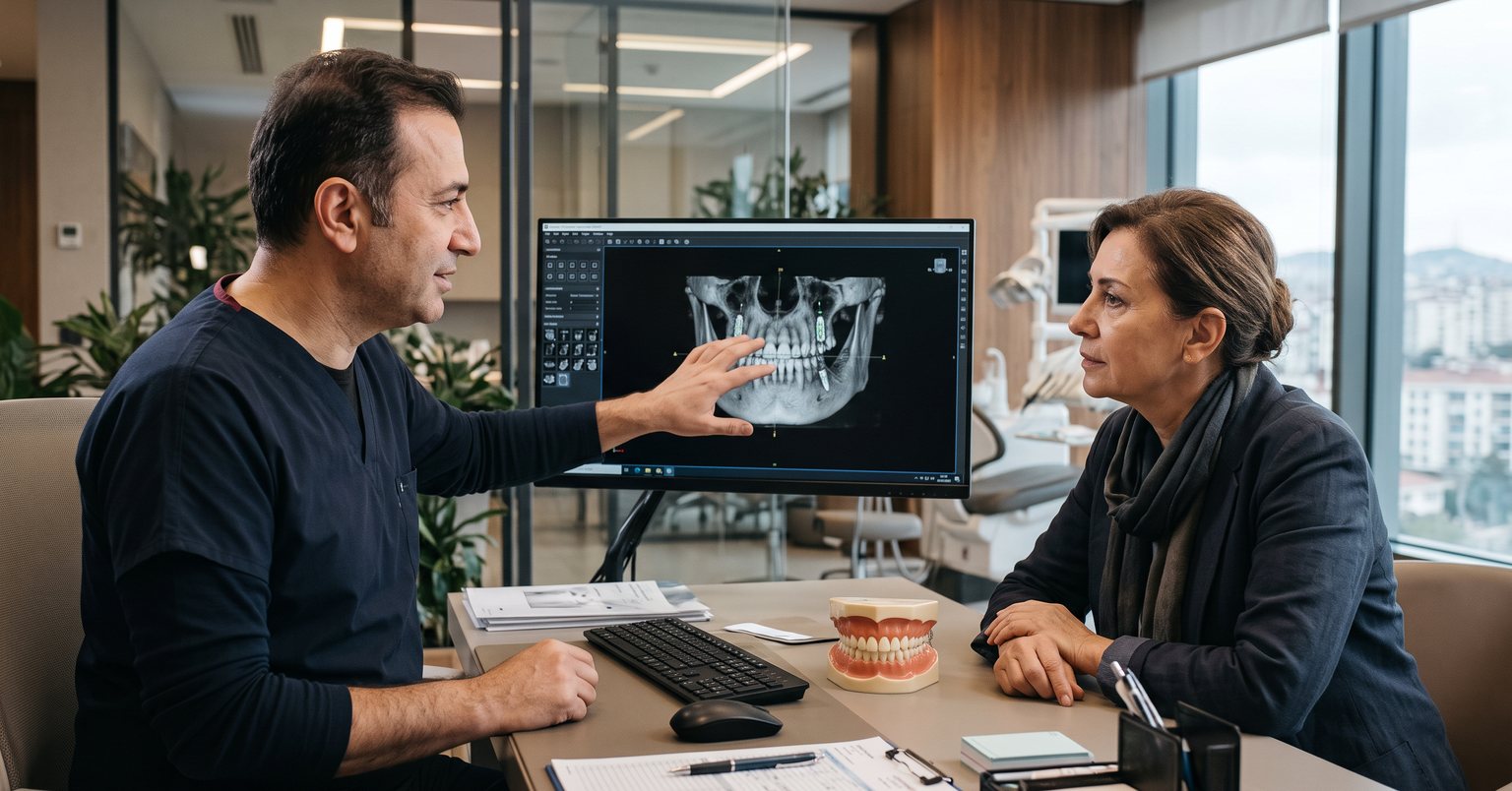
Ask who will examine you, plan the implant positions, perform the surgery, and approve the final restoration. Request the dentist’s full name and qualifications before paying a substantial deposit.
Niva Dental currently publishes profiles for members of its dental team. Its profile for Sevil Akyüz states that she studied at Sivas Cumhuriyet University Faculty of Dentistry and that her clinical work includes dental implant treatments. Patients should still confirm who will personally treat their own case.
2. Ask what diagnostic records are needed
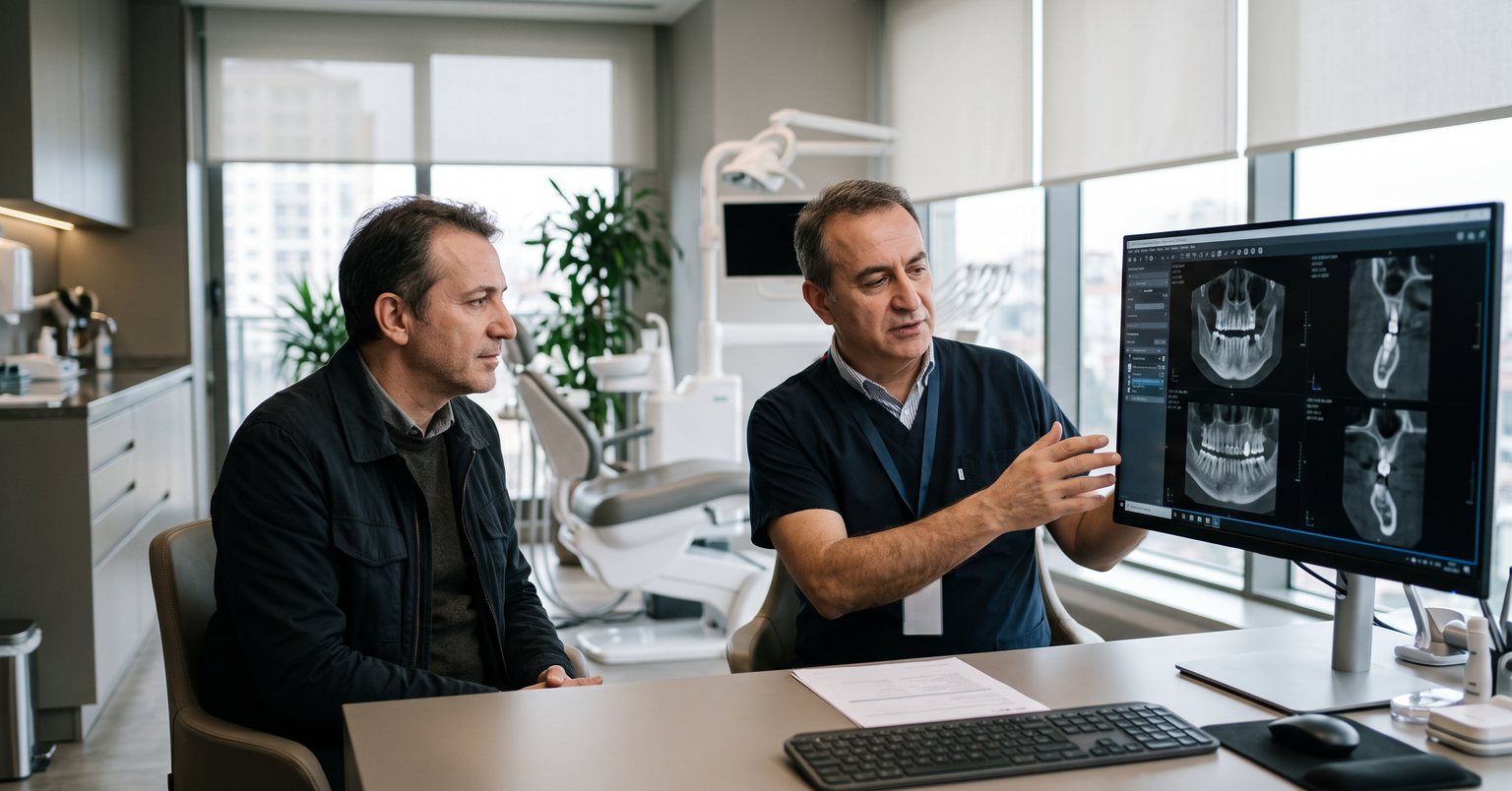
A final implant plan should not be based only on a smile photograph. Dental examination and imaging are used to assess teeth, bone, gums, bite, and nearby anatomy.
A CBCT (cone-beam computed tomography) scan provides three-dimensional information and may be useful when clinically indicated. The dentist still needs to interpret it within the full examination.
3. Get the treatment sequence in writing
The plan should separate extraction, grafting or sinus augmentation if needed, implant placement, healing, temporary restoration where appropriate, and the final prosthetic stage. Procedure time is not the same as total treatment time.
4. Ask which implant system will be used
Request the manufacturer and system name in writing. Keep the documentation identifying the implant system and components after treatment so another dentist can understand what was placed if future maintenance is needed.
5. Ask how aftercare works after you fly home
The NHS treatment-abroad checklist advises patients to understand complications, aftercare, recovery time, and possible return-trip costs.
Before booking, ask who reviews healing, which symptoms need urgent assessment, whether a control visit occurs before departure, what can be managed remotely or locally, and when a return to Istanbul may be necessary. A warranty is not the same as an aftercare plan.
Which Patient Factors Can Increase Dental Implant Risk?
Implant risk varies between patients. Planning should consider oral health, medical history, medications, smoking, bone anatomy, and healing factors.
Smoking
Smoking is associated with poorer implant outcomes. A 2024 systematic review and meta-analysis involving tens of thousands of implants found a significant association between smoking and early implant failure. Smoking does not guarantee failure, but it is a relevant risk factor that should be discussed before treatment.
Gum disease and oral hygiene
The American Academy of Periodontology describes peri-implant mucositis as soft-tissue inflammation around an implant and peri-implantitis as inflammation associated with loss of supporting bone. Previous periodontal disease, poor plaque control, smoking, and diabetes are among factors linked with peri-implant disease.
Diabetes and other medical conditions
Diabetes does not automatically make a person unsuitable for implants. Risk depends on disease control, overall health, medications, healing capacity, and other clinical findings. Relevant medical conditions should be reviewed rather than approved through a blanket “yes” from a message exchange.
Bone volume and anatomy
Insufficient bone may change implant position, timing, or the need for augmentation; it does not automatically rule out treatment. Upper-jaw sinus anatomy and lower-jaw nerve anatomy can also influence planning, which is why appropriate imaging and individualized assessment matter.
Does “Same-Day” Implant Treatment Mean It Is Unsafe?
No. Same-day implant placement or immediate loading can be appropriate in selected cases, but the terms must be defined clearly and patient selection matters.
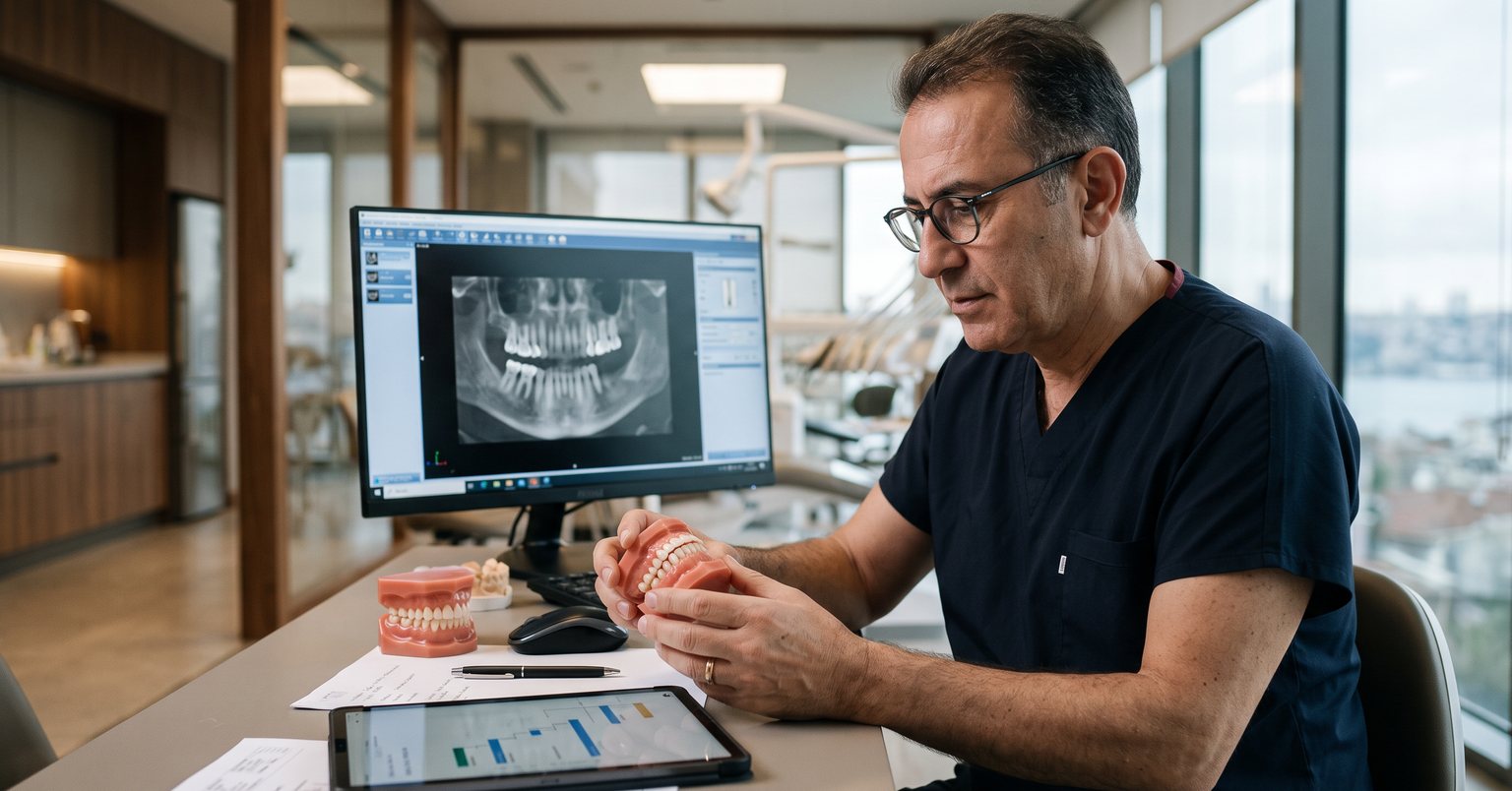
“Immediate implant placement” means an implant is placed at the time a tooth is extracted. “Immediate loading” refers to connecting a prosthesis to the implant soon after placement. These are not the same as promising that every patient will receive their definitive final teeth immediately.
The International Team for Implantology notes that immediate placement and loading protocols can be clinically documented options, but suitability depends on patient- and site-specific factors, primary implant stability, bone conditions, the need for augmentation, occlusion, and clinician experience.
That creates an important safety question for dental tourism: Is the treatment being made faster because the clinical criteria support it, or because the travel package has already promised a fixed number of days?
A responsible plan should be able to change if examination or surgical findings make a faster protocol inappropriate.
What Complications Should Dental Implant Patients Understand?
Dental implant surgery should not be described as risk-free. According to Mayo Clinic, recognized surgical risks include infection at the implant site, damage to nearby structures, nerve injury, and sinus-related problems in selected upper-jaw cases.
Other possible problems over the treatment pathway can include:
- failure of the implant to integrate with bone;
- delayed healing;
- inflammation around the implant;
- bone loss around the implant;
- loosening or fracture of a temporary or final prosthetic component;
- bite or prosthetic problems;
- need for repair, additional surgery, or implant removal in some cases.
The distinction between the implant fixture and the prosthetic restoration matters. An implant can remain integrated while a crown, screw, bridge, or other prosthetic component later requires maintenance or replacement.
Mild postoperative soreness, swelling, bruising, or minor bleeding can occur after implant surgery. Worsening symptoms, persistent bleeding, signs of infection, new or persistent altered sensation, or other concerning changes should be assessed clinically rather than managed only through social-media messages.
Why Does Aftercare Matter More When You Travel for Implants?
Travel does not change the biology of osseointegration, but it changes access to the original treating team.

The CDC Yellow Book guidance on medical tourism recommends discussing complication plans before travel, arranging continuity of care after returning home, understanding insurance coverage, and obtaining copies of overseas medical records. The CDC also notes that infection-control standards and regulatory systems vary between facilities and countries.
For dental implant patients, keep copies of:
- your written treatment plan;
- pre- and postoperative radiographs or scans that are provided to you;
- the implant manufacturer/system information;
- details of any grafting materials or additional procedures;
- the final prosthetic design;
- medication and aftercare instructions;
- contact details for the treating clinic and dentist;
- invoices and warranty or revision terms.
If you already have a regular dentist at home, it can be useful to discuss how routine maintenance and urgent assessment would work after your return.
What Are the Red Flags Before Paying a Deposit?
No single warning sign proves that a clinic is unsafe, but be cautious when the legal healthcare facility or treating dentist cannot be identified; a final surgical plan is guaranteed from photographs alone; risks and alternatives are not discussed; implants are presented as “100% safe” or unable to fail; a same-day schedule cannot change after examination; the implant system is described only as “premium”; there is no written aftercare pathway; or you are pressured to pay immediately.
The NHS also advises caution with hard selling, pressure to decide quickly, lack of information, no discussion of complications, and no mention of aftercare.
How Does Niva Dental Describe Its Implant Treatment Pathway?
Niva Dental’s current dental implant service page describes examination and imaging, implant placement, healing, abutment placement, and prosthetic restoration, with planning that varies by patient.
Its Patient Journey describes online consultation, preliminary dental-team evaluation, an individualized plan with pricing, travel support, final checks, aftercare guidance, and remote support. Patients should confirm which elements apply to their own case in writing.
Before booking, ask the clinic for the exact legal name of the healthcare facility and its current authorization details, then check them against official Ministry of Health information.
If you are considering dental implant treatment in Istanbul, existing records or X-rays can support preliminary discussion. Final treatment decisions still require appropriate clinical assessment.
Frequently Asked Questions
Are dental implants in Turkey safe?
Yes, dental implants in Turkey can be safe when a suitable patient is treated by an appropriately qualified dental team in an authorized healthcare facility with proper diagnosis, infection control, planning, consent, and follow-up. Implant surgery still carries risks, and quality varies between providers. Verify the facility and treating dentist rather than judging safety from the country name alone.
How can I check if a dental clinic in Turkey is authorized for international patients?
Ask for the exact legal healthcare-facility name and its international health tourism authorization details, then compare them with current Turkish Ministry of Health information. Do not rely only on a marketing brand, facilitator, social-media profile, or certificate image that cannot be independently checked.
Do I need a CBCT before dental implant surgery?
A CBCT is useful when three-dimensional information is clinically needed, but it is not automatically required for every patient. The dentist should decide which imaging is appropriate after considering the examination and available records. A remote photo or panoramic image may be insufficient for complex implant planning.
Is it safe to get dental implants and permanent teeth in one trip?
Sometimes a faster protocol is appropriate, but not for every patient. Immediate placement, immediate loading, temporary teeth, and a definitive final prosthesis are different concepts. Bone conditions, implant stability, infection, grafting needs, and bite forces can change the schedule.
What happens if a dental implant fails after I return home?
Management depends on the cause and timing. A patient may need examination, imaging, treatment of infection or inflammation, prosthetic repair, or sometimes implant removal and later replacement. Before travel, get a written complication plan explaining who evaluates problems and when a return trip may be required.
Are cheap dental implants in Turkey unsafe?
Not automatically. A lower price does not prove unsafe care, and a higher price does not guarantee quality. Compare the treating dentist, diagnostics, implant system, surgery, restoration, and follow-up. A very low headline price is more concerning when essential clinical information is vague or risks are minimized.
What should I ask a Turkey dental implant clinic before paying?
Ask for the legal facility name, authorization details, treating dentist’s identity and qualifications, implant system, required imaging, planned implant locations, additional procedures, restoration type, treatment stages, written cost, aftercare plan, complication policy, and copies of your records after treatment.
What Patients Should Take Away
Are dental implants in Turkey safe? The most accurate answer is that they can be, but safety is created by the specific provider, patient selection, clinical plan, surgical and restorative execution, infection-control process, and follow-up system—not by the destination or package price alone.
For an international patient, the strongest pre-treatment checks are practical and verifiable: confirm the healthcare facility in official Ministry information, identify the dentist who will treat you, insist on an individualized examination and written plan, understand the implant and final restoration, distinguish fast treatment from appropriate treatment, and know exactly how follow-up will work once you return home.
If you are considering Niva Dental, use the clinic’s dental implant and patient-journey information as a starting point for questions, then request an individualized assessment. A remote consultation can support preliminary planning, but final eligibility and treatment decisions require appropriate clinical assessment.
Medical References
- Republic of Türkiye Ministry of Health / Official Gazette. Regulation on International Health Tourism and Tourist Health. Published April 26, 2025.
https://resmigazete.gov.tr/eskiler/2025/04/20250426-2.htm - Republic of Türkiye Ministry of Health, General Directorate of Health Services. Updated lists of healthcare facilities holding international health tourism authorization. Updated August 20, 2026.
https://shgmturizmdb.saglik.gov.tr/TR-119821/yetki-belgesi-listeleri-guncellenmistir.html - Republic of Türkiye Ministry of Health, General Directorate of Health Services. Notice to healthcare facilities holding health tourism authorization regarding accreditation/certification requirements. May 13, 2026.
https://shgmturizmdb.saglik.gov.tr/TR-117812/saglik-turizmi-yetki-belgesine-sahip-saglik-tesislerinin-dikkatine.html - Mayo Clinic. Dental implant surgery: overview, planning, risks and treatment stages.
https://www.mayoclinic.org/tests-procedures/dental-implant-surgery/about/pac-20384622 - American Academy of Periodontology. Peri-Implant Diseases.
https://www.perio.org/for-patients/periodontal-treatments-and-procedures/dental-implant-procedures/peri-implant-diseases/ - NHS. Treatment abroad checklist.
https://www.nhs.uk/using-the-nhs/healthcare-abroad/going-abroad-for-treatment/treatment-abroad-checklist/ - Centers for Disease Control and Prevention. Medical Tourism, CDC Yellow Book.
https://www.cdc.gov/yellow-book/hcp/health-care-abroad/medical-tourism.html - International Team for Implantology (ITI). Implant Placement and Loading Protocols — Consensus Statements.
https://academy.iti.org/academy/consensus-database/consensus-statement/-/consensus/implant-placement-and-loading-protocols/1802 - Fan YY, Li S, Cai YJ, Wei T, Ye P. Smoking in relation to early dental implant failure: A systematic review and meta-analysis. Journal of Dentistry. 2024;151:105396. PMID: 39393606.
https://pubmed.ncbi.nlm.nih.gov/39393606/ - Giok KC, Veettil SK, Menon RK. Risk factors for peri-implantitis: An umbrella review of meta-analyses of observational studies and assessment of biases. Journal of Dentistry. 2024;146:105065. PMID: 38762079.
https://pubmed.ncbi.nlm.nih.gov/38762079/