


Compare composite and porcelain veneers by cost, appearance, durability, repair and tooth preparation. Learn what to ask before choosing treatment.

When comparing composite veneers vs porcelain veneers, composite generally offers a lower initial cost and easier repairs. Porcelain usually provides better resistance to staining and wear. Both can look natural, but neither is suitable for every tooth or guaranteed to last indefinitely. [1]
The useful comparison is between two treatments covering the same teeth and addressing the same concern. A quote for small composite edge repairs is not equivalent to a quote for full porcelain veneers. Before choosing, establish the treatment scope, expected enamel changes and responsibility for future care.
Composite and porcelain veneers: the main differences
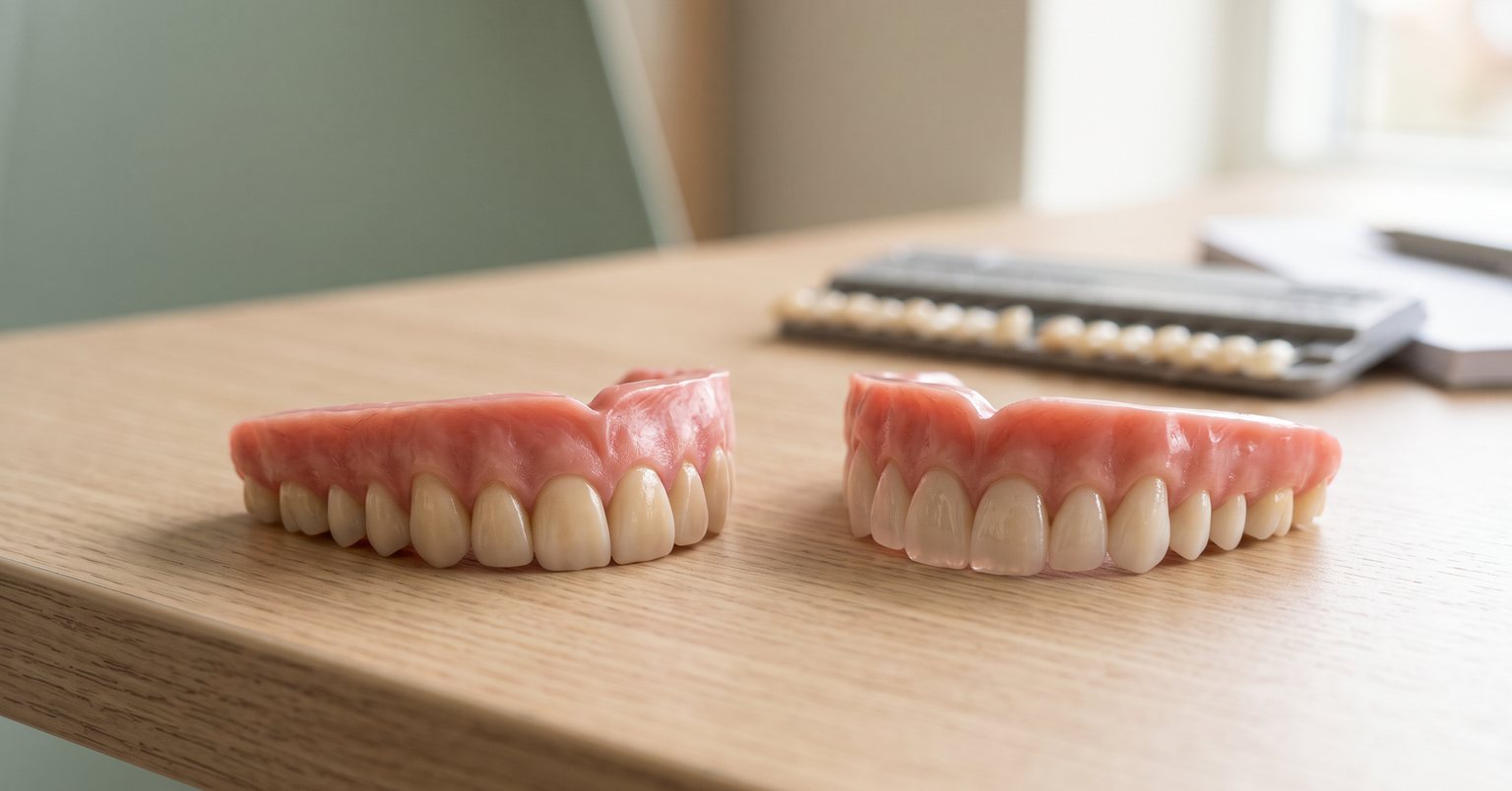
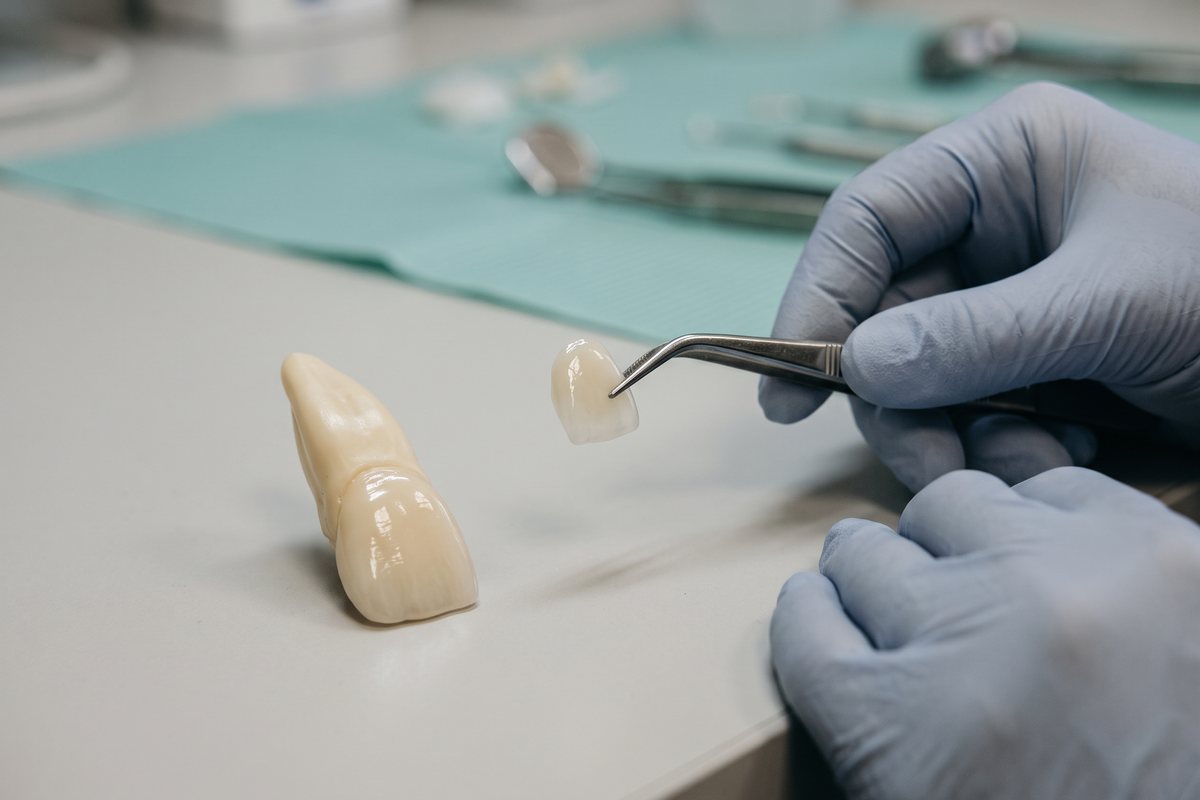
A veneer covers the front surface of a tooth. Direct composite veneers use tooth-coloured resin shaped and hardened on the tooth. Porcelain veneers are custom-made ceramic coverings bonded into place. Localised composite bonding usually repairs a smaller area, whereas a full composite veneer covers the facial surface more extensively. [2]
| Factor | Direct composite veneers | Porcelain veneers |
|---|---|---|
| Initial cost | Usually lower | Usually higher |
| Appearance | Can produce a natural finish | Can produce a natural finish |
| Staining and wear | More susceptible | Generally more resistant |
| Repair | Usually easier to repair directly | Damage may require repair or replacement |
| Tooth preparation | May require less enamel removal | Usually involves enamel preparation |
| Appointments | Often placed in one treatment visit | Usually requires multiple visits |
These are general differences, not promises about an individual result. [1,2]
This comparison focuses on direct composite veneers. Composite can also be made indirectly outside the mouth; ask which technique your quote describes. Research distinguishes direct and indirect resin veneers, so their results should not automatically be treated as interchangeable. [3]
For a smaller chip or edge correction, see Niva’s related guide to E-max veneers versus composite bonding.
Cost: compare the same treatment and the full commitment
Porcelain generally costs more initially. However, the material name alone cannot tell you whether one proposal offers better value. Current fees require an individual, itemised quote; there is no single price that applies across the USA, Canada, the UK and Turkey.
Start by checking whether both proposals cover the same number of teeth and the same surfaces. “Bonding per tooth” may describe a small addition, while “composite veneer per tooth” may describe a much broader restoration.
What should a veneer quote include?
Ask for written confirmation of:
- Treatment scope: the teeth involved, the restoration on each tooth and the exact material proposed.
- Planning: consultation, necessary investigations, photographs, scans or impressions, and any proposed preview or mock-up.
- Placement: preparation, fabrication, temporary restorations if needed, fitting and finishing.
- Follow-up: review appointments, adjustments, polishing and how later repairs are charged.
- Exclusions: treatment needed before veneers, replacement fees and any protective appliance recommended separately.
- Payment terms: currency, total price, quote validity and what happens if the clinical plan changes.
Ask the clinic to separate included services from optional or conditional items. A package name does not establish what you are purchasing.
If comparing treatment abroad, add travel, accommodation, time away from work and possible return visits. Confirm who will assess a problem after you return home and who pays for that assessment. Keep the treatment plan and material details available for your usual dentist.
Initial savings and future maintenance are different questions
Composite may need polishing, repair or replacement as its surface changes. [5] A lower starting price can still be a reasonable choice, but it should come with a realistic maintenance discussion.
Avoid calculating a precise “cost per year” by dividing a fee by an advertised lifespan. Neither the timing nor the cost of future intervention is known in advance. Instead, ask for current charges for a review, a small repair and replacement of one veneer, while recognising that future fees may change.
Appearance: assess the whole smile, not just a shade
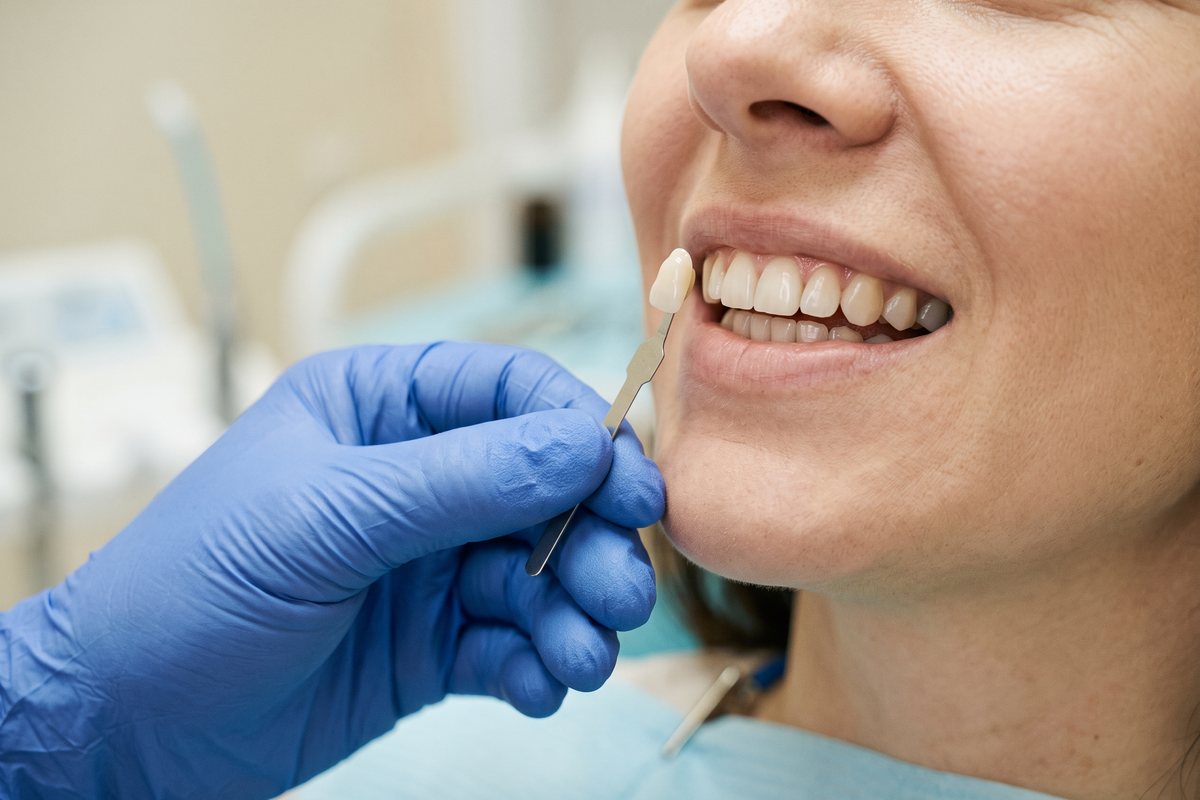
Both options can look natural. At the planning appointment, discuss shape, length, surface texture and how the treated teeth will sit beside untreated teeth. Ask to see examples with a starting situation similar to yours, rather than choosing from a single dramatically white result.
A preview can help communicate preferences, but ask what it represents: a proposed shape, a digital illustration or a trial restoration. It is not a guarantee of the final result. Before treatment, agree when you can discuss changes and which decisions must be settled before bonding.
Long-term appearance also deserves attention. A systematic review of composite veneers identified roughness, colour mismatch and discolouration around restoration edges among the most frequently reported complications. These changes do not all mean a veneer has failed, but they help explain why appearance may need maintenance. [3]
Whitening does not change the colour of existing veneers. If you also want lighter natural teeth, discuss treatment order before selecting the restoration shade. Otherwise, later whitening could create a mismatch. [5]
Durability: lasting in place is different from needing no repairs
Long-term comparative evidence generally favours ceramic veneers, but it does not give every patient a fixed replacement date.
A practice-based study published in 2022 examined 1,459 direct composite and ceramic veneers in 341 patients, with follow-up extending to ten years. Ceramic performed better for both survival and success. Crucially, the study distinguished veneers still present after repair from those that remained satisfactory without repair. [4]
This distinction matters when a clinic quotes a survival figure: a restoration can remain in service while requiring additional treatment. The study was observational and came from a private practice, so it cannot predict your personal result or prove that material alone caused every difference. [4]
Ask two separate questions: “How likely is replacement?” and “What maintenance might be needed before replacement?” A useful answer should explain what counts as a repair, an adjustment or a complete remake.
Tooth preparation: are either of these options reversible?
Do not assume that composite veneers are fully reversible. Composite may require less enamel removal, but the actual preparation matters. Enamel removed for a veneer cannot simply be restored by taking the veneer off. Ask what will change on each tooth before consenting. [1]
Preserving enamel also affects bonding. A systematic review of six clinical studies found better outcomes for ceramic veneers bonded to enamel than for veneers bonded to dentin—the layer beneath enamel—or teeth with existing composite restorations. The evidence supports careful preparation planning, rather than choosing a material without assessing the tooth underneath. [7]
Useful questions include: “Can you show me the proposed preparation?” and “What condition would this tooth be in if the restoration needed replacement?” A promise of minimal preparation should be explained in relation to your own teeth.
Suitability: when might another approach be needed?
Healthy teeth and gums, sufficient enamel and the bite must be assessed before choosing veneers. Decay, gum disease, limited enamel, substantial tooth damage or grinding and clenching may change the treatment recommendation. [2]
If colour is the main concern, professionally supervised whitening may offer an alternative that does not remove tooth surface. Results vary, and accepting the existing colour is also an option. [5] Ask your dentist whether your concern actually requires a full veneer, a smaller correction or another treatment.
Risks to discuss include sensitivity, loosening and the possibility of decay in the underlying tooth. Veneers do not remove the need for preventive care. [6] Cosmetic treatment should follow an examination and a discussion of alternatives, not simply a choice between two materials on a price list.
Everyday care and access to repairs
Brush with fluoride toothpaste, clean between the teeth daily and attend dental reviews. Avoid using veneered teeth to open packaging or bite hard objects. Contact your dentist if a veneer becomes loose, damaged or uncomfortable. [6]
For composite, ask how routine polishing differs from a repair. For porcelain, ask how the clinic would handle a detached or damaged restoration. If you travel for treatment, obtain these arrangements in writing before booking.
Frequently asked questions
Is composite bonding the same as a composite veneer?
The material can be the same, but the coverage differs. Bonding often addresses a small defect; a composite veneer covers the front surface more extensively. Ask which procedure is being quoted. [2]
Are porcelain veneers always worth the extra cost?
No universal answer applies. Decide whether the proposed benefits justify the extra fee for your goals, after comparing preparation, maintenance and the full treatment scope.
Can composite veneers be completed in one day?
Direct composite placement can often be completed in one visit. That does not mean every assessment, planning step and review will fit into the same appointment. Confirm the complete schedule. [2]
Can I change from composite to porcelain later?
It may be possible, but it needs a new assessment. Remaining enamel and existing restorations affect the surface available for bonding; switching materials should not be treated as an automatic upgrade. [7]
Will whitening toothpaste make my veneers lighter?
Whitening does not change the colour of existing veneers. If their appearance changes, ask your dentist to identify the cause and discuss appropriate care. [5]
Discuss your veneer options with Niva Dental
If you are considering treatment in Bakırköy, Istanbul, explore Niva Dental’s E-max veneer information and request an individual assessment. Ask which teeth need treatment, what preparation is proposed and what the written quote includes before deciding.
This content provides general information and is not a diagnosis or personal treatment recommendation. A dentist must assess your oral health and suitability for treatment.
Medical references
- American Dental Association, MouthHealthy. Veneers.
- Canadian Dental Association. Bonding & Veneers.
- Lim TW, et al. Survival and complication rates of resin composite laminate veneers: A systematic review and meta-analysis. Journal of Evidence-Based Dental Practice. 2023.
- Mazzetti T, et al. 10-year practice-based evaluation of ceramic and direct composite veneers. Dental Materials. 2022.
- Leeds Teaching Hospitals NHS Trust. Tooth Whitening: Information for Adult Patients.
- Cleveland Clinic. Veneers.
- Alqutaibi AY, et al. Clinical survival and complication rate of ceramic veneers bonded to different substrates: A systematic review and meta-analysis. The Journal of Prosthetic Dentistry. 2025; published online 2024.