

Dental implant infection symptoms include swelling, bleeding and discharge. Learn what needs a dental check, how it is assessed and when to seek urgent care.

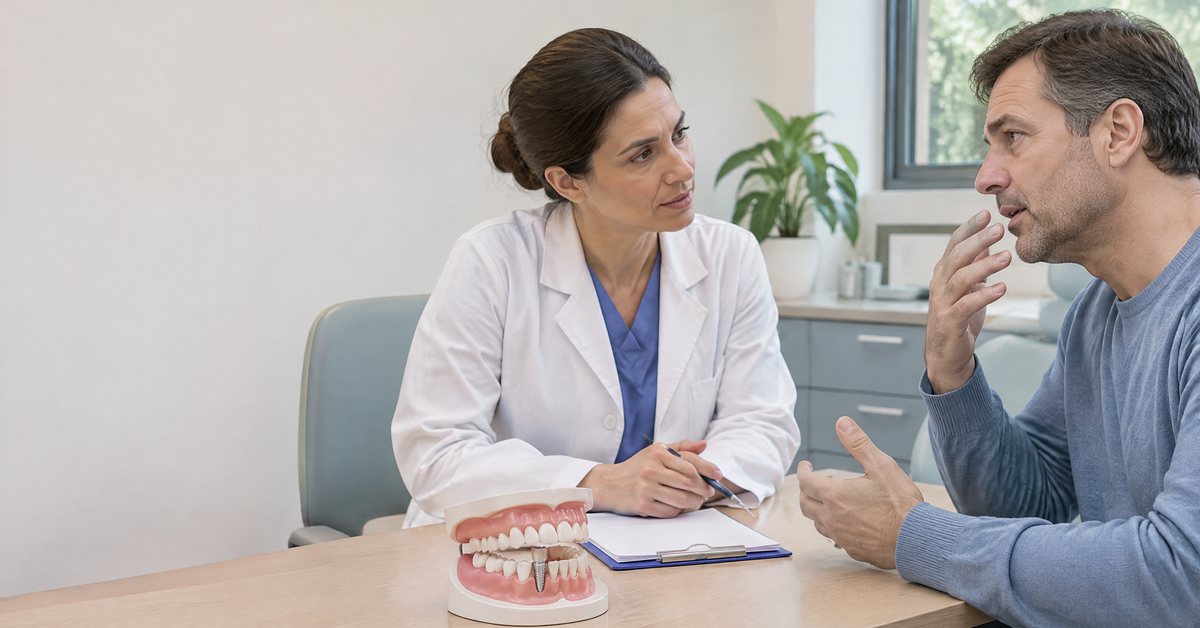
Yes. Infection and inflammation can affect the gums and bone surrounding a dental implant. Implant-related complications can arise soon after surgery or much later.[1,3] The implant itself is an artificial device; the living tissues supporting it still need care.
Possible dental implant infection symptoms include persistent redness or swelling, bleeding around the implant, discharge, a bad taste and worsening discomfort.[2,4,8] These signs need assessment rather than a diagnosis from a photograph. Pain is not always present.
Seek emergency medical help for difficulty breathing, speaking or swallowing, or substantial swelling inside the mouth.[4] For other concerns, the timing and pattern of symptoms help the dental team decide how quickly you need to be seen.
Which symptoms should you watch for?
New changes around an established implant, or symptoms that worsen during recovery, deserve attention. The European Federation of Periodontology advises arranging an appointment promptly for signs of peri-implant disease.[2]
| What you notice | Why it needs attention |
|---|---|
| Red, swollen or tender gum around the implant | May indicate inflammation; recent surgery changes how it is interpreted |
| Repeated bleeding when brushing or cleaning | Can be a sign of inflamed tissue, even without pain |
| Pus, discharge or a recurring bad taste | Needs assessment for infection; taste alone does not identify the cause |
| Increasing pain or discomfort when chewing | Can reflect infection or another implant-related problem |
| Gum recession or newly visible implant threads | Needs assessment of the tissues and supporting bone |
| A loose-feeling crown, bridge or implant | May involve a connecting component or the implant itself; prompt examination is needed |
These observations are drawn from implant and peri-implant disease guidance.[2,3,8] Pus does not, by itself, establish how much bone has been lost, and movement does not automatically prove that the implant body is loose.
Can there be a problem without pain?
Yes. Peri-implantitis can cause tissue changes without obvious pain; discomfort may become noticeable during acute infection.[8] Do not use the absence of pain as a reason to ignore repeated bleeding or swelling.

When should you contact a dentist urgently?
Contact a dentist urgently for pus, fever, worsening facial swelling or severe pain that suggests an acute infection. A suspected dental abscess needs dental treatment; waiting for it to settle is not a reliable solution.[4]
Tell the practice if symptoms are spreading, you feel unwell or opening your mouth is becoming difficult. Explain when the implant was placed and whether the problem appeared after a period of improvement.
Emergency medical assessment is appropriate for breathing, swallowing or speaking difficulties, substantial mouth swelling, or swelling and pain around an eye or changes in vision.[4] Do not wait for a remote reply from an overseas clinic in these circumstances.
For a loose or painful implant, contact your dental provider promptly.[3] Repeated bleeding without severe symptoms also warrants an appointment; it should not be left until an annual check.
What do “mucositis” and “peri-implantitis” mean?
These terms describe different patterns of disease around implants. They cannot be distinguished reliably by symptoms alone.
| Term | What it means |
|---|---|
| Postoperative infection | Infection associated with the surgical site during recovery; it needs assessment in the context of the operation |
| Peri-implant mucositis | Inflammation in the soft tissues around an implant, without additional supporting bone loss beyond initial bone remodelling |
| Peri-implantitis | Inflammation around an implant accompanied by progressive loss of supporting bone |
Peri-implant mucositis can be reversible with appropriate treatment. It may progress, but not every inflamed implant inevitably develops peri-implantitis.[1,7] Bone loss changes the diagnosis and management, which is why an examination and appropriate X-rays matter.
Is it infection or normal healing after implant surgery?
Some soreness, swelling, bruising and minor bleeding can follow implant placement. Guy’s and St Thomas’ describes discomfort as commonly lasting up to a week, although individual recovery varies.[5]
The direction of change matters more than a fixed day number. Mayo Clinic advises contacting the surgeon if swelling, soreness or another problem worsens in the days after surgery.[6] You do not need to wait until a certain day before reporting something concerning.
When you call, describe whether symptoms are improving, unchanged or worsening. Mention discharge, fever, medication use and any new movement of the restoration. Tell the team if treatment also included an extraction or graft, because they need the full procedural context.
An implant that has functioned comfortably for years can also develop problems. New symptoms should not be explained away as old surgical healing.[3]
What causes inflammation or infection around an implant?
Bacterial plaque—a film that builds up on oral surfaces—is central to peri-implant disease. Bacteria accumulating around the implant can trigger inflammation in the surrounding tissue.[1]
Risk is influenced by several factors. UK public-health guidance identifies poor plaque control, previous periodontitis, smoking, diabetes and lack of supportive care as relevant risk factors.[7] Having one of these factors does not prove why an individual implant has become symptomatic.
The restoration also matters. A shape that is difficult to clean or residual cement beneath the gum can contribute to problems and should be assessed.[9] This is why the consultation should review both your cleaning routine and the implant restoration, without assuming the problem is simply your fault.
Tell the dentist about medical conditions, changes in medicines, tobacco use and previous gum treatment. These details help them interpret the findings and plan care.
How does the dentist check for an implant infection?
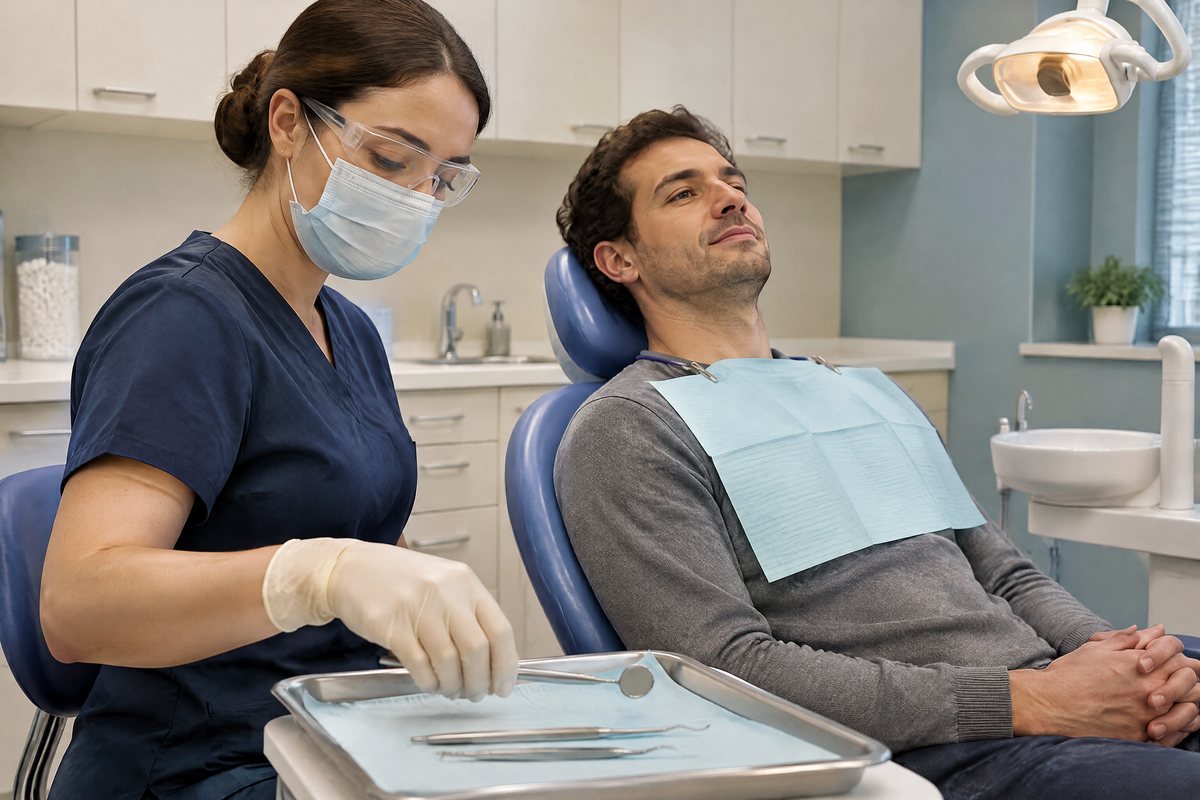
The dentist examines the gums, checks for bleeding or discharge, measures the depth of the space around the implant and assesses the restoration. Appropriate X-rays help evaluate supporting bone, ideally against earlier records.[7]
They also need to determine whether any movement comes from the crown or connecting screw, rather than the implant body. The FDA lists a loose abutment screw as one possible reason a replacement tooth feels loose.[3]
Bring previous X-rays and implant records if you have them, especially when seeing a different practice. Useful questions include: “Is bone loss present?”, “What is moving?” and “Does this need specialist care?”
How is an infected or inflamed implant treated?
Treatment depends on the diagnosis and extent of tissue damage. For peri-implant mucositis, professional cleaning and improved daily plaque removal are central measures.[9] A review is needed to check whether inflammation has resolved.
Peri-implantitis may require surgery after initial non-surgical care, and some implants need removal.[8] Your dentist may refer you to a periodontist, a dentist specialising in supporting tissues and gum disease.
Ask what the proposed treatment aims to achieve and how its effect will be measured. A discussion about preserving an implant should also explain the limits of treatment and the alternatives if disease continues.
Are antibiotics enough?
Usually, antibiotics alone do not address the deposits or local problems driving peri-implant disease. The Scottish Dental Clinical Effectiveness Programme does not recommend routine local or systemic antibiotics for peri-implantitis treatment in primary care.[8]
An acute infection requires its own assessment, and the clinician decides whether antibiotics are indicated. Do not start leftover tablets or repeat a previous prescription yourself. Symptom relief should not replace the recommended examination or follow-up.
What can you do while waiting for the appointment?
Follow the practice’s interim advice and any existing postoperative instructions. After recent surgery, cleaning directly at the wound may be restricted; ordinary long-term implant cleaning instructions are not a substitute for surgical aftercare.[5]
Avoid pressing a swelling, trying to drain it, testing a loose component or attempting to tighten it. Ask the practice how to clean and eat around the area until it can be examined.
If you normally take pain relief, check that it is suitable for you and follow the recommended dose. Do not exceed the dose because symptoms are worsening.[4] Escalate urgent symptoms instead of relying on medication to postpone care.
How can you reduce the risk of future problems?
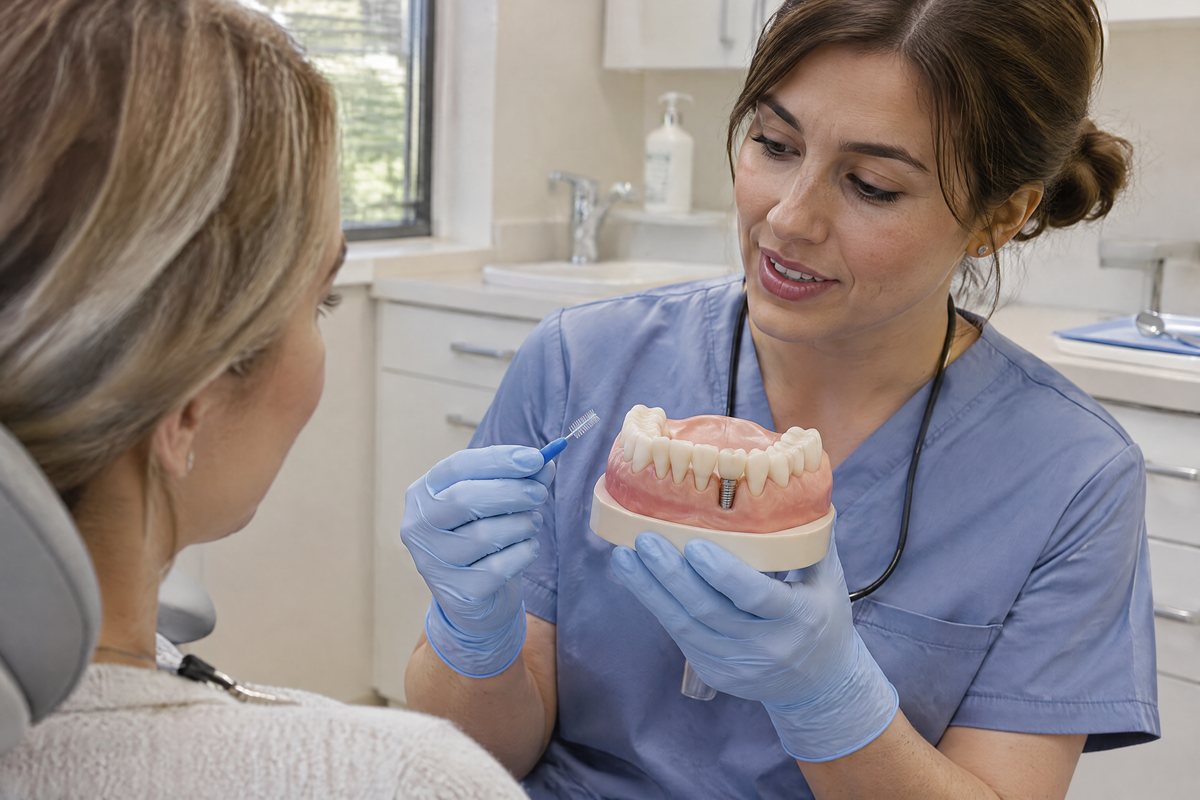
Daily cleaning around the implant and replacement teeth, regular dental checks and professional maintenance remain important after treatment.[6] Ask for a demonstration of the cleaning aids that fit your restoration, particularly beneath a bridge.
Discuss smoking cessation, diabetes management where relevant, and treatment of existing gum disease. Arrange reviews according to your individual risk and findings.[7] A comfortable implant still needs monitoring, and follow-up should continue even when you receive treatment in another country.
Frequently asked questions
Can a dental implant get infected years later?
Yes. Implant-related complications can occur long after placement.[3] New swelling, bleeding or discharge deserves assessment even if the implant previously felt normal.
Does bleeding around an implant mean it must be removed?
No. Bleeding can accompany soft-tissue inflammation that may respond to treatment.[1] The dentist needs to assess the surrounding bone and other findings before discussing prognosis.
Can a mouthwash cure an implant infection?
A rinse does not replace diagnosis or professional treatment. Management may need cleaning, correction of local contributing factors and, in some cases, surgery.[9] Use a rinse only as advised for your situation.
Can an infected implant be saved?
Sometimes, but symptoms alone cannot predict the outcome. Bone loss and response to treatment help guide the options.[9] No clinician can guarantee preservation before assessing the site.
Discuss implant concerns with Niva Dental
For questions about care at Niva Dental in Bakırköy, Istanbul, see the clinic’s dental implant treatment information and ask about assessment and follow-up. If symptoms are urgent, seek timely local dental or emergency care rather than waiting to travel.
This article provides general information and cannot diagnose an implant infection. Follow your treating clinician’s instructions and seek appropriate care for concerning symptoms.
Sources
- American Academy of Periodontology. Peri-Implant Diseases.
- European Federation of Periodontology. Check your symptoms.
- US Food and Drug Administration. Dental Implants: What You Should Know.
- NHS. Dental abscess.
- Guy’s and St Thomas’ NHS Foundation Trust. Dental implants: After having a dental implant.
- Mayo Clinic. Dental implant surgery.
- Office for Health Improvement and Disparities. Delivering better oral health: Chapter 5 — Periodontal diseases, peri-implant health and prevention.
- Scottish Dental Clinical Effectiveness Programme. Treatment of peri-implantitis.
- European Federation of Periodontology. Peri-implant disease: Treatment.