


Compare veneers cost in Turkey vs the USA by checking material, tooth preparation, lab work, scans, temporaries, follow-up and travel costs.


When comparing veneers cost in Turkey vs the USA, compare complete treatment plans rather than a single “per tooth” price. The total depends on how many teeth are treated, the material and laboratory process, the amount of tooth preparation, and what the quote includes. If you travel, also count flights, accommodation, time away, and follow-up. Ask for a written plan that identifies the restoration for each tooth, the proposed material, preparation, temporary veneers if needed, and every included or excluded fee.
Why veneer prices are difficult to compare
A veneer is a custom restoration bonded mainly to the visible front surface of a tooth. A quote may cover one veneer, a selected group of teeth, or a wider smile plan that also includes whitening, bonding, gum treatment, or crowns. These are not equivalent services. Even two quotes for the same number of teeth may differ because one proposes composite and the other laboratory-made ceramic, or because their diagnostic, laboratory, and follow-up services differ.
Current search results for “veneers cost Turkey vs USA” commonly show clinic-published price ranges and package claims, but those figures use different materials, treatment scopes, currencies, and inclusion rules. They do not establish a like-for-like national average. Niva does not publish a universal price for every veneer case, so this guide does not quote a price range. Request current written estimates from the providers you are considering and compare the line items below. For the factors that shape veneer pricing in Turkey specifically, see E-max veneers cost in Turkey.
Veneer materials: what the name on the quote means
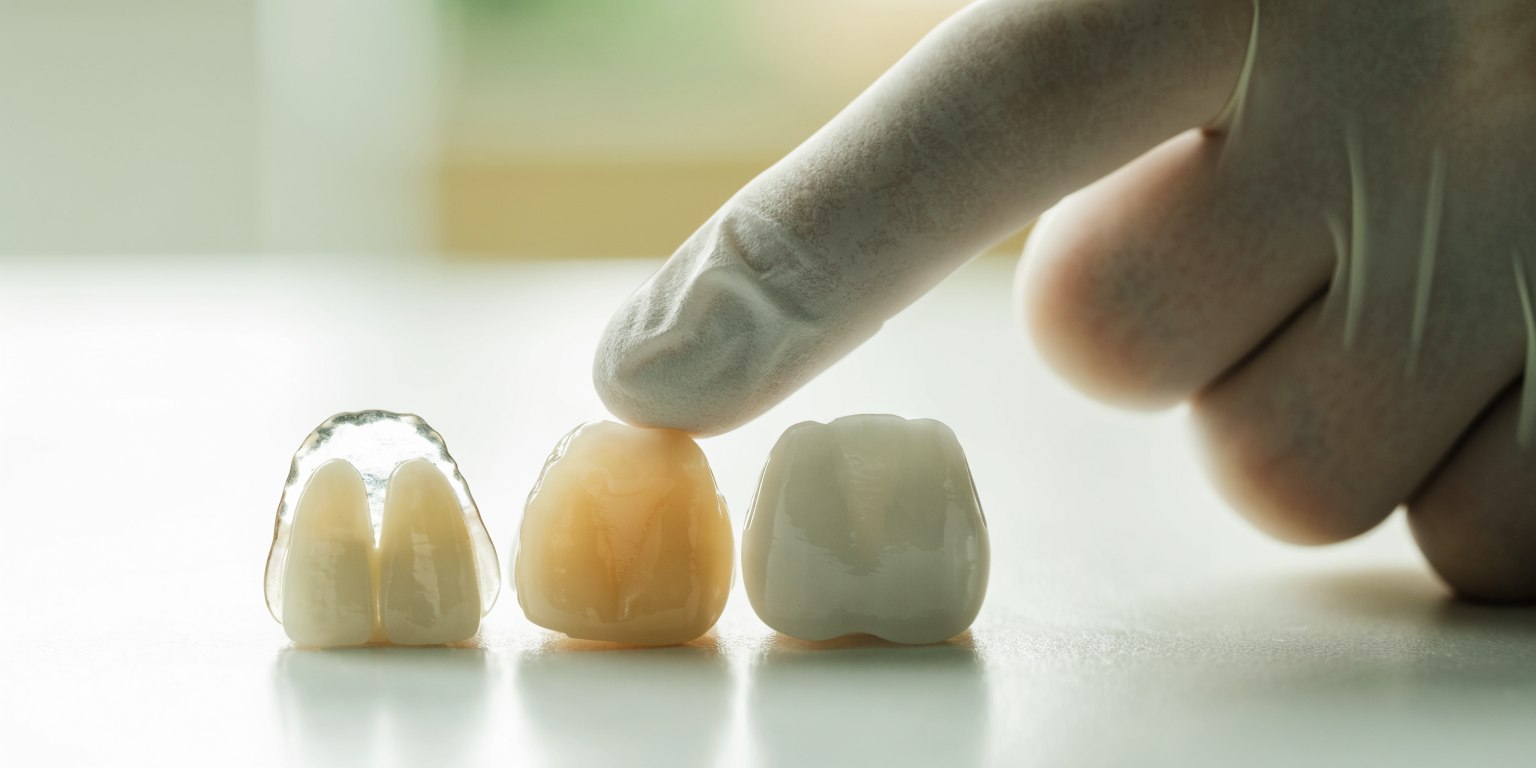
“Porcelain” is often used as a broad term for ceramic veneers. E.max is a material-system name associated with lithium-disilicate glass-ceramic; it describes the ceramic, while “veneer” describes the type of restoration. Composite veneers use tooth-colored resin, which may be applied directly or fabricated indirectly. Zirconia is another ceramic, but the word alone does not tell you whether the plan is a thin veneer or a full-coverage crown. Ask the dentist to name both the material and the restoration design.
| Option | How it is made | What to clarify |
|---|---|---|
| Direct composite | Tooth-colored resin is shaped and bonded by the dentist, often during a visit | Is it direct bonding or a lab-made composite? What repair and maintenance should be expected? |
| Ceramic / porcelain | A custom ceramic restoration is fabricated for the tooth and bonded in place | Which ceramic is planned, which laboratory or workflow is used, and what is included in the lab fee? |
| Lithium-disilicate (E.max) | A particular glass-ceramic material system used for selected restorations | Does “E.max” mean a genuine lithium-disilicate product, and is the planned restoration a veneer or crown? |
| Zirconia | A ceramic family used for different restoration designs | Is the proposed work a veneer or a crown, and why is that design suitable for the individual tooth? |
Material alone does not determine the result. Tooth color, restoration thickness, translucency, surface texture, bonding, laboratory work, bite, and the dentist’s plan all matter. The American Dental Association explains that indirect restorations are fabricated from impressions or scans and usually involve multiple clinical steps, though digital workflows can change the process. ADA: Materials for Indirect Restorations
What should a veneer quote include?
Ask for a tooth-by-tooth written estimate that separates the confirmed plan from possible additional care. A clear quote should identify whether fees are included, excluded, or still subject to examination.
| Quote item | Ask the clinic to specify |
|---|---|
| Assessment and planning | Examination, photographs, imaging if needed, smile design or mock-up, and who confirms the final plan |
| Teeth treated | Which teeth receive veneers and the number of units; avoid assuming a standard 8-, 10-, or 20-tooth package is clinically appropriate |
| Material and design | Exact ceramic or composite, whether each unit is a veneer or crown, and the laboratory/fabrication method |
| Preparation | Whether enamel reduction is planned, how much is anticipated, and whether minimal-prep is clinically realistic for each tooth |
| Temporary restorations | Whether temporary veneers are needed, included, and fitted for the full treatment period |
| Laboratory and placement | Whether fabrication, try-in, adhesive bonding, bite checks, and adjustments are included |
| Additional treatment | Cleaning, gum care, fillings, orthodontics, or other treatment only if identified after assessment; show separate fees where possible |
| Review and aftercare | Number and timing of review visits, the contact for concerns, and what follow-up is available after returning home |
| Travel services | Hotel nights, transfers, interpreter support, and any limits if these are part of a package |
| Terms | Currency, quote validity, payment schedule, exclusions, repair/replacement terms, and what happens if the plan changes in person |
A low starting price is not automatically a problem, but it is not comparable until you know what it buys. Do not treat a material brand, hotel offer, or “smile makeover” label as a substitute for a clinical plan.
Comparing the USA and Turkey: calculate the full cost
For a useful comparison, ask a US dentist and a Turkish clinic to price the same teeth, material, restoration design, preparation approach, and included services. If the proposed plans differ, ask each provider to explain why; a difference may reflect clinical judgment rather than a simple price variation.
Use the same checklist for both estimates:
- USA total: the complete written treatment estimate plus any separate imaging, temporary restorations, or follow-up charges.
- Turkey total: the complete written treatment estimate plus flights, accommodation not included, meals and local transport not included, time away from work, and any return trip that may be required.
Compare the totals in one currency using the exchange rate on the date you are making the decision, and allow for possible exchange-rate changes before payment. Check any dental insurance or benefits directly with your plan administrator: cosmetic veneer treatment may be excluded or limited, and coverage rules differ by policy. Patients in Canada, the UK, or elsewhere in Europe should check their local plan or public/private funding rules rather than assuming US coverage terms apply.
The practical difference is also about continuity. A local dentist may be easier to revisit for checks or adjustments, while treatment abroad requires a plan for communication and follow-up after you return. CDC guidance for medical travellers recommends arranging follow-up before travel and obtaining copies of records from care received abroad. CDC: Medical Tourism

Materials matter, but preserving healthy teeth matters too
Veneer treatment is not only a cosmetic purchase. Depending on the design, a dentist may remove some enamel to create space and shape for a restoration. Enamel does not grow back; if tooth structure is removed, the treatment should generally be considered irreversible. Minimal-prep or no-prep approaches may suit selected cases, but they are not appropriate for every tooth or goal.
The Cleveland Clinic describes composite and porcelain veneer options and notes that porcelain veneers commonly require enamel removal, while no-prep approaches are not suitable for everyone. Cleveland Clinic: Dental Veneers
Before agreeing, ask which alternatives could achieve your goal with less alteration, such as whitening, composite bonding, or orthodontic treatment. Ask why each tooth needs a veneer and whether a crown is being proposed instead. A crown covers more of the tooth than a veneer and should not be treated as a synonym for one. Active decay or gum disease should be assessed before elective cosmetic treatment.
The American Dental Association also cautions against veneer services that bypass a dentist’s examination, diagnosis, treatment planning, and oversight because altering teeth without proper care can cause irreversible harm. ADA statement on “veneer technicians”
Questions to ask before choosing a clinic
- Which teeth are being treated, and why does each one need a veneer?
- What material and restoration design are planned for each tooth?
- Is the quote for veneers only, or does it include other smile-makeover treatments?
- What preparation is expected, and can I see the proposed design before treatment?
- Are scans, laboratory work, temporary restorations, bonding, and bite checks included?
- What changes would require a revised quote after the in-person examination?
- How many visits are expected, and when can I travel safely after each appointment?
- What follow-up, repair, or replacement support is available after I return home?
- Will I receive my treatment plan and records in English, including material and laboratory details?
Niva’s E-max guidance explains that material choice, preparation, and the number of teeth should be determined individually rather than by a standard package count. For international care, keep copies of your treatment plan and records so another dentist can understand what was done.
FAQ
Are veneers cheaper in Turkey than in the USA?
Many clinics advertise lower starting prices in Turkey, but the difference cannot be judged from a headline price alone. Compare the same material, number of teeth, preparation, laboratory work, additional care, travel, and follow-up using current written estimates.
Which veneer material is best: E.max, porcelain, composite, or zirconia?
There is no universal best material. Composite resin, lithium-disilicate glass-ceramic, other ceramics, and zirconia have different properties and uses. A dentist should recommend a restoration based on the tooth, bite, desired change, and amount of healthy structure that can be preserved.
How many veneers do I need?
There is no standard number. The dentist should assess which teeth are visible when you smile and speak, their condition, neighboring teeth, shade, bite, and your goals. A package number should not determine which healthy teeth are treated. See how many E-max veneers you may need.
Are veneers permanent or reversible?
If enamel is removed, the change is irreversible. The veneer may later need repair or replacement, so ask about preparation and long-term maintenance before treatment.
Should I choose a veneer or a crown?
They are different restorations. A veneer mainly covers the visible front surface; a crown covers substantially more of the tooth. The appropriate option depends on the tooth’s condition and should be decided after a dental examination. Read more in E-max veneers vs crowns.
Explore veneer treatment at Niva Dental
Niva Dental is based in Bakırköy, Istanbul. If you are considering veneers, you can review the E-max veneer treatment page and the guide to veneer preparation. Ask for an individual assessment and a written quote that clearly separates each restoration, material, preparation step, and travel inclusion.
Health information: This article is for general information and is not a diagnosis or personal treatment recommendation. Veneer suitability, preparation, and material choice require an individual dental examination.
Sources
- Cleveland Clinic, Dental Veneers: What They Are, Procedure and Risks
- American Dental Association, Materials for Indirect Restorations
- American Dental Association, Statement on Recent Reports of “Veneer Technicians”
- Centers for Disease Control and Prevention, Medical Tourism: Travel to Another Country for Medical Care
- Niva Dental, E-max Veneers in Turkey
- Niva Dental, Do E-max Veneers Require Tooth Shaving?
- Niva Dental, Hollywood Smile vs Veneers: What Is the Difference?