



How many veneers do I need? Learn why 6, 8 or 10 may fit different smiles and how smile width, shade, tooth condition and treatment goals determine the number.

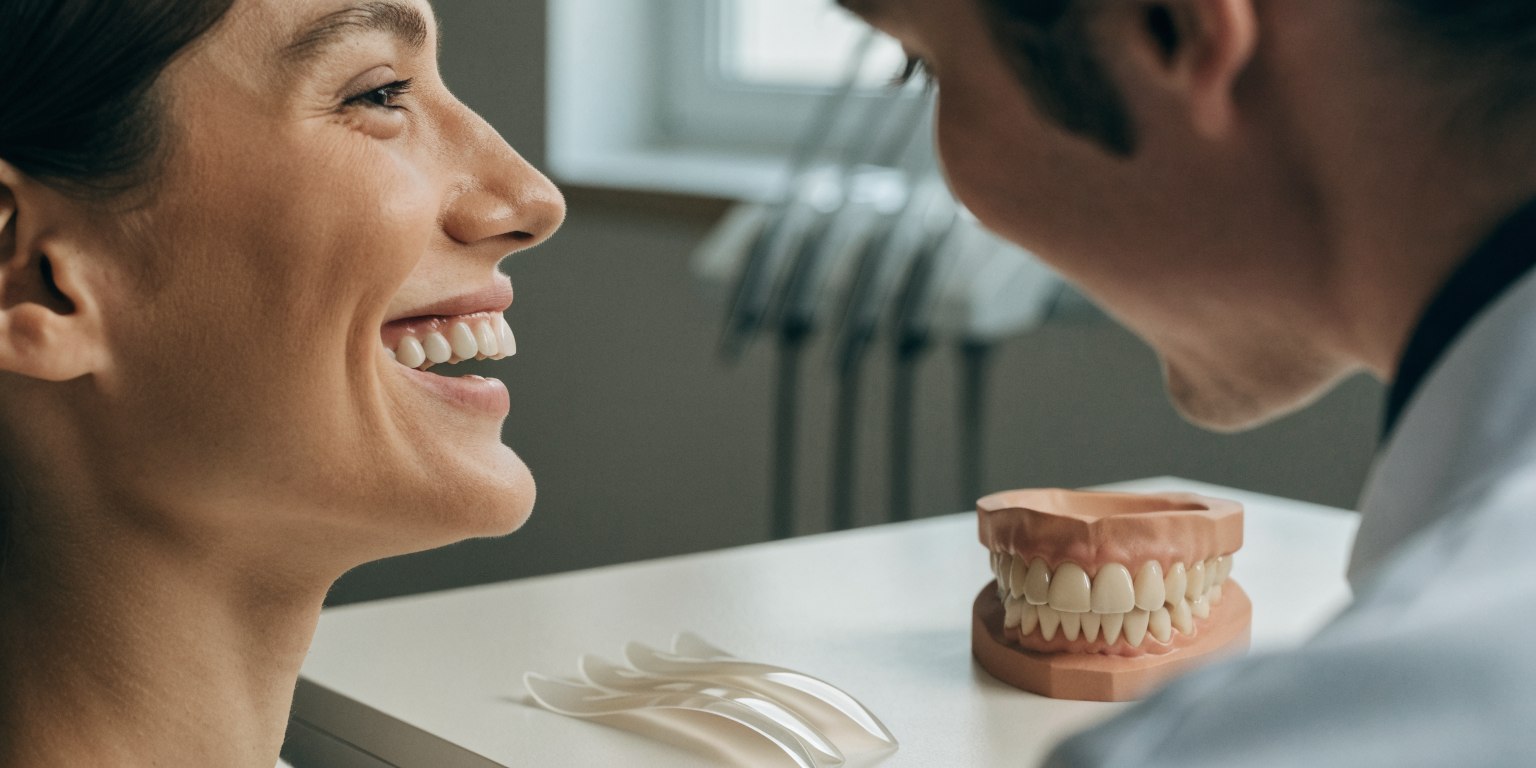
How many veneers do I need? There is no universal number. Some patients may need only one or two restorations for isolated problems, while others may consider 6, 8, 10 or more veneers when several teeth visible in the smile need coordinated changes. The correct number depends on which teeth show when you smile naturally, your smile width, tooth color, tooth proportions, alignment, gum display, existing restorations, and which teeth genuinely need treatment.
The goal should not be to choose the biggest package. It should be to treat the smallest appropriate number of teeth that can achieve a balanced result without creating obvious mismatches or unnecessary irreversible treatment.
Patients considering E-max veneer treatment at Niva Dental should expect the final tooth count to be individualized after clinical and smile assessment.
Quick Answer: 6, 8, 10 or More Veneers?
| Number | When it may be considered | Important limitation |
|---|---|---|
| 1–2 veneers | Isolated chip, shape problem, localized discoloration or replacement of an existing veneer | Matching untreated neighboring teeth can be demanding |
| 4 veneers | Selected changes focused on the central smile area | May leave lateral color or proportion differences visible in a wider smile |
| 6 veneers | Often corresponds to the upper front six teeth when those are the main visible treatment zone | Premolars may still show in many smiles |
| 8 veneers | Can extend the treatment zone farther toward the sides of the smile | Not automatically necessary just because “8” is a common package |
| 10 veneers | May suit a wider smile where additional posterior-facing teeth are visible and need coordinated change | More treated teeth means more biological and financial commitment |
| 12+ veneers | May be discussed for very broad aesthetic plans or when both arches are involved | A high veneer count should never be justified by package size alone |
| Upper + lower veneers | Only when lower teeth are visible, aesthetically relevant and clinically suitable | Lower veneers are not automatically required for a “complete” smile |
Why There Is No Standard Number of Veneers
The number of veneers should follow the patient’s visible smile and clinical needs, not a fixed cosmetic formula.
Dental aesthetics is based on relationships among:
- the teeth;
- lips;
- gums;
- facial midline;
- smile width;
- tooth size and proportion;
- color;
- alignment;
- and the way the smile moves.
A systematic review of the smile line concluded that smile-line assessment is a valid component of aesthetic evaluation. The authors noted that upper anterior tooth exposure varies with lip position and that the relationship between the upper teeth and lower lip contributes to perceived smile aesthetics.
Another clinical review on smile evaluation emphasized that facial and dental measurements should be assessed together rather than treating teeth in isolation.
This is why two patients who both say “I want a whiter, more even smile” may need completely different plans.
One person may need two veneers.
Another may need six.
Another may be better treated with whitening and orthodontics rather than ten veneers.
What Does “Smile Zone” Mean?
The smile zone is the group of teeth and gum tissues that are visible when a person smiles, speaks or laughs. It is not a fixed set of six or eight teeth.
Many online veneer pages use “smile zone” as shorthand for the upper front teeth. Clinically, however, tooth display differs from person to person.
A study of 203 adults found that the maxillary premolars were at least partially visible in more than 80% of smiles. This helps explain why treating only the six front teeth can sometimes leave untreated premolars visible at the sides of the smile.
That does not mean everyone needs eight or ten veneers.
It means the dentist should evaluate where the visible transition between treated and untreated teeth will occur.
Factors that influence the visible zone include:
- lip width;
- arch width;
- tooth size;
- smile intensity;
- age;
- lip mobility;
- facial proportions;
- and whether the person is posing for a photograph or smiling spontaneously.
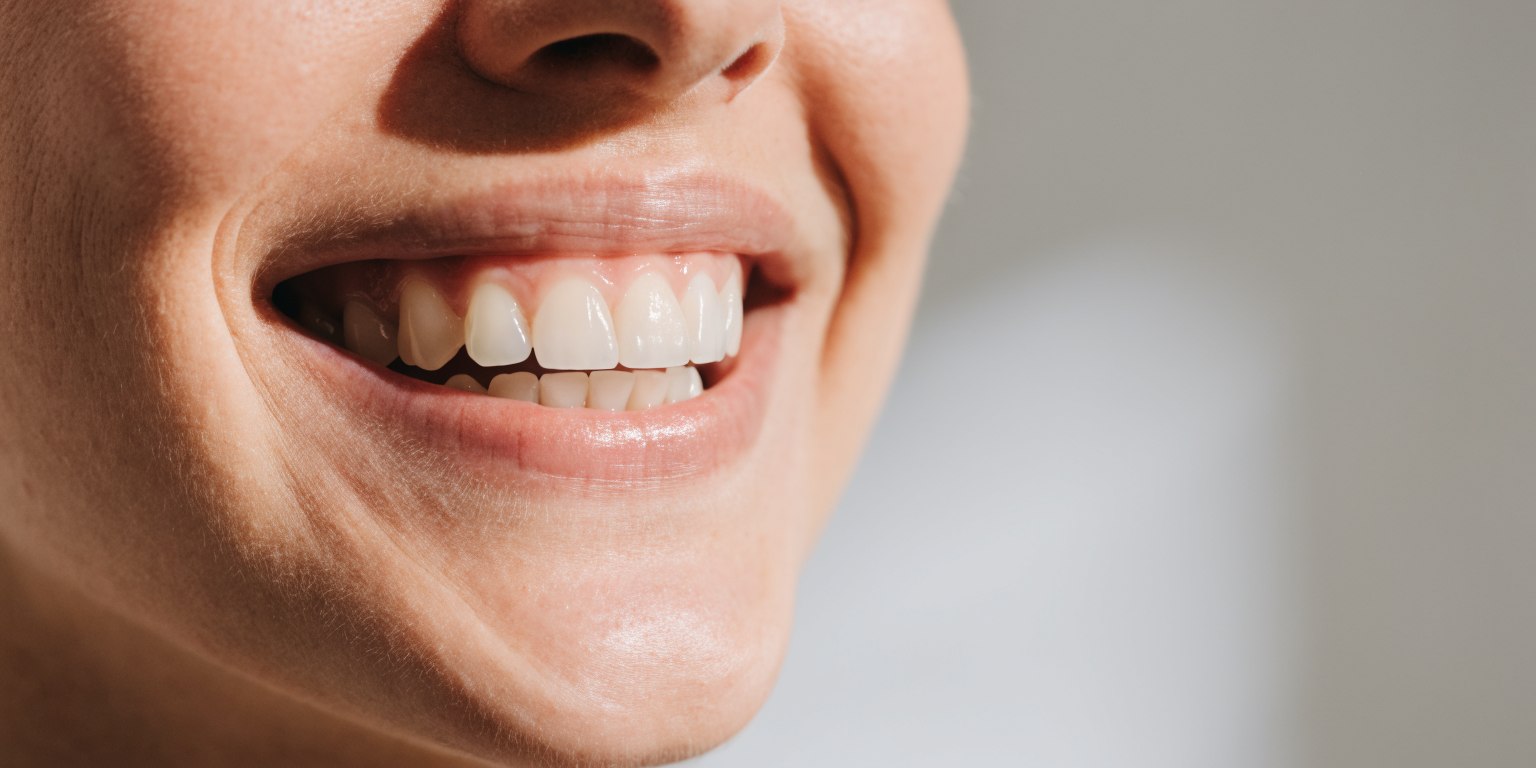
Why a Natural Smile Matters More Than One Posed Photograph
A posed smile may not show the same teeth as a spontaneous smile, so veneer count should not be planned from one static photo alone.
Research comparing posed and spontaneous smiling has shown differences in:
- upper lip height;
- smile width;
- posterior tooth display;
- and how much of the teeth are covered by the lips.
In one study, spontaneous smiles showed greater tooth display and wider smile dimensions than posed smiles.
For cosmetic planning, useful records may include:
- full-face photographs;
- a natural smile;
- a broad smile;
- profile views;
- short video while speaking or laughing;
- intraoral photographs;
- scans or impressions;
- and, where appropriate, a diagnostic mock-up.
The key question is not:
“How many teeth look visible in this one selfie?”
It is:
“Which untreated teeth will remain visible beside the planned veneers during normal facial movement?”
What Is the Difference Between 6, 8 and 10 Veneers?
Six, eight and ten veneers describe the width of the treatment zone, not different grades of cosmetic dentistry.
6 veneers
Six veneers often involve the most central upper teeth. This may work when:
- the smile is relatively narrow;
- the main concerns are centered on the front teeth;
- the visible premolars already match well in shade and shape;
- the transition to untreated teeth is not obvious.
But six can look incomplete in a broad smile if darker, smaller or differently shaped premolars remain visible at the sides.
8 veneers
Eight veneers can extend the treatment farther into the visible smile.
This may help when:
- first premolars are clearly visible;
- a shade change is substantial;
- broader symmetry is needed;
- the patient’s smile exposes more lateral teeth.
Eight is common in commercial packages, but “common” does not make it clinically necessary.
10 veneers
Ten veneers may be considered when the smile is wider and additional teeth are visible.
This may reduce a visible color or shape transition at the corners of the smile, but only if those additional teeth actually benefit from restoration.
The decision should never be:
“Ten gives a more premium result than eight.”
The correct question is:
“Does tooth number nine or ten need irreversible treatment to create a coherent smile?”
Do You Need a Veneer on Every Tooth You Can See?
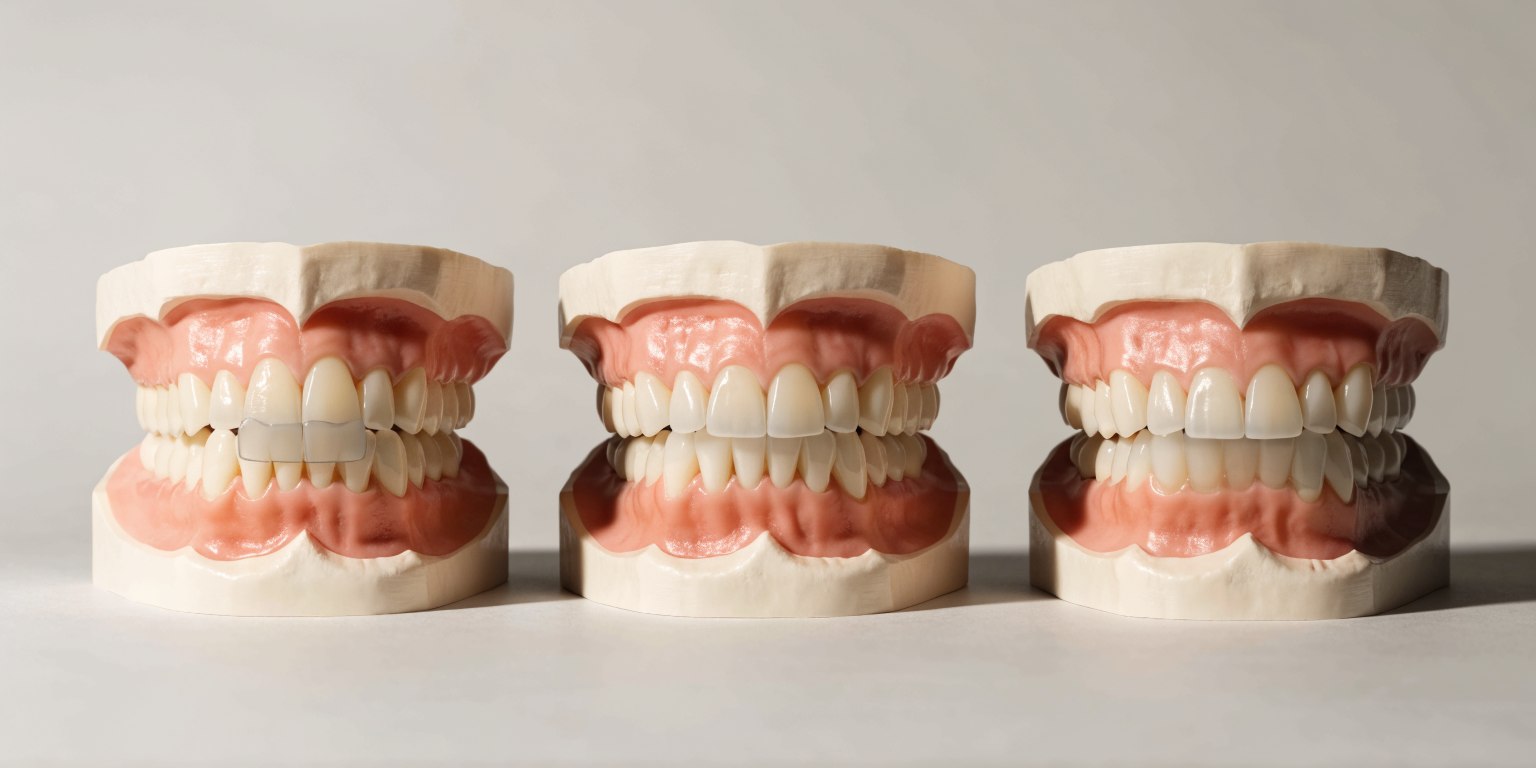
No. It is not always necessary—or desirable—to veneer every visible tooth.
A published clinical article on aesthetic changes with a limited number of anterior restorations specifically noted that significant cosmetic improvement can be achieved conservatively and that it is not always necessary to prepare every tooth visible in the smile.
A visible tooth may remain untreated when it already has:
- an acceptable color;
- appropriate shape;
- healthy enamel;
- good alignment;
- and a natural transition with the planned restorations.
This is where conservative smile design matters.
For example, instead of placing veneers on ten teeth simply to make every visible tooth the same shade, a plan might use:
- professional whitening first;
- orthodontics for position;
- composite bonding for a small edge correction;
- veneers only on selected teeth.
The most conservative plan may contain fewer veneers but more thoughtful treatment sequencing.
How Does Tooth Color Affect the Number of Veneers?
The larger the planned color change, the more carefully the transition between treated and untreated teeth must be planned.
Suppose a patient wants very light veneers but naturally has darker premolars that are visible during smiling. Treating only the central six teeth can create a noticeable shade difference at the sides.
Possible strategies include:
- choosing a veneer shade that harmonizes with untreated teeth;
- whitening natural teeth before final veneer shade selection;
- extending veneers farther into the visible smile when clinically justified;
- or modifying the overall aesthetic goal.
The American Dental Association explains that veneer color should be selected to work with the natural teeth and that porcelain veneers require irreversible enamel removal when preparation is performed.
That means “just add two more veneers” is not a trivial cosmetic adjustment. Each additional prepared tooth adds another irreversible restoration to the long-term treatment plan. For more on preparation and long-term upkeep, see Do E-max Veneers Require Tooth Shaving? and How Long Do E-max Veneers Last?
How Do Tooth Shape, Width and Proportion Change the Count?
Veneer count must also account for how treated teeth will look beside untreated teeth.
A smile is not simply a row of identical white rectangles.
The visible teeth should relate to one another in:
- width;
- length;
- incisal edge position;
- axial inclination;
- symmetry;
- surface texture;
- and gradual transition toward the sides of the smile.
Published smile-design literature emphasizes the relationship between tooth size, shape, alignment, arrangement, facial features and patient preference.
This becomes particularly important when closing spaces.
If a patient has a gap between the central incisors, making only the two central teeth wider may create poor proportions. The space may need to be distributed across more teeth—or orthodontics may be the more conservative approach.
The number of veneers therefore cannot be decided from the gap size alone.
Can Crooked Teeth Change How Many Veneers You Need?
Yes, but significant alignment problems may mean the patient needs orthodontics rather than more veneers.
A rotated or protruding tooth can complicate ceramic treatment because a straight-looking veneer may require more preparation on prominent areas.
Adding more veneers does not solve this biological problem.
Published restorative literature describes limited orthodontic treatment as a way to position teeth before minimally invasive veneer preparation in selected patients.
A patient may therefore move from:
“I need ten veneers because my teeth are uneven”
to:
“I need orthodontic alignment first, followed by fewer conservative restorations.”
That is often a more meaningful treatment-planning question than choosing between a 6- and 10-veneer package.
Should You Get Veneers on the Bottom Teeth Too?
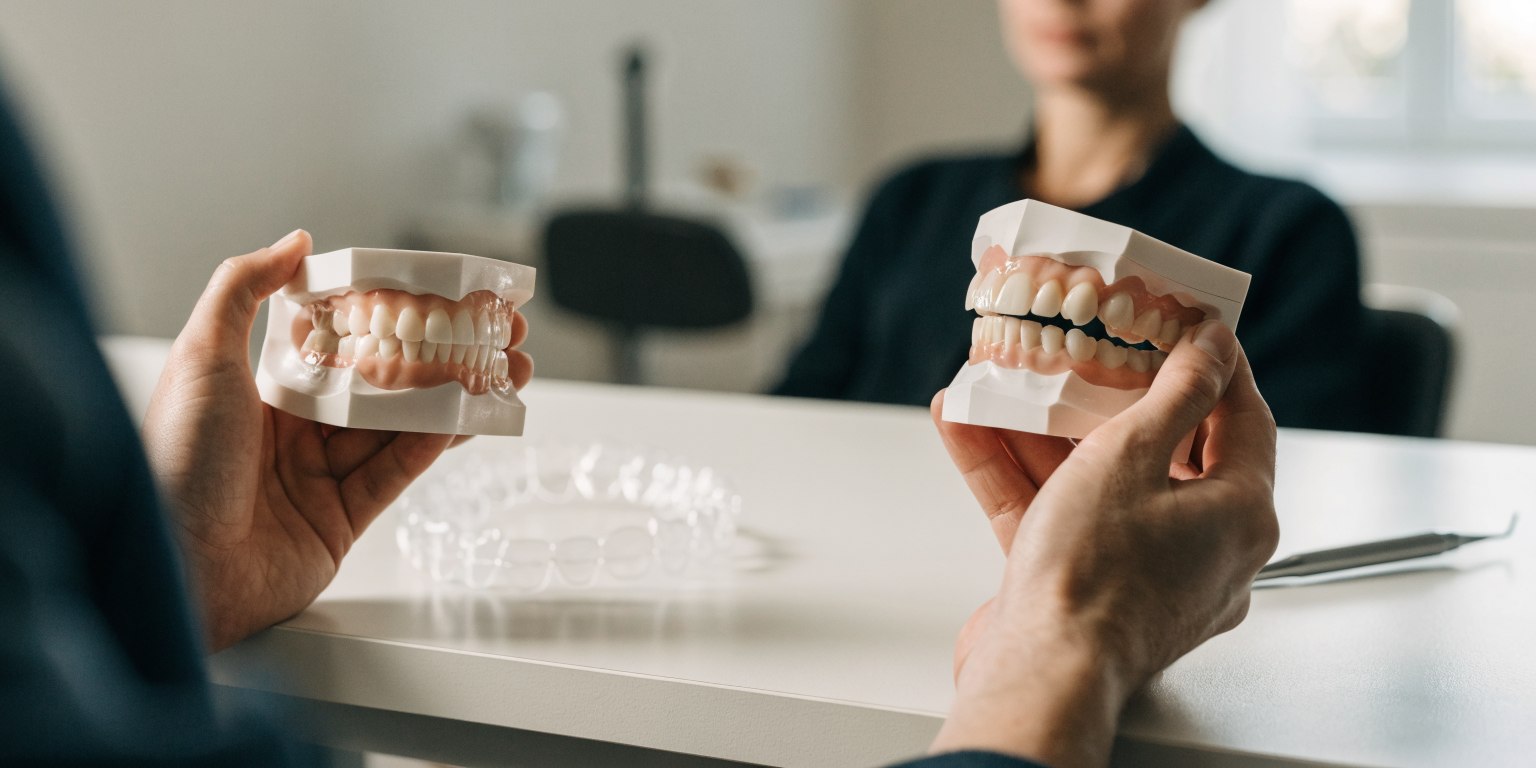
Lower veneers are not automatically necessary. They should be considered only when the lower teeth are visible enough to matter aesthetically and are clinically suitable for treatment.
Some people show very little of their lower teeth when smiling.
Others show more lower tooth structure when:
- speaking;
- laughing;
- or as facial and lip dynamics change.
The dentist should assess whether a lower restoration would:
- meaningfully improve the patient’s concern;
- create a better color relationship;
- preserve healthy structure;
- and function safely within the bite.
A package of “20 veneers” often implies treatment across upper and lower teeth, but package size is not a clinical indication.
If healthy lower teeth do not need restoration, they should not be treated simply to reach a round number.
When Might Fewer Veneers Be the Better Plan?
Fewer veneers may be preferable when the cosmetic concern is localized or when other treatments can preserve more healthy tooth structure.
Examples include:
One chipped tooth
A single veneer—or composite bonding—may solve the problem.
Small gaps
Composite bonding or orthodontics may reduce the need for ceramic restorations.
Generalized tooth color concern
Professional whitening may improve untreated teeth so that fewer veneers are needed.
Mild crowding
Orthodontics may create a more conservative foundation for later cosmetic treatment.
One dark tooth
A localized restorative solution may be more appropriate than veneering the entire smile.
The ADA advises treating decay and gum disease before elective veneers and notes that veneer treatment is irreversible when enamel is removed.
The correct number is therefore not the number that creates the biggest transformation.
It is the number that remains justified after conservative alternatives have been considered.
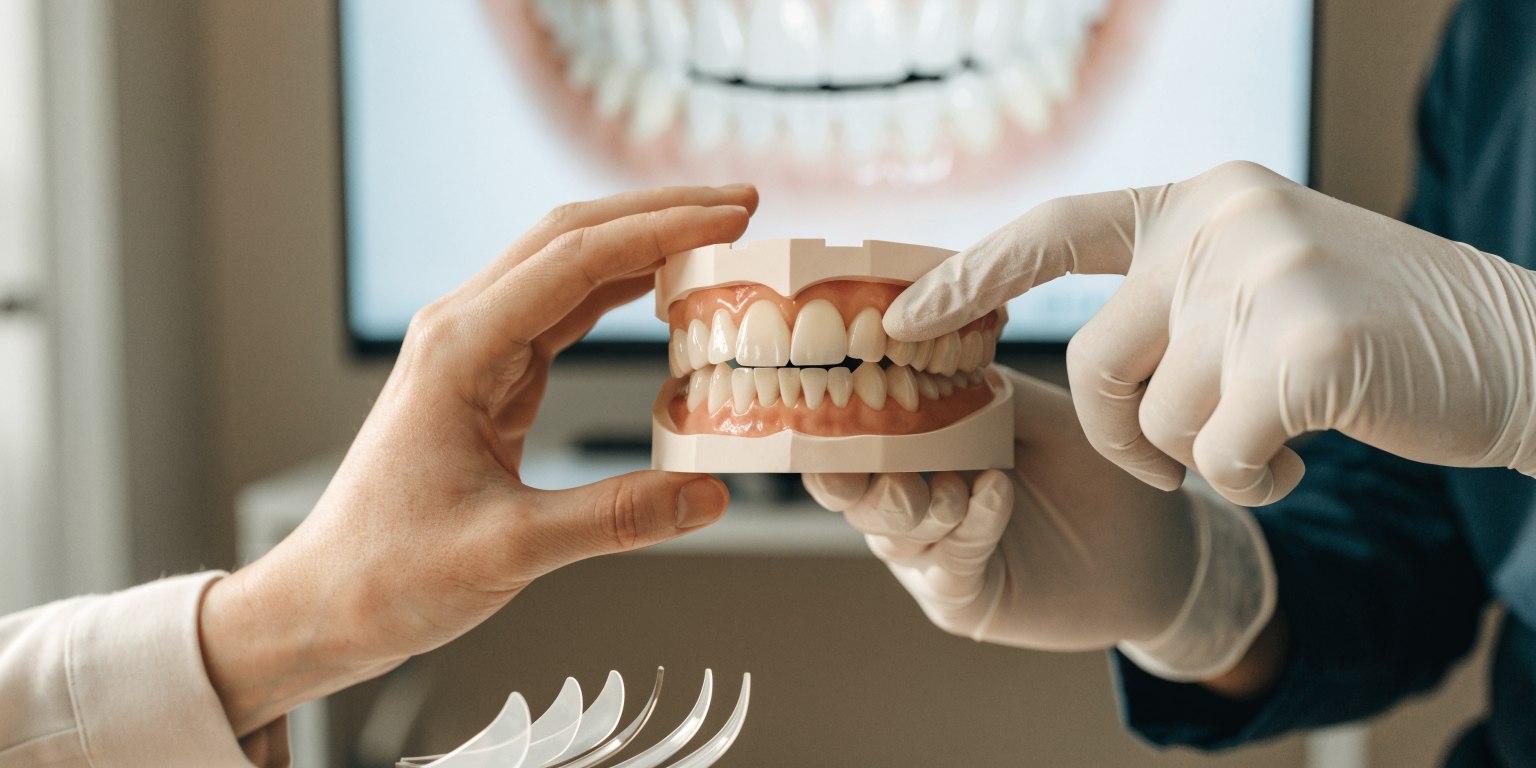
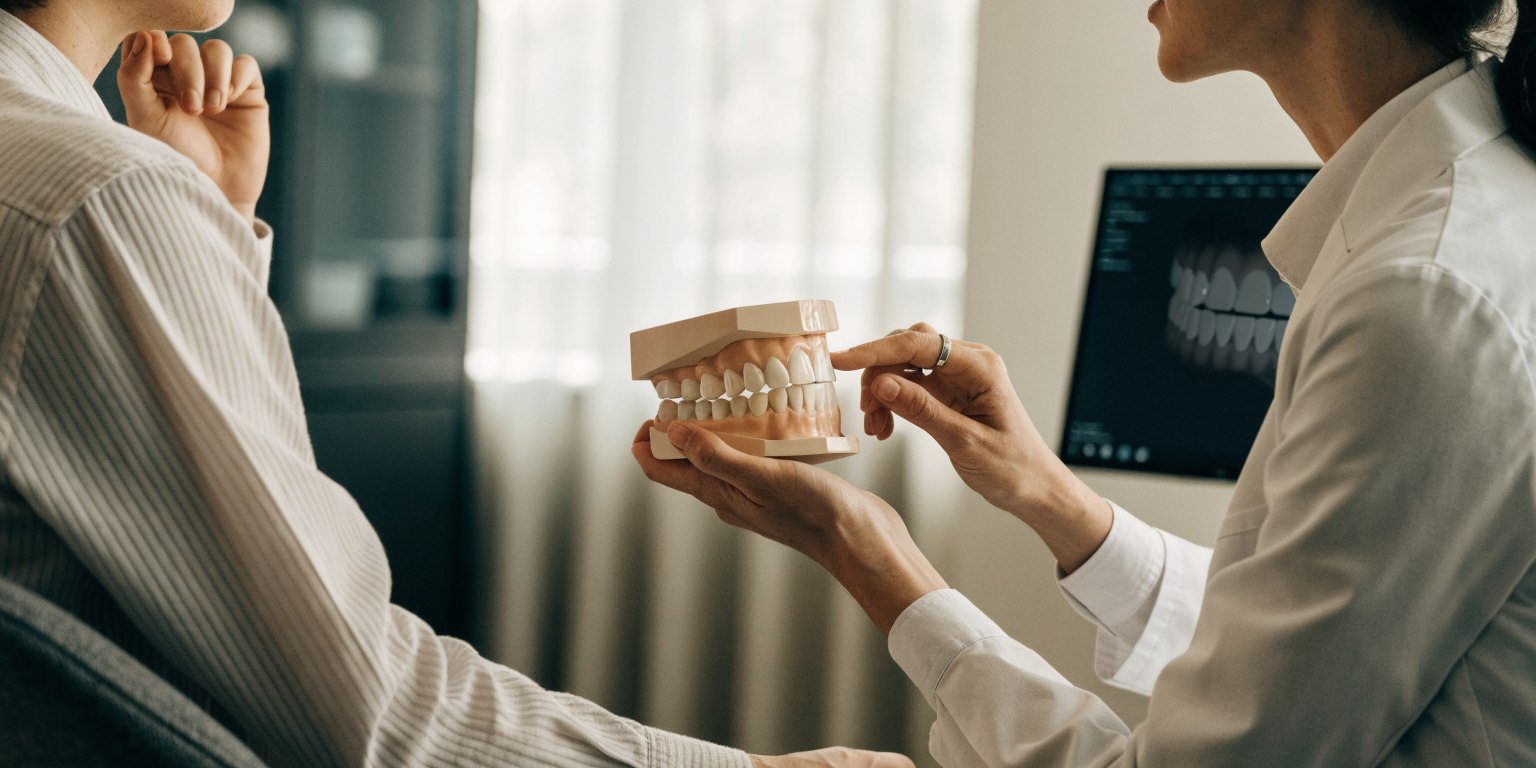
Can a Mock-Up Help Decide Between 6, 8 and 10 Veneers?
Yes. A diagnostic wax-up, digital design or intraoral mock-up can help patients and dentists evaluate the width, shape and transition of the planned smile before irreversible preparation.
Published reports on digital smile design and mock-up techniques describe these tools as useful for communication and treatment planning.
A mock-up can help answer practical questions such as:
- Will six treated teeth create a visible shade boundary?
- Would eight give a smoother transition?
- Do the proposed teeth look too wide?
- Does the smile still look natural from the side?
- Are premolars visible when the patient laughs?
- Could fewer restorations work after whitening or orthodontics?
A simulation is still not a diagnosis, and digital design should not overrule oral health or biological considerations.
But it can be useful for avoiding unnecessary treatment based on an arbitrary package number.
What Should International Patients Ask Before Choosing a Veneer Package in Turkey?
Patients considering veneers in Turkey should ask for a tooth-by-tooth treatment plan rather than accepting a package solely because it contains 8, 10, 16 or 20 restorations.
Ask:
- Which exact teeth are proposed for veneers?
- Why does each tooth need treatment?
- Which visible teeth can remain natural?
- How many teeth are visible when I smile naturally and laugh?
- Will untreated premolars create a shade or shape mismatch?
- Can whitening reduce the number of veneers?
- Could orthodontics reduce preparation or tooth count?
- Are any proposed “veneers” actually crowns?
- How much preparation is expected on each tooth?
- What exact ceramic material is proposed?
- Can I preview 6, 8 and 10-tooth designs before treatment?
- What happens if the in-person examination changes the preliminary plan?
Niva Dental in Bakırköy, Istanbul lists E-max veneers as a dental treatment and its Hollywood Smile content describes smile makeover planning as individualized rather than one fixed dental procedure.
International patients can also review the Niva Dental patient journey when preparing for consultation and treatment planning. Because tooth count is also a major cost driver, the detailed pricing factors are covered in E-max veneers cost in Turkey.
How Many Veneers Do I Need? A Practical Decision Framework
For the question “how many veneers do I need?”, use this sequence:
Step 1: Identify the actual problem
Is the concern color, shape, gap, wear, alignment, damage—or several issues together?
Step 2: Record the real visible smile
Assess the teeth during a natural smile, broad smile, speech and laughter—not only a posed photograph.
Step 3: Mark which visible teeth genuinely need treatment
Do not automatically include healthy teeth.
Step 4: Check the transition zone
Will untreated teeth at the sides differ obviously in color, shape or position?
Step 5: Consider alternatives
Could whitening, bonding or orthodontics reduce the number of veneers?
Step 6: Preview the plan
Where appropriate, compare a mock-up or digital plan with different treatment widths.
Step 7: Confirm tooth-by-tooth preparation
Every additional veneer should have a clinical and aesthetic reason.
Six, eight and ten are planning possibilities—not prescriptions.
Frequently Asked Questions
How many veneers do most people need?
There is no clinically correct “most people” number. Current commercial pages often recommend six to ten upper veneers, but the right number depends on the individual smile width, tooth display, shade, proportions and treatment goals. Some patients need only one or two restorations; others may need a broader coordinated plan.
Are 6 veneers enough for a full smile?
They can be enough for a relatively narrow smile when the six central teeth are the main visible aesthetic concern and untreated side teeth already match well. However, premolars are visible in many smiles, so six veneers can leave a visible shade or shape transition in patients with a broader smile.
Is 8 veneers better than 6?
Not automatically. Eight veneers simply extend the treatment zone farther toward the sides of the smile. They may create a smoother transition when premolars are visible, but adding two healthy teeth to treatment without a clear reason increases irreversible restorative commitment.
When would someone need 10 veneers?
Ten may be considered when a patient has a wide smile and additional teeth remain clearly visible beside an eight-veneer design, particularly if those teeth differ in shade, shape or proportion. The dentist should still confirm that each additional tooth genuinely benefits from treatment.
Do I need 20 veneers for a Hollywood Smile?
No. A Hollywood Smile is a broader smile-makeover concept, not a requirement for 20 veneers. Some patients may need veneers, whitening, bonding, orthodontics, gum treatment or a combination. Upper and lower teeth should only be restored when each treatment has an individual clinical and aesthetic indication.
Can I get veneers only on my top teeth?
Yes. Many veneer plans involve only upper teeth because they dominate the visible smile, but this depends on individual tooth display. Lower teeth should not be veneered simply for symmetry if they are healthy, minimally visible and do not contribute to the patient’s concern.
Can whitening reduce how many veneers I need?
Sometimes. If untreated visible teeth mainly differ in color, whitening before final shade selection may create a better match and allow more natural teeth to remain untreated. Whitening cannot correct major shape, position or structural problems, and existing restorations do not whiten like natural enamel.
Can orthodontics reduce the number of veneers I need?
Yes, in selected patients. If crowding, rotation, spacing or protrusion is the main reason many veneers are being proposed, orthodontic movement can reposition the teeth and may allow fewer or more conservative restorations later. Treatment depends on the individual bite and aesthetic goals.
Should my veneer count be based on a selfie?
No. A selfie can be useful for preliminary communication, but posed photographs may not reproduce natural smile width or tooth display. Final planning should include clinical examination and, where useful, several photographs, video, scans and a mock-up to evaluate the smile dynamically.
Can I mix veneers with bonding on other teeth?
Yes, selected plans can combine treatments. A tooth requiring a larger ceramic change may receive a veneer while another tooth only needs a small additive composite correction. Shade, surface texture, tooth proportions, bite and maintenance should be coordinated so the restorations work together naturally.
Patients considering 6, 8, 10 or more E-max veneers can contact Niva Dental in Bakırköy, Istanbul for an initial smile assessment and individualized treatment plan. Final veneer count should be based on the teeth visible in the patient’s natural smile, oral health, tooth structure, aesthetic goals and whether a more conservative treatment could allow some teeth to remain untouched.
Medical References and Sources
| Source | What It Supports |
|---|---|
| American Dental Association / MouthHealthy — Veneers | Veneer indications, porcelain veneer preparation and irreversibility, color selection, disease treatment before veneers, and maintenance considerations. |
| Parekh SM, et al. — Is the smile line a valid parameter for esthetic evaluation? A systematic literature review — PMID 21876867 | Smile-line validity, tooth display, upper-lip relationship and aesthetic evaluation. |
| van der Geld P, et al. — Teeth and gingival display in the premolar area during smiling in relation to gender and age — PMID 16202047 | Study showing maxillary premolars were partially visible in more than 80% of smiles, supporting assessment beyond the central six teeth. |
| van der Geld P, et al. — Tooth display and lip position during spontaneous and posed smiling in adults — PMID 18622829 | Evidence that posed and spontaneous smiles can differ in lip-line height, smile width and posterior tooth display. |
| Aesthetic changes with four anterior units — PMID 16474351 | Supports conservative planning and the principle that significant aesthetic improvement does not always require preparation of every visible tooth. |
| Garcia PP, et al. — Digital smile design and mock-up technique for esthetic treatment planning with porcelain laminate veneers — PMID 30122831 | Supports use of digital planning and mock-ups for patient communication and veneer treatment planning. |