

Temporary teeth while dental implants heal may be fixed or removable. Compare options, understand eating restrictions, and learn what to ask before surgery.

You may be able to have temporary teeth while dental implants heal, but the type and timing must be planned individually. Options include a removable appliance, a bridge supported by neighbouring teeth, or an implant-supported temporary in suitable cases. Having an implant placed does not guarantee a fixed tooth on the same day. [1,2]
Before surgery, ask what will fill the gap, when you can wear it and whether you may chew with it. These details matter just as much as the appearance of the temporary tooth.
What are temporary teeth during implant treatment?
Temporary teeth, or provisional restorations, fill gaps during treatment. Fixed or removable options may be supported independently of the healing implant. [2]
The implant itself replaces the tooth root. Bone gradually forms a connection with its surface through osseointegration, which can take several months. A temporary tooth does not mean that this process is complete. [1]
Some implant-supported provisionals also help shape the surrounding gum before the final crown or bridge is made. They remain part of a staged treatment plan and need review. [8]
Which temporary tooth options might be available?
The main difference is what supports the replacement tooth. A removable denture, a tooth-supported bridge and an implant-supported crown place different demands on the mouth. Ask your dentist to explain your proposed option in those terms.
| Option | What it is | What to clarify |
|---|---|---|
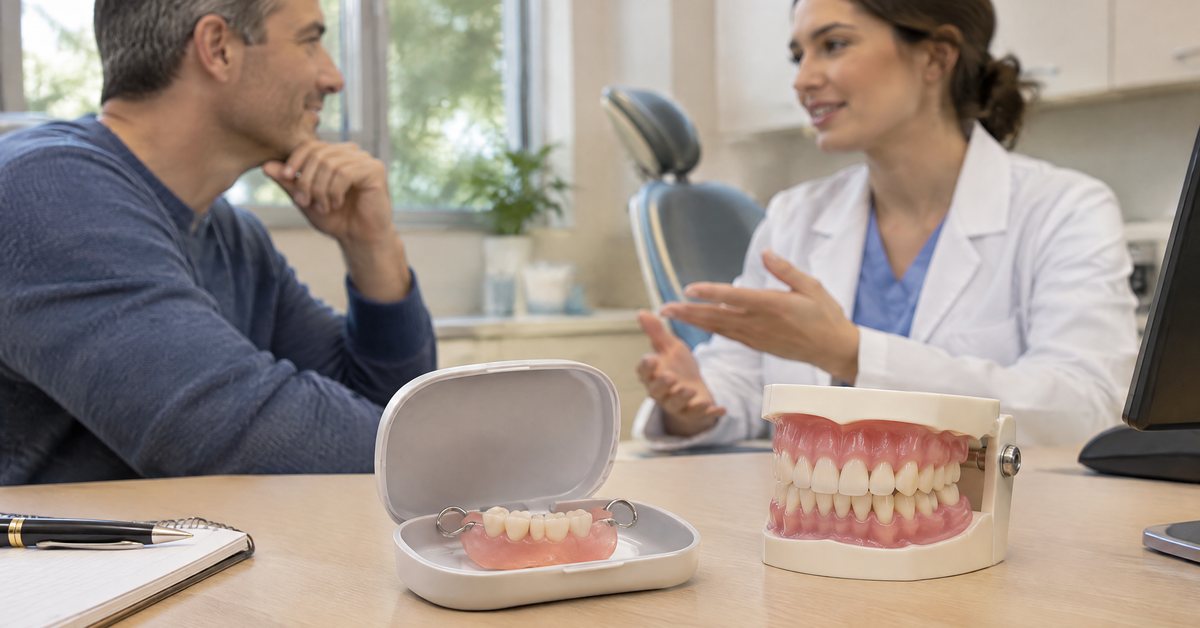
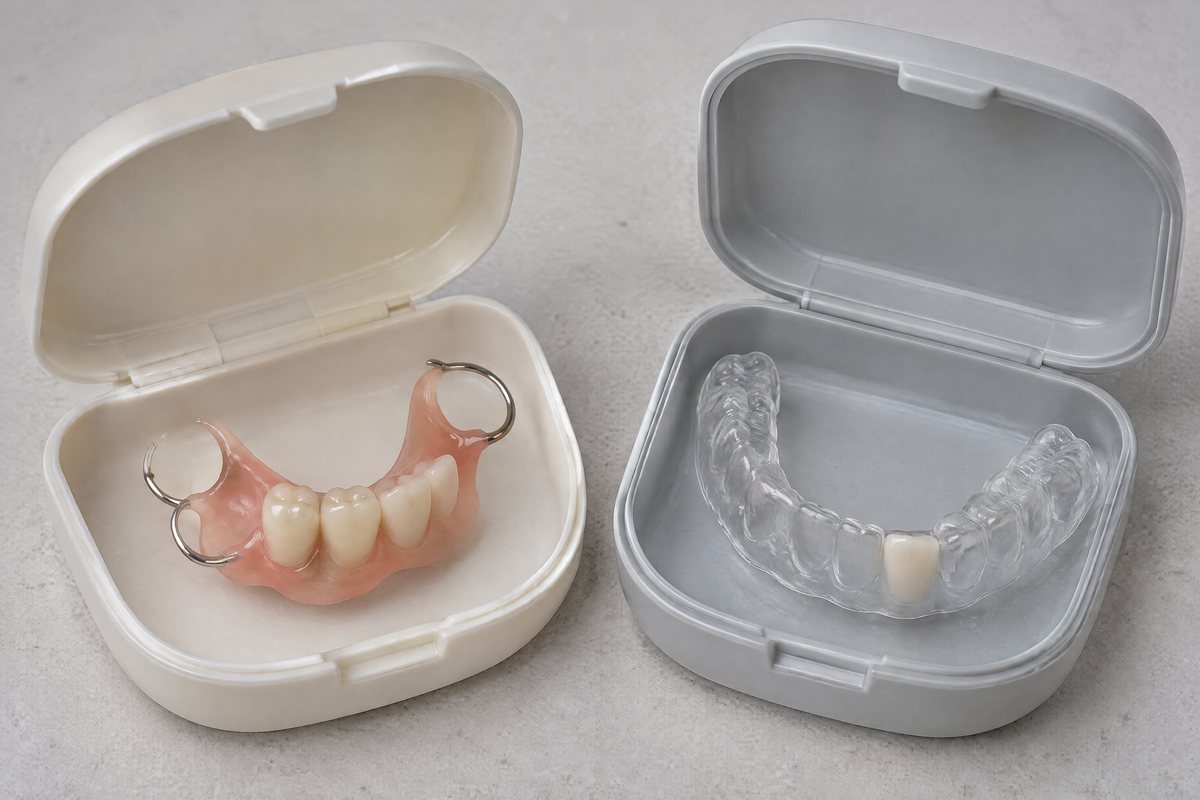
| Removable partial denture, sometimes called a flipper | A removable appliance replacing one or several teeth. [3] | When can it be worn, and will the fit need adjusting after surgery? |
| Clear retainer carrying a false tooth | A removable retainer with an artificial tooth to fill a visible space. [4] | Is this suitable for the surgical site, and when must it be removed? |
| Tooth-supported temporary bridge | A fixed replacement supported by neighbouring teeth; an adhesive bridge is bonded to them. [2,4] | Are the supporting teeth and bite suitable? |
| Implant-supported temporary crown | A provisional tooth attached to the implant in a selected treatment protocol. [2] | Will it be kept out of the bite, and what eating restrictions apply? |
| Temporary full denture or fixed full-arch bridge | A removable replacement for an entire arch, or a fixed provisional supported by several implants in suitable cases. [3,5] | Which design is planned, and what happens if immediate fixed teeth are unsuitable? |
A temporary should be selected for your clinical situation and daily needs. Photographs of another patient’s restoration cannot establish which option will work for you.
Will I leave surgery with a fixed temporary tooth?
Possibly, depending on initial stability and site conditions. If immediate implant-supported restoration cannot proceed, ITI guidance describes alternatives such as a resin-bonded bridge or removable appliance. [2]
Ask for a backup plan before treatment: “If a fixed temporary is unsuitable on the day, what will I have instead?” Confirm whether the alternative is already prepared or requires another appointment.
For more detail about the terminology, see Niva’s explanation of same-day dental implants and temporary restorations.
What about All-on-4 or All-on-6 treatment?
A fixed temporary bridge may be possible for a full arch, but the treatment name alone cannot confirm eligibility. The number and distribution of implants, available bone, their initial stability and the prosthetic plan all matter. ITI describes full-arch treatment as complex and stresses careful selection and planning; additional bone procedures can affect immediate-loading suitability. [5]
Ask whether the first set of teeth will be fixed or removable, whether it is temporary, and what restrictions continue after fitting. “Fixed” describes attachment; it should not be treated as permission to eat anything immediately.
Can I wear my existing denture after implant surgery?
Only when your treating team confirms it is appropriate. An existing denture may need adjustment or relining, which changes the fitting surface. Cambridge University Hospitals advises that some patients cannot wear their dentures for several days after implant surgery. [6]
Guy’s and St Thomas’ notes that some patients may need to leave dentures out for up to two weeks. These are examples of clinical pathways, not a rule that everyone must follow. Ask for instructions for your own procedure before assuming you can reinsert your usual appliance. [7]
Bring the denture to the planning appointment and ask whether it can be adapted. If a new immediate denture is needed around extractions, preparation usually begins beforehand. Bristol Dental School describes making it before the teeth are removed and adjusting it at fitting. [9]
Can I eat and speak normally with temporary teeth?
Eating instructions depend on the appliance and the surgery. Your dentist may recommend soft foods after implant placement. Having teeth in place does not cancel those instructions. [7] For temporary dentures, Bristol Dental School advises avoiding hard, crunchy, chewy and sticky foods while learning to manage the appliance. [9]
Ask for practical guidance: whether to remove the appliance for meals, which areas you may chew on and when the diet can change. A cosmetic replacement for a front tooth should not be assumed to tolerate biting into an apple or crusty bread.
Adjusting to dentures can take weeks. Persistent discomfort warrants review. [3] Mention work presentations, public-facing duties or an upcoming event during planning so the team understands what matters to you.

How do you clean and care for temporary teeth?
Get instructions for both the appliance and the surgical site. The method used to clean a removable denture is not automatically suitable for a fixed temporary bridge or a fresh wound. Ask the team to demonstrate the recommended technique and tools.
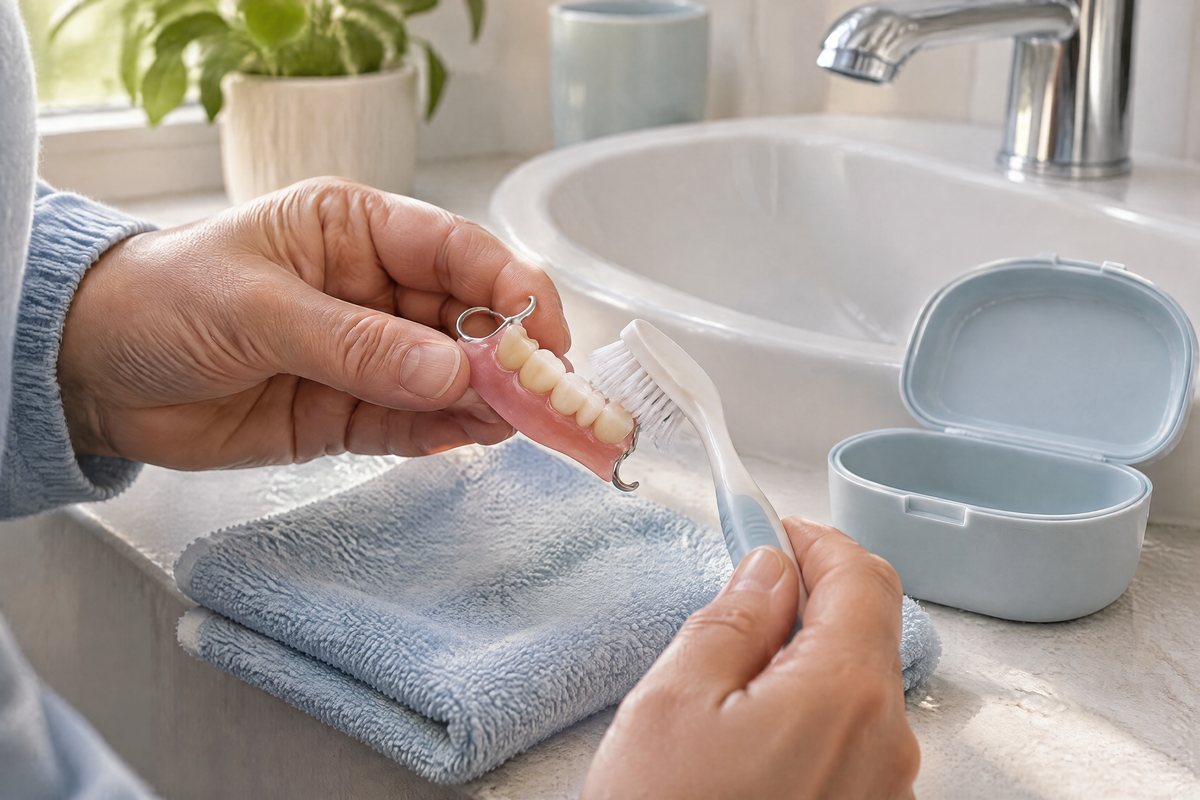
Clean removable dentures regularly and rinse away food. Avoid toothpaste, which can damage them; clean over water or a towel to reduce breakage risk. [3]
Immediately after extraction, the wearing schedule may differ: Bristol Dental School advises leaving an immediate denture in for the first 24 hours in its extraction pathway. Follow your own team’s instructions, especially when implant placement or grafting is also involved. [9]
For implant-supported teeth, follow the prescribed cleaning routine and attend reviews. Smoking can impair implant healing, so discuss support to stop with your dental team. [10]
How long will I use the temporary teeth?
Often for several months, but the endpoint depends on your treatment stages. Cambridge University Hospitals describes a conventional implant healing period of around 3–6 months, sometimes longer, before restorative work. Grafting or an additional surgical stage can extend the course. [6]
The final crown or bridge may also require several appointments once the site is ready. Leeds Teaching Hospitals describes using a temporary restoration to assess shape and gum contours before making the definitive version. [8]
Ask for an expected review date and the conditions needed to move forward. A temporary that still looks acceptable should not be assumed suitable for indefinite use.
What if the temporary tooth hurts, moves or breaks?
Contact your dentist about poor fit, rubbing or damage. Keep broken pieces for inspection. [3] A loose or painful implant also needs prompt assessment; movement may involve a component rather than the implant itself, but this cannot be established at home. [10]
Do not glue a temporary tooth back with household adhesive or try to tighten an implant component yourself. If a removable appliance cannot be seated comfortably, do not force it onto the healing area; contact the team for advice.
Worsening pain or swelling after surgery should also be reported rather than saved for the final crown appointment. [1]
What should your treatment plan confirm?
Ask for these details in writing before extraction or implant placement:
- The exact temporary: its name, whether it is fixed or removable, and what supports it.
- The fitting date: what you will have immediately after surgery and whether any gap is expected.
- The backup option: what changes if fixed temporary teeth cannot be fitted.
- Daily use: eating, sleeping, cleaning and removal instructions.
- The quotation: whether fabrication, adjustments, relining, repairs and the final restoration are included.
- Follow-up: who checks the temporary and whom to contact between visits.
If travelling for treatment, ask how an adjustment or breakage will be handled after returning home. Confirm who can provide an examination locally and what records they would need. A temporary-tooth plan should cover the healing period between treatment visits.
Frequently asked questions
Will I definitely have no visible gap?
This cannot be guaranteed. Temporary replacement can be planned, but surgery and appliance suitability may affect when it can be worn. Confirm the expected appearance and any planned time without the appliance beforehand. [7,9]
Is a healing cap a temporary tooth?
No. A healing cap is a component used during gum healing; it does not replace the visible shape or function of a tooth. Ask whether a separate provisional is planned. [8]
Can a temporary tooth be fixed without using the implant?
Yes. In suitable cases, a provisional bridge supported by neighbouring teeth can fill the space while the implant heals without loading. [2]
Can I sleep with temporary teeth in?
A fixed provisional stays attached. Removable dentures usually come out at night, unless your dentist instructs otherwise, including during early recovery. [3,9]
Are temporary teeth included in the implant price?
Do not assume so. Ask for the temporary and final restoration to be itemised separately, including potential adjustment or repair charges. Only the clinic’s written quotation can confirm its inclusions.
Discuss your temporary tooth plan with Niva Dental
If you are considering Niva Dental in Bakırköy, Istanbul, ask what temporary replacement may be appropriate during healing and how follow-up would work. Explore Niva Dental’s implant treatment information before discussing the proposed stages and written quotation.
This article provides general information. A dentist must assess your mouth, planned surgery and healing before recommending a temporary tooth or appliance.
Medical sources
- Mayo Clinic: Dental Implant Surgery.
- International Team for Implantology — Forum Implantologicum: Implant Placement and Loading Protocols at the 7th ITI Consensus Conference: A Narrative Review of the Findings of Group 5.
- NHS: Dentures (False Teeth).
- University College London Hospitals NHS Foundation Trust: Hypodontia Clinic — Restorative Options and Retainers with Artificial Teeth.
- International Team for Implantology: Loading Protocols for Fixed Prostheses in Edentulous Jaws.
- Cambridge University Hospitals NHS Foundation Trust: Dental Implants in Restorative Dentistry.
- Guy’s and St Thomas’ NHS Foundation Trust: After Having a Dental Implant.
- Leeds Teaching Hospitals NHS Trust: Dental Implants.
- University of Bristol Dental School: Immediate Dentures.
- US Food and Drug Administration: Dental Implants: What You Should Know.