



A dental implant and a fixed bridge can both replace a missing tooth, but they rely on different support structures. This guide explains how dentists compare them based on neighboring teeth, bone, treatment time, maintenance, cost, and individual clinical findings.


When one tooth is missing, a dental implant and a fixed dental bridge can both restore the gap, but they solve the problem in different ways. A dental implant vs bridge decision is usually not about choosing a universally “better” treatment. It is about deciding which support system makes more sense for the missing-tooth site, the teeth beside it, the available jawbone, your health, your timeline, and your long-term maintenance needs.
A single-tooth implant is supported independently by an implant placed in the jawbone. A traditional bridge is supported by neighboring teeth, which are prepared to hold crowns connected to the replacement tooth. That distinction affects surgery, tooth preparation, cleaning, treatment time, and future maintenance.
For patients comparing fixed tooth-replacement options, the most useful starting point is a clinical examination rather than price alone.
| Question | Single-Tooth Implant | Traditional Fixed Bridge |
|---|---|---|
| What supports the replacement tooth? | An implant fixture in the jawbone | Natural teeth beside the gap |
| Are neighboring teeth prepared? | Usually no | Yes, for a traditional bridge |
| Is surgery involved? | Yes | Usually no implant surgery |
| Does treatment require bone healing? | Yes, osseointegration may take months | No osseointegration phase |
| Can it help preserve bone at the missing-tooth site? | Implant loading may help maintain supporting bone | Does not replace the missing root |
| How is it cleaned? | Around the implant crown and gumline | Around supporting teeth and underneath the pontic |
| Which is better? | Depends on clinical findings | Depends on clinical findings |
Dental Implant vs Bridge: What Is the Main Difference?
The main difference is where the replacement tooth gets its support. A dental implant replaces the missing root with an implant body placed in the jaw, while a traditional dental bridge uses teeth next to the gap as abutments.
The U.S. Food and Drug Administration describes dental implants as medical devices placed in the jaw to support artificial teeth such as crowns, bridges, or dentures. The FDA’s dental implant guidance also distinguishes the implant body in the bone from the abutment that connects it to the restoration.
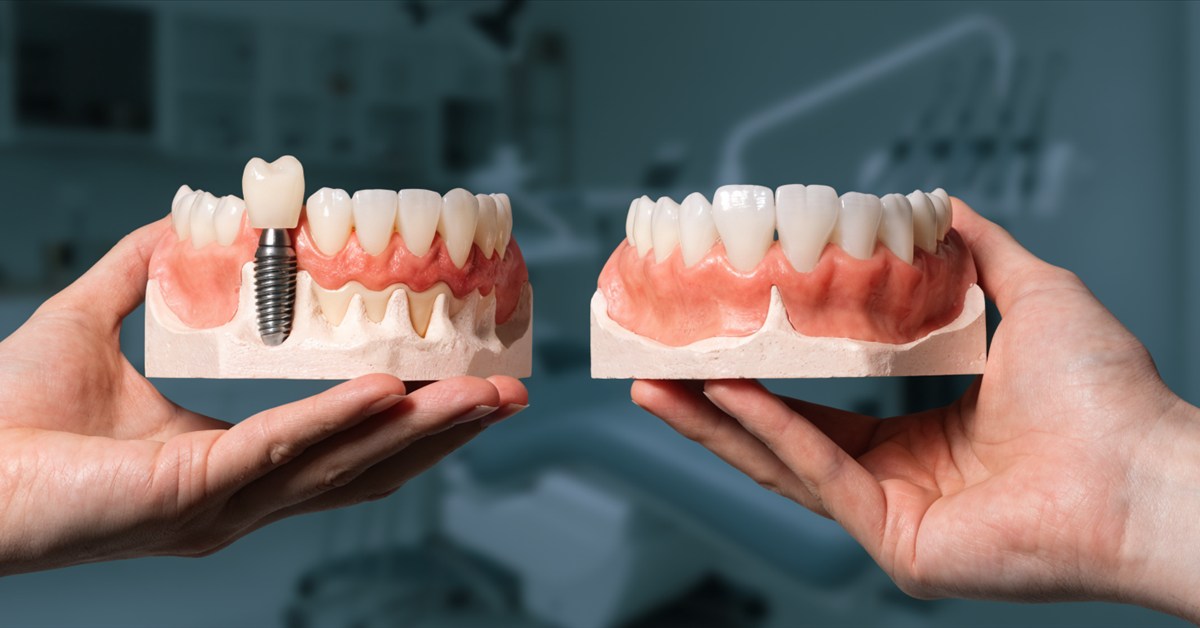
A traditional bridge works differently. The false tooth that fills the gap is called a pontic. In a conventional three-unit bridge for one missing tooth, the pontic is connected to crowns placed over the natural teeth on both sides. The American Dental Association’s bridge information explains that fixed bridges are attached to surrounding teeth for support.
This support difference drives most of the practical pros and cons.
How Does a Single-Tooth Implant Work?
A single-tooth implant usually has three functional parts: the implant body in the jawbone, an abutment that connects to it, and the visible crown. The implant body acts as an artificial root rather than relying on the teeth beside the gap.
After placement, the bone heals closely around the implant surface in a process called osseointegration. The American Dental Association’s implant guidance notes that this healing takes time and that some patients may wait several months before the final replacement tooth is attached.
The main structural advantage is independence. If the neighboring teeth are healthy and intact, an implant can often replace the missing tooth without preparing those teeth for crowns.
However, implant treatment is surgical. Suitability depends on factors such as bone volume, gum health, medical history, healing capacity, tobacco use, and the anatomy around the planned implant site. Additional procedures such as bone grafting may be considered in selected cases, but they are not automatically required for every patient.
Patients considering dental implant treatment in Istanbul should have the missing-tooth site and surrounding structures assessed before a final plan is confirmed.
How Does a Traditional Dental Bridge Work?
A traditional fixed bridge replaces the visible missing tooth without placing a new root in the gap. Instead, the dentist prepares the adjacent teeth so they can support crowns connected to the pontic.
For a conventional bridge, this tooth preparation is irreversible because some tooth structure must be removed. Cleveland Clinic’s dental bridge overview explains that the abutment teeth are reshaped before impressions or digital records are used to make the restoration.
That does not mean a bridge is an inferior treatment. A bridge may be clinically reasonable when the teeth beside the gap already have large restorations, already need crowns, or can provide appropriate support. It can also avoid implant surgery and is often completed sooner because there is no implant osseointegration phase.
Not all bridges have the same design. A resin-bonded or Maryland bridge, often considered for selected front-tooth situations, uses a different form of support and may require less preparation than a conventional full-coverage bridge. The appropriate design depends on bite forces, tooth position, enamel available for bonding, and other clinical factors.
Implant vs Bridge: Side-by-Side Comparison
The table below summarizes the decision points that usually matter more than a simple “pros and cons” list.
| Factor | Dental Implant | Traditional Bridge | Why It Matters |
|---|---|---|---|
| Neighboring teeth | Usually remain unprepared | Used as abutments and prepared for crowns | Important when adjacent teeth are healthy |
| Jawbone | Implant is placed in bone | No root replacement in the gap | Bone condition affects implant planning |
| Surgery | Required | Usually not required | Relevant to health, preference, and recovery |
| Treatment time | Often longer because of healing | Often shorter | Important for travel and scheduling |
| Cleaning | Clean around crown and implant gumline | Clean around crowns and under pontic | Both require daily plaque control |
| Future decay | Implant body cannot develop tooth decay | Supporting natural teeth can develop decay | Maintenance risks are different |
| Technical maintenance | Crown, screw, or other components may need care | Cement, porcelain, pontic, or abutment teeth may need care | “Survival” does not mean maintenance-free |
| Cost pattern | Often higher initial treatment complexity | Often lower initial cost in straightforward cases | Total value depends on future maintenance too |
When May an Implant Make More Sense?
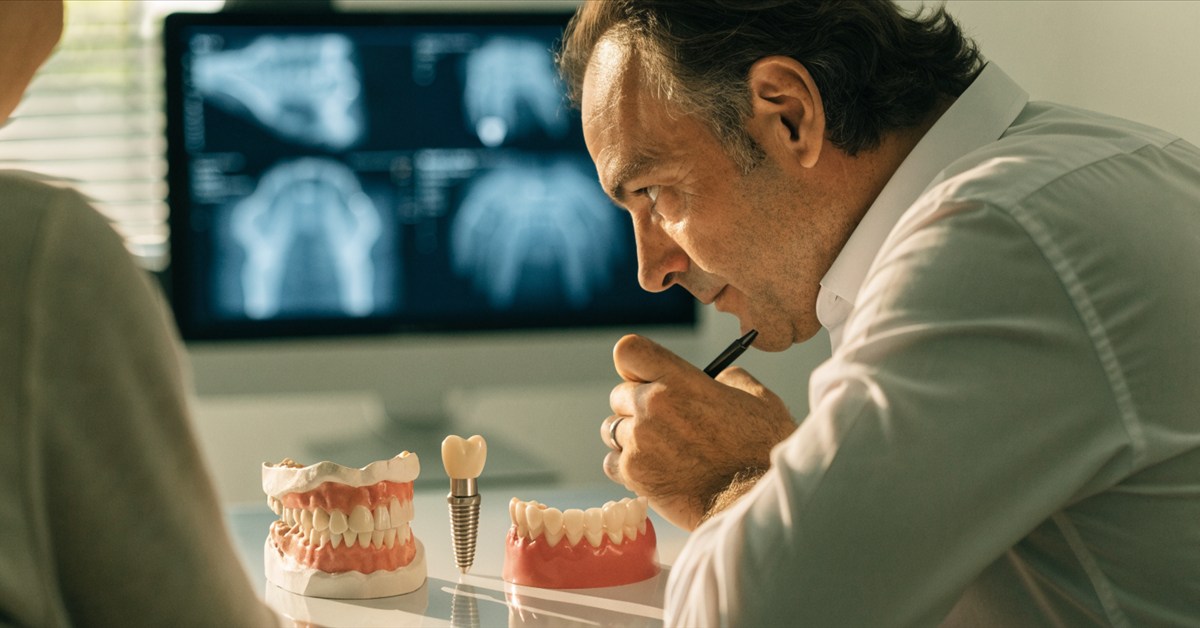
An implant may be especially worth discussing when the teeth beside the gap are healthy and would otherwise need to be reduced only to support a bridge. Preserving sound neighboring tooth structure can be an important treatment-planning goal.
An implant may also be considered when:
- there is adequate bone for stable implant placement, or bone augmentation is clinically feasible;
- the gums and surrounding tissues can support implant treatment;
- the patient can undergo oral surgery and allow time for healing;
- independent support for the missing tooth is desirable;
- long-term maintenance of the implant, crown, gums, and bite is realistic.
The FDA notes that implants can help keep the jawbone from shrinking after tooth loss. That does not mean an implant guarantees that bone levels will remain unchanged. Bone and soft tissue around implants still require healthy plaque control, professional follow-up, and management of risk factors.
Smoking can impair healing, and medical conditions may affect implant candidacy or healing. The correct question is therefore not “Can everyone get an implant?” but “Is this implant site and this patient suitable after clinical assessment?”
When May a Bridge Make More Sense?
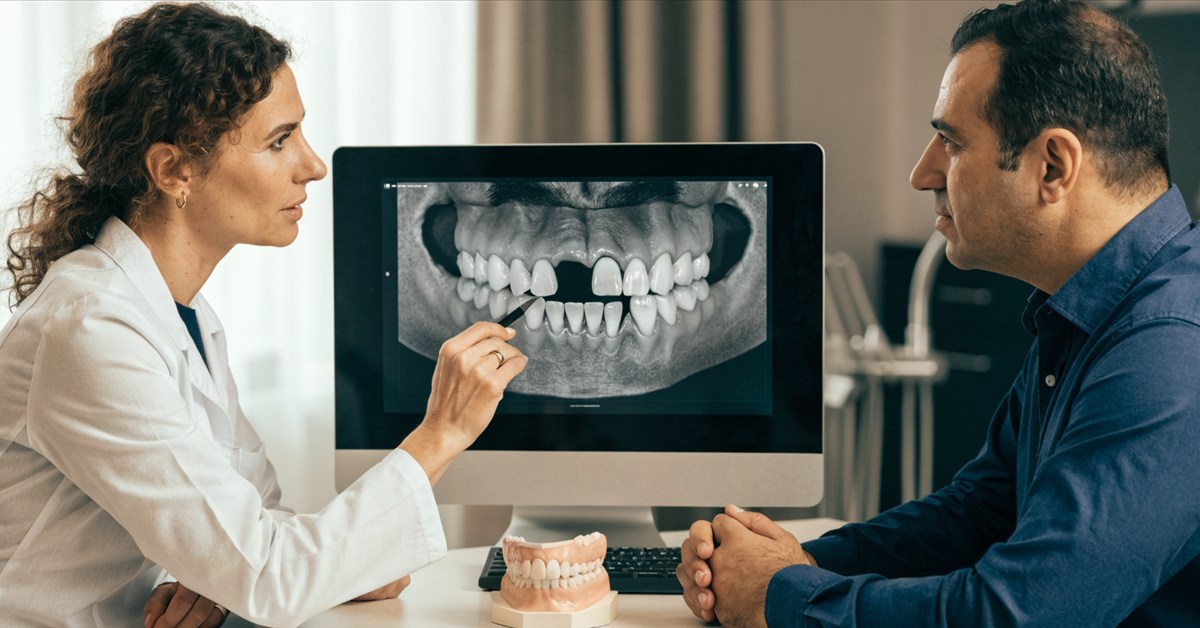
A bridge may make more sense when neighboring teeth already require full-coverage crowns or have restorations that make bridge support clinically appropriate. In that situation, preparing those teeth may not represent the same sacrifice of intact tooth structure as it would in completely healthy teeth.
A bridge may also be considered when:
- implant surgery is not desired or is not advisable;
- local anatomy makes implant treatment more complex;
- the patient prefers a shorter treatment sequence;
- bone augmentation would substantially change the treatment burden;
- a bridge design offers a predictable restorative option for the specific gap;
- a temporary or alternative long-term plan is more appropriate for the patient’s circumstances.
A bridge still depends on the health of its supporting teeth. If an abutment tooth later develops decay, fracture, loss of vitality, or periodontal problems, the bridge may also be affected. This is why the prognosis of each supporting tooth matters before treatment begins.
Which Option Is Better for Bone, Neighboring Teeth, and Cleaning?
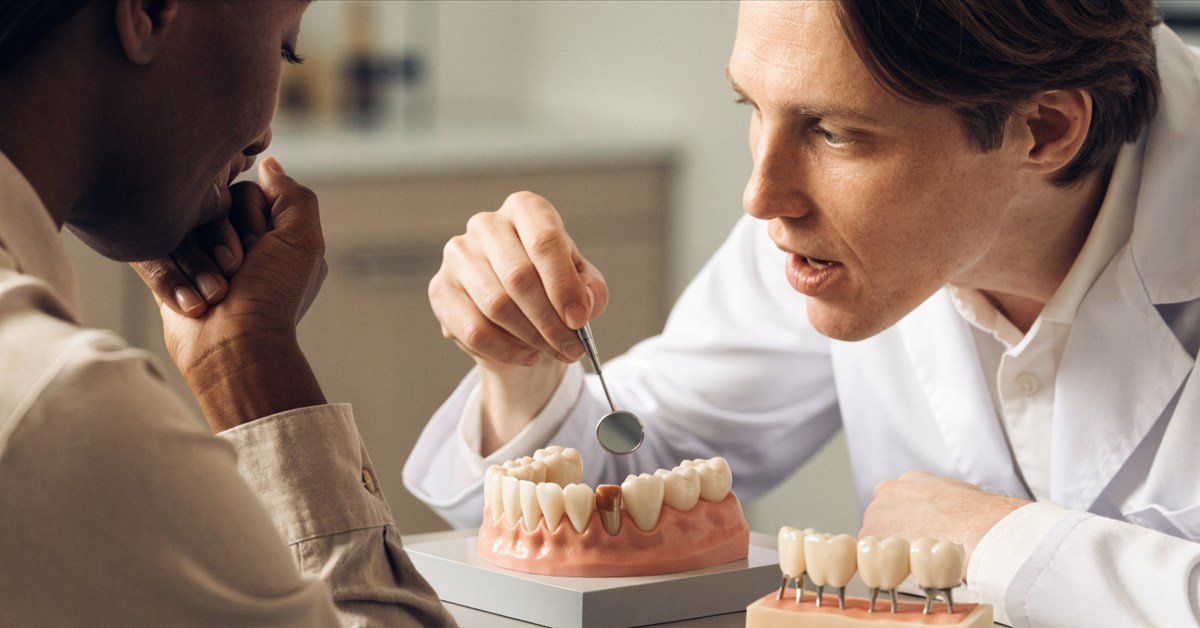
For neighboring teeth, a single implant often has the conservative advantage when the adjacent teeth are healthy because it does not normally require them to be prepared as bridge abutments. A conventional bridge, by design, depends on those teeth.
For bone at the missing-tooth site, an implant replaces the root and transfers functional forces into the surrounding bone. FDA patient information lists helping maintain jawbone as a potential benefit of dental implant systems. A tooth-supported bridge fills the space above the gum but does not replace the missing root.
For cleaning, neither option is maintenance-free. An implant crown is cleaned around the crown, gumline, and implant-supported tissues. A bridge requires cleaning around the crowns and underneath the pontic, often with a floss threader, interdental brush, or another tool recommended by the dental team.
Implants cannot develop a cavity in the implant body, but the surrounding tissues can develop inflammatory disease. Bridge abutment teeth are still natural teeth and remain susceptible to decay and gum disease. The best restoration is therefore one the patient can maintain effectively.
Which Is Faster: an Implant or a Bridge?
A traditional bridge is often faster because it does not require surgical implant placement followed by osseointegration. The bridge process may involve tooth preparation, records or impressions, a temporary restoration, laboratory fabrication, and final cementation.
Implant treatment can take longer because the implant must achieve sufficient stability and healing before the final crown is completed in many cases. Some implant protocols differ, and a temporary tooth may sometimes be provided during healing. “Same-day implant placement” also does not necessarily mean a same-day final crown.
For international patients, the important comparison is not just procedure time but the number and timing of clinical stages. Travel plans should be based on the actual treatment plan after examination and imaging. Niva Dental’s patient journey explains its consultation and travel pathway, but an online review cannot by itself confirm implant eligibility or the exact number of visits required.
What About Cost and Long-Term Value?
A bridge may have a lower initial cost in some cases, while an implant can involve surgery, implant components, a crown, imaging, and sometimes additional procedures. However, comparing only the first invoice can be misleading.
A fair dental implant vs bridge cost comparison should ask what is included in each plan. For an implant, this may include the implant body, abutment, crown, temporary restoration, imaging, or grafting when needed. For a bridge, the relevant cost may include multiple units, temporary restorations, and any treatment required for the supporting teeth.
Long-term value is also individual. A 2024 cost-effectiveness analysis from Türkiye found that an implant-supported single crown had a higher modeled quality-adjusted prosthesis value but was also more costly than a tooth-supported fixed prosthesis over the study horizon. Economic models depend on assumptions, local fees, complications, and follow-up patterns, so they should not be treated as a personal quotation.
For the factors that shape implant pricing, see our guide to dental implant cost in Turkey.
The more useful question is: Which option gives the soundest biological and restorative plan for this particular mouth at a cost the patient can sustain?
How Does a Dentist Choose Between an Implant and a Bridge?
The decision usually starts with the missing-tooth site and then expands outward. A dentist may assess:
- The adjacent teeth: Are they untouched, heavily restored, crowned, decayed, cracked, or root-canal treated?
- Bone and gum conditions: Is there enough healthy tissue for implant placement, and is grafting likely to be needed?
- The bite: Are there heavy chewing forces, grinding, or limited restorative space?
- The location of the tooth: Front and back teeth have different esthetic and loading demands.
- Medical and healing factors: Are there conditions or habits that could affect surgery or healing?
- Maintenance ability: Can the patient clean the planned restoration predictably?
- Time and travel: How many clinical stages are realistic?
- Cost and future maintenance: What is included now, and what components or supporting teeth may need care later?
For a missing tooth between two completely healthy teeth, an implant may avoid unnecessary preparation of those teeth if the implant site is suitable. If the adjacent teeth already need crowns and the implant site is unfavorable or surgery is not preferred, a bridge may be a sensible alternative.
That is why the answer should be based on the whole restorative picture rather than one feature.
Frequently Asked Questions
Is a dental implant better than a bridge?
Not for every patient. An implant can preserve neighboring tooth structure and provides independent support, while a bridge can avoid implant surgery and may be a practical choice when adjacent teeth already need crowns. The better option depends on the condition of the gap, supporting teeth, bone, gums, health history, bite, maintenance, timeline, and patient preferences.
Which lasts longer: a dental implant or a bridge?
Implant-supported single crowns and tooth-supported bridges can both provide many years of service, but their failure and maintenance patterns differ. Implant fixtures often have strong long-term survival, while the crown may eventually need maintenance or replacement. Bridges depend on the restoration and on the continued health of the supporting teeth. Longevity should not be presented as a guaranteed number for an individual patient.
Does a dental bridge damage healthy teeth?
A conventional bridge requires the supporting teeth to be prepared for crowns, so some tooth structure is permanently removed. Whether that is an acceptable trade-off depends on the starting condition of those teeth. If the neighboring teeth are already heavily restored or require crowns, a bridge may be more reasonable than when both teeth are completely intact.
Can a dental bridge be replaced with an implant later?
Often it can be considered, but it is not automatic. The dentist must reassess the bone, gums, space, bite, and condition of the former bridge abutment teeth. Because bone changes can occur after tooth loss, some patients may require additional planning or bone augmentation before an implant is placed.
Which has a shorter recovery: an implant or a bridge?
A traditional bridge generally has a shorter overall treatment pathway because it does not require implant surgery or osseointegration. Implant surgery has an early recovery period, followed by a longer biological healing phase before the final restoration in many cases. Individual protocols vary, especially when extractions, grafting, or temporary restorations are involved.
What if I do not have enough bone for an implant?
Insufficient bone does not automatically rule out implant treatment. Depending on the location and amount of bone loss, a dentist may consider bone augmentation or another implant strategy, or may recommend a bridge or removable option instead. Imaging and an in-person assessment are needed to determine what is clinically reasonable.
Can I get a bridge without shaving down the teeth?
Some resin-bonded bridges, often called Maryland bridges, can use a more conservative bonding design than a conventional full-coverage bridge. They are most often considered in selected situations, particularly in the front of the mouth. They are not suitable for every gap or bite, so the bridge design should be chosen after a clinical evaluation.
Which Option Should You Choose for One Missing Tooth?
For one missing tooth, the most important distinction is simple: an implant is independently supported in the jaw, while a traditional bridge depends on neighboring teeth. If those neighboring teeth are healthy and the implant site is suitable, an implant may preserve more natural tooth structure. If the adjacent teeth already need crowns, surgery is not appropriate, or a shorter restorative pathway is preferred, a bridge may be a strong alternative.
The right dental implant vs bridge choice requires an examination, imaging when indicated, and a discussion of long-term maintenance—not just a comparison of headline prices.
To understand how implant treatment is evaluated at Niva Dental, review Niva Dental’s dental implant service or contact the dental team for an initial assessment. A remote consultation can help organize information, but final treatment suitability requires appropriate clinical evaluation.
Medical References
- U.S. Food and Drug Administration — Dental Implants: What You Should Know
- American Dental Association / MouthHealthy — Implants
- American Dental Association / MouthHealthy — Bridges
- Cleveland Clinic — Dental Bridges: Types & Who Needs Them
- PubMed — Cost-Effectiveness Analysis of Implant-Supported Single Crown and Tooth-Supported Fixed Dental Prostheses in Türkiye (2024)