

Emax veneer aftercare covers sensitivity, eating, brushing, flossing and bite checks. Learn what to expect after treatment and when to call a dentist.

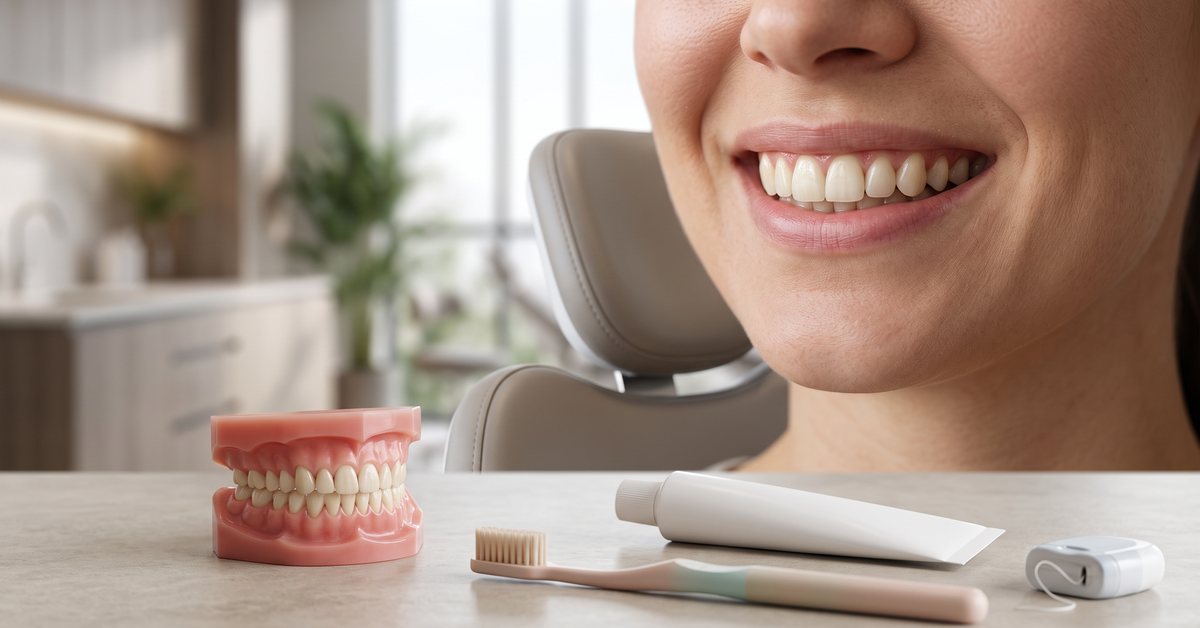
Emax veneer aftercare usually involves a short adjustment period rather than recovery from surgery. Some patients notice temporary sensitivity, mild gum tenderness, or an unfamiliar bite after ceramic veneers are bonded. Daily care should focus on fluoride toothpaste, cleaning between the teeth, avoiding unnecessary hard-object forces, monitoring the bite, and attending follow-up when something does not feel right.
A veneer is a restoration type. E-max / IPS e.max is ceramic material-system terminology; IPS e.max CAD and IPS e.max Press use lithium-disilicate glass-ceramic. Long-term success depends on more than the ceramic itself. The tooth, enamel and bonding substrate, bite forces, oral hygiene, gum health, and maintenance all matter.
Patients receiving E-max veneer treatment at Niva Dental should follow the individual instructions given after treatment because preparation depth, the number of veneers, bite relationships, sensitivity history, and other clinical factors vary from person to person.
Quick Answer: What Should You Expect After E-max Veneers?
| Time / Situation | What may be expected | What deserves dental review |
|---|---|---|
| Immediately after bonding | The teeth may feel different in shape or bite; numbness may persist if local anesthesia was used | A veneer feels loose, there is significant trauma, or the bite is clearly uncomfortable |
| First few days | Mild temperature sensitivity or gum tenderness can occur in some patients | Severe, worsening, spontaneous or persistent pain |
| Early adjustment | The tongue and bite may need time to adapt to new contours | One tooth hits before the others, chewing feels persistently uneven, or the veneer feels too long |
| Daily hygiene | Brush twice daily with fluoride toothpaste and clean between teeth every day | Bleeding, swelling or gum irritation that is worsening or not settling |
| Eating | Normal function generally resumes, but avoid using veneered teeth on ice, hard objects or packaging | Chipping, cracking, loosening or pain on biting |
| Long term | Routine dental care, hygiene visits, bite monitoring and protective measures when indicated | New sensitivity, margin changes, recurrent pain, a chip, crack or debonding |
Is There a Recovery Period After E-max Veneers?
E-max veneer treatment does not usually involve the surgical healing process associated with procedures such as tooth extraction or implant surgery. However, the teeth, gums and bite may still need a period of adaptation after preparation and bonding.
The American Dental Association notes that it can take a few days to get used to a veneer and advises patients to tell their dentist if the bite does not feel right after placement.
What a patient notices after treatment depends on factors such as:
- how many teeth were treated;
- whether enamel preparation was required;
- whether any dentin was exposed;
- whether temporary restorations were used;
- pre-existing tooth sensitivity;
- gum manipulation during treatment;
- the final shape and length of the veneers;
- the patient’s bite;
- grinding or clenching.
A patient who receives one minimally prepared veneer may have a different experience from someone receiving several veneers across the visible smile.
What Can You Expect in the First Hours After Veneer Placement?
Immediately after treatment, the teeth may feel unfamiliar even when the veneers are functioning normally.
If local anesthesia was used, the lips, cheeks or tongue may remain numb for a period after the appointment. Until normal sensation returns, it is sensible to avoid chewing in a way that could accidentally injure numb soft tissues.
Patients may also notice:
- a smoother tooth surface;
- slightly different tooth length or contour;
- a new contact point between teeth;
- an unfamiliar feeling when the teeth meet;
- temporary sensitivity to air or temperature.
The important distinction is between adaptation and a clear functional problem.
If one veneer feels as though it contacts first every time the mouth closes, or the bite feels significantly uneven, the dentist should review it rather than assuming the patient simply needs to “get used to it.”
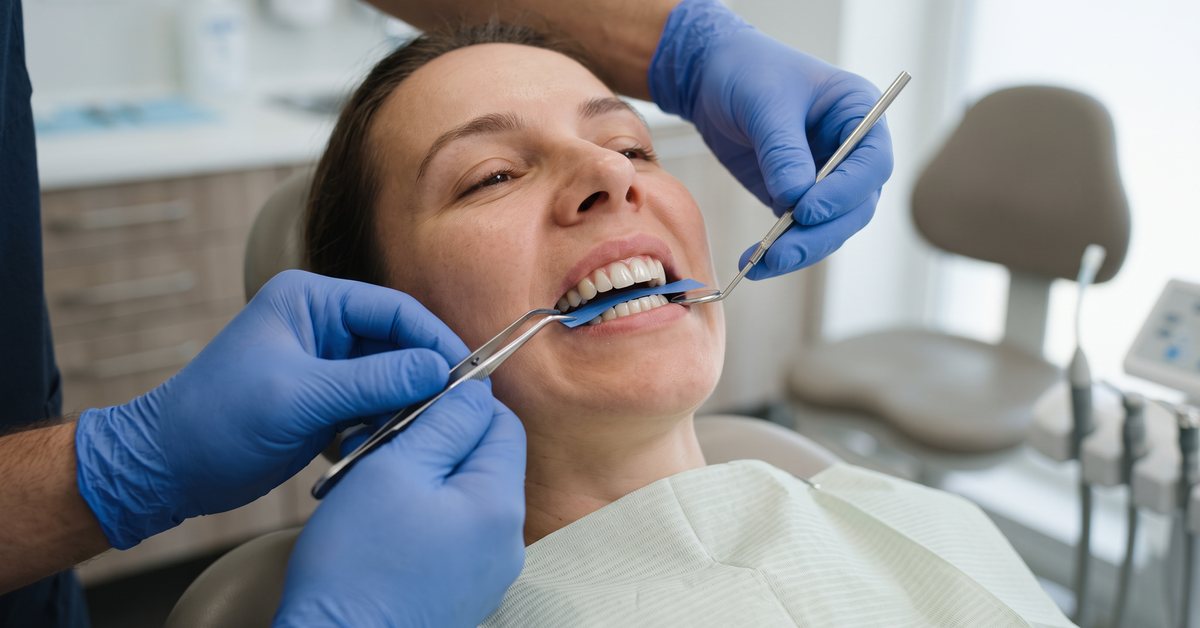
Is Sensitivity Normal After E-max Veneers?
Temporary sensitivity can occur after veneer treatment, but not every patient experiences it and the intensity varies. Sensitivity may be triggered by cold air, chilled drinks, heat, sweets, or biting pressure.
Postoperative sensitivity has been evaluated in clinical veneer studies. A 2025 clinical study comparing direct composite, indirect composite and ceramic veneers recorded postoperative sensitivity as one of the clinical outcomes; only a small number of sensitivity events occurred in that study, and differences were not statistically significant.
Longer-term veneer studies have also monitored postoperative sensitivity as a relevant clinical outcome, which confirms that sensitivity is a recognized consideration in veneer care.
Possible contributors include:
- enamel preparation;
- exposed dentin;
- adhesive and cementation procedures;
- pre-existing sensitivity;
- temporary restorations;
- bite contacts;
- pulpal irritation.
Mild sensitivity that is improving is different from severe or worsening pain.
Contact a dentist if sensitivity:
- becomes stronger rather than weaker;
- is spontaneous rather than stimulus-related;
- wakes you at night;
- is associated with pain when biting;
- is accompanied by swelling;
- or persists in a way that concerns you.
The exact cause cannot be diagnosed from symptoms alone.
What If Your Bite Feels Different After Veneers?
A short period of adaptation can be normal, but a persistent “high” bite should be checked.
The ADA specifically advises patients to tell their dentist if the bite does not feel right after veneer placement so it can be corrected.
Signs that a bite review may be useful include:
- one tooth contacts before the others;
- biting feels uneven;
- a veneer feels too long;
- chewing creates pain in one specific tooth;
- the jaw feels unusually strained;
- there is a new repeated contact on the veneer edge.
Why does this matter?
Ceramic veneers function within the patient’s bite. Repeated unfavorable forces may contribute to:
- chipping;
- fracture;
- debonding;
- tooth sensitivity;
- wear on opposing teeth.
A dentist can evaluate whether the sensation is simply adaptation or whether a small occlusal adjustment is clinically appropriate.
For a deeper discussion of mechanical complications, see Can E-max Veneers Chip, Break or Fall Off? Risks Explained.
What Can You Eat After E-max Veneers?
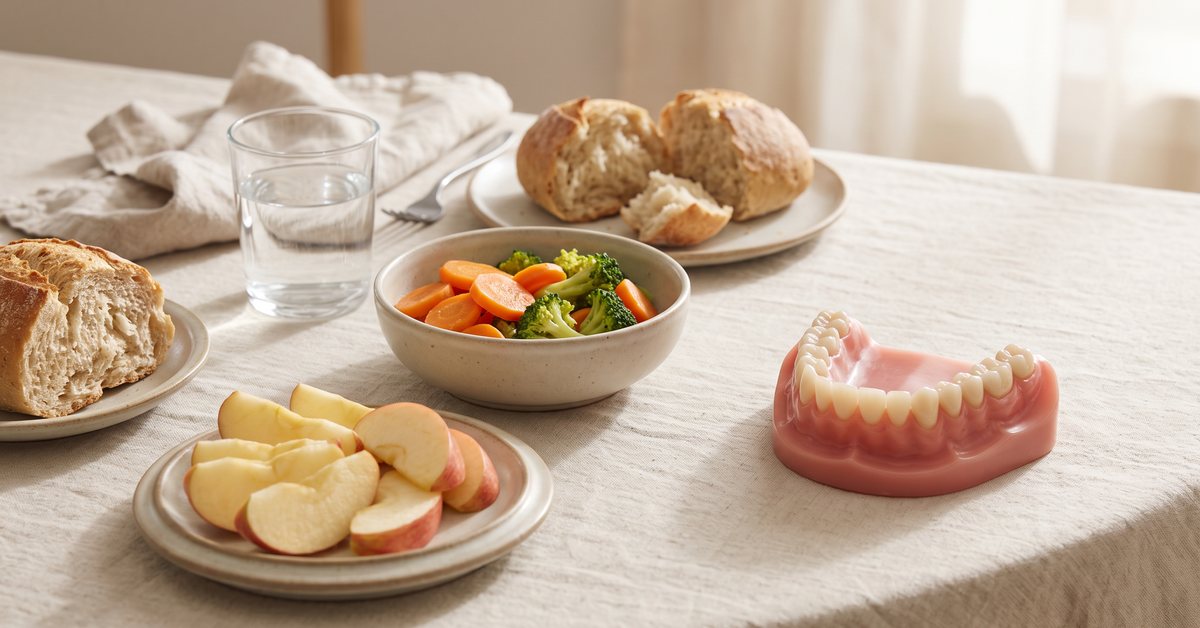
After permanent veneers are bonded and the dentist confirms the bite, patients can generally return to normal eating, but veneered front teeth should not be used as tools or exposed unnecessarily to concentrated hard forces.
The ADA advises people with veneers to avoid biting fingernails and chewing hard objects or foods.
Practical examples include avoiding:
- chewing ice;
- biting pens;
- cracking nuts or shells with front teeth;
- opening packaging with teeth;
- biting directly into very hard objects.
This does not mean a patient must remain on a soft diet indefinitely.
If the teeth are temporarily sensitive immediately after treatment, choosing foods and temperatures that are comfortable can make the early adjustment easier.
If local anesthesia is still active, wait until normal sensation returns before chewing normally.
For long-term protection, how a patient bites matters more than following a permanent list of forbidden foods.
How Should You Brush and Floss After E-max Veneers?
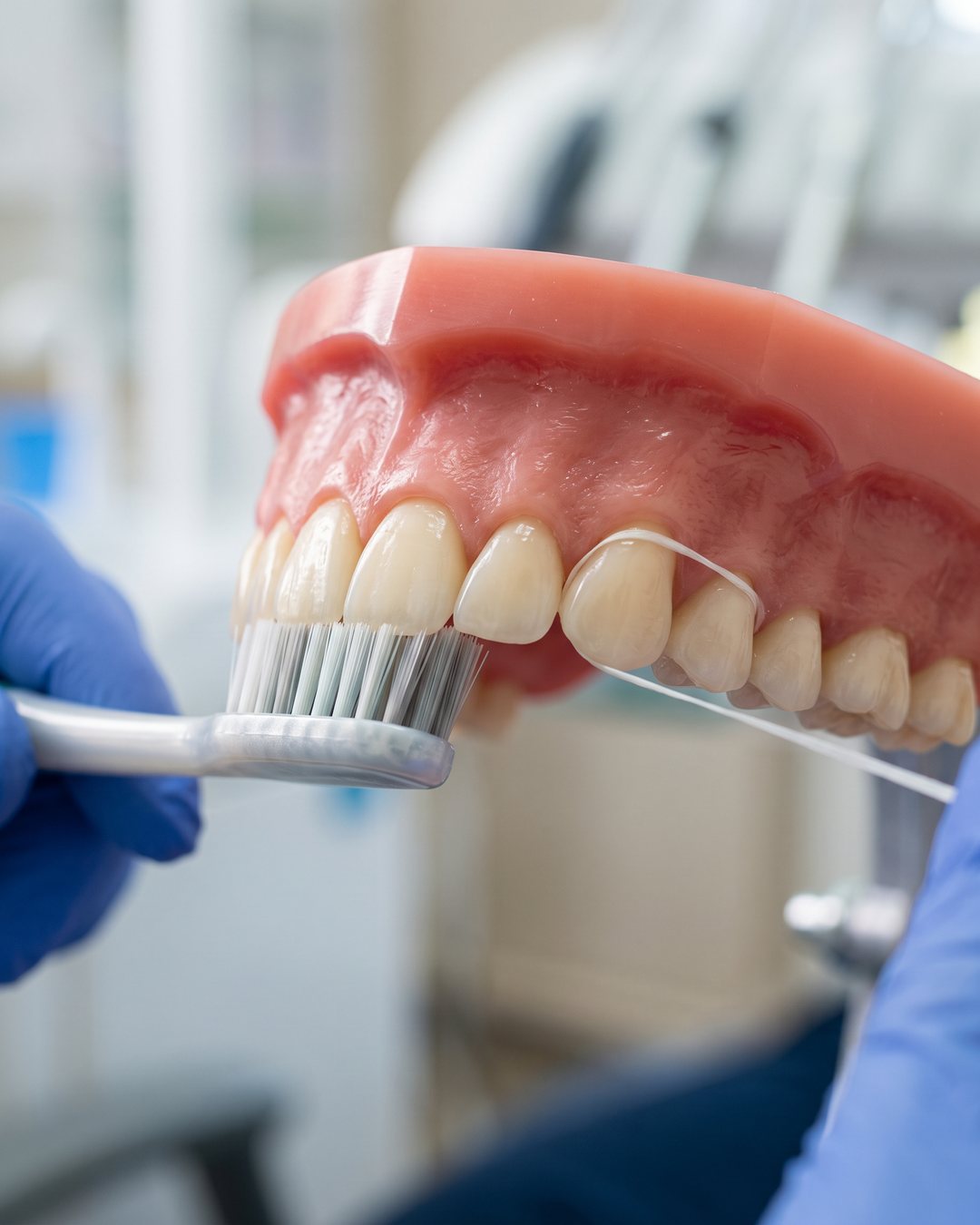
Veneers need the same underlying oral-health care as natural teeth because the tooth and gum margin remain biologically active.
The ADA recommends:
- brushing with fluoride toothpaste twice a day;
- cleaning between the teeth daily.
A veneer itself cannot develop tooth decay, but the natural tooth can still develop a cavity around or beneath the restoration.
Daily cleaning is especially important around:
- the gumline;
- the contact points between teeth;
- restoration margins.
Patients should not avoid flossing around veneers out of fear that normal flossing will “pull them off.” A properly bonded veneer is intended to tolerate routine oral hygiene.
However, technique matters.
If floss repeatedly shreds or catches at one veneer margin, or the contact feels impossible to clean, ask the dentist to check the area rather than forcing floss aggressively.
The goal is healthy tooth structure and gum tissue around the ceramic, not simply keeping the visible veneer surface clean.
Do E-max Veneers Need Special Toothpaste or Mouthwash?
E-max veneers do not automatically require a special branded toothpaste or mouthwash. The ADA’s patient guidance emphasizes fluoride toothpaste and daily interdental cleaning.
A good long-term routine usually prioritizes:
- fluoride toothpaste;
- a soft toothbrush or appropriate powered brush;
- daily interdental cleaning;
- products that do not damage oral tissues or restorations.
Patients who already have:
- sensitivity;
- dry mouth;
- gum disease;
- high cavity risk;
- exposed roots;
- or another oral condition
may need individualized product recommendations from their dentist.
Avoid making aftercare decisions based on claims that a product can “polish E-max back to new,” “seal veneers,” or permanently prevent staining.
No home-care product makes ceramic restorations maintenance-free.
Can Coffee, Tea or Red Wine Stain E-max Veneers?
Lithium-disilicate ceramic is generally color-stable, but the appearance of a veneered smile can still change over time.
The ADA advises patients with veneers to be cautious with strongly pigmented foods and drinks such as:
- coffee;
- tea;
- red wine.
The ceramic surface itself is different from natural enamel, but discoloration can still become noticeable around:
- veneer margins;
- resin cement;
- adjacent natural teeth;
- plaque or calculus deposits.
Natural teeth that remain untreated can also darken or stain at a different rate from ceramic veneers.
Good cleaning, routine dental care and avoiding heavy tobacco exposure can help maintain a consistent appearance.
For detailed shade and optical planning, see Can E-max Veneers Look Natural? Shade, Shape and Translucency Explained.
How Should You Care for Your Gums Around Veneers?
Healthy gums are important for both the appearance and long-term maintenance of veneers.
Veneer margins sit close to the gingival tissues, so plaque accumulation and poor cleaning can contribute to inflammation.
Clinical research has followed gingival health around porcelain veneers and found that periodontal response varies. Some studies report generally satisfactory gingival conditions, while inflammation and recession can still occur in individual patients.
The practical priorities are:
- brush the gumline gently and thoroughly;
- clean between teeth every day;
- attend hygiene visits based on individual risk;
- report persistent bleeding, swelling or recession;
- avoid tobacco exposure where possible.
A small amount of early gum tenderness after treatment can differ from ongoing inflammation.
If gum discomfort, swelling or bleeding is getting worse rather than settling, the area should be assessed.
What If You Grind or Clench Your Teeth?
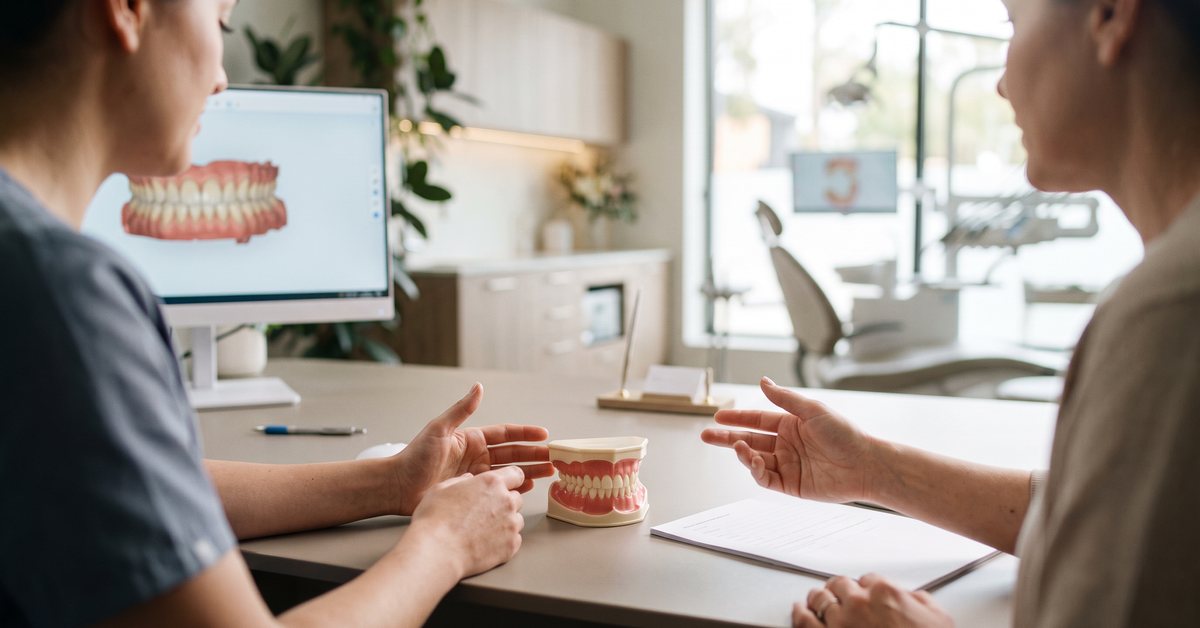
Grinding and clenching can increase mechanical concern around veneers and should be discussed with the dentist.
The ADA notes that people who clench or grind their teeth, or who have a deep overbite, may not be good candidates for veneers in some situations.
Evidence specifically linking sleep bruxism and ceramic restoration failure is limited. A systematic review found a risk signal in the subgroup of anterior ceramic veneers, but the overall evidence quality was rated very low.
This means bruxism should neither be ignored nor treated as a guarantee that veneers will fail.
Depending on the patient, aftercare may include:
- bite monitoring;
- assessing wear facets;
- monitoring chips or cracks;
- managing parafunctional habits;
- using a custom night guard when clinically indicated.
A night guard reduces exposure to some forces but does not make a veneer unbreakable.
How Long Should E-max Veneers Last With Good Aftercare?
Good aftercare supports veneer longevity, but it cannot guarantee a specific lifespan.
A 2025 systematic review and meta-analysis reported 96.81% pooled survival for lithium-disilicate laminate veneers at approximately 10.4 years.
The same review found that technical, aesthetic and biological complications still occurred even when the restoration survived.
This distinction matters:
Survival means a veneer remains in service.
Success usually implies it remains in service without requiring significant clinical intervention.
A veneer can therefore “survive” while needing:
- polishing;
- repair;
- bite adjustment;
- margin monitoring;
- or another intervention.
Long-term performance is influenced by:
- enamel and bonding substrate;
- preparation design;
- bite;
- bruxism;
- trauma;
- hygiene;
- periodontal health;
- maintenance.
For the full evidence review, see How Long Do Veneers Last? Lifespan, Care and Reasons They May Need Replacing.
When Should You Contact a Dentist After Veneer Treatment?
Contact a dentist if symptoms are severe, worsening, persistent or associated with a loose/broken restoration, swelling or trauma.
The NHS lists broken or loose veneers among problems that can warrant urgent dental advice.
Arrange dental review if you notice:
- a loose veneer;
- a chipped or cracked veneer;
- a veneer that has come off;
- pain that is worsening or not resolving;
- persistent pain on biting;
- swelling;
- increasing gum inflammation;
- an obvious bite problem;
- a sharp edge that is injuring the tongue or lip;
- trauma to a veneered tooth.
Seek emergency medical care for severe facial injury, uncontrolled bleeding, or severe mouth/neck swelling that interferes with breathing or swallowing.
Do not try to permanently reattach a loose veneer at home.
What Should International Patients Do After Returning Home?
International patients should leave treatment with enough information to support follow-up care after returning home.
Before leaving Istanbul, ask for:
- the final list of treated teeth;
- the restoration type on each tooth;
- the ceramic/material information available for the case;
- any specific preparation or bonding notes that may be useful later;
- your bite and bruxism recommendations;
- aftercare instructions;
- what symptoms should trigger contact with the clinic;
- what a local dentist should check if a veneer chips or becomes sensitive;
- how remote follow-up works;
- any repair/replacement policy and its exclusions.
Niva Dental’s current website describes aftercare guidance and remote support within its broader patient journey. The exact follow-up arrangement for an individual veneer patient should still be confirmed directly.
Patients planning treatment in Bakırköy, Istanbul can review the Niva Dental patient journey before travel.
Ask the clinic to confirm in writing how aftercare questions and remote follow-up will be handled for your veneers after you return home.
Emax Veneer Aftercare: A Practical Daily Routine
For emax veneer aftercare, the most useful routine is simple:
Every day
- Brush twice with fluoride toothpaste.
- Clean between the teeth daily.
- Keep the veneer margins and gums free from plaque.
- Do not use veneered teeth as tools.
- Avoid chewing ice and other unnecessary hard objects.
If you grind or clench
Follow the dentist’s bite and night-guard recommendations when clinically appropriate.
During sports
Use an appropriate mouthguard for activities that risk injury to the teeth.
At dental reviews
Ask the dentist to evaluate:
- veneer margins;
- gum health;
- bite;
- chips or cracks;
- debonding;
- decay around restored teeth;
- signs of grinding or wear.
Contact a dentist sooner if
- pain is significant or worsening;
- sensitivity does not improve as expected;
- the bite feels persistently wrong;
- a veneer chips, cracks, loosens or comes off;
- swelling or trauma occurs.
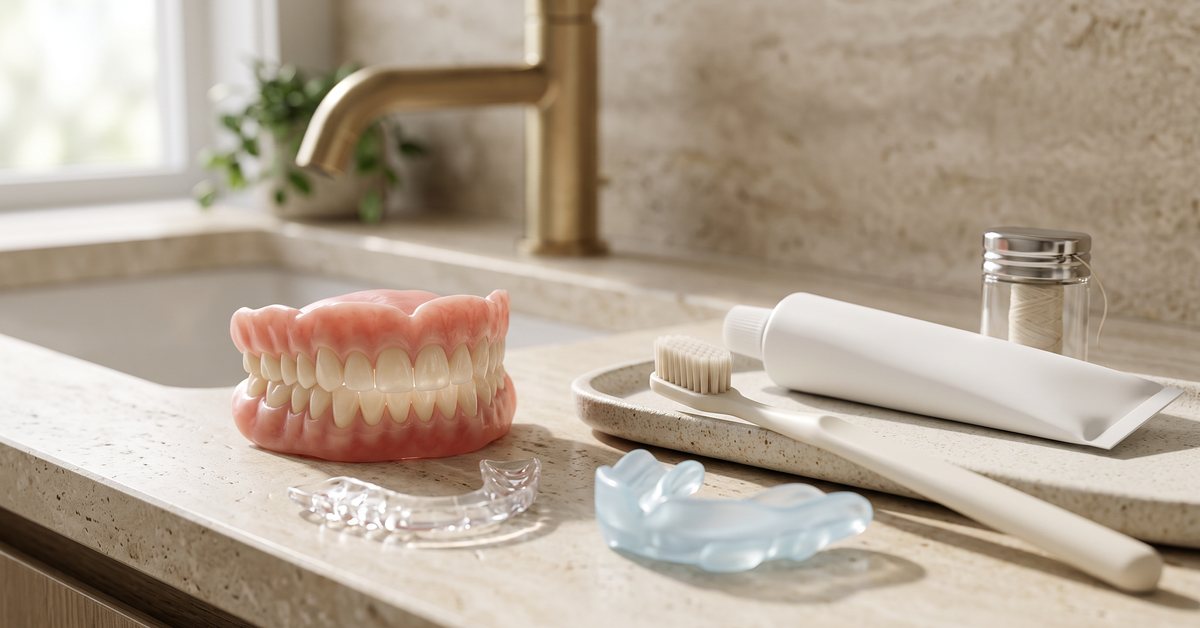
The best aftercare plan protects both the ceramic restoration and the natural tooth underneath it. E-max veneers should be treated as long-term dental restorations that require ordinary oral hygiene, sensible force protection and professional monitoring—not as maintenance-free cosmetic shells.
Frequently Asked Questions
How long does sensitivity last after E-max veneers?
Sensitivity can be temporary after veneer preparation and bonding, but there is no single normal duration for every patient. Mild sensitivity that is steadily improving is different from severe or worsening pain. If sensitivity is persistent, spontaneous, associated with biting pain or accompanied by swelling, contact a dentist for assessment.
Can I eat normally after E-max veneers?
Generally, yes after the permanent veneers are bonded, the bite is checked, and any local anesthesia has worn off. Avoid using front teeth to chew ice, crack hard objects or open packaging. If the teeth are initially sensitive, choose foods and temperatures that are comfortable until the sensitivity improves.
Can I drink coffee after getting veneers?
Coffee is not automatically prohibited, but the ADA advises caution with foods and drinks that may contribute to staining or discoloration around veneers. Ceramic is color-stable, but margins, cement and untreated natural teeth can change color over time. Good hygiene and routine professional care remain important.
How soon can I brush and floss after veneers?
Patients should maintain normal oral hygiene after veneer treatment unless their dentist gives a case-specific instruction. The ADA recommends brushing twice daily with fluoride toothpaste and cleaning between the teeth every day. If floss catches, shreds or cannot pass normally around a new veneer, ask the dentist to check the contact.
Is it normal for my bite to feel strange after veneers?
A brief adjustment period can occur, but a persistent high spot or uneven bite should be reviewed. The ADA advises telling the dentist if the bite does not feel right after veneer placement. Early adjustment can reduce repeated unfavorable contact on a veneer or opposing tooth.
Do I need a special toothpaste for E-max veneers?
Not necessarily. There is no universal requirement for a special “veneer toothpaste.” The ADA recommends fluoride toothpaste and daily interdental cleaning. Patients with sensitivity, gum disease, dry mouth or high cavity risk may benefit from individualized products recommended by their dentist.
Do I need a night guard after E-max veneers?
Not everyone needs one. A night guard may be considered when grinding, clenching or other bite-related risk factors are present. Bruxism evidence for ceramic veneers is limited, but it remains an important clinical consideration. A dentist should decide whether a guard is appropriate based on the individual bite and wear pattern.
What happens if my veneer feels loose?
Stop biting hard food with the affected tooth and contact a dentist. A loose veneer may represent partial debonding, a problem at the adhesive interface or another issue that needs assessment. Do not try to permanently glue the veneer at home.
Can you get cavities under E-max veneers?
Yes. The ceramic veneer itself does not decay, but the natural tooth can develop cavities around or beneath a veneer. Brush with fluoride toothpaste twice daily, clean between the teeth every day and attend dental reviews based on your individual oral-health risk.
When is pain after veneers not normal?
Pain deserves review when it is severe, getting worse, spontaneous, affects sleep, persists without improvement, or is associated with swelling, trauma or marked pain on biting. A dentist should assess the cause rather than assuming every symptom is normal post-treatment sensitivity.
Patients receiving E-max veneers at Niva Dental in Bakırköy, Istanbul should follow their individualized aftercare instructions and contact the clinic if the bite feels wrong, sensitivity is worsening, or a veneer becomes loose, chipped or painful. Long-term care should include routine oral hygiene, professional dental review and bite protection when clinically indicated.
Medical References and Sources
| Source | What It Supports |
|---|---|
| American Dental Association / MouthHealthy — Veneers | Getting used to veneers, bite review, fluoride toothpaste twice daily, daily interdental cleaning, hard-object avoidance, sports mouthguard use, stain awareness and ongoing cavity risk. |
| Klein P, et al. — Survival and Complication Rates of Ceramic Laminate Veneers — PMID 39523553 | 2025 systematic review/meta-analysis reporting 96.81% pooled lithium-disilicate veneer survival at about 10.4 years and documenting technical, aesthetic and biological complications. |
| Alqutaibi AY, et al. — Clinical survival and complication rate of ceramic veneers bonded to different substrates — PMID 38604905 | Systematic review/meta-analysis supporting enamel preservation and showing poorer outcomes with severe dentin exposure. |
| Clinical assessment of direct composite veneer and indirect veneers using a minimally invasive preparation technique — PMID 41169776 | 2025 clinical study including postoperative sensitivity as an evaluated outcome and showing sensitivity can occur after veneer treatment. |
| Melo G, et al. — Association of sleep bruxism with ceramic restoration failure — PMID 28967401 | Systematic review/meta-analysis supporting cautious evaluation of bruxism; evidence quality was very low overall. |
| NHS — How to find an emergency or urgent NHS dentist appointment | Broken or loose veneers, significant pain, swelling and trauma as reasons to seek urgent dental advice; severe swelling/bleeding/facial injury as emergency concerns. |
| Ivoclar — IPS e.max CAD | Material-specific confirmation that IPS e.max CAD is lithium-disilicate glass-ceramic used for multiple indirect restorations including veneers. |