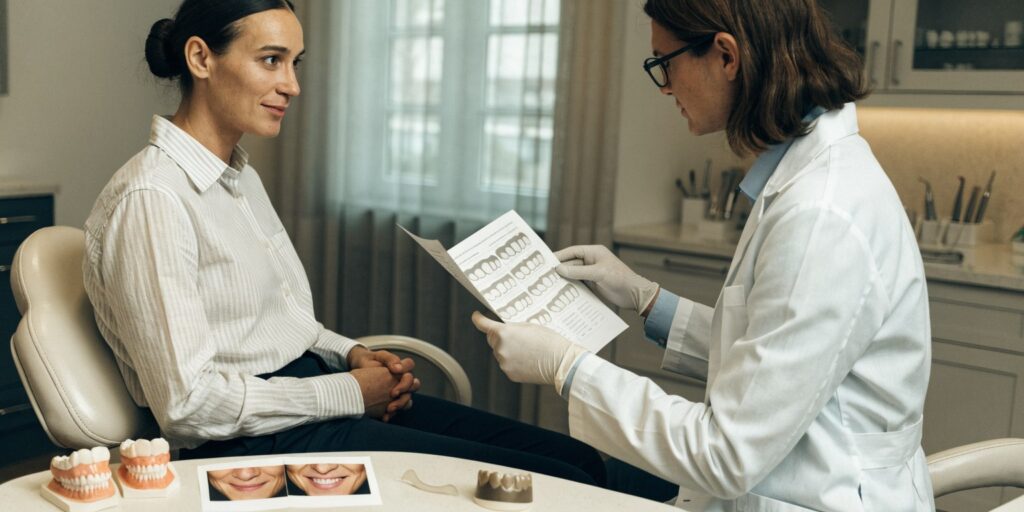


Emax veneers for crooked teeth can mask selected mild irregularities, but orthodontics moves teeth. Compare preparation, bite correction, risks, and candidacy.

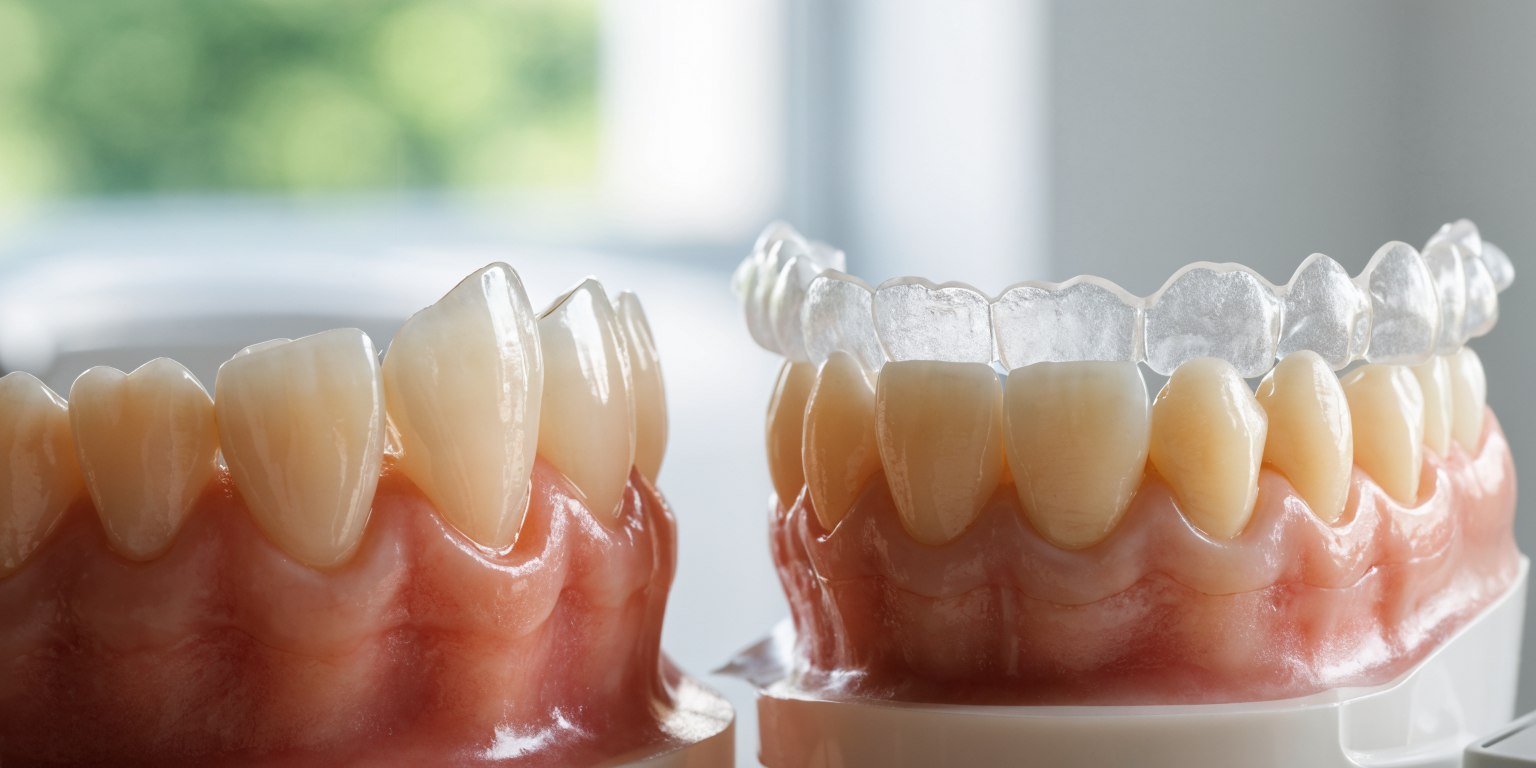
Emax veneers for crooked teeth can make selected mildly misaligned teeth look straighter, but veneers do not actually move teeth or correct the position of their roots. Orthodontic treatment—using braces or clear aligners—moves teeth through the supporting tissues and is usually the more biologically conservative option when crowding, rotation, protrusion, spacing, or bite relationships need true correction. Veneers may be reasonable when the irregularity is limited, the bite is stable, enough suitable enamel can be preserved, and the patient also wants changes in tooth shape, color, or proportion.
The key distinction is simple:
Veneers camouflage position. Orthodontics changes position.
For patients considering E-max veneer treatment at Niva Dental, the decision should follow an individual assessment of tooth position, enamel, bite, gum health, restorative history, and how much tooth preparation would be required to create the desired appearance.
Quick Answer: Veneers or Orthodontics for Crooked Teeth?
| Clinical question | E-max Veneers | Orthodontics |
|---|---|---|
| Does it move the tooth? | No. It changes the visible contour of the tooth | Yes. It repositions teeth biologically |
| Can it improve mild crooked appearance? | Yes, in selected cases | Yes |
| Can it correct significant crowding? | Usually not without potentially excessive preparation | Often the more appropriate route |
| Can it correct bite relationships? | No | Orthodontic treatment can address selected malocclusions |
| Can it change tooth color and shape? | Yes | No; tooth position changes, but color and intrinsic shape remain |
| Tooth preparation | Often some enamel preparation; amount varies | No veneer preparation, although orthodontic treatment has its own risks and maintenance |
| Is it reversible? | Prepared veneer treatment is irreversible | Tooth movement itself is not “reversible” in a simple sense; retention is usually needed to reduce relapse |
| Treatment scope | Cosmetic/restorative | Orthodontic |
| Best fit | Mild cosmetic irregularity plus color/shape concerns, with favorable enamel and bite | True alignment, crowding, rotation, protrusion, spacing, or bite problems |
| Can both be used? | Yes, veneers may follow orthodontics if shape/color concerns remain | Yes, orthodontics can create a more conservative position before veneers |
What Can E-max Veneers Actually Do for Crooked Teeth?
E-max veneers can change how a tooth looks from the front, but they cannot reposition the tooth root or correct the underlying orthodontic relationship.
A ceramic veneer is a thin restoration bonded mainly to the visible surface of a selected tooth. E-max / IPS e.max is ceramic material-system terminology; IPS e.max CAD and IPS e.max Press are lithium-disilicate glass-ceramics used for several restoration types, including veneers in appropriate cases.
When a mildly rotated or uneven tooth is close to a favorable position, a veneer can sometimes alter:
- apparent width;
- apparent length;
- line angles;
- visible contour;
- incisal edge position;
- color;
- surface texture;
- and the way the tooth visually aligns with neighboring teeth.
This is cosmetic camouflage, not orthodontic movement.
For example, a slightly narrow lateral incisor that appears “crooked” because of shape and mild rotation may be improved by adding ceramic to one area and refining another. A tooth that is substantially rotated or positioned far outside the arch is a different problem.
When Can Veneers Be Reasonable for Mildly Crooked Teeth?
Veneers may be reasonable when the misalignment is mild, the tooth is structurally suitable, and the desired correction can be achieved without aggressive removal of healthy tooth structure.
Potentially favorable situations may include:
- a slight rotation;
- mildly uneven front-tooth edges;
- a small asymmetry;
- a small space combined with shape concerns;
- a slightly set-back tooth that can be corrected additively;
- a tooth that is mildly out of visual alignment and also significantly discolored;
- teeth that remain uneven in shape or color after orthodontic treatment.
The decision depends on more than what the tooth looks like in a selfie.
A dentist should assess:
- the position of the crown and root;
- how the upper and lower teeth meet;
- available enamel;
- existing restorations;
- gum levels;
- tooth wear;
- bruxism;
- how much ceramic thickness is needed;
- and whether the final contour would become bulky.
If a natural-looking veneer can be created with limited preparation and the bite is stable, ceramic camouflage may be reasonable.
If the required correction would demand substantial reduction of a healthy tooth, orthodontic movement usually deserves serious consideration first.
When Is Orthodontics Usually More Appropriate?
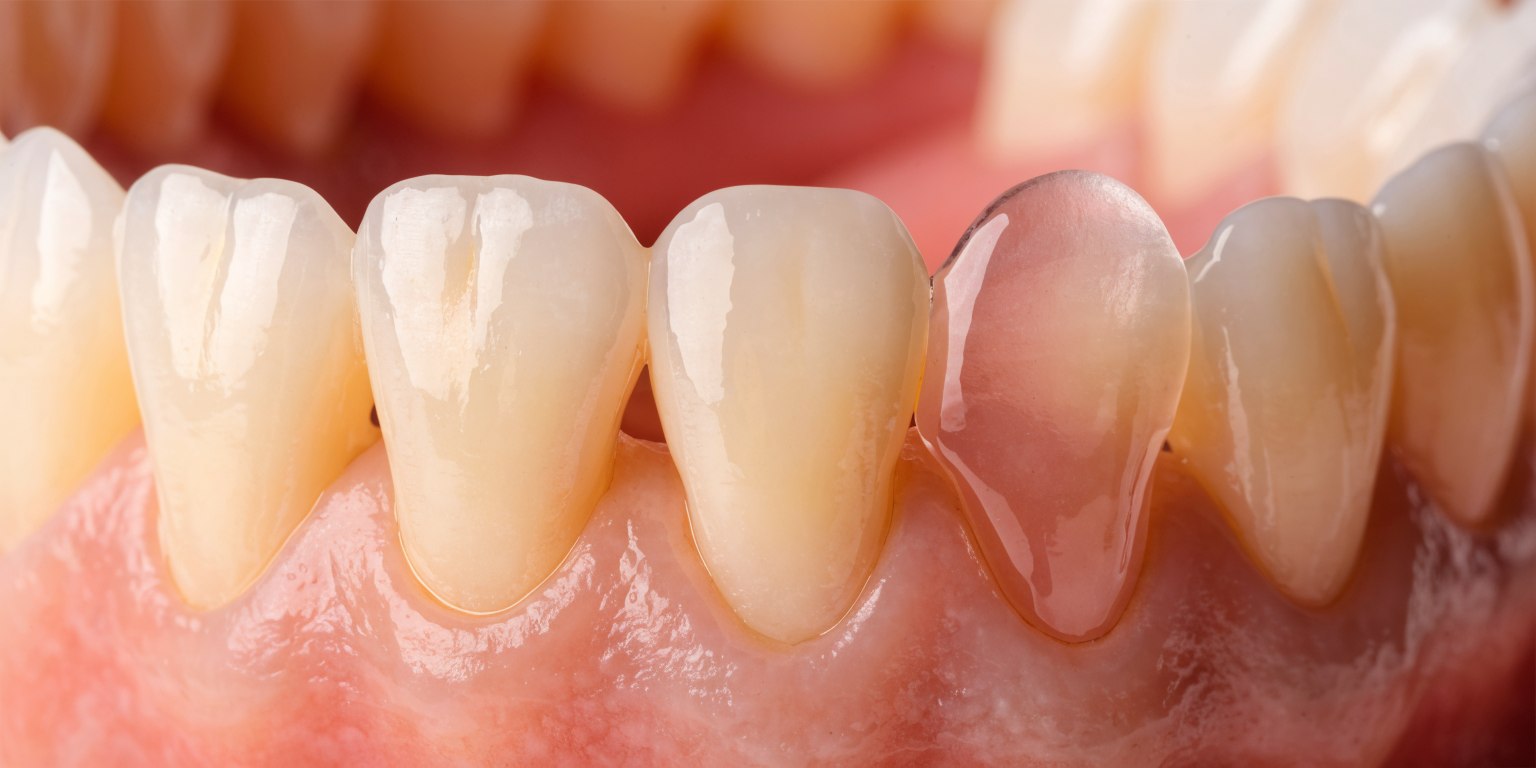
Orthodontics is usually more appropriate when the problem is primarily tooth position or bite rather than tooth color or shape.
The American Dental Association explains that orthodontic treatment is used to correct malocclusion, including crowded or crooked teeth and problems in the way the jaws or teeth meet.
Orthodontic treatment should be strongly considered when there is:
- moderate or severe crowding;
- substantial tooth rotation;
- pronounced protrusion;
- a deep bite;
- open bite;
- crossbite;
- unstable spacing;
- arch-width or tooth-position problems;
- a need to move roots rather than just alter the visible tooth surface.
Orthodontics does not automatically mean conventional metal braces.
Depending on the case, options may include:
- fixed braces;
- clear aligners;
- or another orthodontic appliance or treatment sequence.
The correct appliance depends on the movement required.
A 2026 systematic review comparing clear aligners and fixed appliances for anterior tooth movement found mixed results across several types of movement. Fixed appliances appeared to provide better control for some rotation and torque movements, although the evidence was limited and not uniform across studies.
So the choice is not simply:
“Do I want braces or invisible aligners?”
It is:
“What tooth movements are actually required, and which orthodontic method can achieve them predictably?”
E-max Veneers vs Orthodontics: Detailed Comparison
| Decision Factor | E-max Veneers | Orthodontics |
|---|---|---|
| Primary purpose | Change visible tooth shape, surface, color, and apparent alignment | Move teeth into different positions |
| Corrects tooth roots? | No | Yes |
| Corrects bite? | No | Can correct selected bite problems |
| Improves color? | Yes | No |
| Improves tooth shape? | Yes | Not directly |
| Tooth preparation | Often some enamel reduction; may be minimal in selected cases | No veneer preparation |
| Biological cost | Irreversible tooth alteration if enamel is removed | Orthodontic tooth movement has different risks, including root resorption and periodontal considerations |
| Time | Restorative treatment can be shorter after diagnosis/planning | Usually requires a longer active treatment period |
| Maintenance | Dental hygiene, bite monitoring, possible repair/replacement | Hygiene during treatment plus long-term retention after tooth movement |
| Future treatment | Veneers may eventually need repair or replacement | Teeth may relapse without retention; cosmetic work may still be considered afterward |
| Best suited to | Mild cosmetic irregularity with favorable structure and bite | True malposition, crowding, rotation, protrusion, spacing, or bite correction |
| Universal winner | No | No |
Why Tooth Preparation Matters More in Crooked Teeth
The more a tooth is positioned outside the desired final contour, the more natural tooth structure may need to be removed to disguise that position with a veneer.
This is one of the most important safety issues in the veneer-versus-orthodontics decision.
Imagine a front tooth that projects forward.
To make it appear aligned using a veneer, the dentist cannot simply add ceramic to the facial surface—the tooth is already too prominent. Space may need to be created by preparing the natural tooth.
A slightly set-back tooth can be very different. In a selected case, ceramic may be added to bring the visible surface forward with relatively little preparation.
This is why two teeth that both look “crooked” can have opposite restorative requirements.
A published clinical article on multidisciplinary aesthetic treatment described using orthodontics before veneers specifically to reposition teeth so future preparations could be more minimally invasive. In that report, tooth movement was used to improve overbite, overjet, spacing, and axial inclination before restorative treatment.
The principle is clinically important:
Move the tooth first when movement can prevent unnecessary restorative reduction.
For more detail on preparation, see Do E-max Veneers Require Tooth Shaving? What Patients Should Know.
Can Veneers Fix Rotated Teeth?
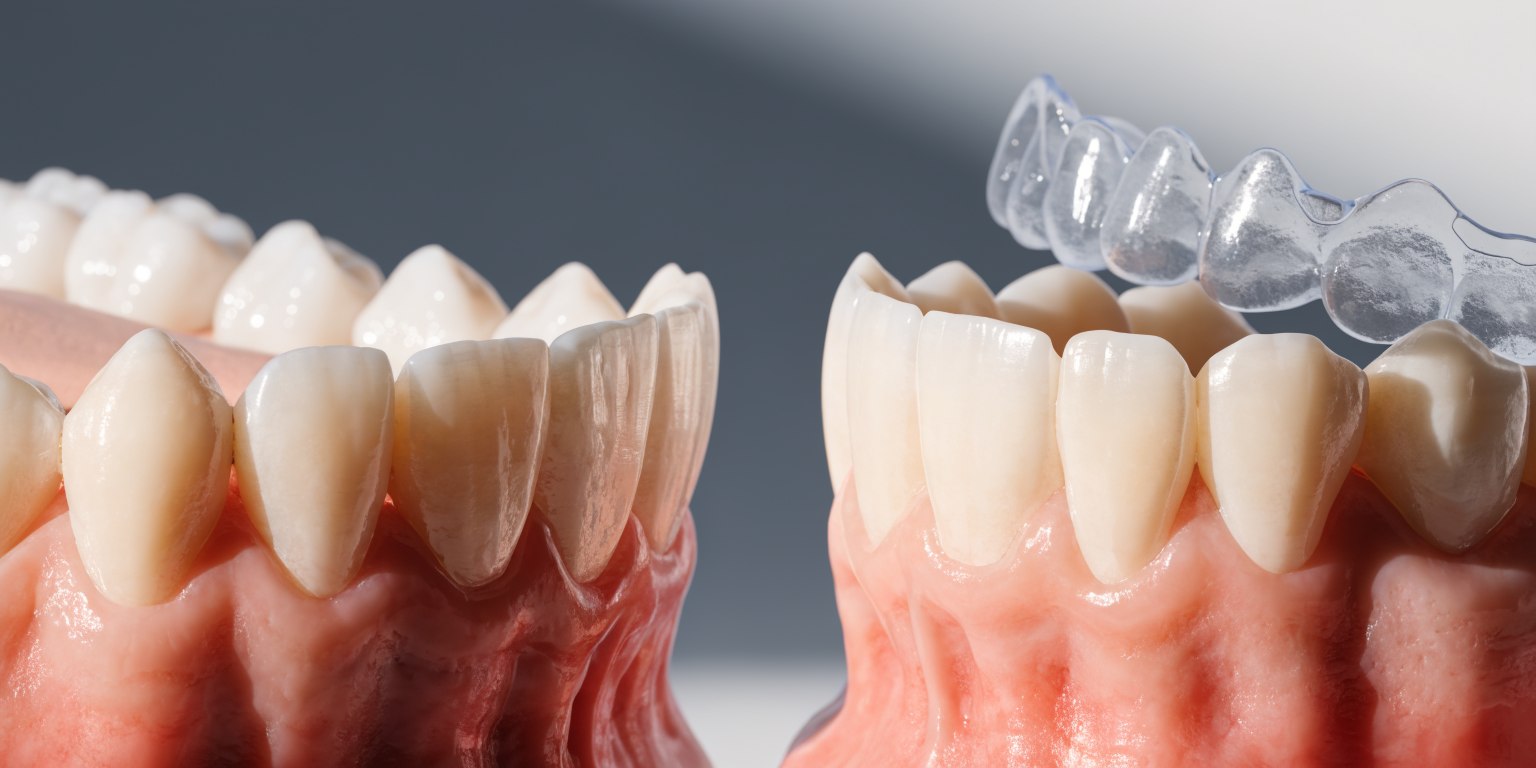
Veneers can visually reduce the appearance of a mild rotation, but moderate or severe rotation usually requires orthodontic assessment.
A rotated tooth creates a three-dimensional problem.
One side may sit too far forward while the other sits too far back. Correcting that appearance with ceramic can require:
- adding material to the recessed area;
- reducing enamel on the prominent area;
- changing line angles;
- altering apparent tooth width;
- and managing contact points with neighboring teeth.
If the rotation is small, that may be possible conservatively.
If the rotation is substantial, a veneer may become:
- too bulky;
- too thin in one area;
- overly prepared in another;
- difficult to clean around;
- or visually unnatural.
Orthodontics can rotate the actual tooth rather than compensating for the rotation with ceramic thickness.
Can Veneers Fix Crowded or Overlapping Teeth?
Veneers may disguise very mild crowding, but they are not a substitute for orthodontic treatment when teeth overlap substantially or do not have adequate space in the arch.
Crowding occurs when tooth size and available arch space do not match, or when tooth positions create overlap.
A veneer cannot create true arch space.
Attempting to make crowded teeth look straight only by changing the facial surfaces can lead to:
- excessive enamel reduction;
- narrow or unusual tooth shapes;
- bulky contours;
- difficult contact areas;
- compromised hygiene;
- and an unnatural smile transition.
Orthodontic treatment addresses the actual position of the teeth.
In selected patients, the most conservative sequence may be:
- align crowded teeth;
- reassess color, shape, and edge wear;
- use whitening or bonding where enough;
- place veneers only on teeth that still need ceramic correction.
That can reduce both preparation depth and the number of veneers.
What About Protruding Front Teeth?
Significantly protruding front teeth usually deserve orthodontic assessment before veneers because ceramic cannot move the roots backward.
A protruding tooth is particularly important because creating a flatter facial profile with a veneer can require substantial reduction of the natural tooth.
The more tooth structure that must be removed to create space for the desired contour, the less conservative the treatment becomes.
Orthodontics may be able to reposition the tooth while preserving more enamel.
A veneer may still have a role after alignment if the tooth remains:
- discolored;
- chipped;
- too small;
- worn;
- or aesthetically disproportionate.
This combined approach is often more biologically logical than using restorations to compensate for a large positional problem.
Can Clear Aligners Replace Veneers for Crooked Teeth?
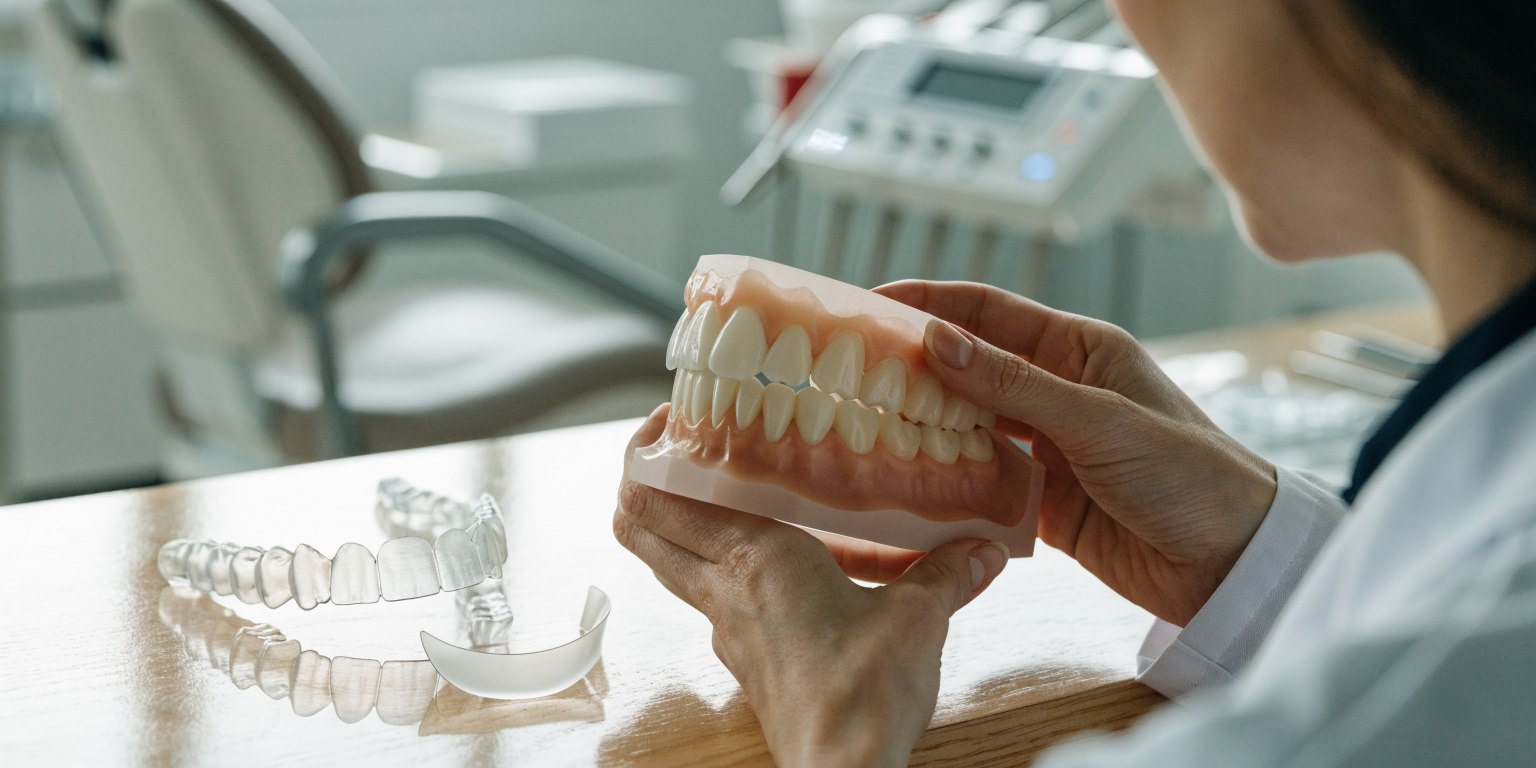
Clear aligners can replace veneers when the main goal is tooth movement, but they cannot reproduce the color and shape changes that ceramic veneers can provide.
Aligners may be considered for selected:
- crowding;
- rotations;
- spacing;
- tipping;
- and other orthodontic movements.
However, clear aligner effectiveness depends on the type and complexity of movement.
A 2026 systematic review found that clear aligners and fixed appliances showed mixed effectiveness across anterior tooth movements. Fixed appliances appeared to have an advantage for some rotation and torque control, while other movements showed similar or inconsistent findings.
Orthodontic treatment also has risks.
Root resorption is a recognized orthodontic complication. A 2026 systematic review and meta-analysis using CBCT measurements found lower average external apical root resorption with clear aligners than fixed appliances in the included studies, but the certainty of evidence was rated low, so the result should be interpreted cautiously.
The comparison is therefore not:
“Aligners are harmless; veneers are invasive.”
It is:
- orthodontics moves teeth and has orthodontic risks;
- veneers alter tooth surfaces and have restorative risks;
- the appropriate option depends on what needs to change.
What If Crooked Teeth Also Need a Color or Shape Change?
A combined approach may be more appropriate when tooth position and tooth appearance both need correction.
Orthodontics can improve:
- alignment;
- spacing;
- rotation;
- tooth position;
- and selected bite relationships.
It does not change:
- intrinsic tooth color;
- chipped enamel;
- tooth width;
- worn edges;
- developmental shape;
- or certain surface defects.
After alignment, the remaining cosmetic concern may be addressed with:
- whitening;
- composite bonding;
- one or more veneers;
- or no additional treatment.
For a small edge or shape correction, composite bonding may preserve more tooth structure than a veneer.
See E-max Veneers vs Composite Bonding: Which Is Better for Your Teeth?.
This staged approach can also reduce the number of teeth that need veneers.
See How Many E-max Veneers Do You Need: 6, 8, 10 or More?.
Are Veneers Faster Than Orthodontics?
Veneer treatment can usually change the visible appearance of selected teeth more quickly than comprehensive orthodontic tooth movement, but speed should not decide treatment when significant movement is clinically indicated.
Orthodontics works gradually because teeth are physically repositioned through supporting tissues.
Veneers can create a rapid cosmetic change because they alter visible tooth contours instead of moving the teeth.
But that does not make veneers a safe shortcut for every crooked smile.
If a tooth must be extensively reduced to appear aligned, the biological cost remains after the cosmetic result is complete.
The better question is:
“Which option achieves the goal while preserving the healthiest long-term foundation?”
Exact treatment duration varies significantly with:
- orthodontic complexity;
- appliance type;
- required restorative stages;
- oral health;
- laboratory workflow;
- and whether combined treatment is needed.
No Niva-specific duration for this exact crooked-teeth scenario should be assumed without a personalized treatment plan.
What Are the Risks and Limitations of Each Option?
Both veneers and orthodontics have risks, but the risks are different.
E-max veneer considerations
Possible issues include:
- irreversible enamel removal;
- sensitivity;
- dentin exposure;
- chipping or fracture;
- debonding;
- marginal discoloration;
- gum irritation;
- secondary decay;
- future repair or replacement;
- excessive preparation when trying to camouflage a poorly positioned tooth.
The ADA’s veneer guidance notes that enamel is commonly removed for porcelain veneers, making prepared treatment irreversible.
Orthodontic considerations
Possible issues include:
- temporary discomfort;
- challenges maintaining plaque control with some appliances;
- periodontal inflammation if hygiene is poor;
- enamel decalcification/caries risk where plaque control is inadequate;
- external apical root resorption;
- relapse if retention is not maintained;
- treatment taking longer than a cosmetic restorative procedure.
Orthodontics is therefore not “zero-risk treatment.”
But when tooth position is the actual problem, orthodontics can preserve intact tooth surfaces that might otherwise be reduced to create a restorative illusion of alignment.
How Do You Decide Between Veneers and Orthodontics?
The decision should start with the source of the problem: position, shape, color, structure, or a combination.
| Main finding | Option that may deserve priority |
|---|---|
| Mild visual rotation + color/shape concern | Veneer may be considered |
| Slightly set-back tooth that needs added volume | Veneer or bonding may be considered |
| Significant rotation | Orthodontic assessment |
| Moderate/severe crowding | Orthodontic assessment |
| Protruding front teeth | Orthodontic assessment before veneers |
| Bite problem | Orthodontic assessment |
| Healthy alignment + discoloration | Whitening or veneer depending on cause/severity |
| Small chip after alignment | Composite bonding may be enough |
| Alignment corrected but tooth shape still uneven | Bonding or veneer |
| Structurally weak/heavily restored tooth | Crown or other restorative assessment may be needed |
If a proposed plan changes from veneer to full-coverage restoration, review E-max Veneers vs Crowns: What Is the Difference?.
What Should International Patients Ask Before Choosing Veneers for Crooked Teeth in Turkey?
International patients should not accept a final veneer plan for crooked teeth based only on front-facing photographs. Tooth position, root position, bite, enamel and periodontal health all matter.
Useful questions include:
- Is my problem mainly cosmetic shape, or true orthodontic malposition?
- Are any teeth significantly rotated or protruding?
- Is my bite stable?
- Would orthodontic movement reduce the amount of enamel preparation?
- Can clear aligners achieve the required movements, or would fixed appliances provide better control?
- If veneers are proposed, how much tooth preparation is expected on each tooth?
- Will the plan remain mainly in enamel?
- Could bonding solve any small residual shape problems after orthodontics?
- Are any proposed restorations actually crowns rather than veneers?
- How will grinding or clenching be assessed?
- What imaging or records are needed before treatment?
- If I complete orthodontics in my home country, can veneer planning be reassessed afterward?
- What follow-up is required after I return home?
- What would make the treatment plan change after an in-person examination?
Niva Dental is located in Bakırköy, Istanbul. Its current E-max page lists E-max veneers among its dental treatments, while its Hollywood Smile content recognizes that broader smile planning may involve veneers, bonding, whitening, orthodontics, gum treatment, or combinations rather than one fixed procedure.
International patients can also review the Niva Dental patient journey for broader consultation and travel planning.
Emax Veneers for Crooked Teeth: A Practical Decision Framework
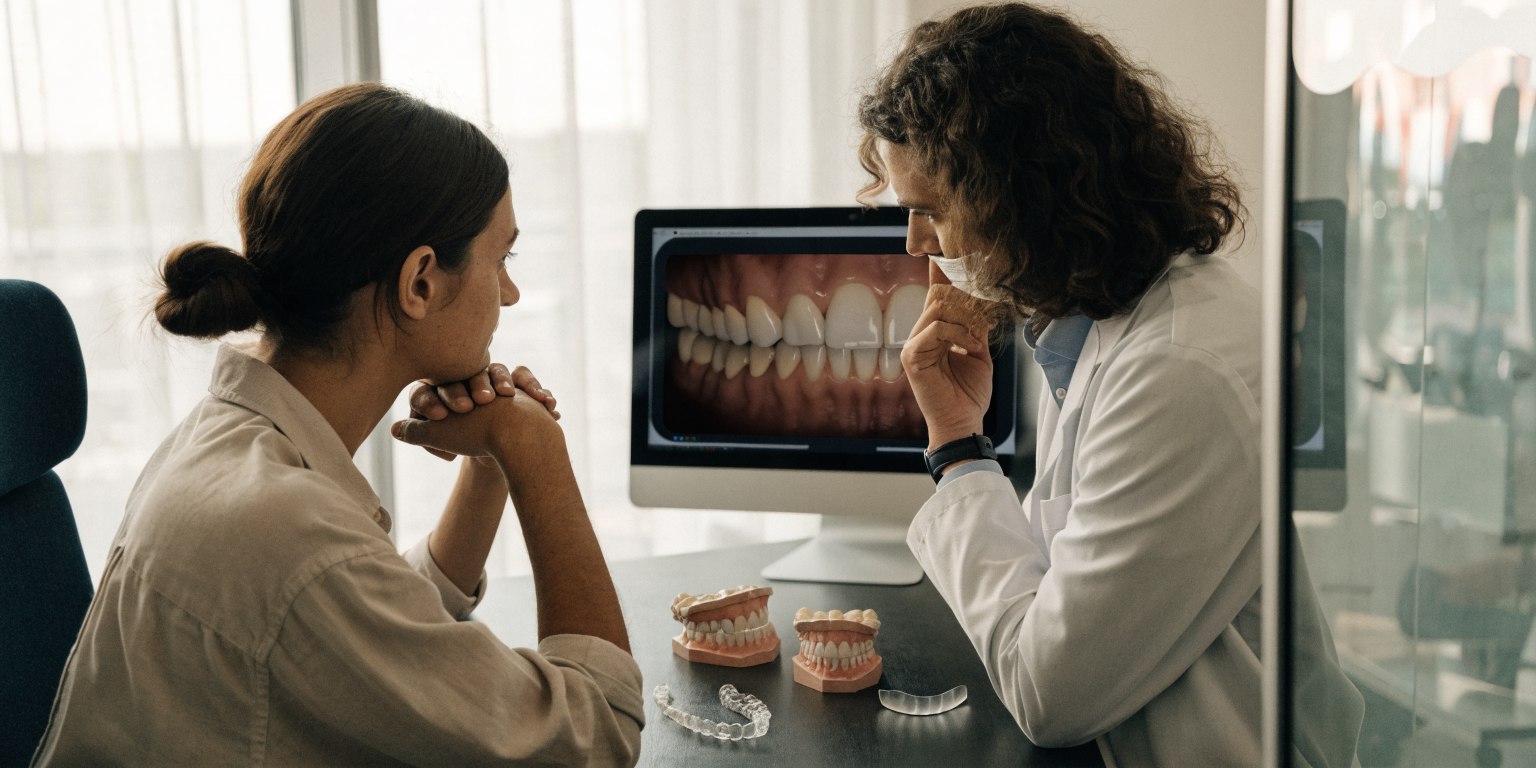
For emax veneers for crooked teeth, use this sequence:
1. Decide whether the problem is positional or cosmetic
If the tooth needs to move, orthodontics should be assessed.
If the tooth is already close to a healthy position and mainly needs a modest change in visible contour, a veneer or bonding may be reasonable.
2. Ask how much natural tooth would need to be removed
A veneer that requires aggressive reduction to hide severe malposition is not a conservative shortcut.
3. Check the bite
Crowding, deep bite, crossbite, protrusion, and unstable contacts can change the restorative plan.
4. Consider orthodontics before irreversible preparation
Moving teeth first can create space and better axial positions for more conservative restorations later.
5. Reassess after alignment
Some patients discover that after orthodontics, whitening or small composite additions are enough.
6. Use veneers only where they still add value
Ceramic should solve a remaining color, shape, surface, or proportion problem—not simply replace orthodontic tooth movement.
The most conservative treatment is not always the fastest. It is the plan that corrects the real problem while preserving healthy tooth structure whenever reasonably possible.
Frequently Asked Questions
Can E-max veneers fix crooked teeth?
E-max veneers can make selected mildly crooked teeth look straighter by changing the visible surface, shape and line angles. They do not move tooth roots or correct malocclusion. Significant crowding, rotation, protrusion or bite problems generally require orthodontic assessment before veneer treatment is considered.
Are veneers better than braces for mildly crooked teeth?
Not necessarily. Veneers may be reasonable when the irregularity is mild and the patient also wants color or shape changes. Braces or aligners may be more conservative when tooth position is the main concern because orthodontics moves the tooth without preparing the facial enamel for a veneer.
Can I get veneers instead of Invisalign?
Sometimes, but only when true tooth movement is not required. Veneers cosmetically camouflage selected mild irregularities; clear aligners physically reposition teeth. If crowding, rotation, protrusion or bite relationships need correction, an orthodontic assessment is more appropriate than choosing veneers purely to avoid aligner treatment.
Can E-max veneers fix rotated teeth?
They may visually disguise a small rotation in selected cases. Moderate or severe rotation can require excessive reduction on the prominent side of the tooth and added ceramic on the recessed side. Orthodontics can rotate the actual tooth and may preserve more natural structure when the rotation is significant.
Can veneers fix overlapping teeth?
Only very mild overlap may be cosmetically camouflaged. Significant overlapping usually reflects inadequate space or tooth-position problems that veneers cannot correct biologically. Trying to make substantially crowded teeth look straight with ceramic alone can require unnecessary enamel removal and create difficult contours.
Should I straighten my teeth before veneers?
If malposition is significant, orthodontic treatment before veneers can be a more conservative sequence. Published clinical literature describes orthodontics being used to improve tooth position so later veneer preparations can remain more minimally invasive. After alignment, fewer veneers—or only whitening or bonding—may be needed.
Are clear aligners always better than braces before veneers?
No. Clear aligners can treat many orthodontic problems, but appliance selection depends on the movement required. A 2026 systematic review found mixed effectiveness across anterior movements and suggested fixed appliances may offer better control for some rotation and torque movements, based on limited evidence.
Can veneers correct a deep bite?
No. Veneers do not correct the underlying bite relationship. A deep bite may also increase mechanical demands on anterior restorations. The bite should be assessed before veneers, and orthodontic or other treatment may be recommended when the occlusal relationship itself needs correction.
Can I have orthodontics first and E-max veneers later?
Yes. This can be a conservative approach when teeth need positional correction but still have residual color, shape, wear or proportion concerns after alignment. Orthodontics can position the teeth first, after which the dentist can reassess whether veneers, composite bonding, whitening or no further treatment is needed.
Will veneers require more tooth shaving if my teeth are crooked?
They can. A tooth that protrudes or is significantly rotated may require more preparation to fit within the intended final contour. A slightly set-back tooth may allow more additive treatment. Preparation should therefore be planned tooth by tooth, and orthodontic movement should be considered if it can reduce unnecessary enamel removal.
Patients considering E-max veneers for crooked teeth can contact Niva Dental in Bakırköy, Istanbul for an initial assessment of tooth position, enamel, bite, gum health and cosmetic goals. Final treatment may involve veneers, orthodontics, bonding, whitening or a combination; the appropriate sequence should be confirmed after an individual dental examination.
Medical References and Sources
| Source | What It Supports |
|---|---|
| American Dental Association / MouthHealthy — Braces | Orthodontic treatment moves teeth and is used for crowded/crooked teeth and malocclusion; treatment approach depends on individual needs. |
| American Dental Association / MouthHealthy — Veneers | Veneers cover the front surface of teeth; porcelain veneer preparation commonly removes enamel; prepared treatment is irreversible and has maintenance/complication considerations. |
| Coachman C, et al. — Esthetic Smile Design: Limited Orthodontic Therapy to Position Teeth for Minimally Invasive Veneer Preparation — PMID 26140974 | Clinical evidence supporting orthodontic repositioning before veneers to enable more conservative restorative preparation in selected cases. |
| Ubuzima P, et al. — Comparative effectiveness of clear aligners and fixed appliances in orthodontic movement of the anterior teeth in adults — PMID 41172597 | 2026 systematic review showing mixed effectiveness by movement type and limited evidence favoring fixed appliances for some rotation and torque control. |
| Yıldırım E, Topbas C. — CBCT-Based Assessment of External Apical Root Resorption in Clear Aligner Versus Fixed Orthodontic Therapy — PMID 42278800 | 2026 systematic review/meta-analysis showing lower CBCT-measured root resorption with aligners in included studies, but with low certainty and important limitations. |
| Ivoclar — IPS e.max CAD | Technical confirmation that IPS e.max CAD is lithium-disilicate glass-ceramic and can be used for veneers; used only for material-specific facts. |