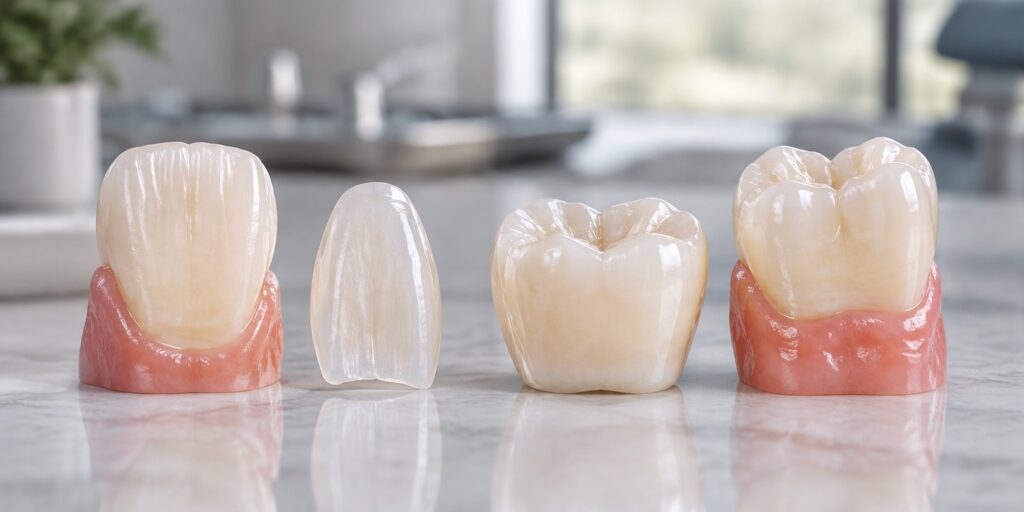



Air travel after uncomplicated implant placement may be possible after the early postoperative period, but there is no universal clearance time. Sinus lifts, bone grafting, multiple implants, symptoms, and the need for follow-up can require a longer stay before flying.

Yes, many patients can fly after dental implant surgery, but flying after dental implant surgery should be timed around the procedure and early recovery rather than around the cheapest return flight. There is no single medically appropriate waiting period for every implant patient.
A 2023 review in the British Dental Journal proposed 72 hours as a minimum interval after uncomplicated implant placement before air travel, provided there is no pain, swelling, or bleeding at the surgical site. The authors also emphasized that evidence is limited, much of it comes from military aviation rather than civilian commercial travel, and individual clinical judgment remains necessary.
A sinus lift or more extensive grafting changes the situation. Because changes in cabin pressure can affect the paranasal sinuses, the same review proposed at least two weeks after sinus lift surgery as a minimum, with a more conservative recommended interval in some cases.
The safest return date should therefore be confirmed by the dentist or surgeon who performed your treatment.
Can You Fly After Dental Implant Surgery?
In an uncomplicated implant case, flying may be possible after the immediate postoperative period, but same-day or next-day travel should not be treated as the default. The best available dental-tourism review offers 72 hours after uncomplicated implant placement as a minimum starting point rather than a guarantee that every patient is ready to fly.
The review, indexed on PubMed, specifically notes that the available evidence on flying after dental treatment is limited. Its suggested intervals are intended to guide clinical decision-making and should be individualized according to the procedure, symptoms, complications, and characteristics of the flight.
For flying after dental implant surgery, the practical answer is therefore more useful than a single fixed number:
- routine implant placement: air travel may be considered after the early postoperative period if recovery is uncomplicated and the treating clinician agrees;
- multiple implants or more extensive surgery: additional observation may be appropriate;
- bone grafting: timing depends on the site and extent of the graft;
- sinus lift or sinus-related surgery: a longer delay is generally warranted because pressure changes affect the sinus differently;
- active or worsening symptoms: the patient should be reviewed before flying.
If you are still planning treatment, Niva Dental’s main guide to dental implants in Turkey explains the broader surgical, healing, and restorative stages.
Does Airplane Cabin Pressure Damage a Dental Implant?
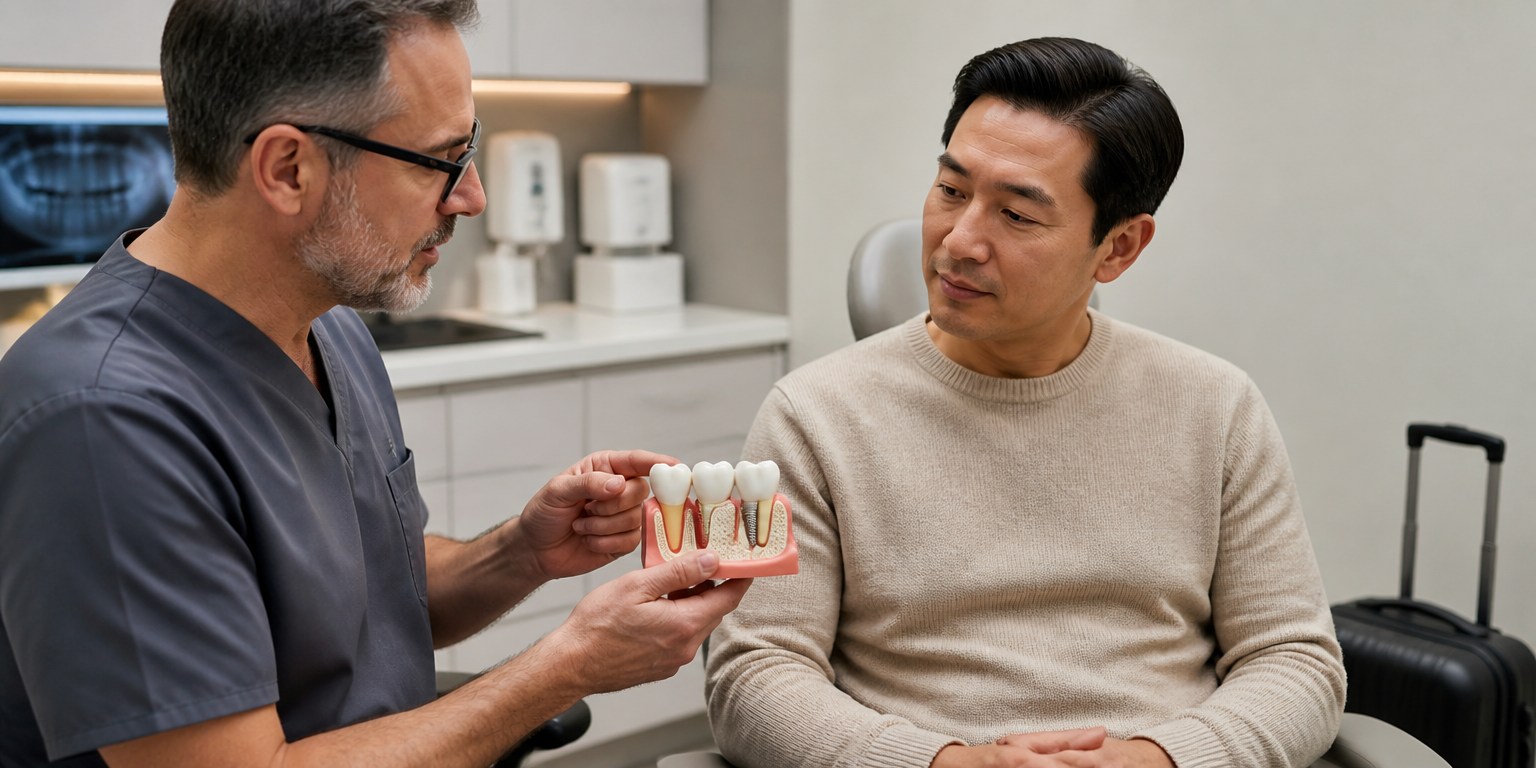
Normal cabin-pressure changes are not believed to directly loosen a dental implant that has been properly placed in jawbone. The more immediate concerns after routine implant surgery are the healing surgical tissues, bleeding, swelling, pain, and whether a postoperative problem could develop while the patient is far from the treating clinic.
A dental implant fixture is placed within bone. Osseointegration—the biological process in which bone develops a stable connection with the implant surface—continues over weeks or months. Mayo Clinic describes this healing process as central to implant treatment and notes that the overall implant pathway often takes months because bone healing requires time.
Cabin pressure therefore should not be confused with the mechanical loading of the implant.
However, air travel still matters because a recently operated patient is leaving easy access to the surgical team. Mayo Clinic notes that swelling, bruising, implant-site pain, and minor bleeding can occur after implant surgery and advises contacting the surgeon if swelling, soreness, or another problem worsens in the days after treatment. Mayo Clinic dental implant surgery guidance.
Why Is Flying After a Sinus Lift Different?
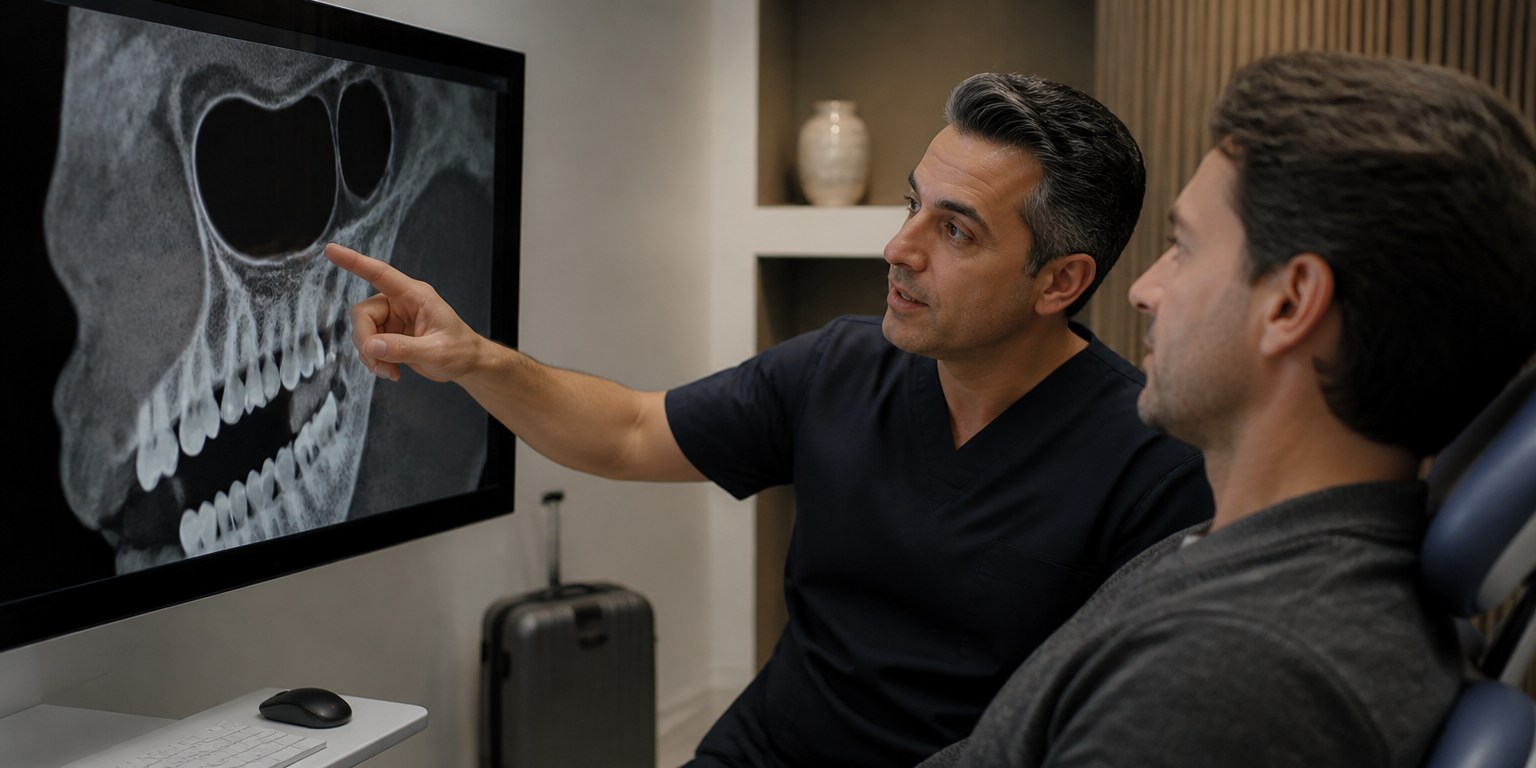
A sinus lift is different because the surgery directly involves the maxillary sinus region, an air-filled space affected by pressure changes during ascent and descent. This makes general advice for an uncomplicated implant inappropriate for a patient who also had sinus augmentation.
The American Academy of Periodontology explains that sinus augmentation raises the sinus floor and creates space for bone development in the back of the upper jaw. Healing of this area is therefore anatomically different from an implant placed without sinus involvement.
The British Dental Journal review on dental tourism and barotrauma proposed:
| Dental procedure | Minimum interval proposed in the review* |
|---|---|
| Uncomplicated implant placement | 72 hours |
| Surgical extraction | 72 hours |
| Difficult orofacial procedures including sinus lift / dental bone graft implantation | At least 2 weeks |
*These are guiding intervals from a literature review, not universal clearance rules. The authors explicitly note that research is limited and that treatment should be individualized.
The same review discussed a more conservative recommendation of one week after most dental interventions and six weeks after sinus lift surgery. Rather than presenting these figures as competing “rules,” the important takeaway is that sinus-related surgery deserves substantially more caution than a routine implant.
Does a Bone Graft Mean You Should Wait Longer to Fly?
It can. Bone grafting ranges from a small amount of augmentation around an implant to a separate reconstructive procedure, so the effect on travel timing depends on what was actually done.
Mayo Clinic explains that minor bone grafting can sometimes be performed at the same time as implant placement, while larger grafts may require a separate healing period before the implant is placed. The aviation review classifies dental bone-graft implantation among more difficult orofacial interventions for which a longer interval before flying may be appropriate.
This is why the phrase “I had an implant” is not enough to determine a safe departure date. Two patients who both received implants may have had very different operations.
Useful questions for the treating surgeon include:
- Was bone grafting performed?
- Was the graft close to or within the sinus region?
- Were several implants placed?
- Were extractions performed at the same visit?
- Is a postoperative review planned before departure?
- Are symptoms improving as expected?
What Symptoms Should Make You Delay a Flight and Contact the Dentist?
Do not rely on a calendar alone if recovery is not progressing as expected. A patient who reaches a suggested waiting interval but has worsening symptoms still needs clinical review.
Mayo Clinic lists swelling of the gums or face, bruising, implant-site pain, and minor bleeding among possible postoperative effects. It specifically advises contacting the surgeon if swelling, soreness, or another problem worsens in the days after surgery.
Before international air travel, contact the treating dental team if you have concerns such as:
- persistent or significant bleeding;
- swelling that is increasing rather than settling;
- pain that is becoming more severe rather than improving;
- a new concern about the surgical wound or temporary restoration;
- unusual sinus pressure or nasal symptoms after an upper-jaw sinus procedure;
- any other postoperative symptom the treating team has told you requires review.
This list is not a diagnostic checklist. If symptoms are severe or urgent, seek appropriate local medical or dental care rather than waiting for a flight or remote reply.
Is It Better to Stay in Istanbul for a Postoperative Check?
For international implant patients, allowing enough time for a planned postoperative review is often more useful than aiming for the earliest technically possible flight. This is especially relevant when planning flying after dental implant surgery from Istanbul back to another country.
Niva Dental’s current implant page advises international patients not to schedule return travel so tightly that there is no time for the planned postoperative review. Its Patient Journey also describes final checks, aftercare guidance, remote support, and transfer back to the airport as part of the travel pathway.
A review before departure can help the dental team assess:
- whether bleeding has settled;
- whether swelling and discomfort are within the expected range;
- whether a temporary restoration is stable;
- whether hygiene instructions are understood;
- whether the patient knows whom to contact after returning home;
- whether the return-flight date remains reasonable after the actual procedure.
This matters because the treatment performed on arrival may differ from the preliminary plan. A patient expecting one uncomplicated implant could ultimately need an extraction, grafting, or another procedure that changes the recommended travel buffer.
Does the Number of Dental Implants Affect When You Can Fly?
Potentially, yes. The number of implants is not the only factor, but multiple implant sites or full-arch surgery can create a larger postoperative burden than one straightforward implant.
More extensive surgery may involve more swelling, additional extractions, temporary prosthetic work, or a greater need for clinical review before departure. It is therefore inappropriate to apply a single-implant timeline automatically to every full-arch case.
Niva Dental’s All-on-4 / All-on-6 treatment page describes implant placement with a fixed temporary prosthesis in selected cases and a later definitive prosthetic stage. Patients having full-arch treatment should confirm return-flight timing separately from the question of when temporary teeth are fitted.
Receiving fixed temporary teeth on the day of surgery does not mean the surgical tissues have finished healing or that the patient is automatically ready to board a long-haul flight.
Short-Haul vs Long-Haul Flights: Does Flight Length Matter?
The available dental literature does not provide a simple evidence-based rule such as “short flights are safe after X hours but long flights require Y days.” The 2023 review specifically notes that more research involving civilian commercial flights is needed.
Flight length can still matter practically. A longer journey means more time away from easy clinical access, a longer period managing postoperative discomfort in transit, and potentially several airport and connection stages.
For international patients, planning should therefore consider not only the departure time but the whole journey home:
| Travel factor | Why it matters after implant surgery |
|---|---|
| Direct vs connecting flight | Connections increase total travel time and time away from clinical care |
| Length of flight | A long journey may be harder during early swelling or discomfort |
| Sinus involvement | Pressure change deserves additional caution after sinus surgery |
| Planned postoperative check | Departure should allow the agreed review to occur |
| Current symptoms | A calendar interval does not override worsening recovery |
| Access to dental care at home | Follow-up arrangements matter once the patient leaves Istanbul |
How Should International Patients Plan Their Return Flight?
The best strategy is to book around the clinical plan and keep the return date flexible enough to change if the actual surgery or recovery differs from the preliminary estimate. For international patients, flying after dental implant surgery should be treated as part of aftercare planning rather than as a separate travel-only decision.
Before treatment, ask the clinic to state separately:
- what procedure is expected;
- whether grafting or sinus augmentation may be needed;
- when the postoperative review is planned;
- the earliest provisional return date;
- what findings would cause the team to recommend staying longer;
- how urgent aftercare will be handled after you return home.
If your treatment is part of a multi-trip implant plan, the related question of how many separate visits to Turkey are required should also be considered independently from how soon you can fly after each surgical stage.

Frequently Asked Questions
How soon can you fly after a dental implant?
A 2023 British Dental Journal review proposed 72 hours as the minimum interval after uncomplicated implant placement, provided there is no pain, swelling, or bleeding. However, the evidence is limited and this is not an automatic clearance time. The surgeon who performed the implant should confirm when flying is appropriate for the individual patient.
Can I fly the day after dental implant surgery?
Flying the next day should not be assumed to be appropriate after implant surgery. A published dental-tourism review proposed 72 hours as a minimum after uncomplicated implant placement. More importantly, bleeding, swelling, pain, additional procedures, and the planned postoperative review can all justify waiting longer.
Can cabin pressure make a dental implant move?
Normal commercial cabin-pressure changes are not generally considered a direct cause of implant movement. A dental implant is mechanically placed in jawbone, and osseointegration then develops over time. The more relevant early concerns are the surgical wound, symptoms, follow-up access, and sinus involvement when applicable.
How long should you wait to fly after a sinus lift?
A dental-tourism and aviation review proposed at least two weeks as a minimum after sinus lift surgery and discussed an even more conservative recommended interval. Because the evidence base is limited and sinus anatomy varies, the treating surgeon’s individualized restriction should take priority over any general online timeline.
Can you fly after a dental bone graft?
Sometimes, but the appropriate timing depends on the extent and location of the graft. A small graft placed with an implant is different from a larger staged graft or a procedure involving the maxillary sinus. The surgeon should confirm the flight interval after the actual procedure is known.
Can I fly after All-on-4 implant surgery?
Possibly, but full-arch implant surgery should not automatically use the same travel timeline as one uncomplicated implant. Multiple implants, extractions, temporary fixed teeth, swelling, and postoperative checks can affect departure timing. Same-day temporary teeth do not mean surgical healing is complete.
Should I book a flexible flight after dental implants in Turkey?
Flexible travel is sensible when possible because a preliminary treatment plan may change after in-person examination and imaging. Additional extraction, grafting, sinus treatment, or unexpected recovery issues can alter the recommended departure date. Ask the clinic for a provisional return date and what would make that date change.
What if I develop worsening swelling before my flight home?
Contact the treating dental team before flying. Mayo Clinic advises contacting the surgeon if swelling, soreness, or another problem worsens after implant surgery. Significant or urgent symptoms may require in-person assessment rather than waiting for remote advice or proceeding with planned travel.
Flying Home Should Follow the Surgery, Not the Schedule
For uncomplicated cases, flying after dental implant surgery may be possible after the early postoperative period, and a published review proposes 72 hours as a minimum starting point. But that figure should not be treated as a universal permission to fly.
Sinus lift surgery, bone grafting, multiple implants, extractions, worsening symptoms, and the need for postoperative review can all justify a longer stay. Sinus-related procedures deserve particular caution because cabin-pressure changes affect air-filled sinus spaces differently from a routine implant site.
International patients should therefore ask for flight guidance after the actual procedure has been completed, not only from the preliminary online plan. For the wider treatment sequence, see Niva Dental’s guide to dental implant treatment in Istanbul.
Medical References
- Zadik Y, Drucker S. Dental tourism and the risk of barotrauma and barodontalgia. British Dental Journal. 2023. https://pubmed.ncbi.nlm.nih.gov/36707585/ — Full text: https://pmc.ncbi.nlm.nih.gov/articles/PMC9880927/
- Mayo Clinic. Dental Implant Surgery. https://www.mayoclinic.org/tests-procedures/dental-implant-surgery/about/pac-20384622
- American Academy of Periodontology. Sinus Augmentation. https://www.perio.org/for-patients/periodontal-treatments-and-procedures/dental-implant-procedures/sinus-augmentation/
- American Academy of Periodontology. Dental Implant Procedures. https://www.perio.org/for-patients/periodontal-treatments-and-procedures/dental-implant-procedures/