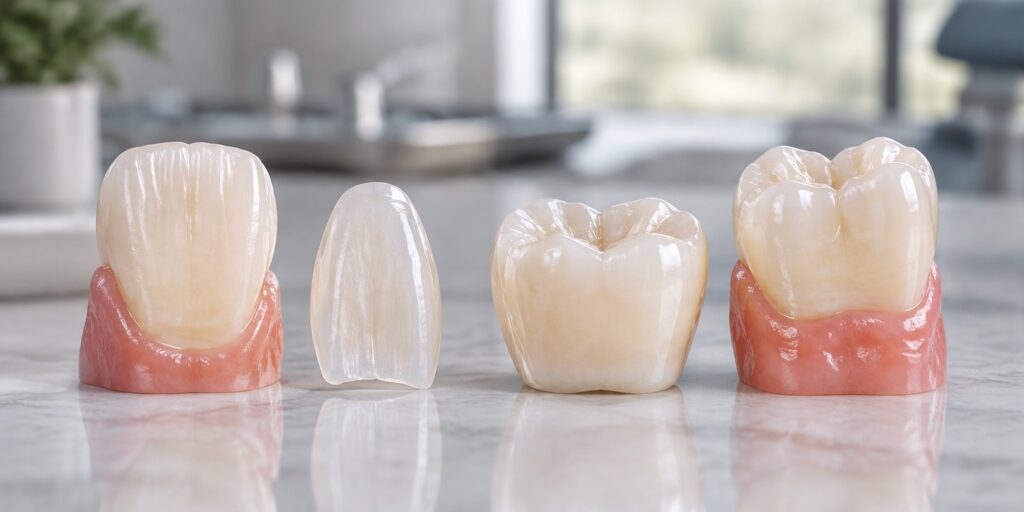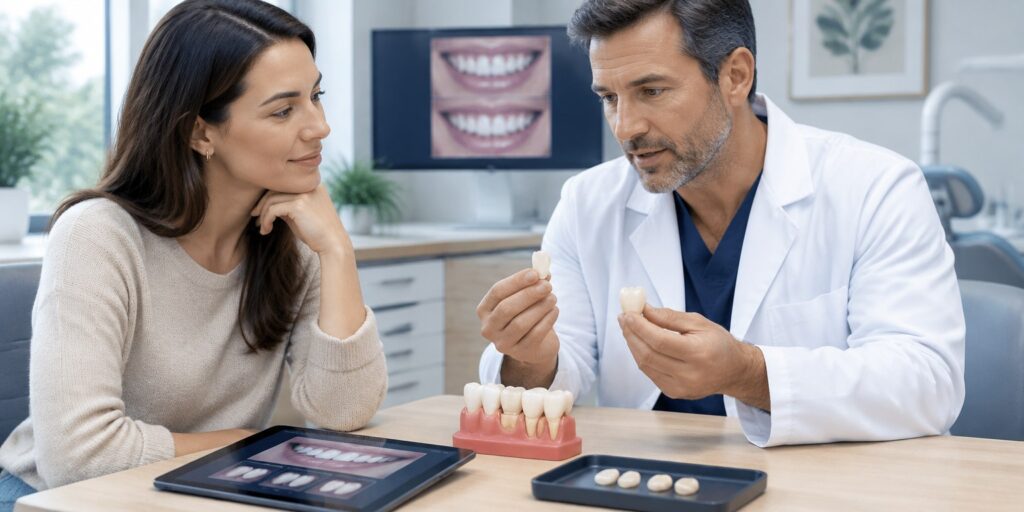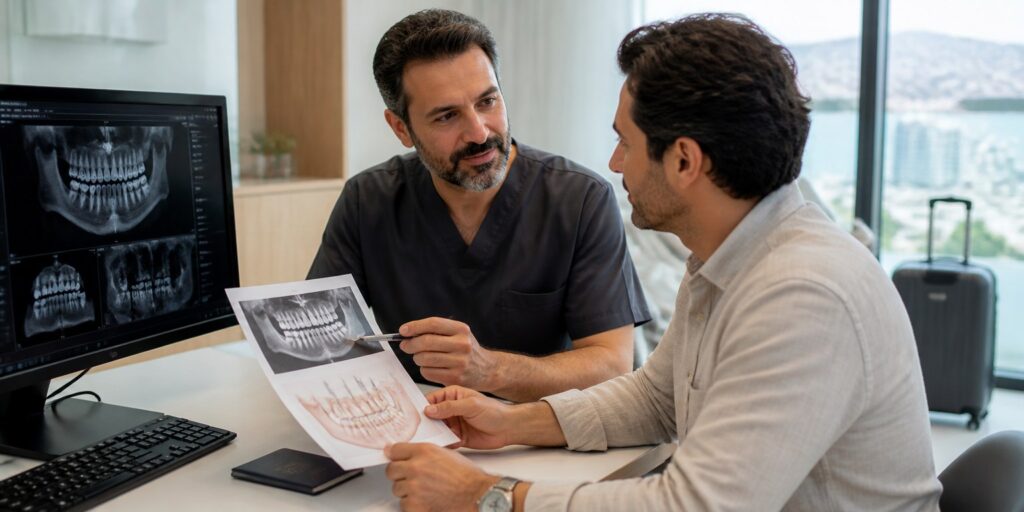



A practical travel-planning guide for international dental implant patients, explaining typical first-trip ranges, why many cases require a second visit, how healing differs from travel time, and what can extend a stay.

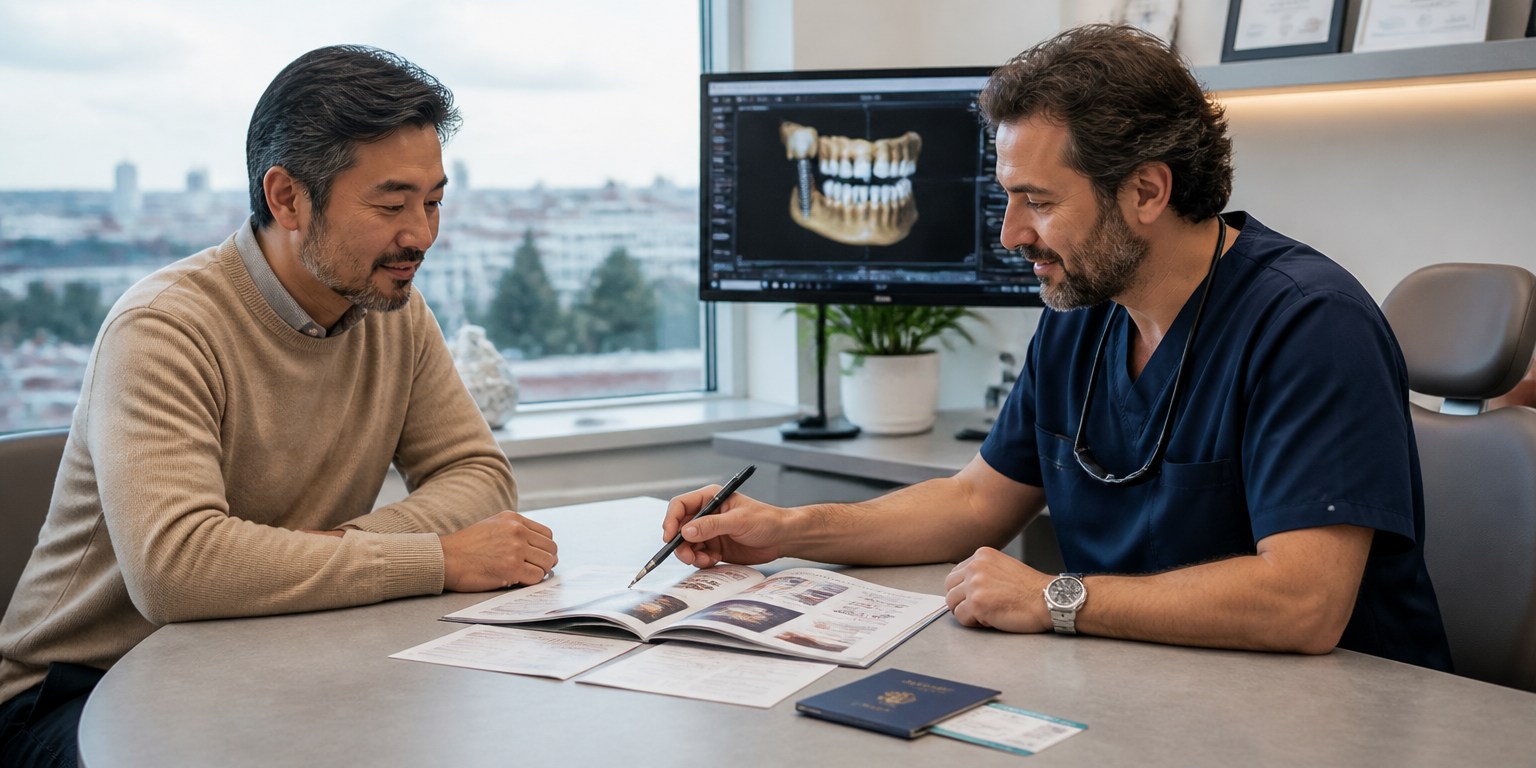
If you are asking how long to stay in Turkey for dental implants, a practical planning range for a straightforward first surgical visit is often about 3–7 days, based on current 2026 clinic schedules in the Turkey dental-tourism market. More complex treatment, multiple implants, full-arch reconstruction, bone grafting or a sinus lift may require a longer stay.
That number is only the first trip, not the complete implant timeline. Dental implants commonly need months of healing before the final crown or bridge is fitted, so many international patients return home during osseointegration and travel back later for the final restoration.
The safest itinerary is therefore built around the actual treatment plan, not a fixed vacation package. For the broader implant process, candidacy and treatment options, see Niva Dental’s guide to dental implants in Turkey.
How Long Do You Usually Need to Stay in Turkey for Dental Implants?
For a straightforward implant-placement visit, many current Turkey clinic itineraries fall in the 3–7 day range. This is a travel-planning range, not a universal medical rule. The required stay depends on what is being done, when postoperative review is planned and whether a temporary restoration or additional surgery is involved.
A useful way to think about the stay is:
| Treatment situation | Practical travel-planning approach |
|---|---|
| One uncomplicated implant | Often several days for examination, placement and early review |
| Several implants | May require more clinic time and a longer observation/review window |
| Implant plus bone graft | Timing depends on graft size, location and whether grafting is simultaneous or staged |
| Sinus lift plus implant | May require a more cautious travel plan because surgery is more extensive |
| Full-arch / All-on-4 or All-on-6 | Usually requires more appointments during the first trip, especially when a temporary prosthesis is fitted |
| Final crown or bridge visit | Usually a separate, shorter restorative trip after healing in conventional two-stage treatment |
The most important question to ask the clinic is not simply, “How many nights should I book?”
Ask instead:
“Which appointments must happen before I leave Turkey, and what has to be clinically checked before I fly home?”
That produces a safer and more useful itinerary.
Why Can Dental Implants Require Two Trips to Turkey?
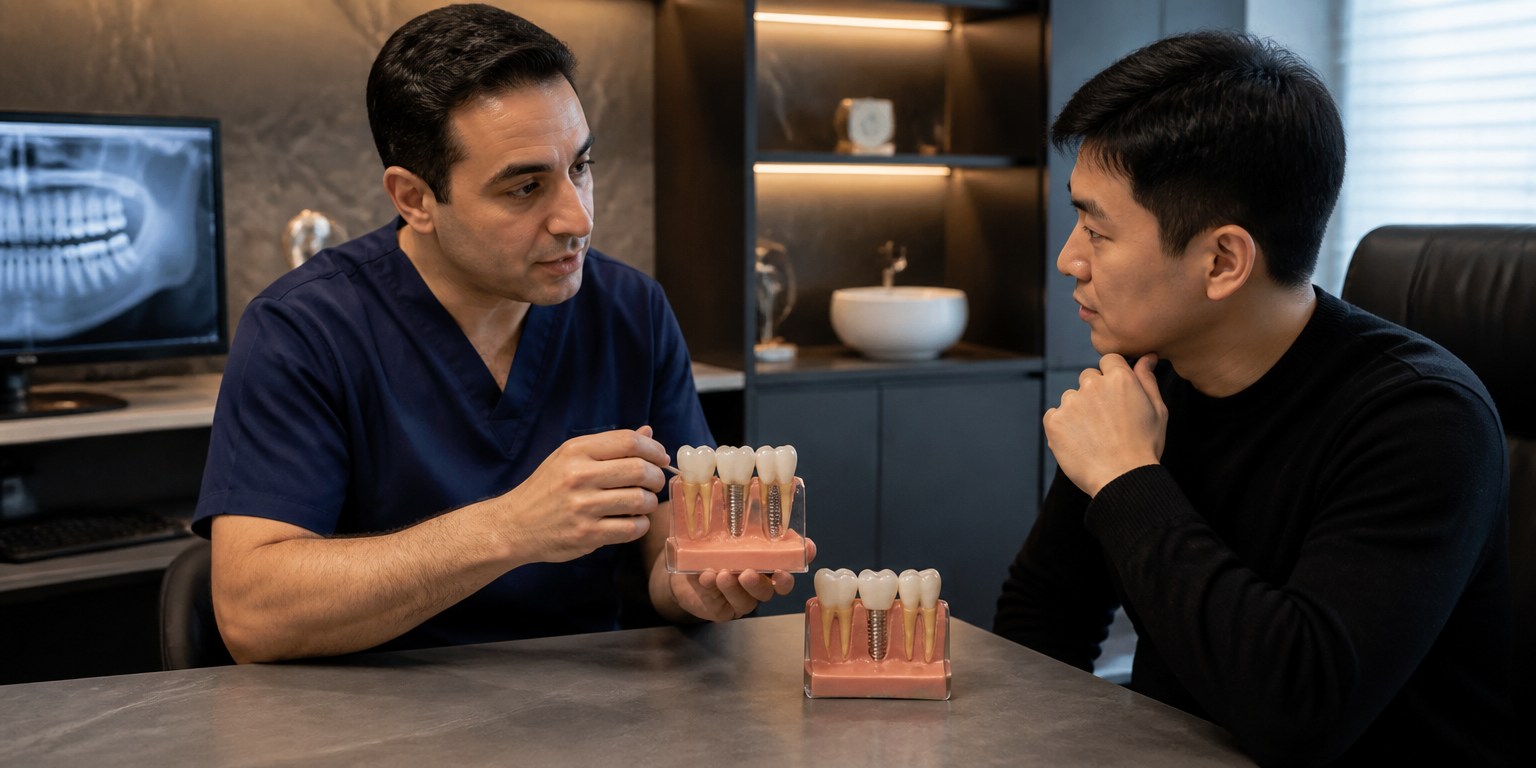
Dental implants often require two trips because implant placement and final tooth placement are different treatment stages. After the implant fixture is placed in the jaw, the bone commonly needs time to heal around it before the definitive crown or bridge is fitted.
This healing process is called osseointegration. The American Dental Association’s MouthHealthy guidance explains that osseointegration takes time and that some patients may wait several months before replacement teeth are attached.
Mayo Clinic likewise notes that implant treatment can take many months because bone healing is a major part of the process.
A conventional international treatment sequence may therefore look like this:
First trip: surgical stage
- in-person dental examination;
- X-rays and/or 3D imaging when indicated;
- confirmation of the treatment plan;
- extraction if required;
- implant placement;
- bone grafting or sinus augmentation if required;
- temporary restoration when clinically appropriate;
- early postoperative review;
- aftercare instructions before departure.
Healing period at home
The patient returns home while osseointegration continues. This does not mean treatment has stopped. The implant is undergoing biological healing, and the patient still needs appropriate oral hygiene, follow-up and a clear contact plan if problems develop.
Second trip: restorative stage
After the implant has healed sufficiently, the clinic may complete restorative records, fit the abutment if required and deliver the definitive crown, bridge or full-arch prosthesis.
Not every case follows exactly this sequence. Immediate loading may be possible for selected patients, and some restorative steps can be combined. However, “same-day implant” should not automatically be interpreted as “final permanent tooth completed in one trip.”
Is the First Trip the Same as the Total Dental Implant Treatment Time?
No. Travel time, surgical recovery and osseointegration are three different timelines. Confusing them is one of the biggest planning mistakes in dental tourism.
A patient may be in Istanbul for only several days, feel substantially better soon after surgery and still need months before the implant is ready for the final restoration.
| Timeline | What it means |
|---|---|
| Time in Turkey | Days needed for appointments, surgery, early review and travel logistics |
| Early recovery | Period when swelling, tenderness and the surgical wound begin to settle |
| Osseointegration | Deeper bone healing around the implant, which may take several months |
| Final restoration | Crown, bridge or definitive prosthesis fitted after the implant is ready |
Mayo Clinic describes osseointegration as the process in which the jawbone grows into and joins with the implant surface, creating a stable base for the artificial tooth.
This is why the answer to how long to stay in Turkey for dental implants cannot be “three months.” Most patients do not need to remain in Turkey during the entire biological healing period. They usually heal at home between treatment stages when their clinical plan allows it.
What Can Make You Need a Longer Stay?
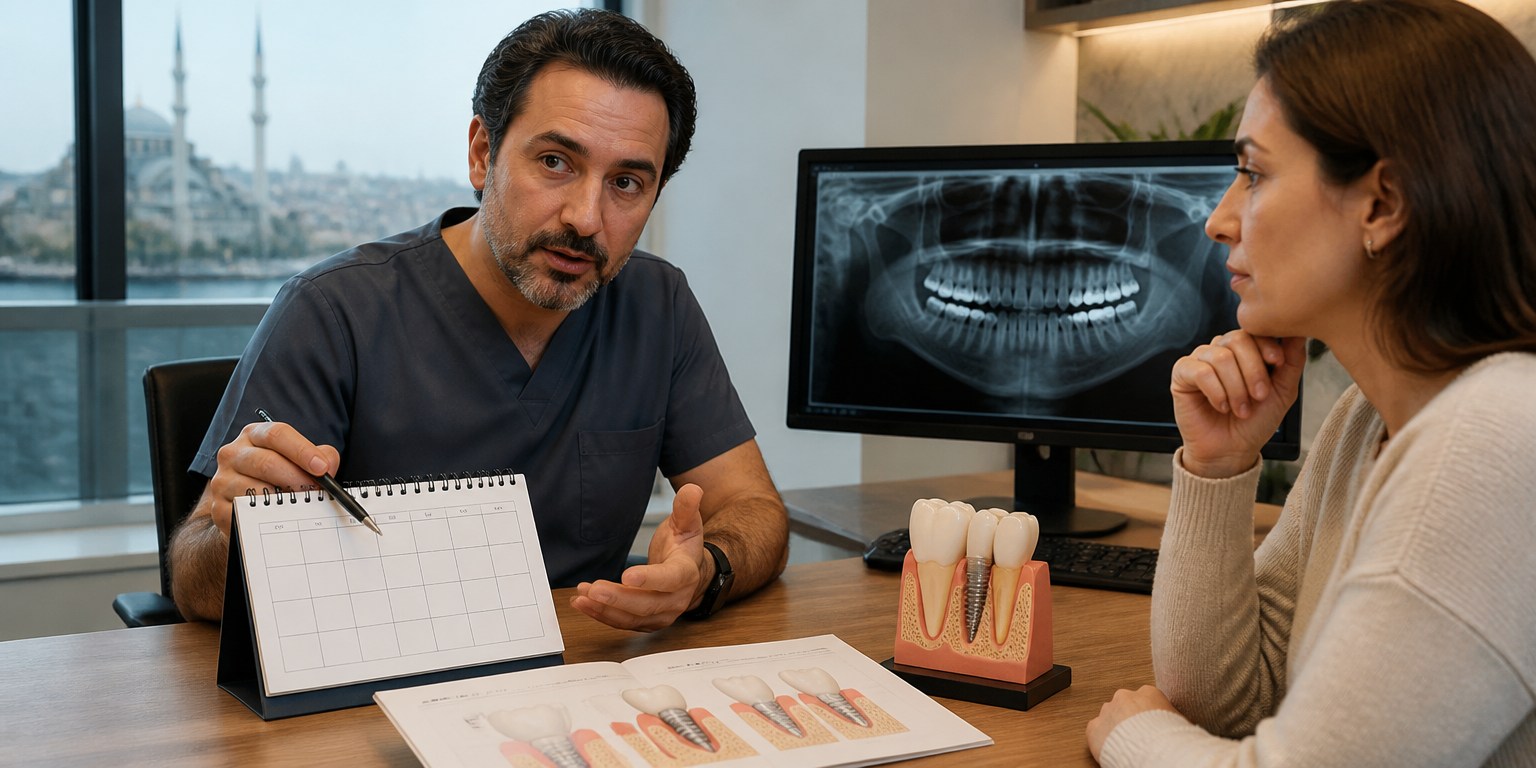
A longer stay may be appropriate when the treatment is more extensive, when several appointments must be coordinated or when the dentist wants additional postoperative observation before international travel.
Factors that can extend the first trip include:
- several implant placements;
- multiple tooth extractions;
- bone grafting;
- sinus lift surgery;
- full-arch implant treatment;
- fitting and adjusting a temporary prosthesis;
- significant swelling or discomfort;
- a need for additional clinical review;
- medical conditions that affect healing or treatment planning;
- changes discovered during the in-person examination.
Bone grafting
A bone graft may be needed when the implant site does not have enough suitable bone for the planned implant position. Mayo Clinic explains that some grafts can be performed at implant placement, while larger grafts may need a separate healing period before the implant is inserted.
A staged graft therefore changes the number of treatment stages, not just the number of hotel nights.
Sinus lift
A sinus lift is a bone-augmentation procedure used in selected upper-jaw implant cases when additional vertical bone is required near the maxillary sinus. Because this is additional surgery, travel timing should be confirmed specifically with the treating clinician rather than copied from a standard single-implant itinerary.
Full-arch treatment
All-on-4 and similar full-arch treatments generally involve more planning, surgery and prosthetic work than a single implant. Niva Dental has a separate page on All-on-4 implants for patients researching full-arch treatment.
A full-arch patient may also need temporary prosthesis adjustments during the first visit, which is one reason a one-implant itinerary should not be used to plan an All-on-4 trip.
How Soon Can You Fly After Dental Implant Surgery?
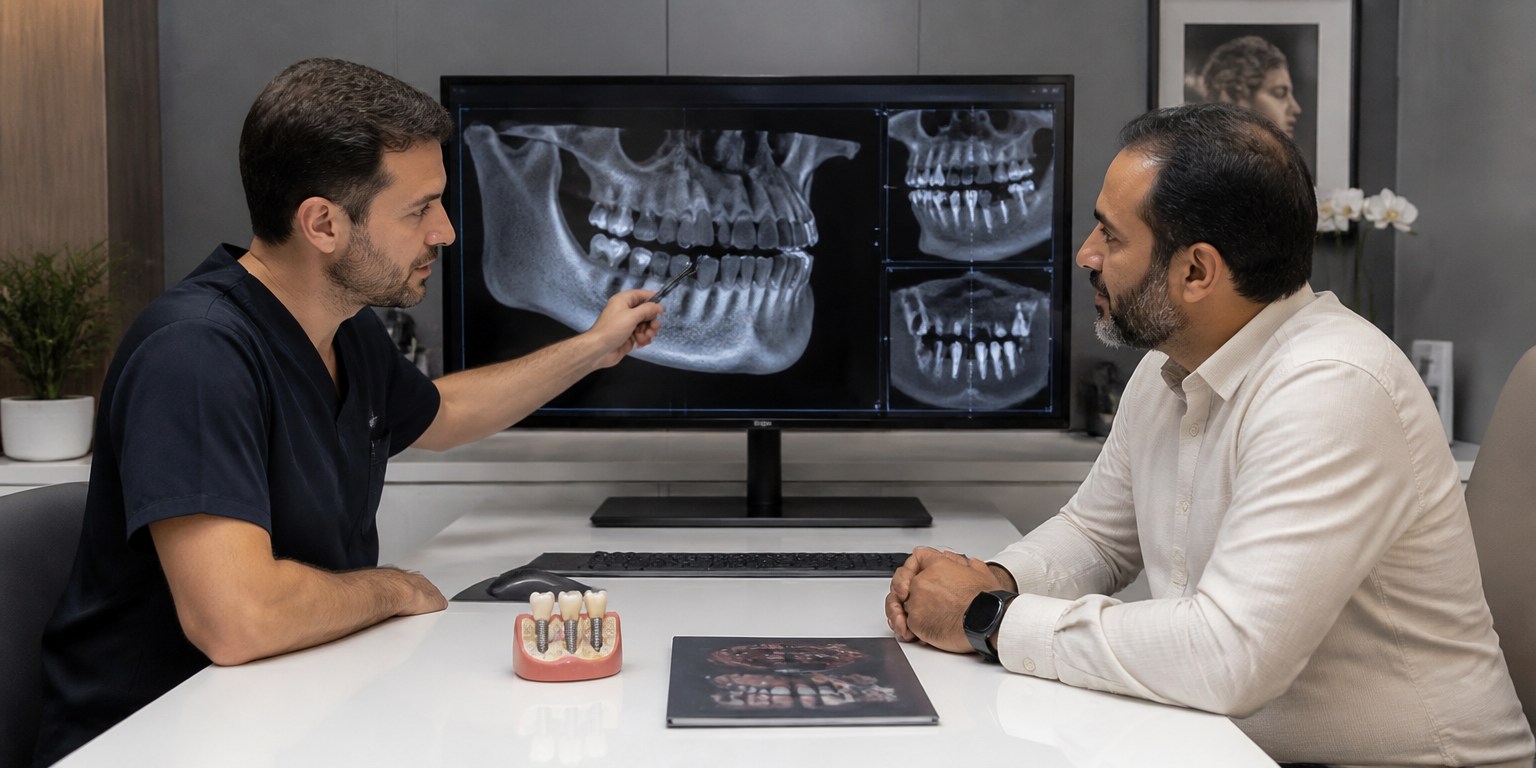
There is no single evidence-based flight interval that applies to every dental implant patient. For routine implant treatment, the treating dental team should decide when travel is appropriate based on the extent of surgery, early healing, swelling, bleeding, grafting and any complications.
This topic is often confused with general guidance about flying after major surgery. The U.S. Centers for Disease Control and Prevention notes that delaying air travel for 10–14 days after major surgery can reduce certain travel-related risks. That statement is not an implant-specific rule and should not automatically be applied to routine outpatient dental implant placement.
For dental implant travel, the more useful questions are:
- Has the surgical site been reviewed if the clinician planned an early check?
- Is bleeding controlled?
- Is swelling following the expected course?
- Are pain and oral intake manageable?
- Was a sinus lift or significant graft performed?
- Are there signs that require another in-person examination?
- Do you have written aftercare and emergency contact information?
Flying immediately after surgery simply because the flight is booked is not a good treatment-planning principle. Likewise, staying an arbitrary number of extra days does not guarantee that every complication will be prevented.
The departure date should follow the clinical plan.

Should You Book Your Return Flight Before the Dentist Examines You?
You can arrange travel in advance, but international implant patients should avoid making the clinical plan depend on a rigid, non-changeable flight schedule. Preliminary records may help estimate the stay, but the final treatment can change after examination and imaging in Turkey.
For example, a patient may arrive expecting straightforward implant placement and learn that:
- an extraction site needs a different approach;
- available bone is less favorable than expected;
- grafting is recommended;
- a temporary restoration needs additional adjustment;
- the implant cannot be loaded as originally hoped;
- another review is advisable before departure.
A sensible booking strategy is to ask the clinic for the earliest reasonable departure date and the preferred departure date, then choose travel arrangements with enough flexibility for a clinically justified change.
A remote consultation can improve planning, but it should not be presented as a substitute for the in-person assessment needed to confirm treatment.
What Follow-Up Should Be Arranged Before You Leave Turkey?
Before leaving Turkey, patients should know exactly who is responsible for follow-up and what to do if a problem develops after returning home.
The CDC Yellow Book guidance on medical tourism advises medical travelers to discuss how complications will be managed, arrange continuity of care and obtain copies of overseas medical records for future healthcare professionals.
Before departure, ask for:
- the treatment summary;
- implant brand/system and relevant component information where applicable;
- copies of relevant X-rays or scans when available;
- written aftercare instructions;
- details of any temporary restoration;
- the planned healing interval;
- the expected timing of the next implant-stage appointment;
- contact details for urgent questions;
- instructions for what should be assessed by a local dentist;
- information on what symptoms should prompt urgent care.
The CDC also cautions that intensive vacation activities during a postoperative period can interfere with recovery. A dental trip should therefore not automatically be planned like a normal city break immediately after surgery.
When Do You Return to Turkey for the Final Crown or Bridge?
The second visit is usually planned after the implant has developed sufficient stability through healing, often several months after implant placement in a conventional protocol. The exact interval depends on the implant site, bone, grafting, implant stability and the restorative plan.
The second trip can involve:
- confirming implant integration;
- exposing the implant if it was covered during healing;
- placing or checking the abutment;
- digital scanning or impressions;
- laboratory fabrication or adjustment;
- fitting the crown or bridge;
- checking contacts, bite and appearance;
- final hygiene and maintenance instructions.
A second visit is therefore not simply a “check-up trip.” It may be the stage when the definitive prosthetic tooth or teeth are completed.
Patients should ask whether their quoted treatment duration refers to:
- the first surgical visit only;
- each visit separately; or
- the complete implant-to-final-restoration pathway.
That clarification prevents major travel-planning misunderstandings.
How Should International Patients Plan Their Istanbul Stay?
If you are deciding how long to stay in Turkey for dental implants, build the trip around the treatment schedule first and tourism second.
A practical checklist is:
- Send records before booking where possible. Existing X-rays, photographs and dental history can help the clinic estimate complexity.
- Ask for a provisional day-by-day schedule. Know which day examination, surgery, review and temporary restoration are expected.
- Keep some travel flexibility. Final decisions may change after in-person examination.
- Do not assume the final crown is included in the first trip. Ask explicitly whether a second visit is expected.
- Clarify grafting and sinus procedures. These can change both healing and travel arrangements.
- Ask when the clinic wants to review you before departure.
- Plan follow-up at home. Know who will assess a concern if one develops after you return.
- Keep your treatment records. These are useful if another dentist needs to provide follow-up.
- Avoid overloading the postoperative itinerary. Long tours, strenuous activities and alcohol-centered plans may be inappropriate during early recovery.
Niva’s current website describes support for international patients that includes consultation, treatment planning, travel assistance and post-treatment support. The exact services and number of nights for an implant case should still be confirmed in writing because they can differ by treatment plan.
Frequently Asked Questions
Is 3 days enough for dental implants in Turkey?
Three days may be enough for some straightforward implant-placement itineraries, but it is not enough for every patient. The number of implants, extraction, grafting, temporary restorations and the timing of postoperative review all matter. A short clinic schedule should only be used after the treating team confirms that the necessary appointments can be completed safely within that trip.
Is 7 days enough for dental implants in Turkey?
Seven days is within the range commonly used for many first-stage implant trips, but it should not be treated as a guarantee. Complex grafting, full-arch treatment, unexpected findings or additional prosthetic adjustments can change the schedule. The clinic should explain what must be completed before departure.
Do I need to stay in Turkey for 3–6 months while the implants heal?
Usually not. Osseointegration may take several months, but international patients commonly return home during this biological healing period when their clinical condition allows it. They then return for the final restorative stage. The important issue is having a clear aftercare and follow-up plan while healing at home.
How many trips to Turkey are needed for dental implants?
Many conventional implant cases require two trips: one for implant placement and another after healing for the final crown or bridge. Some cases may involve additional stages, especially when bone grafting is performed separately. Immediate-loading protocols can reduce or rearrange appointments, but they do not eliminate biological healing.
Can I fly the day after dental implant surgery?
Some patients may be able to travel soon after a straightforward procedure, but there is no universal “next-day flight” rule. The decision should consider bleeding, swelling, pain, grafting, sinus surgery and the dentist’s planned review. Do not choose departure timing solely because a flight was booked in advance.
Does a bone graft mean I need to stay longer in Turkey?
It can. A small graft performed with implant placement may fit into the same trip, while a larger staged graft can change the treatment sequence entirely. The key question is whether the graft and implant are being performed together or at separate stages and what postoperative review is required.
How long should I stay in Turkey for All-on-4 implants?
Full-arch implant treatment generally requires more first-trip appointments than a single implant because surgery, temporary prosthetic work and adjustments may all be involved. The exact stay should be planned from the individual full-arch protocol rather than copied from a single-tooth itinerary.
The Main Takeaway
For most patients researching how long to stay in Turkey for dental implants, it is more accurate to plan in stages than to search for one universal number. A straightforward first implant trip often fits within roughly 3–7 days, while complex surgery or full-arch treatment may require longer. Many conventional cases then involve a second visit after several months of osseointegration for the final crown or bridge.
The critical distinction is that time in Turkey is not the same as total healing time. Your departure date should allow the appointments and early review required for your actual procedure, and your return-home plan should include aftercare and follow-up.
For individualized planning in Istanbul, review Niva Dental’s dental implant treatment options and request a preliminary itinerary based on your dental records. Final timing should be confirmed after appropriate clinical assessment.
Medical References
- Mayo Clinic — Dental implant surgery. Used for implant treatment stages, osseointegration, bone grafting and the fact that implant treatment may extend over several months.
- American Dental Association, MouthHealthy — Implants. Used for osseointegration, delayed versus immediate restoration and the staged nature of implant treatment.
- CDC Yellow Book — Medical Tourism. Used for continuity of care, medical records, complication planning and postoperative travel considerations.
- CDC Travelers’ Health — Medical Tourism. Used to distinguish general air-travel guidance after major surgery from dental implant–specific travel planning.
- Niva Dental — Dental Implants. Used only for verified Niva implant-service context and internal linking, not as the primary authority for independent medical claims.