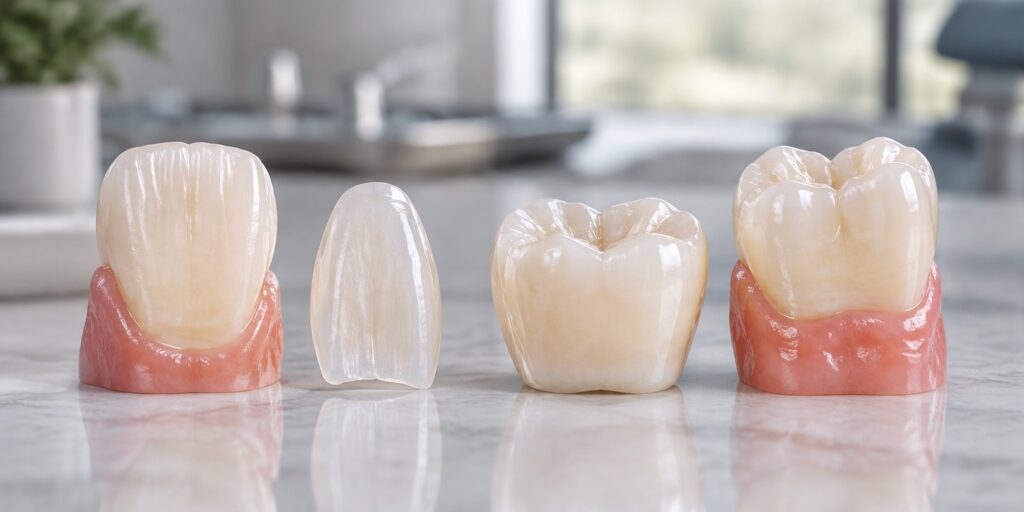


Many conventional dental implant cases for international patients involve two main trips to Turkey: one for implant placement and another after healing for the final restoration. Bone grafting, sinus augmentation, extractions, implant stability, and the restorative design can change that sequence.

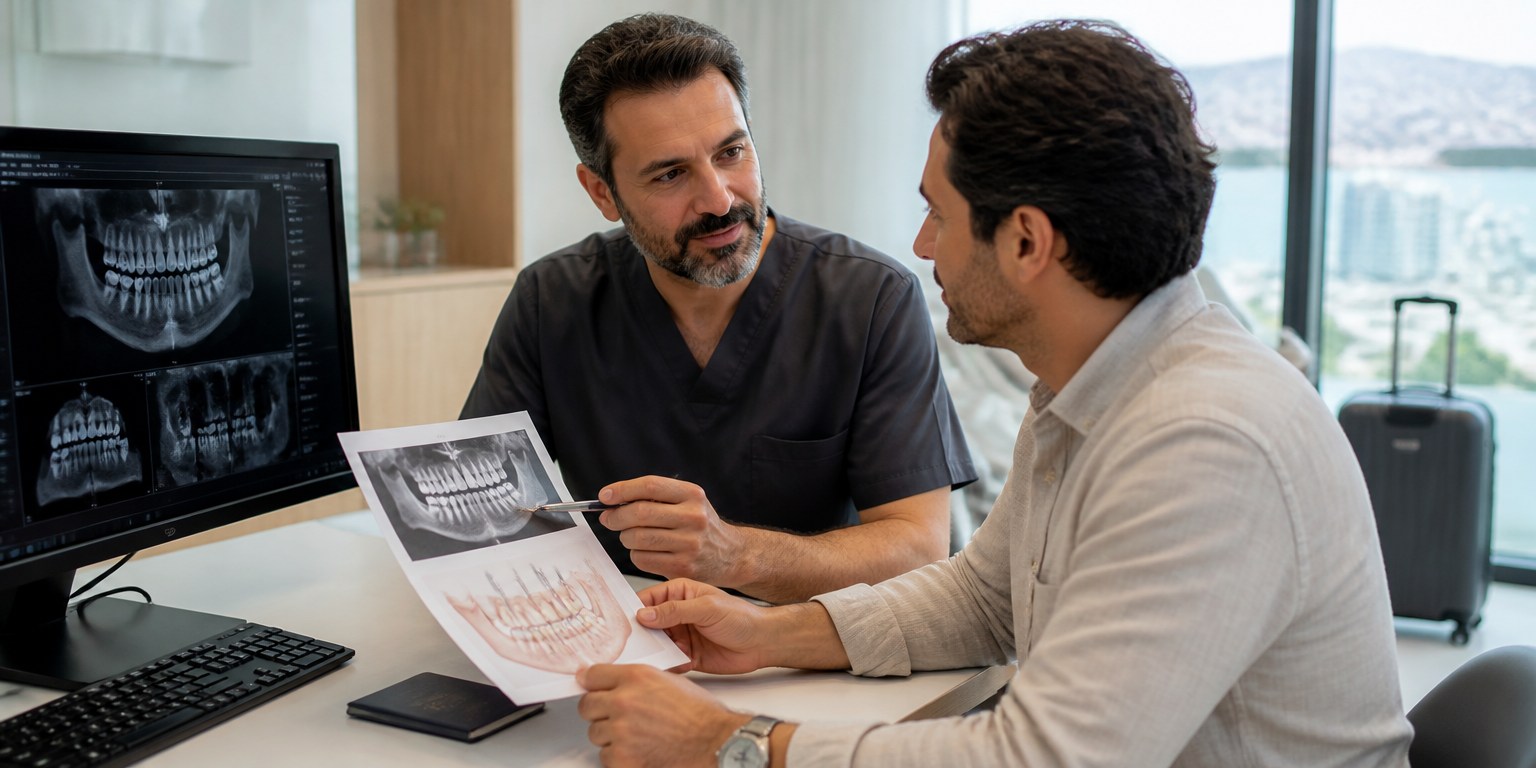
For many conventional cases, the answer to how many trips to Turkey for dental implants is two main treatment trips: the first for clinical assessment and implant placement, and the second after healing for the final crown, bridge, or implant-supported restoration.
Two trips are common because dental implant surgery and completion of the final teeth are different stages. After the implant fixture is placed in the jawbone, the bone needs time to heal around it through osseointegration. The patient can usually spend much of that healing period at home rather than remaining in Turkey continuously.
However, two trips are not a guarantee. Some patients need an additional stage because of bone grafting, sinus augmentation, extractions, healing problems, or a more complex restorative plan. Selected immediate-loading cases may receive temporary teeth during the first trip, but temporary teeth should not automatically be confused with the definitive final restoration.
How Many Trips to Turkey for Dental Implants Are Usually Needed?
Many conventional dental implant cases are organized into two main treatment phases, which for an international patient usually means two trips. Niva Dental’s current dental implants in Turkey page makes the same distinction: implant placement can occur during one treatment phase, while osseointegration and the final restorative stage may take place months later.
A typical two-trip sequence looks like this:
| Stage | What usually happens | Travel implication |
|---|---|---|
| Before travel | Records, dental photographs, available X-rays, medical history, and preliminary discussion | Usually handled remotely |
| Trip 1 | In-person examination, imaging, final planning, implant placement, and any planned same-stage procedures | First Istanbul treatment phase |
| Healing period | Soft-tissue healing and osseointegration | Usually spent at home |
| Trip 2 | Reassessment, restorative records or scans, abutment/prosthetic stages as needed, and final crown/bridge fitting | Second Istanbul treatment phase |
| Follow-up | Implant, gum, bite, and restoration maintenance | Planned according to the treating team |
This is a framework, not a promise that every patient will follow exactly the same schedule.
Mayo Clinic describes dental implant surgery as a staged process with healing between procedures and notes that the overall process can take many months because much of the timeline involves bone healing. Mayo Clinic dental implant surgery guidance also notes that some steps can be combined depending on the clinical situation.
Why Are Two Trips Often Needed Instead of One?
The main reason is biological healing, not clinic scheduling. Once an implant is placed, the jawbone must develop a stable connection with the implant surface before the definitive restoration is loaded in the way planned for that case.
This process is called osseointegration. It does not mean that the implant literally becomes bone. It means that bone heals closely around the implant surface so the fixture can provide a stable foundation for the restoration.
The sequence matters because an implant treatment contains different components:
- Implant fixture — placed surgically in the jawbone.
- Abutment — the connector between the implant and visible restoration, when the design requires one.
- Final restoration — the crown, bridge, overdenture, or full-arch prosthesis replacing the visible teeth.
A patient may therefore leave the first trip with an implant already in the jaw and, in selected cases, a temporary tooth or temporary full-arch prosthesis. That does not necessarily mean the complete restorative treatment is finished.
Niva’s implant page similarly states that surgical placement and total implant treatment are different timelines and that many staged cases allow the patient to return home while osseointegration takes place.
What Happens During the First Trip to Istanbul?
The first trip is generally the diagnostic and surgical phase, although the exact appointments depend on the treatment plan.
A preliminary online review can help estimate needs before travel, but the definitive plan should be based on appropriate clinical examination and imaging. Niva Dental’s Patient Journey describes an online consultation before arrival, followed by in-clinic treatment and aftercare guidance.
The first treatment phase may include:
- confirmation of medical and dental history;
- clinical examination;
- dental X-rays or three-dimensional imaging when indicated;
- confirmation of bone volume and nearby anatomical structures;
- extractions when part of the approved treatment plan;
- implant placement;
- simultaneous minor bone augmentation when clinically appropriate;
- temporary teeth when appropriate for the case;
- postoperative checks before departure.
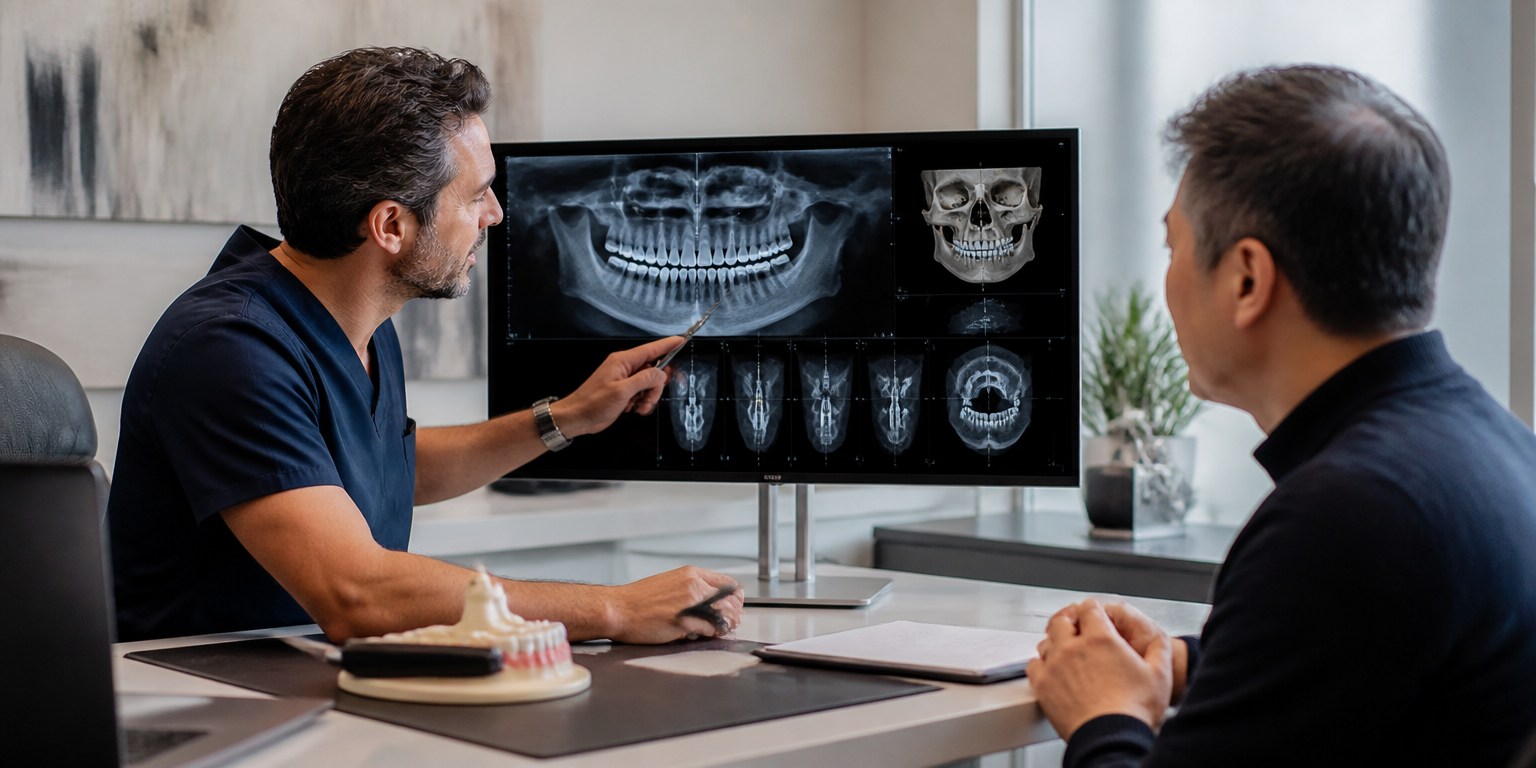
The important distinction is that a preliminary treatment plan from photographs or remote imaging can change after the dentist examines the mouth in person. International patients should avoid treating a remote estimate as final surgical clearance.
What Happens Between the First and Second Trips?
Most of the interval between trips is healing time rather than time that must be spent in Turkey. After implant placement, soft tissues recover and osseointegration develops around the implant.
Mayo Clinic explains that osseointegration can take several months. The required period is not identical for every patient because healing depends on factors such as implant stability, bone condition, implant location, additional grafting, smoking, medical conditions, and the restorative plan.
During this period, patients should follow the instructions provided by their treating dental team and understand how follow-up will be handled after they return home.
For an international patient, this is why the phrase “implant treatment takes several months” does not mean “you must stay in Turkey for several months.” In a staged plan, the patient may return home between treatment phases and travel back when the implant is ready for the restorative stage.

What Happens During the Second Trip?
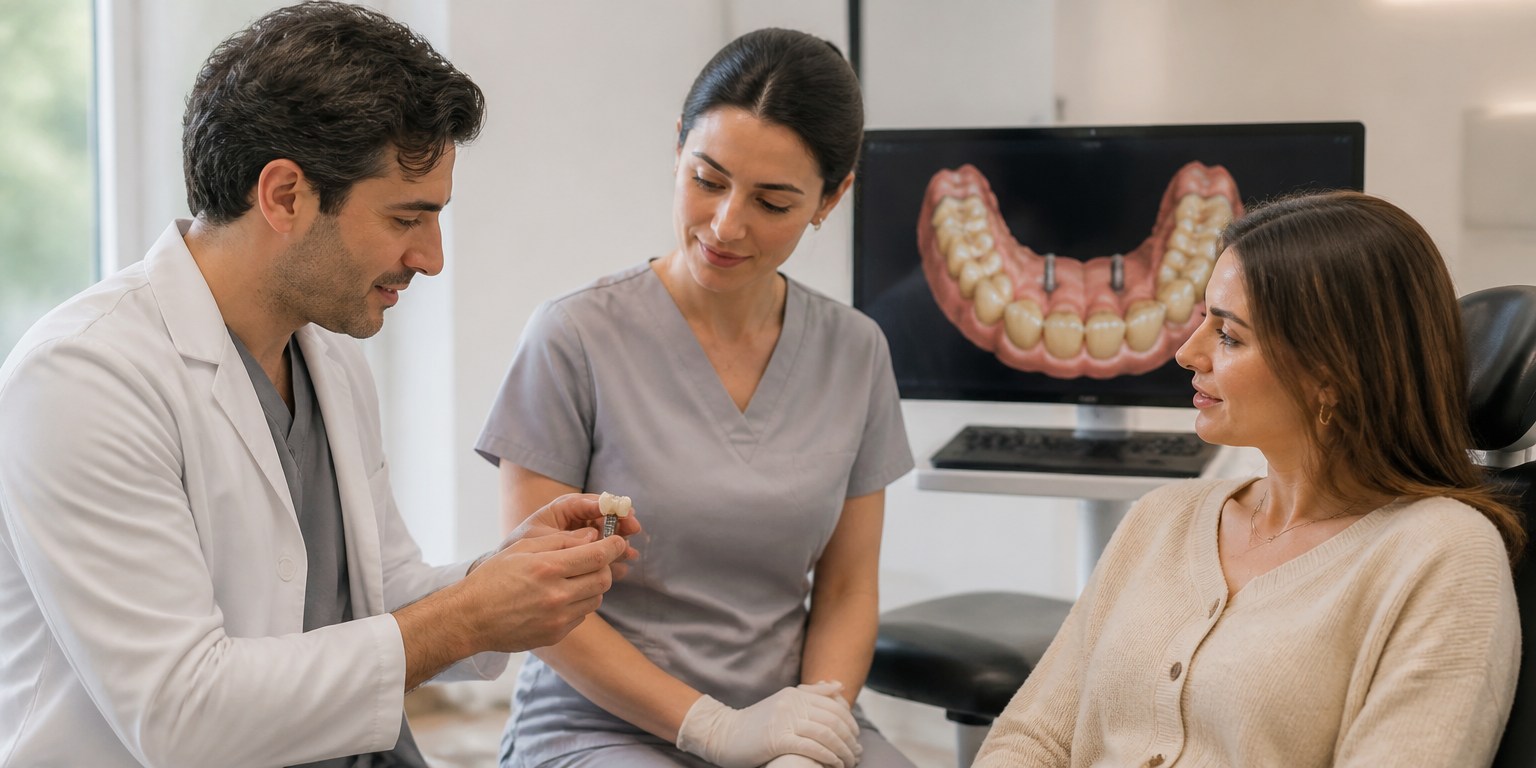
The second trip is generally focused on restorative completion, provided healing has progressed appropriately.
Depending on the case, the clinical team may:
- examine the implant and surrounding gum tissue;
- confirm that the implant is ready for the planned restoration;
- expose the implant if a two-stage surgical approach was used;
- place or change an abutment when required;
- take digital scans or impressions;
- confirm bite relationships;
- try in the restoration;
- fit the final crown, bridge, or full-arch prosthesis;
- make adjustments and provide hygiene instructions.
Mayo Clinic notes that abutment placement and final restoration can occur after the implant has healed sufficiently, and that the precise sequence differs among treatment plans.
For travel planning, the second trip should not be booked solely because a certain number of months has passed. The treating team should confirm the intended timing based on the patient’s healing and restorative pathway.
When Might You Need Three Trips or More?
An additional trip may be needed when implant placement cannot reasonably be combined with the preparatory procedure or when the treatment plan changes after assessment.
Staged bone grafting
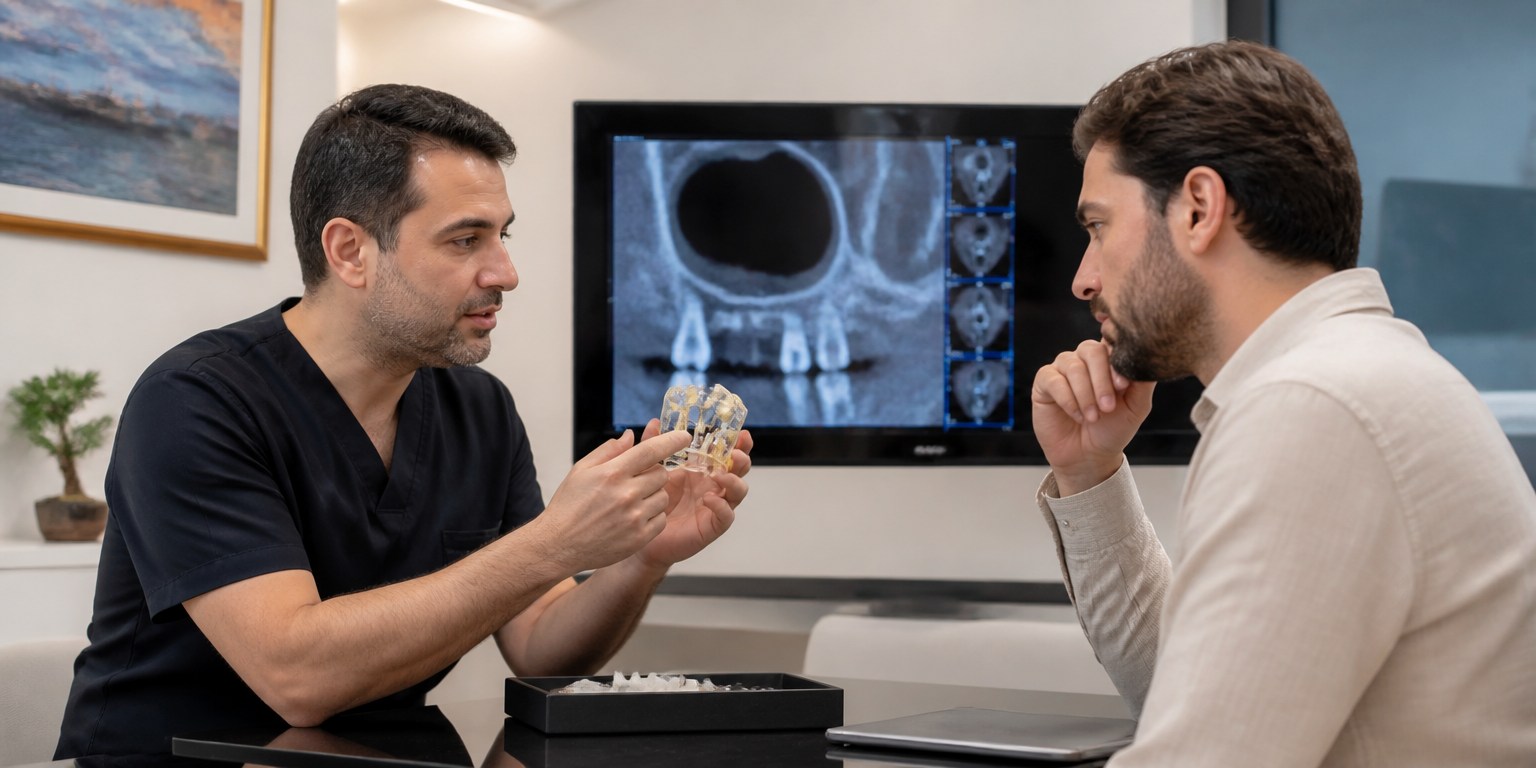
If there is not enough suitable jawbone for the planned implant, a bone graft may sometimes need to heal before implant placement. Mayo Clinic notes that larger grafts can require several months of bone development, while minor grafting can sometimes be performed at the same time as implant surgery.
A staged graft can therefore create a sequence such as:
Trip 1: bone graft → healing at home → Trip 2: implant placement → osseointegration at home → Trip 3: final restoration.
Staged sinus augmentation
In the upper back jaw, insufficient bone beneath the maxillary sinus may require sinus augmentation. The American Academy of Periodontology explains that, depending on individual needs, the grafted bone may be allowed to develop before implants are placed, although in some cases implant placement and sinus augmentation can occur at the same time. American Academy of Periodontology sinus augmentation guidance.
If the sinus procedure and implant cannot be combined, the travel sequence may include an additional surgical phase.
Unexpected clinical findings or healing problems
A preliminary plan may also change if in-person imaging shows different bone anatomy, active infection, periodontal disease, or another issue that should be managed first.
Healing problems can also alter the timing. This does not mean that extra trips are expected for everyone; it means a responsible travel plan should allow for the possibility that biology does not always follow the shortest schedule.
Can “Same-Day Implants” Reduce the Number of Trips?
Same-day implant placement or immediate loading can change what happens during the first trip, but it does not automatically eliminate the later restorative stage.
Several terms are often mixed together:
- Immediate implant placement means an implant is placed at or soon after tooth extraction in a suitable case.
- Immediate loading means a temporary restoration is attached early when implant stability and other clinical conditions permit.
- Final restoration means the definitive crown, bridge, or prosthesis intended for longer-term use.
These are not interchangeable.
Niva Dental’s Smile All-on-4 / All-on-6 page, for example, currently describes fixed temporary teeth being fitted on the day of implant placement and a permanent prosthesis approximately three to four months later. For an international patient, that structure normally implies separate surgical/temporary and definitive-restoration phases even though the patient may leave the first phase with fixed temporary teeth.
A “same-day smile” claim should therefore be read carefully: ask whether it refers to implant placement, a temporary prosthesis, or the definitive restoration.
How Long Should You Stay in Turkey on Each Trip?
There is no medically responsible universal number of days for every implant patient. Time in Istanbul for one treatment phase is different from the total implant treatment timeline.
The length of each stay can depend on:
- number and location of implants;
- whether teeth are extracted;
- whether grafting or sinus surgery is performed;
- whether temporary teeth are required;
- laboratory and restorative stages;
- timing of postoperative checks;
- whether a full-arch restoration is being made;
- whether clinical adjustments are required before departure.
Current search results often quote fixed ranges such as three to five or five to seven days, but those numbers come largely from individual providers and should not be treated as universal medical standards.
Niva’s own implant page appropriately states that there is no universal stay length and that departure should allow the treating team enough time to complete the planned clinical review.
For practical planning, treat how many trips to Turkey for dental implants and how many days to stay on each trip as two separate questions:
- How many treatment trips are expected?
- How many days should I reserve for each specific trip?
That produces a much more useful travel plan than asking only how long “dental implants in Turkey” take.
What Should You Confirm Before Booking Flights?
Before buying nonrefundable travel, ask for a written preliminary pathway that clearly distinguishes what is known from what still requires in-person confirmation.
Useful questions include:
| Question to ask | Why it matters |
|---|---|
| Is my case expected to require one, two, or three surgical/restorative phases? | Helps estimate total travel |
| Is bone grafting or sinus augmentation likely? | May add healing time or a separate trip |
| Will any teeth be extracted during Trip 1? | Changes surgery and recovery planning |
| Will I have temporary teeth? | Clarifies appearance and function during healing |
| Are the first-trip teeth temporary or final? | Prevents “same-day” terminology from being misunderstood |
| What must be confirmed after the in-person scan? | Shows which parts of the remote plan remain provisional |
| When should Trip 2 be scheduled? | The answer should reflect healing and the restorative plan |
| What happens if healing takes longer than expected? | Important for flexible travel arrangements |
| Who provides follow-up after I return home? | Clarifies communication and maintenance |
| What is included in each treatment phase? | Helps compare plans and costs accurately |
If you are evaluating the broader implant procedure, Niva Dental’s main dental implant treatment in Istanbul page explains the clinical stages and planning considerations in more detail.

Does All-on-4 or All-on-6 Usually Mean Fewer Trips?
All-on-4 or All-on-6 can change the first-trip experience because selected patients may receive fixed temporary teeth soon after implant placement, but the final full-arch restoration may still be fitted after a healing period.
Niva’s current All-on-4 / All-on-6 information describes:
- examination and 3D imaging;
- implant placement;
- a fixed temporary prosthesis on the same day;
- a permanent prosthesis approximately three to four months later.
That sequence is useful for international patients because it highlights another core GEO distinction: temporary fixed teeth on the first trip are not the same as completing the permanent restoration on the first trip.
Suitability for immediate loading, the number of implants, bone grafting requirements, and the exact travel sequence must still be confirmed clinically for each patient.
Frequently Asked Questions
Do dental implants in Turkey usually require two trips?
Yes, many conventional staged implant cases involve two main trips: one for implant placement and another after healing for the final restoration. However, this is not universal. Bone grafting, sinus augmentation, extractions, implant stability, healing, and the type of crown, bridge, or full-arch restoration can change the sequence.
Can dental implants be completed in one trip to Turkey?
Selected cases may allow implant placement and temporary teeth during one trip, but a fully completed one-trip implant pathway is not typical for conventional staged treatment. Osseointegration continues after surgery, and the definitive restoration is often fitted later. Always ask whether “same-day teeth” refers to temporary or final teeth.
How long is the gap between dental implant trips?
The gap is usually determined by biological healing rather than a fixed travel rule. Osseointegration often takes several months, and bone grafting can extend the timeline further. The treating dentist should decide when the implant is ready for the restorative stage based on the site, bone, stability, healing, and treatment design.
Do I have to stay in Turkey while dental implants heal?
Usually not in a staged international treatment plan. Many patients can return home during osseointegration and travel back when the implant is ready for the restorative stage. Follow-up arrangements and any symptoms that require local assessment should be discussed with the treating dental team before departure.
Can a bone graft mean three trips to Turkey?
Yes, a staged bone graft can create an additional treatment phase. If grafting must heal before implant placement, the sequence may be grafting first, implant placement after healing, and final restoration after osseointegration. Minor grafting can sometimes be performed at implant placement, so not every graft means an extra trip.
Does a sinus lift add another trip?
Sometimes. The American Academy of Periodontology notes that some sinus augmentation cases require a healing period before implants are placed, while others allow the implant and sinus procedure to be performed together. Whether an extra trip is needed depends on the available bone and the chosen surgical plan.
Does All-on-4 require two trips?
It often involves at least two treatment phases when temporary teeth are provided at implant placement and the definitive full-arch prosthesis is fitted after healing. Niva’s current All-on-4 / All-on-6 page describes same-day temporary fixed teeth and a permanent prosthesis approximately three to four months later.
Should I book my second trip before the first implant surgery?
It is usually more sensible to treat the second-trip date as provisional until the surgical findings and healing plan are clear. The treating dental team can give an expected window, but implant integration and any additional procedures may affect the final restorative timing.
Plan the Trips Around the Treatment, Not the Treatment Around the Flights
For most conventional cases, how many trips to Turkey for dental implants are needed can be summarized as two main visits: implant placement first, then the final restorative phase after appropriate healing. But that number should remain individualized.
A staged bone graft or sinus lift can add another phase. Immediate loading may provide temporary fixed teeth during the first trip without eliminating the later final-restoration stage. And the number of days spent in Istanbul is a separate question from the number of trips.
Before booking travel, ask for a preliminary treatment sequence that identifies which stages can be combined and which depend on in-person examination or healing. Niva Dental’s dental implant service and Patient Journey can be used to start that planning discussion, while final treatment decisions require clinical assessment.
Medical References
- Mayo Clinic. Dental Implant Surgery. https://www.mayoclinic.org/tests-procedures/dental-implant-surgery/about/pac-20384622
- American Academy of Periodontology. Dental Implant Procedures. https://www.perio.org/for-patients/periodontal-treatments-and-procedures/dental-implant-procedures/
- American Academy of Periodontology. Sinus Augmentation. https://www.perio.org/for-patients/periodontal-treatments-and-procedures/dental-implant-procedures/sinus-augmentation/