


Replacing Emax veneers requires careful removal and reassessment of the tooth underneath. Learn when replacement is needed, what happens to enamel, and risks.

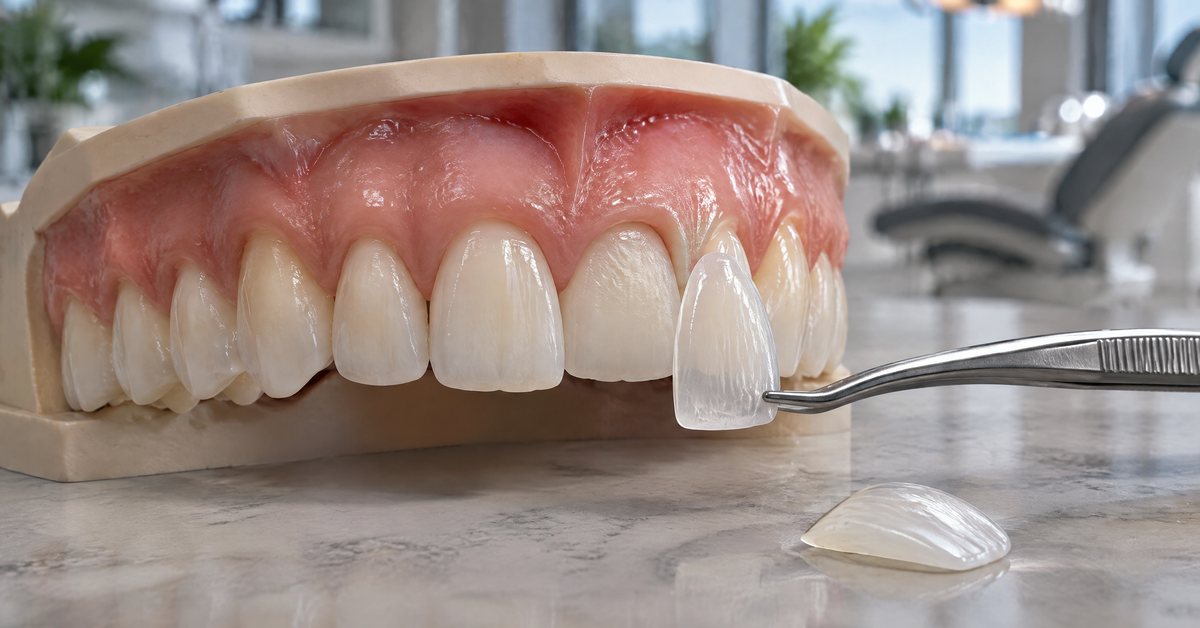
Replacing Emax veneers is possible, but the process is not the same as simply removing a false nail and starting again. The old ceramic must be removed carefully, the tooth underneath must be reassessed, and the replacement restoration must be designed around the enamel, dentin, existing fillings, gum position, bite, and preparation that remain.
If enamel was removed when the original veneer was placed, that tooth does not return to its untouched pre-veneer state when the restoration is removed. However, this does not mean every replacement requires major additional tooth reduction. In selected cases, a new veneer can be designed largely on the existing preparation. In others, decay, damaged margins, old composite, fracture, tooth-position changes, or a different restorative need may require additional treatment.
Patients considering E-max veneer treatment at Niva Dental should understand both the initial treatment and the possibility of future repair or replacement before irreversible tooth preparation begins.
Quick Answer: What Happens When E-max Veneers Are Replaced?
| Question | Direct answer |
|---|---|
| Can E-max veneers be replaced? | Yes. Ceramic veneers can be removed and replaced when clinically indicated. |
| Does the tooth return to its original state? | Usually not if enamel was removed during the first veneer preparation. Removed enamel does not grow back. |
| Is more tooth shaving always needed? | No. Additional preparation depends on the remaining tooth, old cement/composite, decay, margin design, available space, and new restoration plan. |
| Can the old veneer be removed without damaging the tooth? | Conservative removal is possible, but technique matters. Mechanical removal can remove tooth structure if the ceramic–cement–tooth interface is difficult to distinguish. |
| Can lasers help remove ceramic veneers? | Evidence suggests erbium-laser-assisted debonding can reduce bond strength and may help preserve underlying tooth structure with appropriate protocols. It is not required for every case. |
| What if decay is found underneath? | The decay must be treated first. The final restoration may remain a veneer or may need to change depending on how much sound tooth structure remains. |
| Can only one veneer be replaced? | Sometimes. A single restoration can be replaced if the tooth is suitable and the new shade, texture, shape, and bite can be matched to neighboring veneers. |
| Does an old veneer always need replacement? | No. Some chips, roughness, marginal issues, or debonding may be repairable depending on the defect and the tooth. |
Why Do E-max Veneers Need to Be Replaced?
Veneers may need replacement because of ceramic damage, bonding failure, changes in the tooth underneath, gum changes, or an aesthetic problem that cannot be corrected conservatively.
Common reasons include:
- ceramic fracture or a large chip;
- repeated debonding;
- decay around a veneer margin;
- a large marginal defect;
- a tooth fracture beneath the restoration;
- a change in gum level that exposes an unaesthetic margin;
- an old veneer that no longer matches neighboring teeth;
- overcontoured or poorly fitting restorations;
- a design problem affecting cleaning or bite;
- a patient wanting a different shape or shade after appropriate assessment.
Replacement should not be automatic simply because a veneer is old.
A prospective 10-year clinical study of porcelain veneers found that many restorations needing clinical intervention were still repairable, while a smaller proportion required complete replacement. This illustrates an important principle: a problem with a veneer does not always mean the entire restoration must be removed.
For fracture and debonding specifically, see Can E-max Veneers Chip, Break or Fall Off? Risks Explained.
What Happens to the Tooth Under an Old Veneer?
The natural tooth remains underneath the veneer, but its condition depends on what was done during the original treatment and what happened over time.
A veneer usually covers mainly the visible facial surface of the tooth. The root, pulp, dentin, and much of the original crown remain.
However, the tooth may have:
- intact enamel in some areas;
- prepared enamel in others;
- small areas of exposed dentin;
- existing composite restorations;
- old resin cement;
- marginal staining;
- caries;
- cracks;
- changes in gum position.
The American Dental Association explains that porcelain veneer treatment is irreversible because tooth enamel is removed to place the restoration.
That point is central to replacement.
When an old veneer is removed, the dentist is not revealing a completely untouched tooth. The dentist is usually revealing the existing prepared tooth surface and must decide whether it can safely support a new bonded restoration.
Does Enamel Grow Back After a Veneer Is Removed?
No. Enamel removed during veneer preparation does not regenerate.
That is why preparation for the first veneer should be treated as a long-term commitment.
The replacement goal is therefore not to “restore the tooth to how it was before veneers.” The goal is to:
- preserve as much remaining healthy tooth structure as possible;
- remove failing ceramic and old restorative material carefully;
- diagnose any decay or damage;
- create a stable surface for the next restoration;
- avoid unnecessary additional preparation.
Current evidence also reinforces why enamel preservation matters.
A 2025 systematic review and meta-analysis found that ceramic veneers bonded predominantly to enamel showed higher survival and success and fewer complications than veneers bonded to surfaces with greater dentin exposure. In the included evidence, enamel-bonded veneers had survival and success rates around 99%, while severe dentin exposure was associated with lower outcomes.
These pooled values are population-level research findings, not guarantees for an individual replacement case.
How Are Old E-max Veneers Removed?
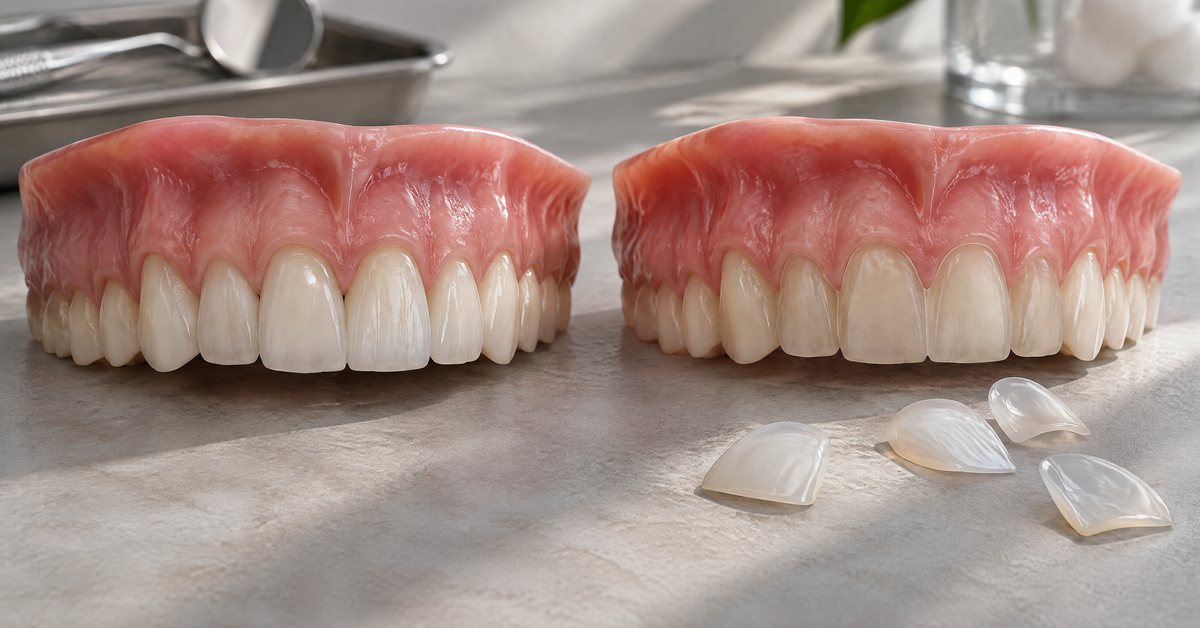
Old ceramic veneers can be removed mechanically or, in selected settings, with laser-assisted debonding. The objective is to separate the restoration while preserving the tooth underneath.
Mechanical removal
Traditional removal uses fine rotary instruments to cut through or thin the ceramic until the veneer can be removed.
This technique can be effective, but the clinical challenge is distinguishing:
- ceramic;
- resin cement;
- composite;
- natural enamel;
- dentin.
Those materials can look similar once the veneer is being removed.
If the operator cannot clearly identify the interface, healthy tooth structure may be removed unintentionally.
Laser-assisted debonding
Erbium lasers have been studied as a way to weaken the resin-cement interface through the ceramic.
A 2025 systematic review and meta-analysis concluded that erbium lasers significantly reduce the shear bond strength of ceramic veneers and, with appropriate settings, can facilitate removal while preserving the underlying tooth structure.
A 2023 systematic review of enamel effects also found no superficial enamel changes in the included in-vitro studies after erbium-laser veneer debonding.
More recently, a 2026 clinical report described removal of six lithium-disilicate veneers using an Er,Cr:YSGG laser with minimal mechanical force and no observed enamel damage in that patient.
These findings are promising, but they should not be interpreted as proof that laser removal is necessary, superior in every case, or available at every clinic.
Removal techniques and laser availability differ between clinics. Ask the clinic to confirm in writing which removal method is planned for your case.
Does Replacing Veneers Mean Shaving the Teeth Again?
Not necessarily. A replacement veneer can sometimes use much of the existing preparation, but additional tooth reduction may be needed when the tooth, margin, space, or restoration design requires it.
Additional preparation may be considered if:
- residual ceramic or cement must be removed;
- decay is present;
- an old composite restoration must be replaced;
- the previous margin is defective;
- the original veneer was overcontoured;
- a new insertion path is needed;
- the tooth position or bite has changed;
- the replacement ceramic requires different restorative space;
- the tooth has fractured.
The key safety principle is:
Additional tooth reduction should have a clinical reason—not simply be performed because the veneer is being replaced.
This is one reason first-time veneer treatment should preserve enamel whenever clinically possible. The more sound structure available at the time of future retreatment, the more restorative options may remain.
For the initial-preparation issue, see Do E-max Veneers Require Tooth Shaving? What Patients Should Know.
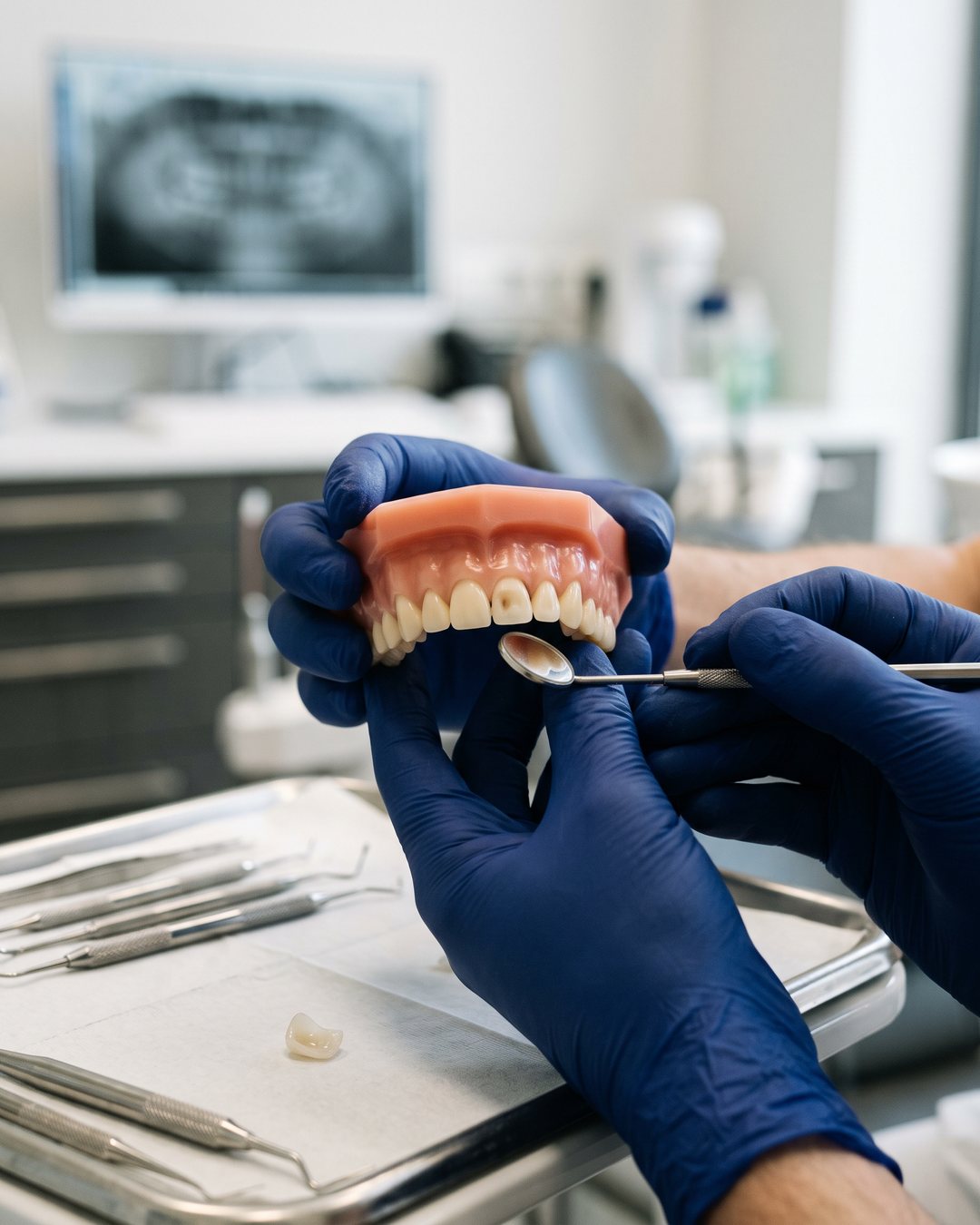
What If There Is Decay Under the Veneer?
If decay is found, the diseased tooth structure must be treated before a new veneer is bonded.
The ADA notes that teeth can still develop decay around or beneath veneers and that existing decay or gum disease should be treated before elective veneer placement.
After removing the old restoration, the dentist evaluates:
- where the decay is;
- how deep it extends;
- whether the enamel margin remains adequate;
- whether the pulp is affected;
- how much healthy tooth structure remains;
- whether a veneer still provides appropriate coverage.
Possible outcomes include:
- treating the decay and placing a new veneer;
- rebuilding a local defect with composite before a new veneer;
- choosing a different restoration design;
- considering a crown if structural loss is substantial;
- endodontic assessment if pulpal disease is suspected.
A crown is not automatically required just because decay is discovered under an old veneer.
The restoration should be selected according to the amount and location of sound tooth structure that remains.
Can an Old Veneer Be Repaired Instead of Replaced?
Sometimes. Small or localized problems may be repairable, while major fracture, poor fit, extensive decay, or an unacceptable margin may make replacement more appropriate.
Potential repair situations include:
- a very small ceramic chip;
- local roughness;
- limited marginal discoloration;
- an intact veneer that has debonded;
- a small repairable ceramic defect.
Possible approaches can include:
- polishing;
- composite repair;
- rebonding an intact veneer;
- localized restoration of an adjacent defect.
Complete replacement may be more appropriate when:
- a large piece of ceramic has fractured;
- the veneer no longer fits;
- the margin is defective;
- significant decay is present;
- the tooth underneath has changed;
- the aesthetic problem involves the whole restoration;
- repeated repair has not solved the underlying problem.
A 10-year prospective clinical study found that many clinically unacceptable veneer problems remained repairable, emphasizing that repair-versus-replace is a clinical decision rather than a fixed rule.
Can One E-max Veneer Be Replaced Without Replacing the Others?
Yes, in selected cases—but matching one new veneer to older neighboring restorations can be technically demanding.
The dentist and dental technician may need to match:
- shade;
- value;
- translucency;
- surface texture;
- gloss;
- tooth shape;
- incisal characterization;
- gum margin;
- contact points;
- bite.
Older ceramic may still be clinically acceptable but appear slightly different because of:
- changes in adjacent natural teeth;
- surface wear;
- staining around margins;
- gum recession;
- previous polishing;
- differences in laboratory technique or ceramic system.
Replacing one veneer can therefore be straightforward structurally but challenging aesthetically.
If several veneers share the same design or margin problem, broader replacement may sometimes produce a more coherent result. That decision should be individualized rather than based on cosmetic package logic.
For shade, shape, and translucency considerations, see Can E-max Veneers Look Natural? Shade, Shape and Translucency Explained.
What Happens if There Is Not Enough Enamel Left?
If little enamel remains, the replacement plan becomes more complex because bonding to dentin and existing restorative materials generally has a less favorable evidence base than bonding predominantly to enamel.
The 2025 systematic review and meta-analysis on bonding substrate found:
- approximately 99% survival for enamel-bonded veneers in the included studies;
- lower survival when veneers were bonded to existing composite or more extensive dentin;
- severe dentin exposure associated with the poorest survival and success among the substrate groups studied.
This does not mean replacement is impossible when dentin is exposed.
It means the dentist may need to reassess:
- whether a veneer remains the appropriate restoration;
- whether composite build-up is required;
- whether margins can remain on sound tooth structure;
- whether the tooth needs broader coverage;
- whether the bite is favorable.
A tooth that began as a conservative veneer case years earlier can become a different restorative problem after fracture, decay, repeated replacements, or other structural changes.
Could a Replacement Veneer Turn Into a Crown?
Yes, but only when the structural needs of the tooth justify broader coverage. Replacement should not automatically convert a veneer into a crown.
A veneer mainly covers the visible surface.
A crown surrounds substantially more of the prepared tooth.
A crown may be considered when there is:
- extensive structural loss;
- a large fracture;
- a major existing restoration;
- inadequate remaining tooth structure for a predictable veneer;
- another restorative indication that requires broader coverage.
The decision should be based on structure and function—not on the fact that the tooth previously had a veneer.
See E-max Veneers vs Crowns: What Is the Difference? for a detailed comparison.
What Are the Risks of Replacing E-max Veneers?
Replacement is a retreatment procedure, so the main concern is preserving the remaining tooth while correcting the reason the old veneer failed or became unacceptable.
Potential risks and limitations include:
- additional enamel or dentin loss during removal;
- sensitivity;
- pulpal irritation;
- accidental tooth damage during removal;
- discovering decay or cracks after the veneer is removed;
- loss of enamel available for bonding;
- need for composite build-up;
- difficulty matching a single replacement veneer;
- gum-margin changes;
- a new bite issue;
- need for a different restoration type;
- future repair or further replacement.
There is also an important limitation in the evidence.
Much of the laser-removal literature is laboratory-based. Clinical reports are increasing, but high-quality long-term trials comparing removal techniques are still limited.
Patients should therefore be cautious about claims such as:
- “laser veneer removal causes zero tooth damage”;
- “old veneers can always be removed intact”;
- “replacement never requires additional preparation”;
- “every replacement can remain a veneer.”
Those statements are too absolute.
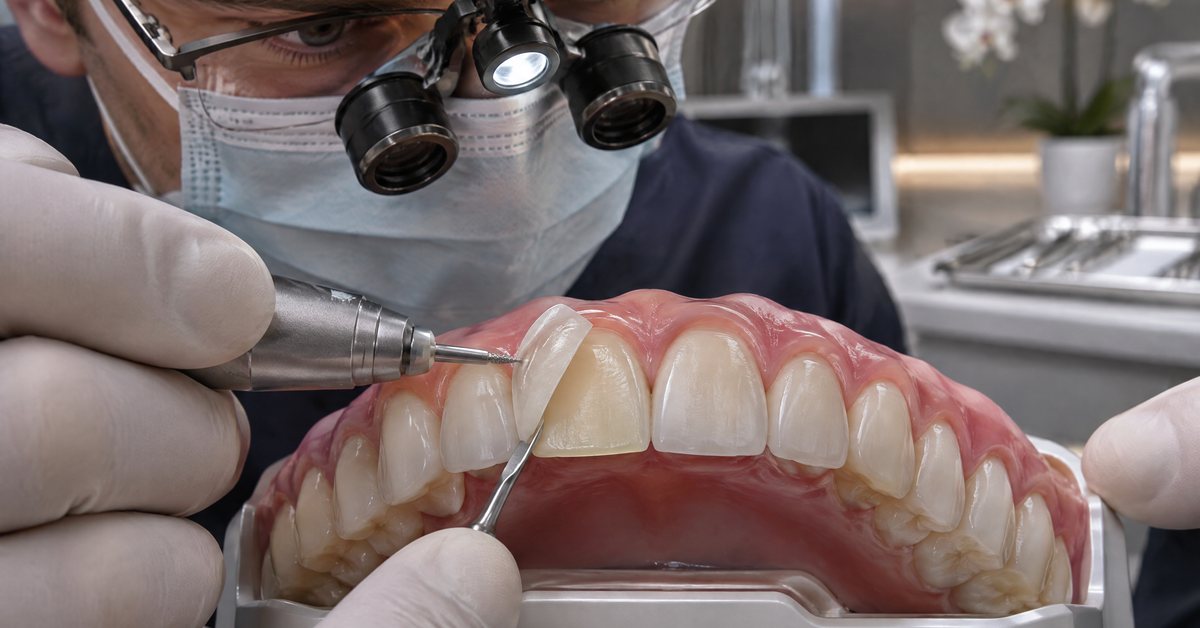
How Many Times Can E-max Veneers Be Replaced?
There is no evidence-based universal number of times a veneer can be replaced.
The limiting factor is not a fixed replacement count.
The important questions are:
- how much enamel and sound tooth structure remains;
- whether decay or fracture has occurred;
- whether the pulp remains healthy;
- whether margins can be placed appropriately;
- whether the bite remains favorable;
- whether the tooth can still support an adhesive veneer;
- whether another restoration type has become more appropriate.
Repeated restorative cycles can become more complex because each episode may involve:
- removal of old material;
- repair of defects;
- new margins;
- changes in gum levels;
- accumulated structural loss.
This is another reason to avoid unnecessary first-time veneers on healthy teeth and to preserve enamel during both initial treatment and retreatment.
How Long Before E-max Veneers Need Replacement?
There is no fixed replacement date. Veneers should be replaced because of a clinical or aesthetic reason—not simply because a certain number of years has passed.
A 2025 systematic review and meta-analysis reported 96.81% pooled survival for lithium-disilicate laminate veneers at an average follow-up of approximately 10.4 years.
A separate long-term case series of pressable glass-ceramic veneers reported estimated survival of:
- 98% at 5 years;
- 95% at 10 years;
- 91% at 15 years;
- 87% at 20 years.
These are population-level survival estimates, not expiration dates.
A veneer can remain clinically acceptable beyond an average estimate, while another may need earlier repair or replacement because of:
- fracture;
- debonding;
- decay;
- gum changes;
- bite changes;
- trauma;
- aesthetic problems.
For a dedicated longevity discussion, see How Long Do E-max Veneers Last? Longevity, Risks and Maintenance.
What Should International Patients Ask Before Replacing Veneers in Turkey?
International patients should ask for an assessment of the existing veneers and the teeth underneath before agreeing to replacement of an entire set.
Useful questions include:
- Why does each veneer need to be replaced?
- Can any veneers be repaired instead?
- Can only the damaged or unaesthetic veneer be replaced?
- How will the old ceramic be removed?
- Does the clinic use mechanical removal, laser-assisted debonding, or another approach?
- How will old cement and composite be distinguished from natural enamel?
- How much enamel appears to remain?
- Is additional preparation expected?
- What happens if decay is discovered after removal?
- Could any tooth need a crown rather than another veneer?
- How will a single replacement veneer be matched to older neighboring veneers?
- What happens if the final treatment plan changes after removal?
- What follow-up is available after returning home?
- Are repair or retreatment policies documented in writing?
Niva Dental is located in Bakırköy, Istanbul. Patients planning retreatment abroad can review the Niva Dental patient journey for broader consultation, treatment planning, aftercare, and remote-support information.
Before travelling, ask the clinic to confirm in writing how veneer removal and replacement would be handled in your case, whether laser-assisted removal is available, and which repair or replacement terms apply.
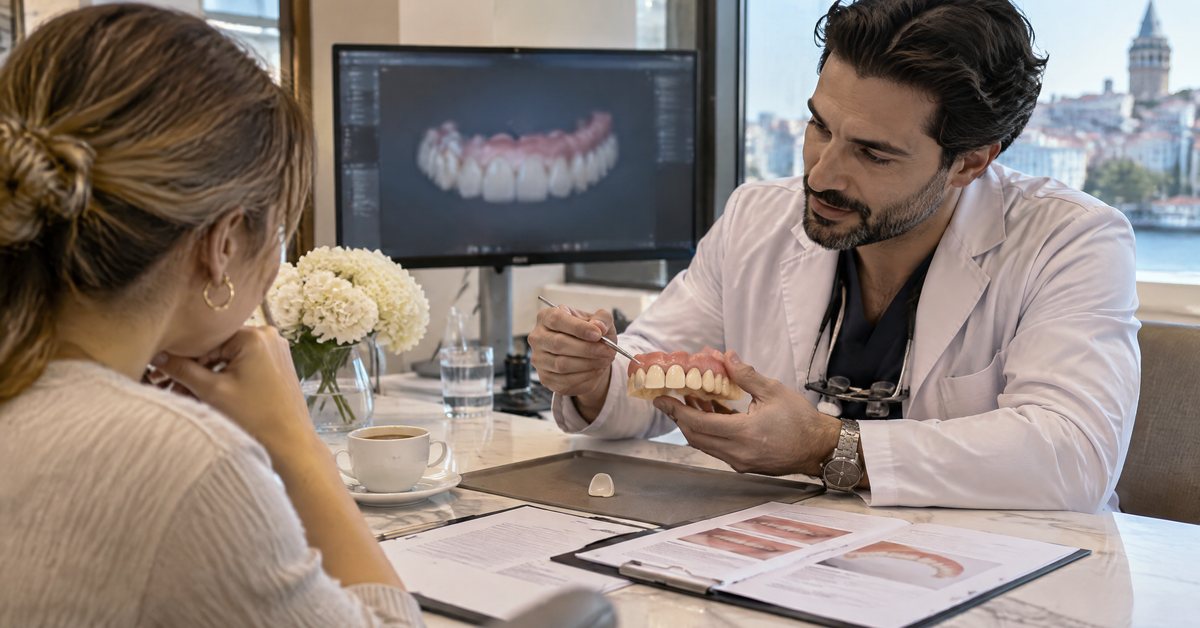
Replacing Emax Veneers: A Practical Decision Framework
For replacing emax veneers, the safest sequence is:
1. Confirm why the veneer is being removed
Aesthetic dissatisfaction, fracture, debonding, decay, poor margins, and bite problems require different retreatment strategies.
2. Decide whether repair is possible
Do not remove an otherwise serviceable veneer if a conservative repair can solve the problem predictably.
3. Plan the removal around tooth preservation
Mechanical and laser-assisted techniques both require careful clinical control. The objective is to preserve the existing tooth surface.
4. Reassess the tooth after removal
The true condition of:
- enamel;
- dentin;
- composite;
- margins;
- caries;
- cracks;
- and bite
may only become fully clear after the old restoration is removed.
5. Choose the new restoration from the remaining tooth structure
The new treatment may be:
- another veneer;
- a repaired/build-up tooth plus veneer;
- a crown;
- another restorative approach.
6. Avoid unnecessary enlargement of the preparation
Replacement does not automatically justify deeper tooth reduction.
7. Plan for the next restorative cycle
The goal should be a restoration that works now while preserving as many future options as reasonably possible.
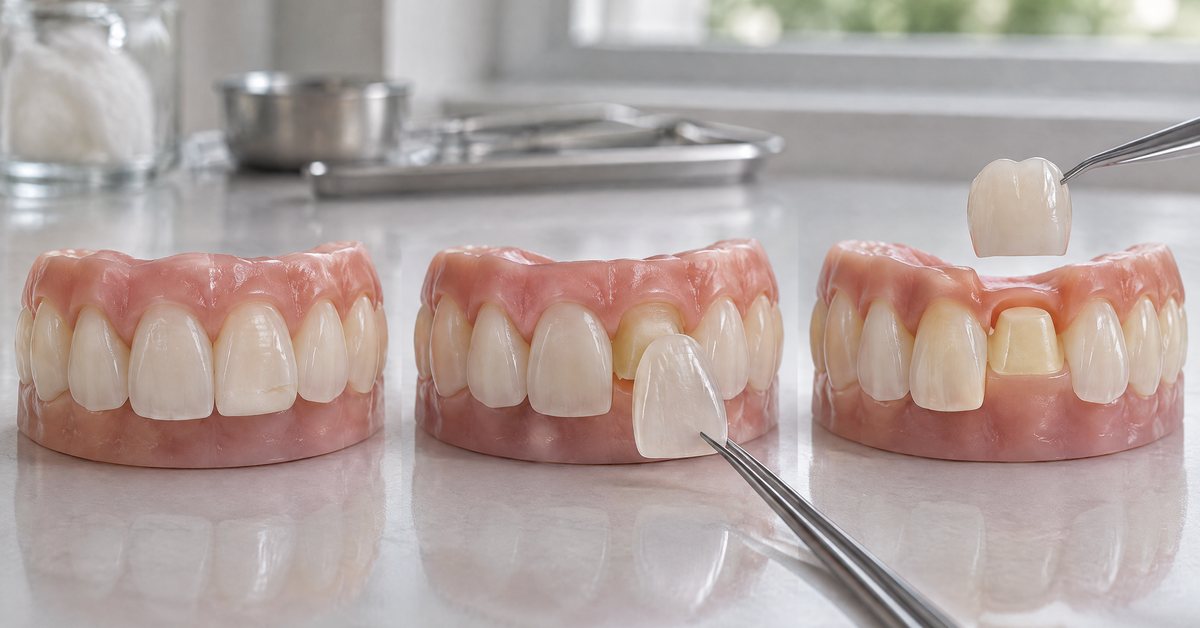
The central principle is simple:
Veneers are replaceable. Removed enamel is not.
That is why careful first-time preparation, conservative removal, accurate diagnosis of the tooth underneath, and enamel preservation matter throughout the lifetime of the restoration.
Frequently Asked Questions
Can E-max veneers be removed and replaced?
Yes. E-max or other ceramic veneers can be removed and replaced when clinically indicated. The old restoration is removed, the tooth is assessed, and a new treatment is planned according to the remaining enamel, dentin, existing restorations, margins, bite, and any decay or damage that is found.
What do teeth look like underneath veneers?
Teeth under veneers usually retain most of their natural structure, but the visible surface may have been prepared. The appearance depends on how much enamel was originally removed, whether dentin is exposed, and whether composite or old cement remains. A prepared tooth does not return to its original untouched appearance when the veneer is removed.
Do veneers ruin the teeth underneath?
Veneers do not automatically “ruin” teeth, but conventional veneer treatment is irreversible when healthy enamel is removed. The long-term condition of the tooth depends on case selection, preparation, bonding, oral hygiene, margins, bite, and future complications such as decay or fracture.
Is more enamel removed every time veneers are replaced?
Not necessarily. Some replacement cases can use the existing preparation with little additional reduction. Other cases require removal of residual materials, decay, defective margins, or damaged tooth structure. Additional preparation should be based on a clinical need rather than being treated as an automatic part of replacement.
Can a veneer be replaced without damaging the tooth?
Conservative replacement aims to preserve the tooth, but no removal technique should be described as completely risk-free. Mechanical removal can inadvertently remove enamel if the interface is difficult to identify. Erbium-laser-assisted debonding may help reduce removal force and preserve enamel when appropriate protocols are used.
Can one veneer be replaced instead of the whole set?
Yes, in selected cases. Structurally, a single veneer may be replaced while neighboring veneers remain intact. The main challenge can be matching shade, translucency, gloss, texture, tooth shape, gum level, and bite to older restorations.
What happens if decay is found under an old veneer?
The decay should be treated before a new veneer is bonded. Depending on how much sound tooth structure remains, the dentist may rebuild the tooth and place another veneer or choose a different restoration. A crown is not automatically required simply because decay was present.
Can old E-max veneers be repaired instead of replaced?
Sometimes. Small chips, roughness, selected ceramic defects, or an intact debonded veneer may be repairable or rebondable. Large fractures, poor fit, significant decay, defective margins, or major aesthetic problems are more likely to require full replacement.
How many times can veneers be replaced?
There is no evidence-based fixed number. The practical limit depends on the amount and quality of remaining tooth structure, enamel available for bonding, decay, fractures, pulp health, margins, bite, and whether a veneer remains the correct restoration.
Do E-max veneers have to be replaced after 10 or 15 years?
No. Ten or fifteen years is not an automatic expiration date. Long-term studies show many ceramic veneers remain in service beyond a decade. Replacement is based on clinical findings such as fracture, debonding, decay, poor margins, gum changes, or an unacceptable aesthetic result—not age alone.
Patients considering replacement of old E-max or ceramic veneers can contact Niva Dental in Bakırköy, Istanbul for an assessment of the existing restorations and the teeth underneath. The treatment plan should determine whether repair, selective replacement, full replacement, or another restoration is appropriate while preserving as much healthy tooth structure as reasonably possible.
Medical References and Sources
| Source | What It Supports |
|---|---|
| American Dental Association / MouthHealthy — Veneers | Veneer treatment is irreversible when enamel is removed; veneers may chip, crack, loosen, and require rebonding, repair or replacement; decay and gum disease require treatment. |
| Alqutaibi AY, et al. — Clinical survival and complication rate of ceramic veneers bonded to different substrates — PMID 38604905 | 2025 systematic review/meta-analysis showing stronger survival/success for enamel-bonded veneers than veneers bonded to severe dentin exposure or existing composite. |
| Gassara Y, et al. — Laser-assisted debonding of ceramic veneers: A systematic review and meta-analysis — PMID 38220549 | Evidence that erbium lasers significantly reduce veneer bond strength and may permit conservative veneer removal with appropriate settings. |
| Alves LVGL, et al. — Do erbium lasers promote changes in the tooth enamel during debonding of ceramic laminate veneers? — PMID 37735282 | Systematic review reporting no superficial enamel changes in the included in-vitro studies after erbium-laser-assisted ceramic veneer removal. |
| Klein P, et al. — Survival and Complication Rates of Ceramic Laminate Veneers — PMID 39523553 | 2025 systematic review/meta-analysis reporting 96.81% pooled lithium-disilicate veneer survival at approximately 10.4 years. |
| Peumans M, et al. — A prospective ten-year clinical trial of porcelain veneers — PMID 15119590 | Long-term evidence showing that some clinically unacceptable veneer problems were repairable and only a minority required replacement in that cohort. |
| Beier US, et al. — Clinical performance of pressable glass-ceramic veneers after 5, 10, 15, and 20 years — PMID 31168916 | Long-term case-series evidence supporting that veneers do not have a fixed 10- or 15-year expiration date. |
| Ivoclar — IPS e.max CAD | Material-specific confirmation that IPS e.max CAD is lithium-disilicate glass-ceramic; used only for material terminology. |