

How long do Turkey teeth last? See typical lifespans for veneers, crowns and implants, what shortens them and what to ask about maintenance and remakes.

How long do Turkey teeth last? The answer depends on what was fitted. Patient guidance puts veneers at about 10 to 15 years and crowns at about 5 to 15 years on average, while an implant can outlast the crown fixed on top of it. Tooth preparation, bite, hygiene and follow-up matter more than the country. [1][2][4]
“Turkey teeth” is an informal name for cosmetic dental work done on a treatment trip, usually a set of veneers, crowns or implant-supported teeth. Because the name covers several treatments, this guide gives the lifespan for each one, explains what shortens it, and lists what to ask about maintenance when the clinic is a flight away. For the treatment itself, see the Hollywood Smile page at Niva Dental.
Key takeaways
- No restoration is permanent. Veneers and crowns are expected to need repair or replacement at some point. [6]
- Typical averages in patient guidance: veneers 10 to 15 years, crowns 5 to 15 years. [1][2]
- In one systematic review, an estimated 95.5% of porcelain veneers were still in place at 10 years. [3]
- An implant may last much longer than the crown or bridge attached to it, which lasts around 15 years. [4]
- Grinding, decay at the edges, gum disease and missed check-ups shorten the life of any dental work. [5][6][7]
- If you live abroad, agree in writing who maintains and remakes the work before treatment starts.
How long do Turkey teeth last on average?
On average, the veneers and crowns that people call Turkey teeth last somewhere between 5 and 15 years, and individual restorations can last longer or fail sooner. [1][2] The figures below come from patient information published by a hospital system and from a peer-reviewed review; none of them is a promise for an individual case.
| What was fitted | What it is | Typical lifespan in published guidance | What usually ends its life |
|---|---|---|---|
| Porcelain veneer | A custom-made shell on the front surface of a tooth [1] | 10 to 15 years on average with proper care [1] | Fracture, coming unbonded, decay of the tooth underneath [3][6] |
| Composite veneer | Tooth-coloured filling material bonded to the tooth [6] | No figure given in the sources used here; less resistant to staining and wear than porcelain [6] | Wear, staining, chipping [6] |
| Crown | A cap that covers the whole tooth [2] | 5 to 15 years on average; some last far longer with good care [2] | Breakage, decay at the edge, a loose crown [2] |
| Implant with a crown or bridge | A titanium screw in the jawbone that supports a replacement tooth [5] | Implant: many years with good care. Crown or bridge on top: around 15 years [4][5] | Gum infection around the implant, wear of the crown [5] |
If you are asking “how long does Turkey teeth last” about your own mouth, the first step is to find out which row of the table applies to each tooth. Many people do not know whether they received veneers or crowns, or what their Turkey teeth are made of, so ask the clinic for a written list.
Why does the answer depend on what was fitted?
The answer depends on the treatment because veneers, crowns and implants are attached to the mouth in different ways and fail in different ways. A veneer is bonded to the front of a tooth, a crown covers the entire tooth to add strength and protection, and an implant replaces the root of a missing tooth. [1][5]
Material matters too. Among crowns, metal crowns rarely chip or break, zirconia crowns are described as extremely durable, and the porcelain layer of a porcelain-fused-to-metal crown may chip over time. [2] Among veneers, porcelain is more resistant to staining and wear than composite, while composite is easier to repair. [6]
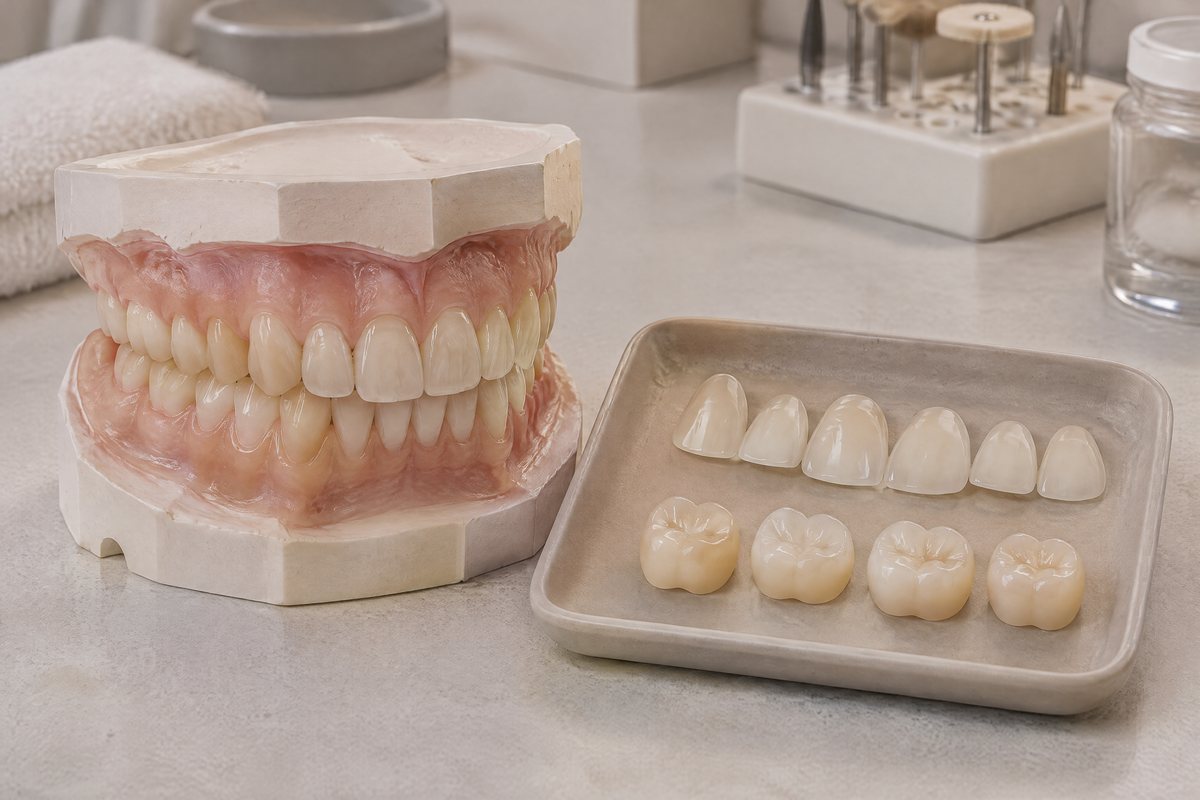
How long do Turkey teeth last if they are veneers, crowns or implants?
Veneers and crowns typically last between 5 and 15 years on average, while a well-maintained implant can stay in place longer than the tooth fixed to it. [1][2][4] Each type is explained below.
How long do Turkey teeth veneers last?
Porcelain veneers last 10 to 15 years on average with proper care, according to Cleveland Clinic. [1] A 2021 systematic review that pooled 25 clinical studies and 6,500 porcelain veneers estimated that 95.5% were still in place at 10 years; fracture was the most common complication, followed by debonding (the veneer coming away from the tooth). [3] Most of the studies in that review were retrospective, so the figure describes well-documented cases and is not a prediction for every patient. Niva’s guides on how long veneers last and how long Emax veneers last go into more detail.
How long do crowns last?
The average lifespan of a dental crown is 5 to 15 years, and Cleveland Clinic notes that crowns can last upwards of 30 years with proper care and maintenance. [2] A crown may need replacing sooner if it becomes cracked or damaged. [2] For full smile makeovers that combine crowns and veneers, see Niva’s article on how long a Hollywood Smile lasts.
How long do Turkey teeth implants last?
A dental implant can last for many years with good care, and the crown or bridge attached to it lasts around 15 years on average before it may need replacing. [4][5] The Oral Health Foundation is clear that no implant comes with a lifetime promise. [5] After placement an implant is usually left to heal for around four months before the final tooth is attached, so implant treatment often needs more than one visit. [5] Niva’s guide to how long dental implants last covers Turkey teeth implants and their upkeep in more depth.
What shortens the life of veneers and crowns?
The life of veneers and crowns is shortened mainly by heavy bite forces, decay and gum problems around the edges, and a poor fit. Most of these factors can be checked before treatment and managed afterwards.
- Grinding and clenching (bruxism). Around 1 in 10 people grind their teeth while sleeping, and signs include worn, cracked or broken teeth or fillings. [7] One study in the veneer review found a significantly higher failure rate in patients who grind. [3] A dentist-made splint worn at night helps protect teeth from wear or fracture. [7]
- Decay under or around the restoration. You can still get cavities under or around a veneer, and a crown that does not fit properly can trap bacteria and lead to decay. [2][6]
- Gum disease. Plaque around an implant can cause peri-implantitis, a condition that can lead to sore or bleeding gums, infection and loosening or loss of the implant. [5]
- Hard objects. Patient guidance advises against biting fingernails, ice and other hard objects with veneers or crowns. [2][6]
- Design and preparation. In the review, veneers without coverage of the biting edge failed more often than veneers with it. [3] How the tooth is prepared is decided by the dentist, which is one reason the choice of dentist affects lifespan.
- Missed reviews. Regular dental cleanings and examinations are part of the care that crowns need. [2]
Niva’s explanation of what a night guard is and how it is used is useful if grinding has been mentioned to you.
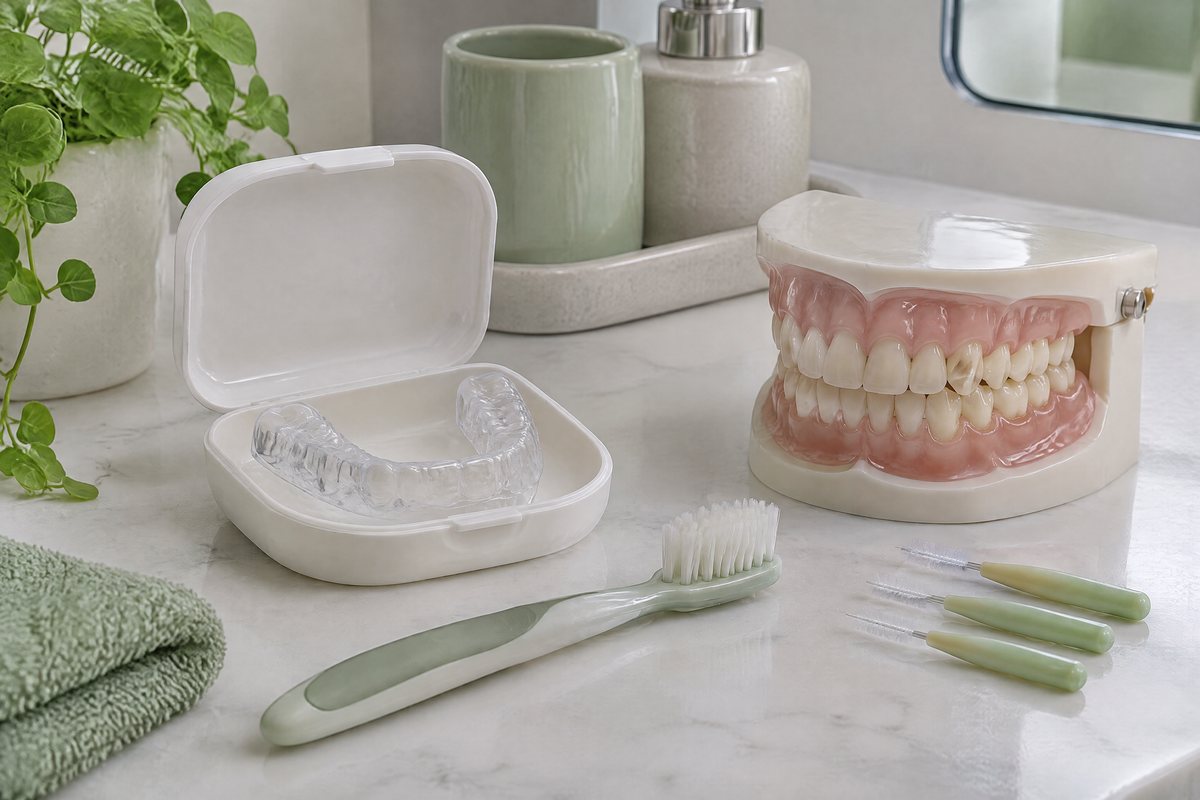
Do Turkey teeth last forever, and what does replacement involve?
No, Turkey teeth do not last forever: veneers and crowns are expected to be repaired or replaced during a person’s life. The American Dental Association notes that a veneer may chip, crack, wear down or loosen over time, requiring a dentist to re-bond, repair or replace it. [6]
Replacement matters more for prepared teeth than for untouched ones. Veneer treatment is not reversible because enamel is removed, so a prepared tooth will need a new covering each time the old one reaches the end of its life. [6] A younger patient may therefore face more than one replacement cycle and should count this as part of the long-term cost.
In practical terms, replacement follows similar steps to the first fitting: the old restoration is removed, the tooth underneath is checked and a new veneer or crown is made. Placing a crown usually requires two appointments, with a temporary crown in between. [2] Niva’s article on replacing Emax veneers and what happens to the tooth describes the process.
What should you plan for maintenance if you are travelling from the UK or abroad?
Plan maintenance before treatment, because the clinic that made the work will not be nearby when a veneer chips or a crown loosens. The Oral Health Foundation lists difficulty getting follow-up care among the problems reported after treatment abroad, and suggests asking how long restorations such as crowns, veneers or implants are expected to last. [9]
Points to arrange:
- Tell your own dentist first. The General Dental Council (GDC) advises speaking to your own dentist before you decide, so that they know your plans in case complications arise later. [8]
- Ask who looks after the work at home. A dentist at home may or may not be willing to repair work made elsewhere, so ask a local practice in advance whether it will provide check-ups and hygiene visits.
- Collect your records. Ask for X-rays, the materials used and a tooth-by-tooth list of what was fitted. A dentist at home needs these to repair or remake a restoration.
- Ask about remakes. The GDC suggests asking whether the work is covered for a certain period, what aftercare is provided, and who pays for extra flights, hotels and remedial work if there is a problem. [8]
- Keep a contact. Ask who you can contact for advice after treatment. [8]
What should a written plan say about lifespan and remakes?
A written plan should state what was fitted, how long the clinic expects the work to last and what happens if a restoration fails early. Ask for these points in writing:
- Restoration list. Each tooth, with veneer, crown or implant stated.
- Materials. The material and manufacturer of each restoration.
- Expected lifespan. The clinic’s own estimate for each type of restoration, and the conditions attached to it.
- Remake terms. Which failures are covered, for how long, and what is excluded (for example damage from grinding without a night guard).
- Travel costs. Who pays for flights and accommodation if a remake is needed.
- Maintenance schedule. Recommended check-ups, hygiene visits and whether a night guard is advised.
- Records. Copies of X-rays and scans handed over before you leave.
Niva Dental’s remake terms and materials are not stated in this article; ask the clinic for them in writing.

Frequently asked questions
How long do Turkey teeth last before they need replacing?
Most sets are made of veneers or crowns, so the usual guide is about 10 to 15 years for veneers and about 5 to 15 years for crowns, with wide variation between people. [1][2] Some restorations last longer and some fail earlier. A dentist can only estimate this for you after examining your teeth and bite.
Do Turkey teeth last forever?
No. Veneers and crowns can chip, crack, wear down or loosen over time and then need to be re-bonded, repaired or replaced. [6] Because enamel is removed when teeth are prepared, the teeth will always need a covering afterwards, so replacement should be expected and budgeted for.
What are Turkey teeth made of, and does the material change the lifespan?
Veneers are porcelain or composite, and crowns may be ceramic, zirconia, porcelain fused to metal or metal. Material does affect durability: zirconia crowns are described as extremely durable, and porcelain veneers resist staining and wear better than composite ones. [2][6] Ask which material is planned for each tooth.
How long do Turkey teeth last if you grind your teeth?
Grinding can shorten the life of veneers and crowns. One study included in a systematic review found a significantly higher failure rate for porcelain veneers in patients who grind. [3] A dentist-made night splint helps protect teeth from wear or fracture, so mention grinding or jaw clenching at your consultation. [7]
Can a dentist at home maintain work that was done in Turkey?
It depends on the dentist and on the records you can provide. The GDC advises telling your own dentist about your plans before you travel. [8] Ask in advance whether the practice will provide check-ups and repairs, and bring X-rays and a list of the materials used.
Discuss long-term care with Niva Dental
Niva Dental is a dental clinic in Bakırköy, Istanbul. If you are considering veneers, crowns or implants and your question is “how long do Turkey teeth last?” for a case like yours, ask for an examination and a written plan that names each restoration, its material, the expected maintenance and the remake terms. The Niva Dental patient journey page explains how consultations and follow-up are organised.
This article provides general information and cannot determine your suitability, treatment plan or costs. Consult a dentist for an individual assessment.
Medically reviewed by Dt. Efsun Esen, dentist at Niva Dental. Last reviewed: November 2026.
Medical sources
- Cleveland Clinic: Dental Veneers.
- Cleveland Clinic: Dental Crowns.
- Journal of Clinical Medicine (PubMed Central): Long-Term Survival and Complication Rates of Porcelain Laminate Veneers in Clinical Studies: A Systematic Review.
- Cleveland Clinic: Dental Implants.
- Oral Health Foundation: Dental implants.
- American Dental Association (MouthHealthy): Veneers.
- Leeds Teaching Hospitals NHS Trust: Clenching and grinding your teeth (bruxism).
- General Dental Council: Going abroad for dental treatment.
- Oral Health Foundation: Going Abroad for Dental Treatment Risks.