

Planning veneers Turkey treatment? Compare porcelain, E-max and composite veneers, see the steps, cost factors and safety checks, and what to ask in writing.

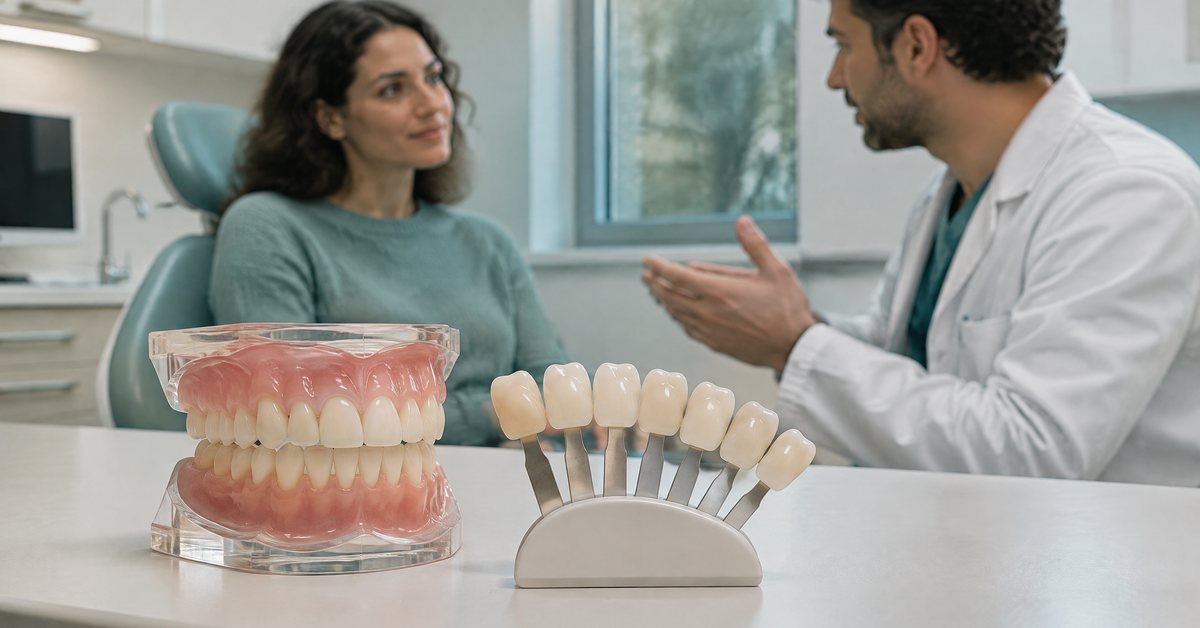
Veneers Turkey treatment means having thin porcelain or composite coverings bonded to the front of your teeth at a clinic in Turkey, usually over more than one appointment. Veneers are not crowns, which cover the whole tooth, so check in writing which of the two your plan contains. Preparing a tooth for a veneer removes enamel and is not reversible. [1][2]
This guide is a starting point for readers in the UK, the US and Europe who are looking at veneers in Turkey. It covers veneer types, how veneers differ from crowns, who may be suitable, the treatment steps, what drives cost and how to check safety before you travel. Niva Dental’s starting prices are given in the cost section. For the material people ask about most, see E-max veneer treatment at Niva Dental.
Key takeaways
- A veneer covers the front surface of a tooth; a crown covers the whole tooth. “Turkey teeth” is a loose label, and the work behind it may be crowns.
- Porcelain veneers, including E-max, are made in a laboratory and usually need at least two visits. Composite veneers are shaped directly on the tooth and can be done in one.
- Enamel removal is permanent, so the decision deserves an examination and time to think.
- Published lifespan estimates range from about 5 to 15 years, depending on the source and on how the veneers are cared for.
- Cost depends mainly on the number of teeth, the material and what the quote includes. Ask for an itemised plan.
What does veneers Turkey treatment mean, and is it the same as Turkey teeth?
Veneers Turkey treatment means travelling to Turkey to have veneers fitted, normally on several front teeth in one trip. A veneer is a thin covering fixed to the front surface of a tooth, usually made of porcelain or tooth-coloured composite material. Dentists use veneers to improve the appearance of teeth that are discoloured, chipped, worn, uneven or slightly out of line. [1]
Turkey veneers are often confused with “Turkey teeth”. That phrase is a colloquial term that spread through social media, and it is used loosely for many kinds of cosmetic dental work done abroad. [6] In a 2025 British Dental Journal review of UK news coverage, a dentist is quoted as saying that patients talk about veneers when in reality they have had crowns, which means much more tooth reduction. The authors recommend clearer public guidance on the difference between cosmetic options. [6] The first question for any quote is therefore simple: veneer or crown, for each tooth? Niva’s guide to what Turkey teeth are explains the label in more detail.
Which veneer types are offered: porcelain, E-max, laminate or composite?
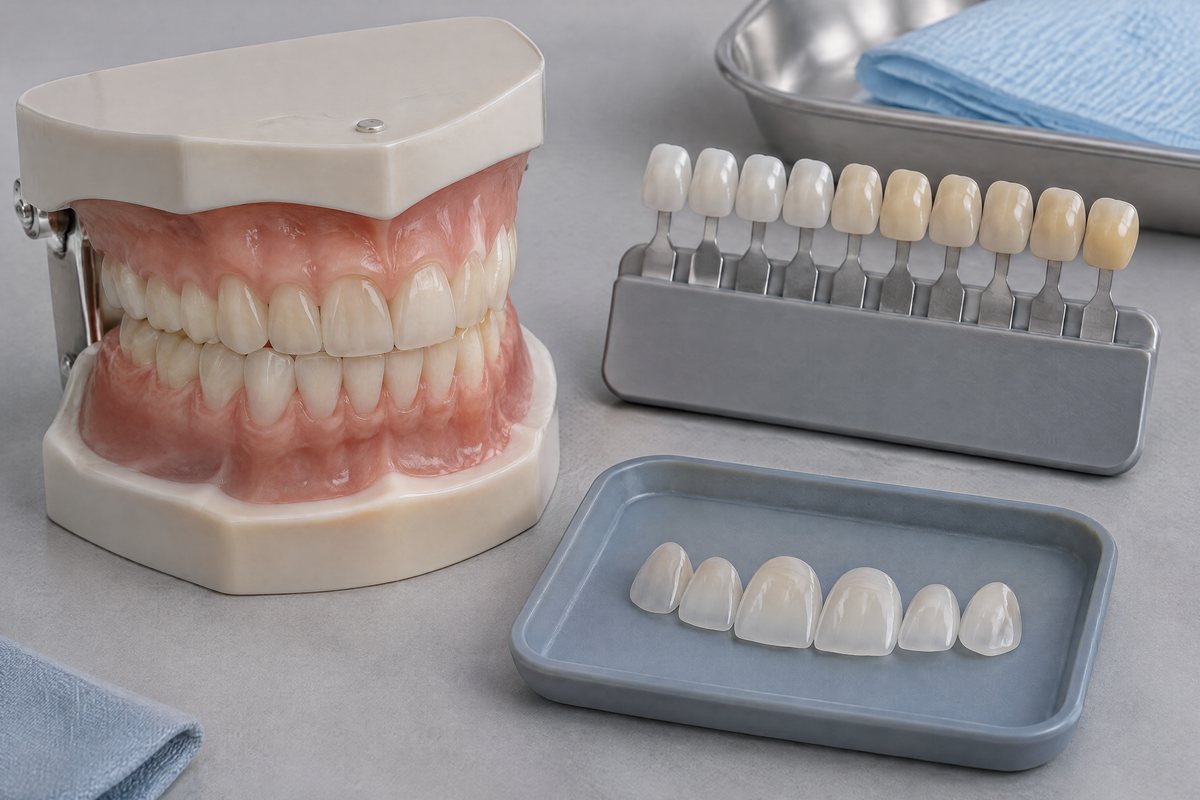
The two main types are porcelain veneers, which are made in a laboratory, and composite veneers, which are built up directly on the tooth. [2]
| Veneer type | How it is made | Typical visits | Tooth preparation | Staining and repair |
|---|---|---|---|---|
| Porcelain veneers (including E-max) | Custom-made in a dental laboratory from an impression or 3D scan [2] | Usually at least two [5] | Enamel is removed from the front and sides of the tooth [2] | Generally last longer and resist stains better [5] |
| Composite veneers | Tooth-coloured resin is bonded, sculpted and hardened with a light on the tooth [2] | Can be done in a single visit [5] | May require less enamel removal [2] | Easier to repair, but less stain- and wear-resistant [2] |
| Minimal-prep or “no-prep” veneers | A less invasive form of porcelain veneer [3] | Depends on your plan | Less enamel removal, but still some [3] | Not right for everyone; a dentist needs to assess [3] |
How the names in adverts relate to the table:
- Porcelain veneers Turkey offers refer to the first row. Porcelain tends to be the more expensive option. [2]
- Emax veneers Turkey quotes name a brand: E-max is a brand name used for one type of dental ceramic, so an E-max veneer is a kind of porcelain veneer.
- Laminate veneers Turkey adverts usually mean thin porcelain veneers. The word is used loosely, so ask which material and how much preparation is meant.
- Composite veneers Turkey offers refer to the second row. Niva’s comparison of composite veneers and porcelain veneers goes into cost and durability.
Veneers or crowns: which one is in your plan?
A veneer covers only the front surface of a tooth, while a crown covers the entire tooth. [3] Both can change how a smile looks, but they do different jobs and remove different amounts of tooth.
| Veneer | Crown | |
|---|---|---|
| What it covers | The front surface of the tooth [3] | The entire tooth [3] |
| Main purpose | Cosmetic: improving appearance [3] | Adding strength and protection to a badly damaged tooth; can also improve appearance [3] |
| When a dentist may prefer it | Sound teeth with enough enamel to bond to [5] | A tooth with a large portion missing [5] |
Neither option is wrong in itself. What matters is that the choice follows your examination and that you know which one you are agreeing to. If a quote lists “veneers” for every tooth including back teeth, or uses “veneer” and “crown” as if they were the same, ask for a tooth-by-tooth list. Niva’s article on E-max veneers vs crowns explains the differences in more detail.
Who may be suitable for dental veneers, and who may need something else?
A dentist needs to examine your teeth, gums and bite before saying whether veneers are an option. People searching for dental veneers Turkey clinics offer often want to fix one of these concerns, which veneers can address: [1]
- discoloured teeth that do not respond to whitening,
- chipped or worn teeth,
- small gaps between front teeth,
- teeth that are uneven in shape or size, or look slightly crooked.
Your dentist may suggest another treatment if a tooth has decay or gum disease, if there is not enough enamel for a veneer to bond to, if a large part of the tooth is missing, or if you grind or clench your teeth. [5] A deep overbite can also make veneers a poor choice. [2] Decay and gum disease should be treated first, because placing veneers over unhealthy teeth may worsen existing problems. [2] Whitening, orthodontics and composite bonding are described as more conservative approaches that often take more time. [6]
What are the steps of veneers Turkey treatment, and how many days does it take?
Porcelain veneers are normally fitted in stages, and the number of days depends on your plan and on the laboratory. The usual sequence is:
- Assessment. The dentist examines you and checks whether veneers are appropriate. [3]
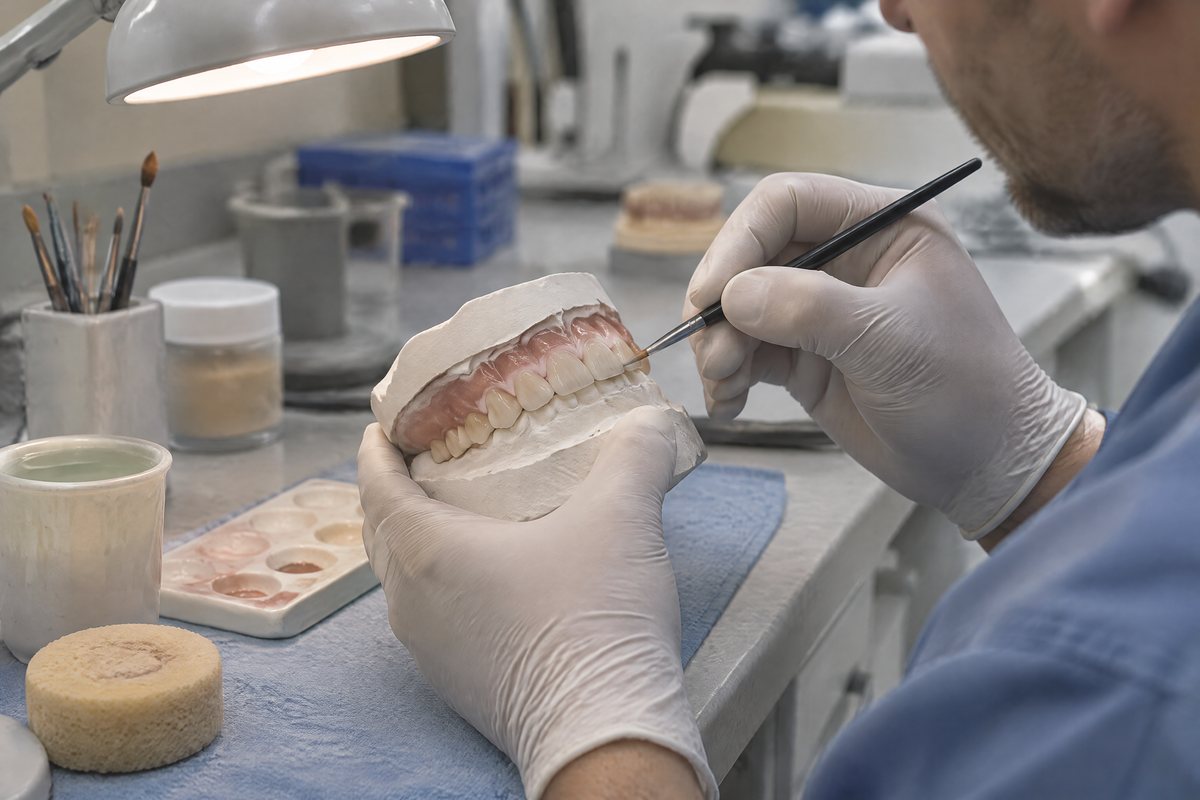
- Preparation. A small amount of enamel is removed from the tooth so the veneer does not feel bulky. You are numb during the procedure. [1][4]
- Impression or 3D scan. A record of your teeth is sent to the dental laboratory. [2]
- Temporary veneers. These may be worn while the laboratory makes the final veneers. [2]
- Fitting. The dentist checks fit, shape and colour, bonds the veneers and adjusts your bite. [3]
- Review. Ask for a check before you fly home.
Dental organisations describe porcelain veneers as needing at least two visits. [5] One US hospital guide notes that the laboratory stage can take a few weeks in the pathway it describes. [3] Timing differs between clinics, so ask for a day-by-day schedule in writing and whether a second trip could be needed.
Afterwards, adjusting to veneers may take a few days, teeth may be more sensitive to heat and cold, and soreness is common when eight or more veneers are placed. [2][3][4] Tell the dentist before you leave if your bite feels wrong. [2]
How much tooth is removed for veneers?
A small amount of enamel is removed from the front of the tooth for a conventional veneer. [1] Because enamel is removed, treatment is not reversible. [2] Minimal-prep veneers remove less, but they still require some enamel removal and are not right for everyone. [3] Ask the dentist to explain how much preparation is planned for each tooth and why. Niva’s guide to tooth shaving for E-max veneers covers this question in depth.
What affects veneers Turkey cost?
Veneers Turkey cost depends on the clinic’s location, the number of teeth treated and the material. [2][4] At Niva Dental, E-max veneers start from €260 per tooth. Where a tooth needs a crown instead of a veneer, zirconia crowns start from €185 per tooth, and a Hollywood Smile with E-max veneers starts from €5,200 per smile. These are starting prices; the exact figure is set in your written plan after an examination and imaging. The dental team should give you a clear estimate of the cost before treatment starts. [1]
The lines that usually change a quote are:
- the number of veneers, and whether any teeth need crowns instead,
- the material and brand (porcelain tends to cost more than composite), [2]
- laboratory work, digital planning and temporary veneers,
- treatment needed first, such as fillings or gum care,
- what is bundled with the dental work, such as hotel nights and transfers,
- aftercare terms and who pays if a veneer needs repair.
For worked examples of how quotes are built, see Niva’s guides to E-max veneers cost in Turkey, veneers cost in Turkey vs the USA and how much veneers cost per tooth.
How can you check safety when travelling from the UK or US for Turkey veneers?
Check the dentist, the plan and the aftercare before you book flights. Standards can vary widely between countries and within them, and UK government travel advice says to do your own research, because private companies have a financial interest in booking your treatment. [8]
- Talk to your own dentist first. The General Dental Council (GDC), the UK regulator, advises this so that your dentist knows your plans and can help if complications arise. [7]
- Insist on an examination before the plan. A qualified dentist should assess you and take your full medical history before you receive a treatment plan and cost estimate. [7]
- Check who will treat you. Ask for the dentist’s name, qualifications and professional registration. Only a licensed dentist should place veneers. [2][7]
- Check the provider. The Turkish Ministry of Health publishes a list of approved providers through its HealthTürkiye website. [8]
- Sort out insurance. The European and Global Health Insurance Cards are not valid in Turkey. [8]
- Plan ahead if you are in the United States. The Centers for Disease Control and Prevention (CDC) suggests seeing a healthcare provider at least 4 to 6 weeks before the trip and getting copies of all your records before you return. [9]

What should a written veneer plan and quote include?
Ask for the plan by email before you pay a deposit, and check that it answers these points:
- Tooth-by-tooth list. Which teeth are treated, and veneer or crown for each one.
- Material and brand. Porcelain, E-max or composite, and the name of the product.
- Preparation. How much enamel removal is planned and why.
- Schedule. Number of appointments, days in Turkey and whether a second trip may be needed.
- Price lines. Examination, imaging, temporaries, final veneers, and anything bundled such as hotel or transfers.
- Exclusions. Treatment that would cost extra if the examination finds decay or gum problems.
- Aftercare. Who to contact once you are home, and what happens if you are unhappy or a veneer chips or comes off. [7]
- Written cover. How long the work is covered, under which conditions and where repairs must be done.
How do you look after veneers once you are home?
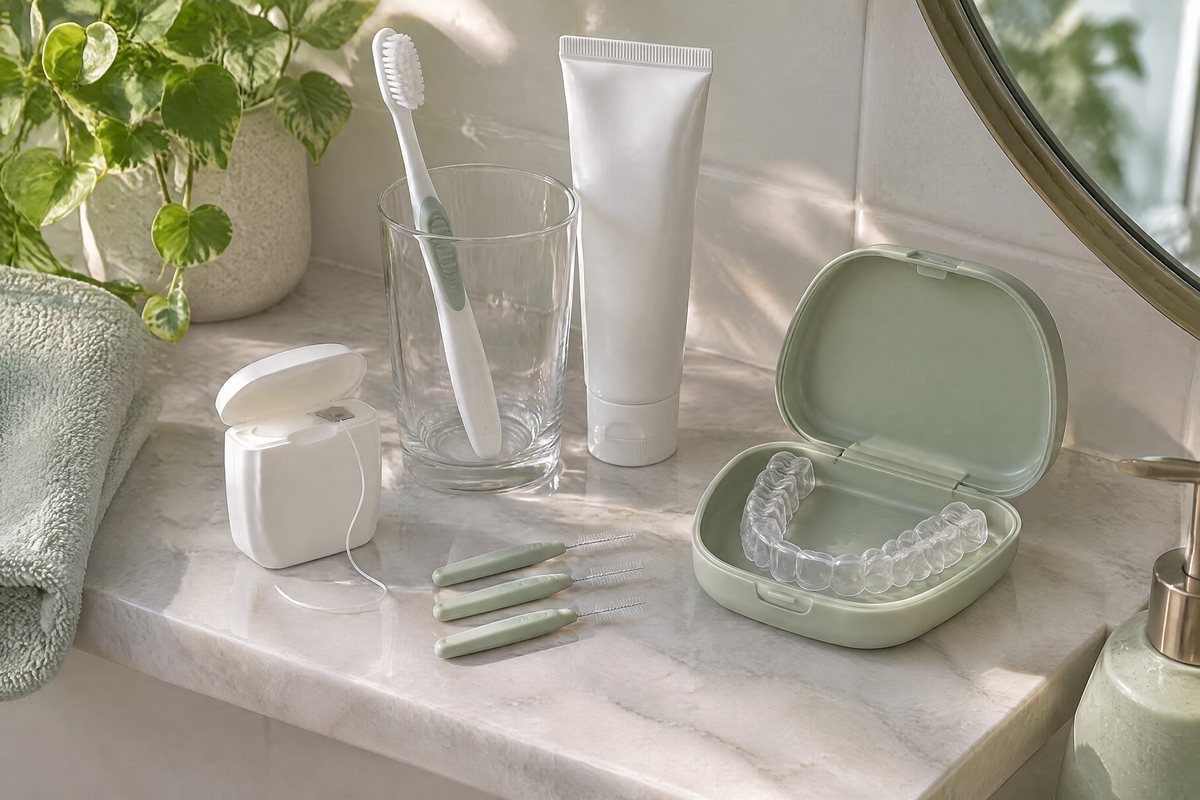
Look after veneers as you would natural teeth: brush twice a day with fluoride toothpaste and clean between your teeth daily, because cavities can still form under or around a veneer. [2] Avoid biting fingernails or hard objects, wear a mouthguard for sports that could injure your mouth, and ask about a night guard if you grind your teeth. [2][4]
Lifespan estimates differ by source: the American College of Prosthodontists gives approximately 5 to 10 years, and Cleveland Clinic gives 10 to 15 years with proper care. [3][4] Veneers can chip, crack or come loose; small chips may be repaired, and sometimes a new veneer is needed. [1] If a veneer comes off, keep it, do not use glue and contact a dentist promptly. [4] Niva’s article on how long veneers last covers care and replacement.
Frequently asked questions
How much are veneers in Turkey?
There is no single price, because veneers are priced per tooth. At Niva Dental, E-max veneers start from €260 per tooth, and the exact figure is set in a written plan after an examination. The total depends on the number of teeth, the material (porcelain usually costs more than composite), laboratory work and what the quote bundles in. Ask for an itemised written estimate after an examination, and compare quotes line by line instead of by headline figure. [1][2]
Are veneers in Turkey safe?
Safety depends on the individual dentist, the plan and the aftercare, not on the country. Standards vary between and within countries. Check the dentist’s registration, insist on an examination before any plan, speak to your own dentist first and ask in writing what happens if something goes wrong. [7][8]
How long do veneers last?
Published estimates vary. The American College of Prosthodontists says a veneer typically lasts approximately 5 to 10 years, and Cleveland Clinic says veneers last 10 to 15 years with proper care. Daily cleaning and regular check-ups help veneers last longer. [1][3][4]
How many days do you need in Turkey for veneers?
The number of days depends on your plan. Porcelain veneers usually need at least two visits, with laboratory work between preparation and fitting, while composite veneers can be done in a single visit. Ask the clinic for a day-by-day schedule and whether a second trip might be required. [5]
Are veneers permanent?
The decision is long-term, even though the veneers themselves may need replacing one day. Enamel is removed to place a conventional veneer, so treatment is not reversible. Minimal-prep veneers remove less enamel but still require some, so ask how much preparation is planned before you agree. [2][3]
Discuss veneers in Turkey with Niva Dental
If you are considering veneers at Niva Dental in Bakırköy, Istanbul, ask for an assessment and a written, tooth-by-tooth plan before you decide. Ask which veneer type is being proposed, how much preparation is planned and what the aftercare terms are. E-max veneers start from €260 per tooth, and your written plan states the number of teeth and the total. You can read more on the Niva Dental E-max veneers page.
This article provides general information and cannot determine your suitability, treatment plan or costs. Consult a dentist for an individual assessment.
Medically reviewed by Dt. Efsun Esen, dentist at Niva Dental. Last reviewed: November 2026.
Medical sources
- Oral Health Foundation: Veneers.
- American Dental Association (MouthHealthy): Veneers.
- Cleveland Clinic: Dental Veneers.
- American College of Prosthodontists: Frequently Asked Questions about Dental Veneers.
- Canadian Dental Association: Bonding & Veneers.
- British Dental Journal (Doughty J, Moore D, Ellis M, et al., 2025): Contemporary dental tourism: a review of reporting in the UK news media.
- General Dental Council: Going abroad for dental treatment.
- GOV.UK: Turkey travel advice: Health.
- Centers for Disease Control and Prevention: Medical Tourism: Travel to Another Country for Medical Care.