

Thinking about composite bonding Turkey treatment? Learn what bonding is, how long it lasts, what affects cost and whether the trip is worth it for you.

Composite bonding Turkey treatment means having tooth-coloured resin shaped onto your teeth by a dentist in Turkey to repair chips, close small gaps or change tooth shape and colour. Bonding is usually done in one visit and typically lasts three to 10 years before a touch-up or replacement. Weigh that against the travel involved for a relatively small procedure. [1]
This guide explains what bonding is, who it may suit, how it compares with composite and porcelain veneers, how long it lasts, what drives cost and what to ask before you book. Niva Dental offers composite bonding and prices it per tooth in a written plan after an examination, so this guide explains the cost factors instead of quoting one figure. If a dentist advises that veneers would suit your teeth better, you can read about E-max veneer treatment at Niva Dental.
Key takeaways
- Composite bonding adds tooth-coloured resin to a tooth and usually needs little or no enamel removal.
- Bonding suits small cosmetic changes. Larger changes may call for veneers or another treatment.
- Expect maintenance: bonding can chip and stain, and typically needs a touch-up or replacement after three to 10 years.
- The procedure is short, so flights and accommodation can cost more than the dental work on a small case.
- Before travelling, ask in writing who will repair chips or stains once you are home.
What is dental bonding, and what does composite bonding Turkey treatment involve?
Dental bonding is a cosmetic procedure in which a dentist applies tooth-coloured composite resin (a putty-like filling material) to a tooth to change its shape, size or colour. It is also called composite bonding or teeth bonding. Dentists use it to conceal chips or minor cracks, close gaps between teeth, hide discolouration and make teeth look longer. [1]
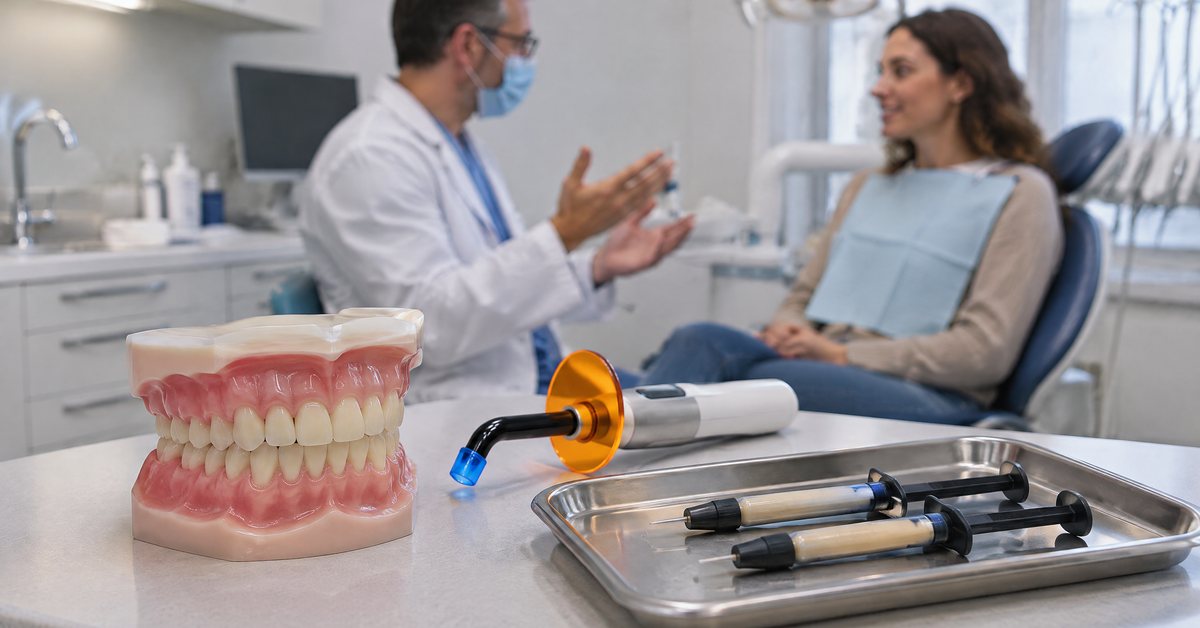
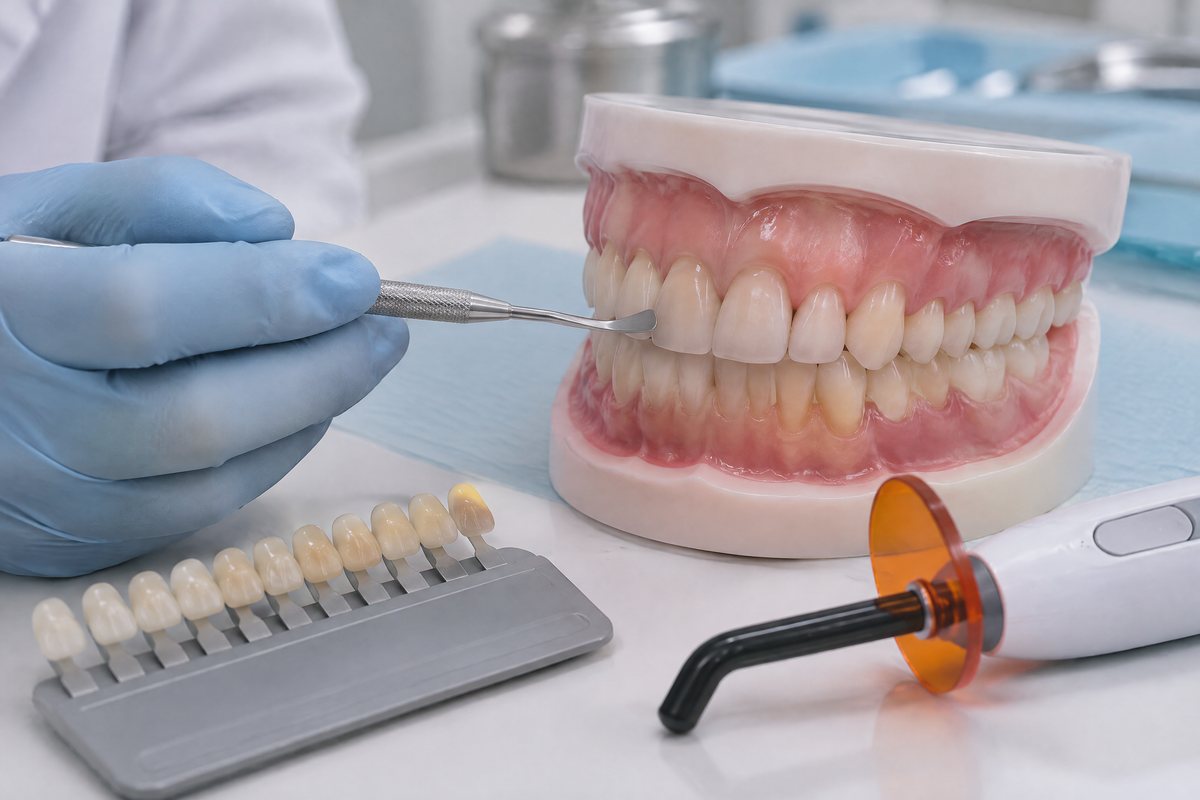
Composite bonding Turkey treatment follows the same steps as bonding anywhere else: [1][2]
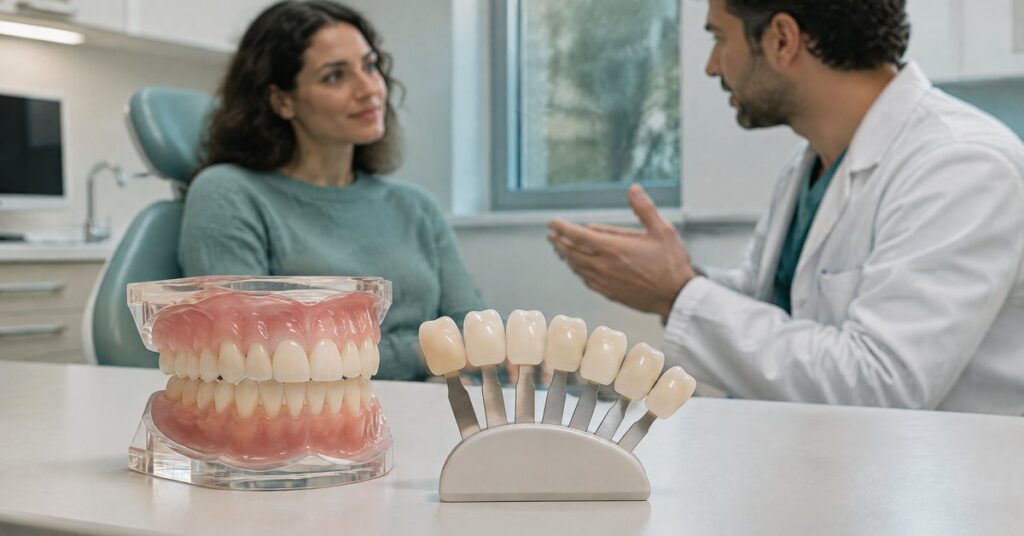
- Shade selection. The dentist matches the resin to your natural tooth colour with a shade guide.
- Preparation. The tooth surface is roughened and a bonding liquid is applied so the material adheres.
- Application. The resin is applied in layers, moulded and smoothed.
- Curing. A special light hardens the resin.
- Polishing. The dentist makes final adjustments and polishes the tooth.
Bonding usually requires little or no enamel removal, which is why it is described as generally reversible. [1] A 2025 British Dental Journal review lists bonding, alongside whitening and orthodontic appliances, among the minimally invasive approaches to improving a smile. [8] If keeping your own enamel matters to you, Niva’s guide to Turkey teeth risks and protecting natural teeth explains why the choice of treatment matters.
Who does composite bonding suit, and who may need a different treatment?
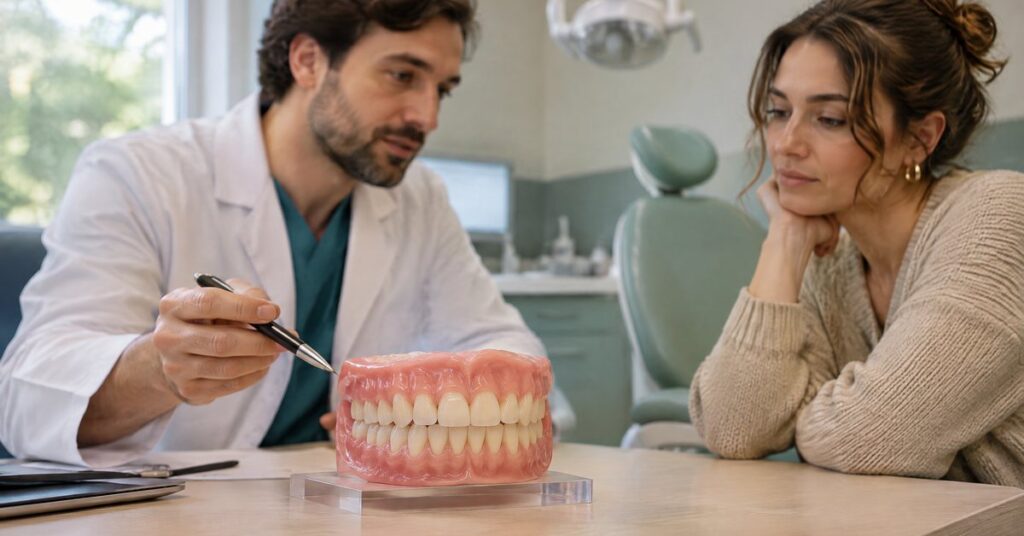
Composite bonding suits people who want small cosmetic changes to teeth that are otherwise healthy; a dentist needs to examine you to confirm this. [1] Minor changes on teeth that function well may suit bonding, while spaced, broken or dark teeth, or teeth affected by clenching or grinding, may point towards porcelain. [4]
Bonding may be considered for:
- a chipped corner or edge,
- a small gap between front teeth,
- a tooth that is slightly short or uneven in shape,
- a localised stain or discolouration. [1][2]
A different plan may be needed if you have tooth decay, which should be treated first, or if you want a more dramatic change, which veneers suit better. [1] More complex cases may be referred to a prosthodontist, a specialist in restoring and replacing teeth. [2] For widespread discolouration, Niva’s article on veneers or whitening for stained teeth compares the options.
Composite bonding, composite veneers or porcelain veneers: what is the difference?
The difference is how much of the tooth is covered and what the covering is made of. Bonding is generally used for smaller repairs, while a veneer covers the entire front surface of the tooth. [2] Composite veneers use the same resin as bonding, and porcelain veneers are thin ceramic shells made in a laboratory. [3][5]
| Composite bonding | Composite veneers | Porcelain veneers | |
|---|---|---|---|
| What is covered | Part of the tooth, such as a chip, edge or gap [2] | The entire front surface [2] | The entire front surface [2] |
| Material | Tooth-coloured composite resin [1] | The same resin used for bonding [5] | Thin custom-made ceramic shell [3] |
| Enamel removal | Usually little or none [1] | May require less than porcelain [3] | Enamel removed from the front and sides [3] |
| Visits | Usually one [1] | Can be done in a single visit [2] | Usually at least two [2] |
| Stain resistance | Lower than porcelain [1] | Lower than porcelain [3] | Higher than composite [2] |
| Repair | Can be touched up [1] | Easier to repair than porcelain [3] | Cracks are difficult to repair [4] |
| Lifespan estimate | 3 to 10 years before touch-up or replacement [1] | Generally shorter than porcelain [2] | 10 to 15 years with proper care [5] |
Adverts for composite veneers Turkey clinics offer and for bonding often overlap, so ask which of the first two columns a quote refers to. Niva’s guide to veneers in Turkey covers the veneer types and steps. Niva’s comparisons of E-max veneers vs composite bonding and composite veneers vs porcelain veneers look at each pair in more detail.
How long does dental bonding last, and how do you maintain it?
Dental bonding typically lasts three to 10 years before it needs a touch-up or replacement. [1] How long yours lasts depends on your habits and on how many teeth were treated. [1]
Two limits are worth knowing before you choose it:
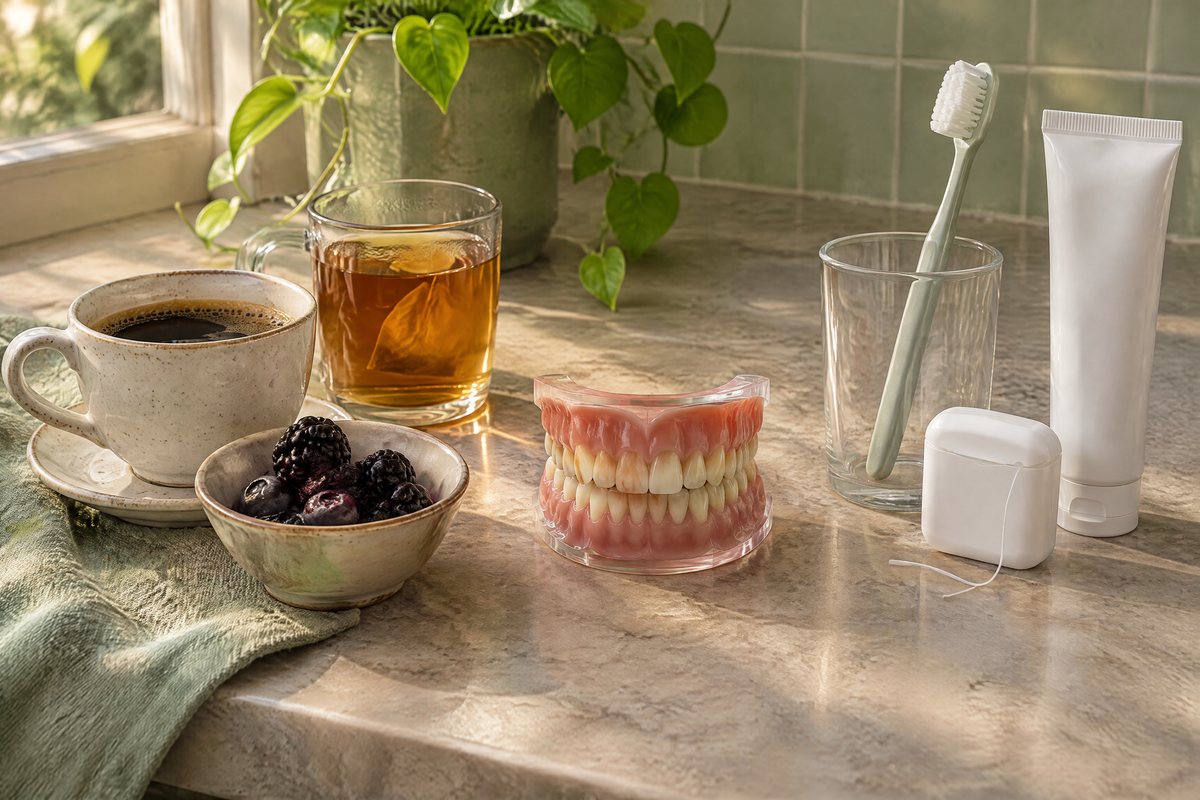
- Staining. Bonding material is somewhat stain-resistant, but it does not resist stains as well as porcelain. [1]
- Chipping. Bonding can chip over time and is less long-lasting than veneers or crowns. [1]
To look after bonded teeth: [1]
- brush at least twice a day with a soft toothbrush and fluoride toothpaste, and floss once a day,
- avoid biting nails, chewing pens or using your teeth to open packaging,
- limit dark drinks such as coffee, tea and red wine, and stop smoking if you smoke,
- keep regular dental check-ups and cleanings.
Contact a dentist if you notice a sharp edge on a bonded tooth or if the tooth feels odd when you bite. [1]
How many visits and days does composite bonding take?
Composite bonding is usually completed in a single visit and takes about 30 to 60 minutes per tooth. [1] No laboratory stage is involved, because the dentist shapes the resin directly on the tooth. [2] Normal activities can resume straight afterwards, although short-term sensitivity is possible. [1]
For a traveller, that means the clinical time is short, but the trip still needs an examination before treatment and a check afterwards. How many days you need depends on the number of teeth and on any treatment required first, so ask the clinic for a day-by-day schedule in writing.
What affects composite bonding Turkey cost?
Composite bonding Turkey cost depends mainly on how many teeth are treated and how much of each tooth is rebuilt. Bonding is among the least expensive cosmetic dental options. [1] Niva Dental sets the composite bonding Turkey price per tooth in a written plan, because a figure without an examination would not be reliable. For comparison, E-max veneers at Niva Dental start from €260 per tooth.
The lines that change a quote are:
- the number of teeth and the dentist’s chair time,
- edge bonding on part of a tooth versus a composite veneer over the whole front surface,
- treatment needed first, such as fillings for decay,
- the examination, imaging and polishing or review visits,
- travel items, if you are comparing composite bonding Turkey packages that bundle a hotel and transfers,
- repair terms: who fixes a chip, where, and at whose cost.
When you compare a Turkey composite bonding quote with one from home, add flights, accommodation, time off work and the likely cost of maintenance at home to the dental figure.
Is it worth travelling from the UK for composite bonding in Turkey?
Travelling can make sense for some people and not for others, and the answer depends on the size of your case and on who will maintain the work. Bonding is a short, single-visit procedure that typically needs touch-ups over the years, so the travel and the aftercare deserve as much thought as the treatment. [1]
Points to weigh:
- Small cases. For one or two teeth, travel costs can exceed the dental cost. A local quote is worth getting first.
- Larger or combined plans. If you are already travelling for other dental treatment, ask whether bonding on small chips or gaps can be part of the same written plan.
- Maintenance at home. Bonding typically needs touch-ups over the years. [1] Ask your own dentist whether they would be willing to maintain bonding done elsewhere.
- Your own dentist’s view. The General Dental Council (GDC), the UK regulator, advises speaking to your own dentist before deciding to travel, so they know your plans and can help if complications arise. [6]
- Examination before the plan. A qualified dentist should assess you before you receive a treatment plan and cost estimate. [6]
- Research and insurance. UK government travel advice says to do your own research, because private companies have a financial interest in booking your treatment, and notes that the European and Global Health Insurance Cards are not valid in Turkey. [7]
Niva’s guide on how to choose a dental clinic in Turkey lists further checks on the clinic and the dentist.

What should you ask in writing before you book?
Send these questions by email and keep the answers. Several come from the GDC’s list for patients going abroad. [6]
- Is composite bonding appropriate for my teeth? If not, which alternative do you suggest and why?
- Who will carry out the treatment? Name, qualifications and professional registration.
- Which teeth, and how much of each tooth? Edge bonding or a full composite veneer for each one.
- Will any enamel be removed? If so, how much and on which teeth.
- What does the price include and exclude? Examination, imaging, polishing, review, and any travel items.
- How many days do I need, and what is the schedule?
- What aftercare do you provide, and who can I contact for advice once I am home?
- What happens if a bonded tooth chips, stains or I am unhappy with the result? Who pays for repairs, extra flights and hotel nights?
Frequently asked questions
How much is composite bonding in Turkey?
There is no single figure. The total depends on the number of teeth, how much of each tooth is built up and what the quote includes. Bonding is among the least expensive cosmetic dental options, so travel can be a large share of the total. Ask for an itemised written estimate after an examination. [1]
Is dental bonding permanent?
No. Bonding typically lasts three to 10 years before it needs a touch-up or replacement, depending on your habits and how many teeth were treated. Because bonding usually requires little or no enamel removal, it is generally described as reversible, unlike porcelain veneers. [1]
Does composite bonding stain?
It can. Bonding material is somewhat stain-resistant, but it does not resist stains as well as porcelain. Limiting dark drinks such as coffee, tea and red wine, not smoking, and keeping up daily brushing and regular cleanings help reduce staining. [1]
Is composite bonding better than veneers?
Neither is better for everyone. Bonding suits small cosmetic changes, usually needs little or no enamel removal and is done in one visit. Veneers suit more dramatic changes and porcelain resists stains better, but placing them removes enamel and is not reversible. A dentist needs to assess which fits your teeth. [1][3]
Can composite bonding be repaired after you return home?
Bonding typically needs touch-ups over time, so plan for them. Before you travel, ask the treating clinic in writing what it covers if a bonded tooth chips, and ask your own dentist whether they would maintain the work. Contact a dentist if you notice a sharp edge or a change in your bite. [1][6]
Discuss composite bonding with Niva Dental
Niva Dental in Bakırköy, Istanbul, offers composite bonding. If you are considering it, ask whether bonding or an alternative such as veneers is appropriate for your teeth, and request an assessment and a written plan with the price per tooth before you book travel. You can send your questions through the Niva Dental contact page.
This article provides general information and cannot determine your suitability, treatment plan or costs. Consult a dentist for an individual assessment.
Medically reviewed by Dt. Efsun Esen, dentist at Niva Dental. Last reviewed: November 2026.
Medical sources
- Cleveland Clinic: Dental Bonding.
- Canadian Dental Association: Bonding & Veneers.
- American Dental Association (MouthHealthy): Veneers.
- American College of Prosthodontists: Frequently Asked Questions about Dental Veneers.
- Cleveland Clinic: Dental Veneers.
- General Dental Council: Going abroad for dental treatment.
- GOV.UK: Turkey travel advice: Health.
- British Dental Journal (Doughty J, Moore D, Ellis M, et al., 2025): Contemporary dental tourism: a review of reporting in the UK news media.