

Zirconia crowns vs porcelain crowns compared: strength, appearance, wear, lifespan and cost factors, plus what to ask for in a written crown quote.

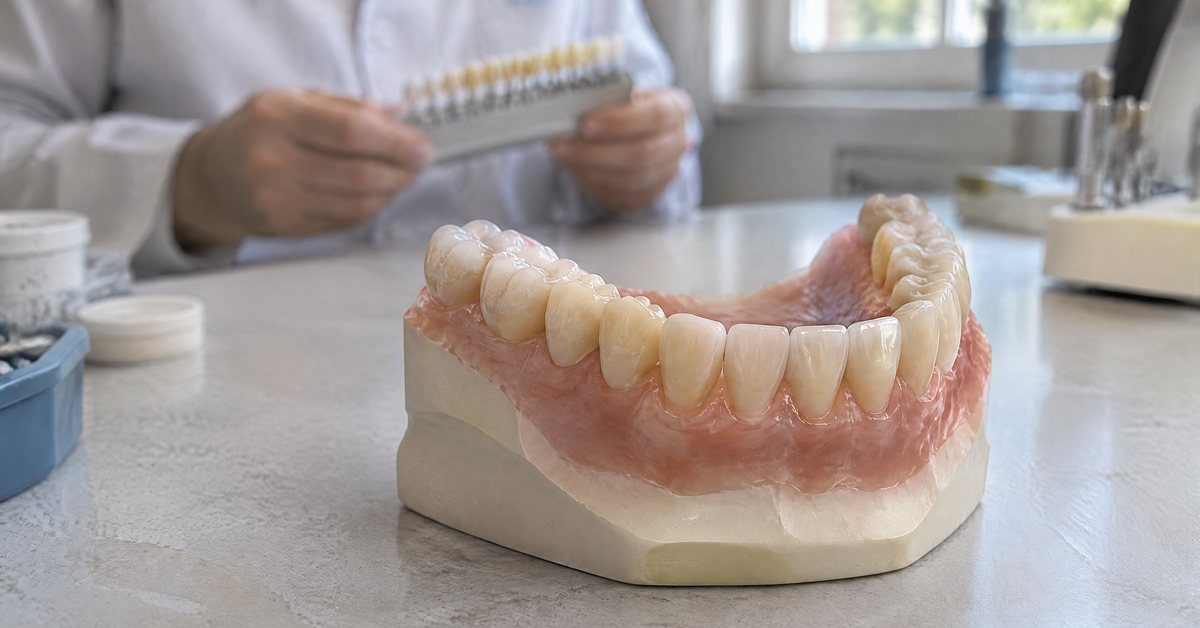
In the zirconia crowns vs porcelain crowns comparison, zirconia is a metal-free ceramic chosen mainly for strength, while “porcelain” crowns are either porcelain fused to a metal base or all-ceramic crowns chosen mainly for a natural, translucent look. Neither suits every tooth: the choice depends on tooth position, bite and remaining tooth structure. [1][2]
This guide explains what each crown material is, how the materials compare in a table, how long crowns tend to last, what changes the price, and what to check if you plan to have crowns made abroad.
Key takeaways
- A crown (also called a cap) is a custom-made cover that fits over a whole tooth to restore its shape, strength and appearance. [3]
- “Porcelain crown” can mean porcelain fused to metal or a metal-free all-ceramic crown, so ask which one a quote refers to. [1][3]
- Zirconia is the strongest of the common tooth-coloured crown ceramics, while glass-ceramics such as lithium disilicate are more translucent. [2]
- Layered crowns of any kind can chip in the outer porcelain; one-piece (monolithic) zirconia has a lower reported fracture rate. [2]
- Published five-year survival figures for zirconia and metal-ceramic crowns are both above 90%, and long-term evidence for zirconia is still limited. [2]
What is the difference in zirconia crowns vs porcelain crowns?
The difference in zirconia crowns vs porcelain crowns is the material that gives the crown its strength: zirconia crowns are built from zirconium dioxide ceramic, while porcelain crowns rely on a metal base or on a glass-based ceramic under or within the porcelain. [1][2]
A dentist may recommend a crown to protect a weak tooth, restore a broken one, support a tooth with a large filling, cover a discoloured or badly shaped tooth, or cover a dental implant. [4] The material is a separate decision, and the same questions apply to zirconium crown treatment at Niva Dental.
What are zirconia crowns?
Zirconia crowns are metal-free crowns made from zirconium dioxide, a ceramic that withstands heavier biting forces than other ceramics. [1] There are two main designs:
- Monolithic zirconia crown: milled from one solid piece of zirconia (“full-contour” zirconia), with no separate porcelain layer. [2]
- Layered zirconia crown: a zirconia core (framework) covered with a layer of porcelain or glass-ceramic to improve appearance. [2]
Zirconia also comes in different grades. The American Dental Association (ADA) explains that raising the yttria content makes zirconia more translucent but more brittle and lower in strength, so a “high-translucency” zirconia is not identical to the strongest type. [2]
What counts as a porcelain crown?
“Porcelain crown” is an everyday term that covers at least three constructions:
- Porcelain fused to metal (PFM, also called metal-ceramic or porcelain bonded to metal): a metal alloy base covered with tooth-coloured porcelain. The Oral Health Foundation describes this as one of the most common crown types. [2][3]
- All-porcelain or all-ceramic crowns: metal-free crowns that mimic the look of enamel closely. A widely used example is lithium disilicate, a strong glass-ceramic. [1][2]
- Pressed ceramic crowns: a hard ceramic inner core with porcelain layered on top. [1]
How do zirconia crowns vs porcelain crowns compare side by side?
Zirconia crowns vs porcelain crowns differ most in strength, translucency and the risk of the outer layer chipping. The table summarises what the cited sources report; your own tooth may change the picture.
| Feature | Monolithic zirconia | Layered zirconia | Porcelain fused to metal (PFM) | Lithium disilicate (all-ceramic) |
|---|---|---|---|---|
| Reported flexural strength | About 900 MPa or more [2] | Core about 900 MPa or more; outer porcelain is weaker [2] | Strength comes from the metal core [2] | About 250 to 400 MPa [2] |
| Appearance | Less translucent than glass-ceramics [2] | Porcelain layer improves appearance [2] | Natural shade, but metal lies underneath [1] | More translucent than any zirconia [2] |
| Chipping of outer layer | No separate layer [2] | Higher veneer chipping rates than other all-ceramic systems [2] | Porcelain may chip and expose metal [1] | Chipping and fracture are the most common complications [2] |
| Wear on opposing teeth | Polished zirconia is reported to cause less wear than PFM porcelain [1][2] | Depends on the outer porcelain | May gradually wear opposing enamel [1] | Ask your dentist |
| Metal-free | Yes | Yes | No | Yes |
| Common use | Back teeth, and front teeth in selected cases [2] | Where appearance matters more | Front and back teeth [1] | Front teeth and selected back teeth [2] |
Flexural strength is a laboratory measure of how much bending force a material resists before it breaks. For comparison, the feldspathic porcelain used as an outer layer is listed at only about 50 to 100 MPa, which is why layered crowns can chip even when the core stays intact. [2]
Which crown looks more natural on front teeth?
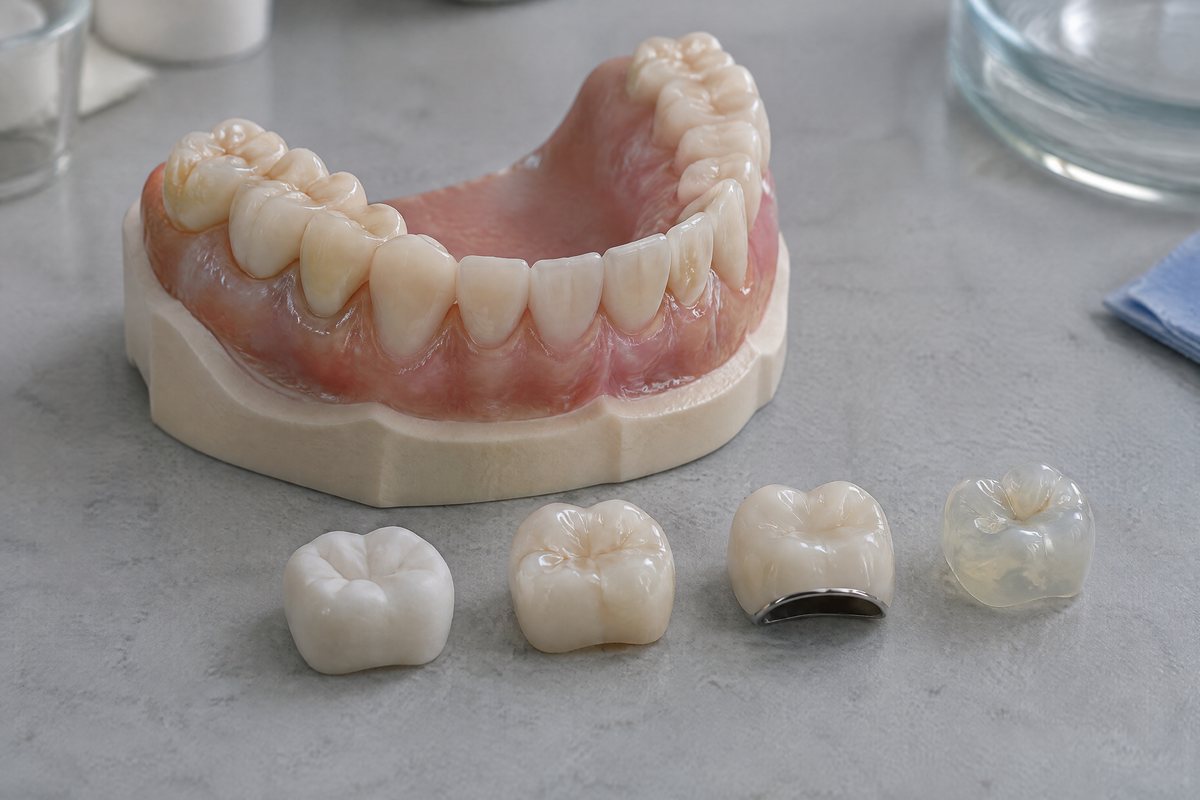
All-ceramic crowns generally look closest to natural enamel, because light passes through the ceramic instead of stopping at a metal layer. [1] Among metal-free options, the ADA notes that lithium disilicate is more translucent than any zirconia. [2]
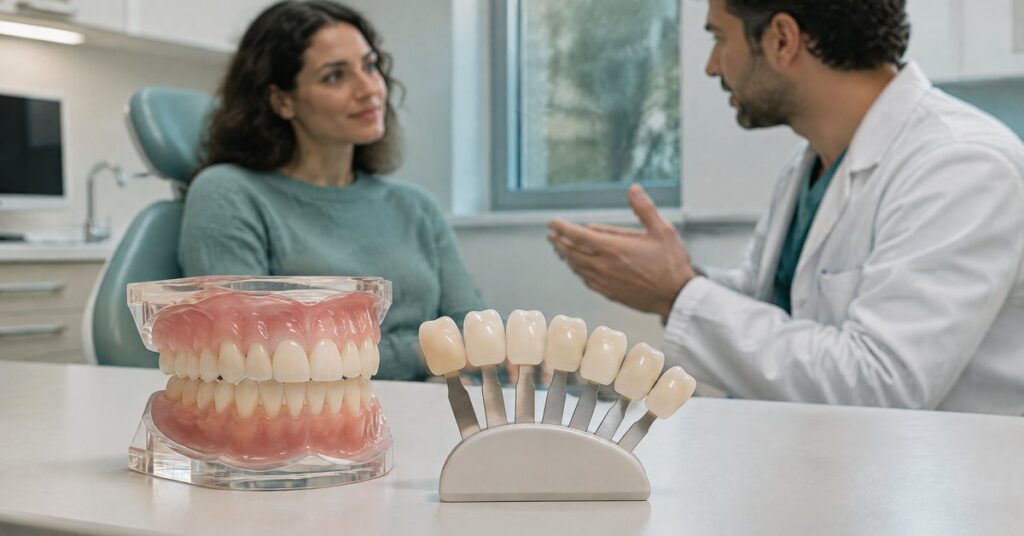
Zirconia can still be used at the front. In a 2021 ADA panel survey of 277 dentists, the most common uses of zirconia were back-tooth crowns (98%), with front-tooth crowns reported by 61%. [2] A layered zirconia crown or a more translucent zirconia grade is often chosen where appearance matters, with the trade-offs in chipping and strength described above. [2] Colour matters as much as material: Niva’s guide to shade selection for porcelain crowns explains how a natural-looking shade is chosen.
If only the front surfaces of healthy teeth need changing, a veneer may remove less tooth than a crown; Niva’s guide to Emax veneers vs zirconia crowns covers that separate decision, and the comparison of Emax veneers and crowns explains when full coverage is considered.
Which crown is stronger for back teeth?
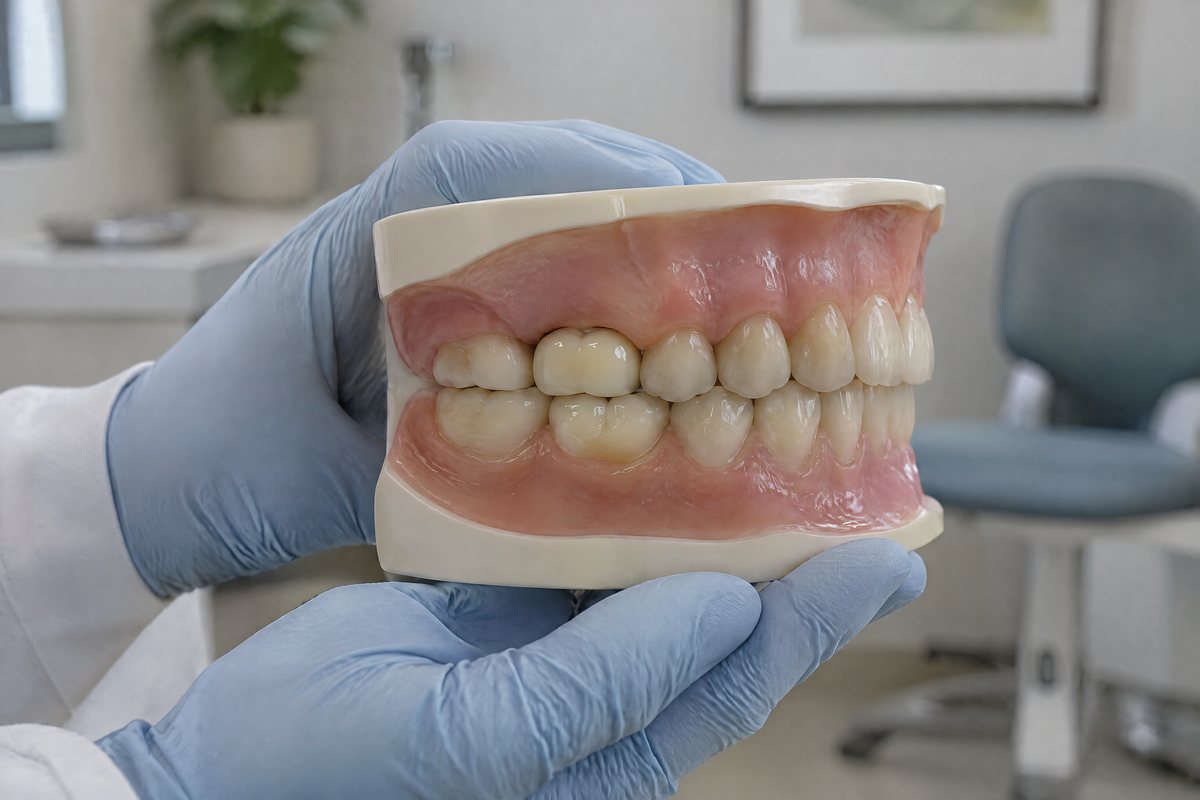
Zirconia is the strongest of the tooth-coloured crown materials and is used most often on back teeth, where chewing forces are highest. [1][2] The ADA lists pooled five-year fracture rates of 0.71% for monolithic zirconia single crowns and 3.25% for layered zirconia single crowns, which rises to 4.08% for layered crowns on back teeth. [2]
Strength is not the only issue for molars:
- Wear on the opposing tooth. Polished zirconia surfaces have been shown to be kinder to the opposing tooth than the feldspathic porcelain used on metal-ceramic crowns. PFM crowns may gradually wear the enamel of the teeth they bite against. [1][2]
- Debonding. In the same ADA survey, 52% of dentists named the crown coming loose (debonding) as the most common problem with zirconia restorations, ahead of fracture at 23%. [2]
- Grinding and clenching. Crowns can break or fracture over time, and dentists often suggest a custom guard for people who grind. [1] Niva’s article on what a night guard is and how it is used explains the appliance.
How long do zirconia crowns last compared with porcelain crowns?
Crowns of both kinds usually last for years, but no material has a fixed lifespan. Cleveland Clinic gives an average crown lifespan of 5 to 15 years with proper care, and notes that some last much longer. [1]
The research summarised by the ADA puts the materials close together over five years: [2]
- Tooth-supported zirconia crowns: 95.9% five-year survival in a 2014 systematic review.
- Metal-ceramic (PFM) single crowns: 94.7% five-year survival in a 2015 review.
- Lithium disilicate crowns: 97.4% at five years in a 2012 prospective study.
These figures come from different studies, so they are not a head-to-head ranking. The ADA also states that evidence for the long-term survival of zirconia is limited, whereas metal-ceramic crowns have been followed for much longer. [2]
What affects lifespan in practice is mostly outside the material: how much sound tooth remains, the fit of the crown (a poor fit can trap bacteria and lead to decay), cleaning between the teeth every day, avoiding biting hard objects such as ice, and regular check-ups. [1][3]
When might a dentist prefer one material over the other?
A dentist chooses a crown material tooth by tooth, after examining the bite, the gum line and the tooth underneath. Common lines of reasoning are:
- Heavy bite or back tooth: monolithic zirconia or a metal-based crown is often considered for strength. [1][2]
- Highly visible front tooth: an all-ceramic crown such as lithium disilicate, or layered zirconia, is often considered for translucency. [2]
- Metal allergy or a wish to avoid metal: all-ceramic and zirconia crowns are metal-free. [1]
- Dark tooth or metal post underneath: a less translucent material can hide the colour better; ask how the dentist plans to mask it.
- Limited space or little remaining tooth: every crown requires some enamel to be removed, and the amount differs by material and design. Ask how much will be removed and why. [1]
For people searching “best crown: porcelain vs ceramic vs zirconia”, the accurate answer is that the most suitable crown is the one matched to the individual tooth, not a single material.
What affects zirconia crown cost and porcelain crown cost?
Zirconia crown cost and porcelain crown cost depend more on how the crown is made and what the tooth needs first than on the material name alone. At Niva Dental, zirconia crowns start from €185 per tooth and aesthetic multi-layered zirconia crowns from €260 per tooth; these are starting prices, and the exact figure is set in a written plan after an examination.
Typical cost factors are:
- the material and design (monolithic, layered, PFM, glass-ceramic),
- whether the crown is milled in one visit or made in a dental laboratory (the Oral Health Foundation notes that single-visit, computer-designed crowns often cost more), [3]
- preparatory work such as a filling build-up, root canal treatment or a post, [1][3]
- the number of teeth, X-rays or scans, and temporary crowns.
What should you plan if you are travelling from abroad for crowns?
Travelling for crowns means fitting at least two appointments and the laboratory time between them into one trip, or making two trips. In the standard process, the tooth is shaped and scanned at the first visit, a temporary crown is fitted, and the final crown is cemented at the second visit; Cleveland Clinic describes laboratory time of two to three weeks, sometimes longer, in a typical setting. [1] Clinics that treat travelling patients often work to a shorter laboratory schedule, so ask for the planned number of days in writing instead of assuming.
People who search for “zirconia crown Turkey” should check the same points as for any treatment abroad:
- Before booking: the General Dental Council (GDC) advises speaking to your own dentist first and being assessed by a qualified dentist before you receive a treatment plan and cost estimate. [5]
- Documents: the US Centers for Disease Control and Prevention (CDC) advises bringing copies of your records and a medication list, and taking copies of all treatment records home. [6]
- Aftercare: ask who you contact after you return, and who pays for travel and remedial work if a crown needs to be adjusted or remade. [5]
- Sensitivity: sensitivity to hot and cold for a few weeks can follow crown placement, so leave time for a bite check before you fly. [1]
Niva’s checklist on how to choose a dental clinic in Turkey lists further questions.

What should a written treatment plan or quote include?
A written crown plan should let you compare two clinics line by line. Ask for:
- Material per tooth. Monolithic zirconia, layered zirconia, PFM or a named glass-ceramic, listed by tooth number.
- Reason for a crown. Why a crown is proposed instead of a filling or a veneer, and how much tooth will be removed.
- Preparatory treatment. Any fillings, root canal treatment or posts, priced separately.
- Appointments and days. Number of visits, laboratory time, temporary crowns and when you approve shade and shape.
- What is not included. X-rays, scans, a night guard, medication and follow-up visits.
- Problems after treatment. The written terms for chips, loosening or remakes, and who to contact once you are home.
Frequently asked questions
Which is better, a zirconia crown vs porcelain crown, for a molar?
For a molar, dentists often consider monolithic zirconia or a metal-based crown because back teeth carry the heaviest chewing forces, and zirconia withstands heavier forces than other ceramics. The right choice still depends on your bite, the space available and the remaining tooth, so a dentist needs to examine the tooth first. [1][2]
Porcelain vs zirconia crown: which chips more easily?
Chipping mainly affects crowns with a separate porcelain layer. Porcelain fused to metal can chip and expose the metal, and layered zirconia shows more chipping of its outer layer than other all-ceramic systems. A monolithic zirconia crown has no outer layer, and its reported five-year fracture rate is lower. [1][2]
What are zirconia crowns made of, and do they contain metal?
Zirconia crowns are made of zirconium dioxide, a ceramic, and are described as metal-free crowns, which makes them an option for people with metal allergies. Zirconium is a metallic element, but the crown material is its ceramic oxide. Tell your dentist about any known allergies before a material is chosen. [1][2]
How long do zirconia crowns last?
No crown has a fixed lifespan. Cleveland Clinic gives an average of 5 to 15 years for dental crowns with proper care, and a 2014 systematic review cited by the ADA found 95.9% of tooth-supported zirconia crowns surviving at five years. Long-term evidence for zirconia remains limited. [1][2]
Can a crown be made in one day?
Some ceramic crowns are designed on a computer and milled in the practice, so they can be made and fitted in a single visit. This option does not suit every tooth, and the Oral Health Foundation notes that the convenience often means a higher cost than laboratory-made crowns. [1][3]
Discuss zirconia and porcelain crowns with Niva Dental
If you are comparing crown materials and considering treatment at Niva Dental in Bakırköy, Istanbul, ask for an examination and a written plan that names the material proposed for each tooth and explains why. You can read about zirconium crowns at Niva Dental and see how visits are organised on the Niva Dental patient journey page before you get in touch.
This article provides general information and cannot determine your suitability, the right crown material for your tooth, your treatment plan or costs. Consult a dentist for an individual assessment.
Medically reviewed by Dt. Efsun Esen, dentist at Niva Dental. Last reviewed: November 2026.
Medical sources
- Cleveland Clinic: Dental Crowns.
- American Dental Association: Materials for Indirect Restorations.
- Oral Health Foundation: Crowns.
- American Dental Association (MouthHealthy): Crowns.
- General Dental Council: Going abroad for dental treatment.
- US Centers for Disease Control and Prevention: Medical Tourism: Travel to Another Country for Medical Care.