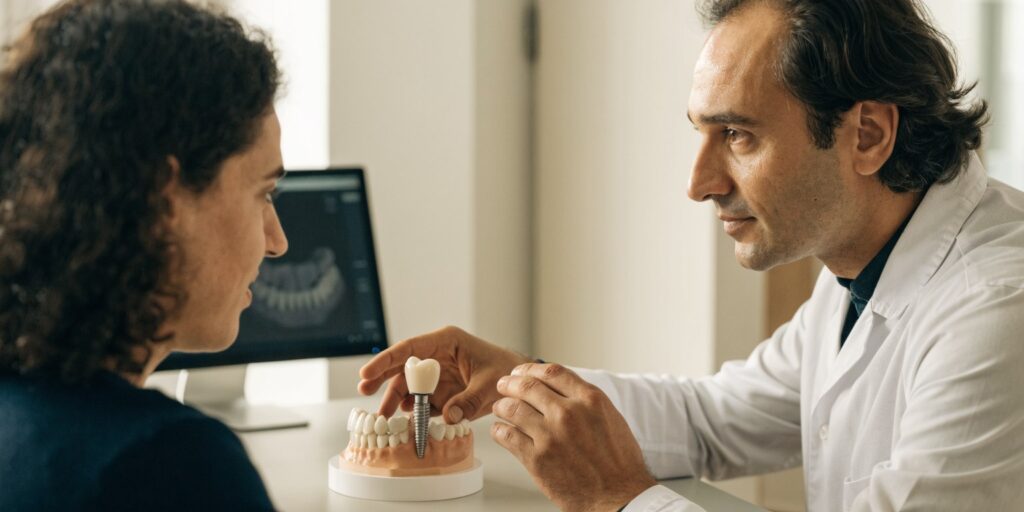



Emax veneers vs zirconia crowns: compare tooth preservation, aesthetics, strength, risks, and when each option may be appropriate for your smile.

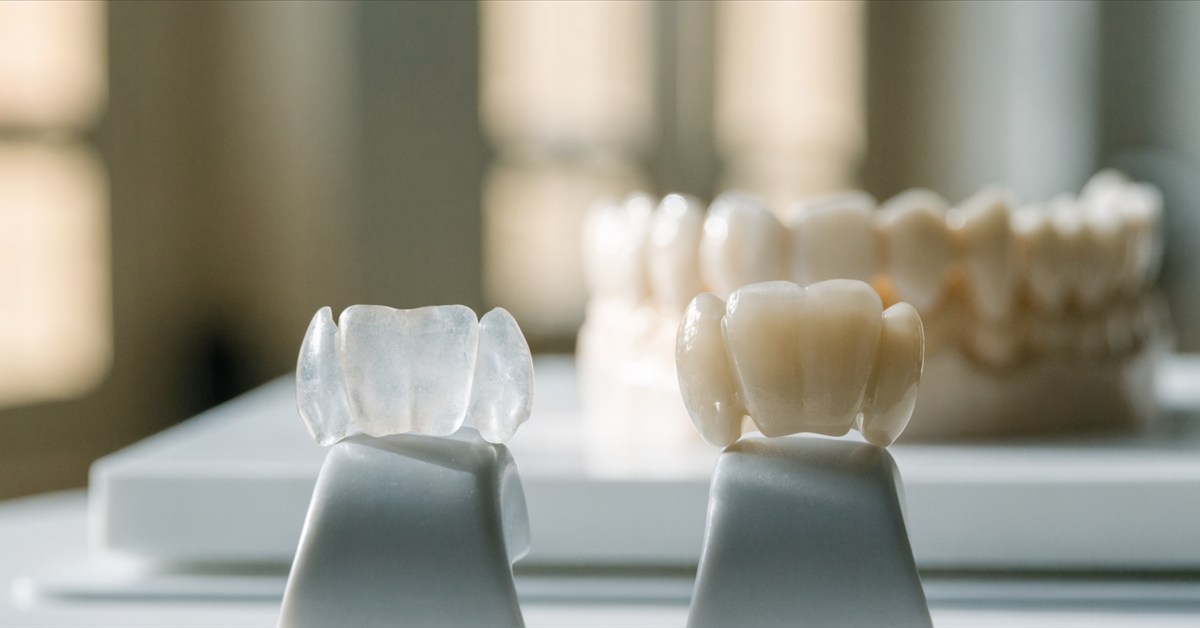
Emax veneers vs zirconia crowns is not a simple material contest because the two options usually involve different amounts of tooth coverage. An E-max veneer is typically a thin, bonded ceramic restoration used mainly to change the visible surface of a tooth, while a zirconia crown generally covers the tooth much more completely. If a front tooth is healthy and the goal is mainly cosmetic, a conservative veneer may preserve more natural structure. If a tooth is heavily restored, fractured, structurally weakened, severely discolored, or exposed to higher functional demands, a crown may be more appropriate. The correct choice depends on an individual dental examination rather than appearance or material strength alone.
Quick Answer: E-max Veneer or Zirconia Crown?
| Decision factor | E-max veneer | Zirconia crown |
|---|---|---|
| What it is | A veneer restoration commonly made from lithium-disilicate glass-ceramic | A full-coverage or near-full-coverage crown made from zirconia ceramic |
| Main role | Primarily aesthetic correction of suitable teeth | Restoration and protection of teeth that need more extensive coverage |
| Tooth coverage | Mainly the visible/front surface, with design varying by case | Covers substantially more of the tooth |
| Tooth preparation | Often more conservative than a crown, but still case-dependent and irreversible when enamel is removed | Usually requires more circumferential tooth preparation than a veneer |
| Appearance | Lithium disilicate offers strong optical and translucent properties | Modern zirconia can be highly aesthetic; opacity/translucency varies by zirconia type |
| Strength | Clinically durable when correctly selected, bonded, and protected from excessive forces | Zirconia is generally selected when higher fracture resistance or load tolerance is important |
| Best candidate | Often a relatively healthy tooth needing shape, shade, proportion, or minor alignment correction | Often a weakened, heavily restored, fractured, root-treated, dark, or high-load tooth |
| Better overall? | Neither option is universally better | Neither option is universally better |
The key principle is to choose the least invasive restoration that can predictably meet the tooth’s aesthetic and functional needs. Patients exploring E-max veneers should therefore compare treatment design first and ceramic material second.
The Most Important Difference: Veneer vs Crown Comes Before E-max vs Zirconia
A common mistake is to compare E-max and zirconia as though patients are choosing between two versions of the same restoration. They may not be.
A veneer is a restoration type. It generally covers the front surface of a tooth and sometimes extends around edges depending on the design. A crown covers substantially more tooth structure and is used when broader structural restoration is needed. The American Dental Association’s patient guidance on veneers makes the same distinction: veneers cover the front surface, whereas crowns cover the tooth more extensively.
E-max / IPS e.max, meanwhile, refers to a ceramic material system rather than a restoration category. IPS e.max CAD and IPS e.max Press are lithium-disilicate glass-ceramics. Lithium disilicate can be used for veneers and, in appropriate indications, other restorations such as crowns. Not every ceramic veneer is E-max, and not every E-max restoration is a veneer.
Zirconia is zirconium dioxide ceramic. It is widely used for crowns and fixed restorations because different zirconia formulations can provide high strength, although optical properties vary among generations and formulations.
That means the clinically responsible question is often:
Does this tooth need a veneer or a crown first—and, once the restoration type is chosen, which ceramic is appropriate?
This distinction matters because removing healthy tooth structure is irreversible.
What Are E-max Veneers?
In everyday patient searches, “E-max veneer” usually describes a thin ceramic veneer made from lithium-disilicate glass-ceramic. Lithium disilicate is valued for its combination of optical properties, translucency, and the ability to be adhesively bonded when the clinical situation is suitable.
E-max veneers may be considered for teeth with aesthetic concerns such as:
- persistent discoloration that is not adequately addressed by whitening;
- chipped or worn edges;
- shape or proportion concerns;
- small gaps;
- selected mild alignment discrepancies;
- replacement of an existing veneer when clinically appropriate.
They are not automatically suitable for every cosmetic concern. Active decay, untreated gum disease, insufficient tooth structure, unfavorable bite relationships, severe grinding, or a tooth that requires structural reinforcement can change the plan.
The ADA notes that porcelain veneer treatment is generally irreversible because some enamel may be removed. “Minimal-prep” and “no-prep” are therefore not promises; they are case-specific concepts with strict indications.
What Are Zirconia Crowns?
A zirconia crown is a ceramic restoration that covers much more of the tooth than a veneer. Dentists may consider full or extensive crown coverage when the remaining tooth needs structural protection or when a veneer would not adequately manage the clinical problem.
Situations that may favor a crown include:
- a large existing filling or substantial loss of tooth structure;
- fracture or cracks requiring broader protection;
- a tooth that has already been heavily prepared;
- selected root-canal-treated teeth;
- severe intrinsic discoloration that is difficult to mask conservatively;
- the need to change form while also restoring significant structural damage;
- high functional demands where the dentist determines that a stronger full-coverage design is indicated.
Modern zirconia is not one single material. More translucent zirconias can improve appearance, while some higher-strength formulations are less translucent. The specific zirconia formulation, restoration thickness, surface finishing, cementation approach, tooth position, and bite all influence performance.
Niva Dental has a separate Zirconium treatment page for patients who need broader information about zirconia restorations.
Emax Veneers vs Zirconia Crowns: Detailed Comparison
| Factor | E-max veneers | Zirconia crowns |
|---|---|---|
| Restoration type | Partial-coverage veneer | Full or extensive coverage crown |
| Common material terminology | Lithium-disilicate glass-ceramic; IPS e.max is a specific material system | Zirconium dioxide ceramic |
| Primary treatment goal | Aesthetic modification while preserving suitable underlying tooth structure | Restore and protect a tooth needing more extensive coverage |
| Natural-tooth preservation | Often more conservative when a veneer is genuinely indicated | Usually requires greater tooth reduction because more surfaces are covered |
| Translucency | Generally strong optical/translucent potential | Varies by zirconia formulation; modern translucent zirconias have improved aesthetics |
| Masking a dark substrate | Can be limited by restoration thickness and translucency | More opaque zirconia options may help mask dark underlying structure |
| Functional load | Suitable in selected patients with favorable occlusion and appropriate bonding | Often considered where higher load tolerance is needed |
| Bonding | Adhesive bonding is central to many veneer protocols | Cementation/bonding strategy depends on zirconia type, preparation, and clinical situation |
| Bruxism | May increase risk of chipping, fracture, or debonding | Strength can be advantageous, but bruxism still requires bite assessment and often protective management |
| Reversibility | Tooth preparation is irreversible | Tooth preparation is irreversible and generally more extensive |
| Future maintenance | May chip, loosen, discolor at margins, develop decay around margins, or require replacement | May chip if layered, lose retention, develop biological complications, or require replacement |
| “Best” use | Suitable tooth + cosmetic correction + conservative design | Tooth needing greater structural coverage and functional protection |
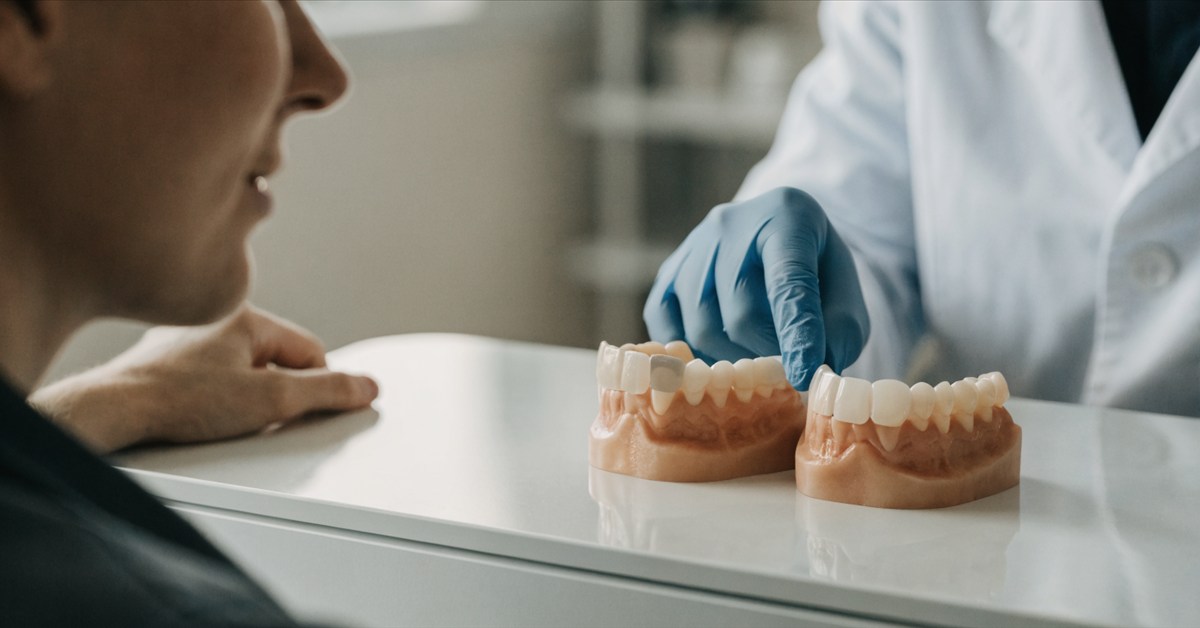
Which Option Preserves More Natural Tooth Structure?
When both treatments are clinically possible, a veneer will usually preserve more natural tooth structure than a full crown because it covers less of the tooth. This is one of the most important reasons not to choose a crown simply because zirconia is stronger.
However, “less preparation” does not mean “no preparation.” Veneer preparation depends on the original tooth position, desired color change, planned thickness, existing restorations, enamel availability, and the final shape. In some cases, a tooth positioned too far forward may require more reduction; in another case, orthodontics might move the tooth first and allow a more conservative restorative plan.
Crowns generally require circumferential preparation because the restoration surrounds the tooth. If a tooth is already heavily damaged or extensively restored, that additional coverage may be justified. On an otherwise healthy tooth, the biological cost deserves careful consideration.
Healthy enamel is valuable, and once it is removed it does not regenerate. A treatment plan should therefore preserve sound tooth structure where clinically appropriate. For more on this topic, see do E-max veneers require tooth shaving?
Which Looks More Natural on Front Teeth?
Lithium-disilicate veneers can provide highly natural optical effects in the visible smile zone because glass-ceramics can transmit and scatter light in a way that supports enamel-like depth and translucency. This is one reason E-max-style lithium-disilicate restorations are commonly discussed for front teeth.
But “E-max always looks more natural” is too absolute. Final appearance also depends on:
- the shade and color of the tooth underneath;
- ceramic thickness;
- translucency selected by the dentist and laboratory;
- surface texture and characterization;
- tooth proportions;
- gum position;
- cement shade;
- neighboring teeth;
- the dental technician’s work.
Zirconia aesthetics have also improved. Some modern zirconias are more translucent than earlier generations, while more opaque options can be useful when a dark tooth or underlying core must be masked. Greater opacity can be an advantage in one patient and an aesthetic limitation in another.
The right question is not “Which material is prettiest?” but “Which optical behavior does this particular tooth need?”
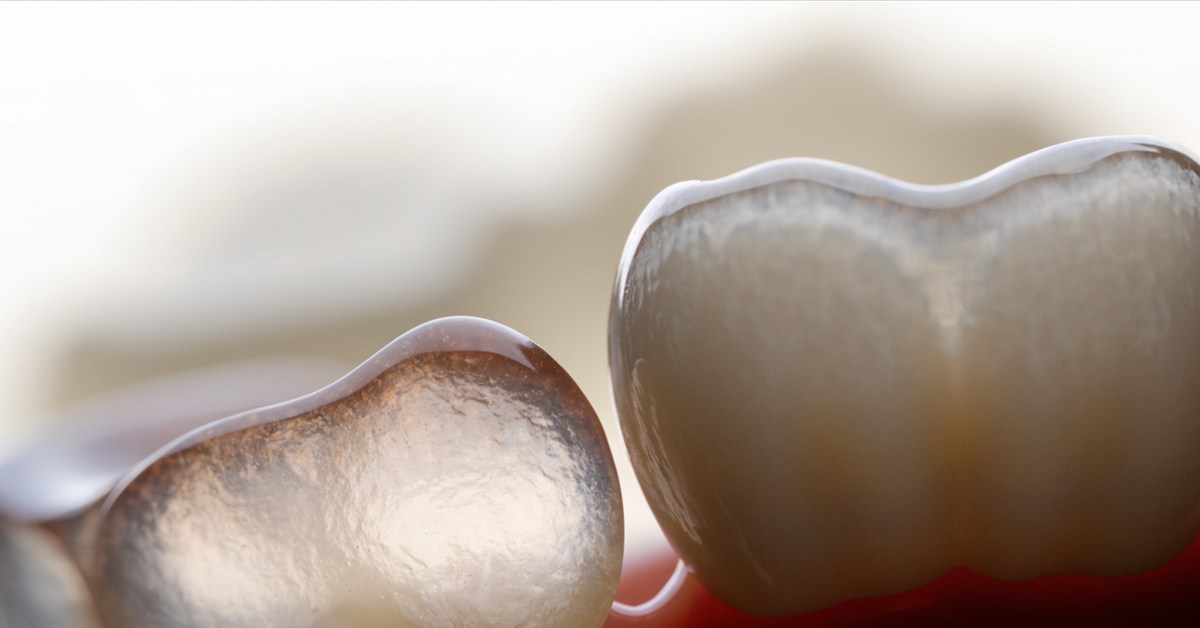
Is Zirconia Stronger Than E-max?
Many zirconia formulations have higher flexural strength than lithium-disilicate glass-ceramics, but higher material strength does not automatically make a zirconia crown the better treatment for every tooth. Dentistry is not a laboratory strength contest.
The American Dental Association notes that ceramic performance depends on the specific material and indication. Zirconia is widely used in high-stress restorative situations, while lithium disilicate provides a balance of strength and translucency for appropriate bonded restorations. See the ADA overview of materials for indirect restorations.
A crown also gains its clinical behavior from more than the ceramic itself. Preparation geometry, restoration thickness, occlusion, cementation, surface treatment, opposing teeth, and patient habits all matter.
A recent 2026 clinical study comparing one lithium-disilicate-based glass ceramic crown system with one high-translucency multilayer zirconia crown system reported better two-year survival for the zirconia group. That finding is clinically interesting, but it should not be generalized into “all zirconia is better than all lithium disilicate,” and it does not compare E-max veneers with zirconia crowns. Different restoration types and products cannot be treated as interchangeable evidence.
What If You Grind or Clench Your Teeth?
Bruxism can change the decision because repeated heavy or nonfunctional forces may increase the risk of fracture, chipping, wear, debonding, or other complications. A stronger ceramic may be useful in some high-load situations, but material choice alone does not solve bruxism.
A dentist should assess:
- where and how your teeth contact;
- signs of wear or cracking;
- parafunctional habits;
- the amount of remaining enamel and dentin;
- restoration thickness and design;
- whether a protective night guard is appropriate;
- whether the cosmetic plan should be delayed or modified.
The ADA specifically advises patients who clench or grind to discuss whether veneers are appropriate. In some cases, changing the bite environment or using a protective appliance is as important as choosing the ceramic.
Which Lasts Longer: E-max Veneers or Zirconia Crowns?
There is no responsible universal lifespan number for either treatment. Longevity varies with restoration type, tooth condition, bonding or cementation, bite forces, oral hygiene, caries risk, gum health, material selection, and maintenance.
The strongest long-term evidence relevant to E-max-style veneers comes from lithium-disilicate laminate veneer research. A 2025 systematic review and meta-analysis reported a 96.81% pooled survival rate for lithium-disilicate laminate veneers at a mean follow-up of approximately 10.4 years. That is population-level study data, not a promise that an individual veneer will last 10 years or remain complication-free.
For crowns, a systematic review of CAD/CAM lithium-disilicate and zirconia crowns found both materials to be viable all-ceramic options, while reporting different complication patterns: chipping was more common in lithium-disilicate crowns in the reviewed evidence, whereas aesthetic concerns were more frequently noted with zirconia crowns.
Most importantly, a longevity comparison between a veneer and a crown is not perfectly “apples to apples.” They treat different starting conditions and require different preparation designs. For veneer-specific detail, see how long do E-max veneers last?
When Might E-max Veneers Be the More Conservative Choice?
E-max veneers may be considered when:
- the tooth is largely healthy and structurally sound;
- the main goal is aesthetic rather than structural rehabilitation;
- enough suitable enamel remains for predictable adhesive treatment;
- the planned change in color, shape, length, or proportion can be achieved conservatively;
- bite forces and parafunctional habits are compatible with the design;
- gum health and caries are under control.
A veneer should not be chosen merely to avoid a crown if the tooth actually needs full coverage. Likewise, a crown should not be chosen merely because it is stronger if a less invasive restoration can meet the clinical need.
Patients considering treatment can review Niva Dental’s main E-max veneer treatment information and then discuss whether their own teeth are candidates for a partial-coverage approach.
When Might a Zirconia Crown Be More Appropriate?
A zirconia crown may be considered when a tooth requires more extensive restoration or protection. Examples can include:
- substantial loss of tooth structure;
- a large existing restoration;
- fracture or structural weakness;
- a need for broader masking of a dark underlying tooth;
- selected root-canal-treated teeth;
- higher functional loading where the dentist judges zirconia appropriate;
- an existing crown that requires replacement.
Even then, the dentist must decide which zirconia formulation, design, finish, and cementation protocol are suitable. “Zirconia” is not one universal product with one translucency or one strength value.
Can E-max Veneers and Zirconia Crowns Be Used in the Same Smile?
Yes, different restoration types and materials can be used in the same treatment plan when different teeth have different needs. A healthy front tooth might receive a veneer while another tooth with major structural loss might need a crown. Material selection can also vary by tooth.
This should be a tooth-by-tooth clinical decision, not a pre-set “hybrid package.”
When the discussion expands from individual restorations to the overall shape, shade, symmetry, gum display, and treatment sequence of a smile, that becomes broader Hollywood Smile / smile-design planning rather than an E-max-only decision.
What Are the Main Risks and Limitations?
Both treatments are irreversible when tooth structure is prepared, and neither is maintenance-free.
Possible issues with veneers can include:
- temporary or persistent sensitivity;
- chipping or fracture;
- debonding or loosening;
- marginal discoloration;
- secondary decay at restoration margins;
- gum irritation;
- bite discomfort;
- future repair or replacement.
Possible issues with crowns can include:
- sensitivity or pulpal complications;
- loss of retention;
- fracture or chipping depending on design;
- wear of opposing teeth depending on surface condition and material;
- gum or margin problems;
- secondary decay;
- endodontic complications;
- future replacement.
Risk depends heavily on the condition of the tooth before treatment, preparation quality, occlusion, hygiene, and ongoing dental care.
Alternatives May Preserve More Tooth Structure
If the tooth is healthy and the concern is mainly cosmetic, a veneer or crown may not be the first or only option.
Depending on the problem, alternatives may include:
- professional teeth whitening for suitable discoloration;
- composite bonding for selected small shape changes, chips, or gaps;
- orthodontics or clear aligners when tooth position is the main issue;
- observation / no cosmetic treatment when intervention is not necessary;
- a different partial-coverage ceramic restoration where indicated.
For example, a patient with relatively healthy but mildly crowded front teeth may benefit from orthodontic alignment before any ceramic treatment. A patient whose main concern is tooth color may be better served by whitening if the discoloration responds to bleaching.
Cosmetic dentistry should not convert a treatable aesthetic concern into unnecessary removal of healthy tooth structure.
Choosing Between E-max and Zirconia in Turkey
International patients should avoid choosing a restoration solely from a package name, photograph, or price-per-tooth list. Before traveling, ask the clinic to explain:
- Which teeth actually need treatment?
- Does each tooth need a veneer, crown, or no restoration?
- How much natural tooth structure is expected to be removed, and why?
- What ceramic is proposed for each tooth?
- Is “E-max” being used as a general term, or is a specific material system/brand being proposed?
- How will bite, gum health, decay, previous restorations, and bruxism be assessed?
- What happens if the clinical examination in Istanbul changes the preliminary plan?
- What maintenance or protective appliance may be needed afterward?
Patients traveling to Niva Dental in Bakırköy, Istanbul can also review the clinic’s Patient Journey when planning consultation and travel logistics. A preliminary remote assessment can be useful for planning, but definitive restoration selection should follow an in-person dental examination.
A Practical Decision Guide
An E-max veneer may make more sense when the tooth is healthy, the change is mainly aesthetic, enamel can be preserved, and the bite is favorable.
A zirconia crown may make more sense when the tooth needs substantial structural coverage, the underlying color requires stronger masking, or functional demands favor a high-strength crown design.
Neither option should be selected purely because one is marketed as “more natural” or “stronger.” The best treatment is the one that solves the actual problem while preserving as much healthy tissue as reasonably possible and managing long-term biological and functional risk.
Conclusion: Which Is Right for You?
The safest answer to emax veneers vs zirconia crowns is not “E-max” or “zirconia” in isolation. First determine whether the tooth needs a veneer or a crown. Then choose the ceramic that fits the required aesthetics, strength, masking ability, bonding conditions, remaining tooth structure, and bite.
For a suitable, largely healthy front tooth, an E-max-style lithium-disilicate veneer may provide a conservative and highly aesthetic option. For a tooth needing substantially more structural coverage, a zirconia crown may be appropriate. Some patients need neither, and some treatment plans appropriately use different restorations on different teeth.
Patients considering E-max veneers can contact Niva Dental in Bakırköy, Istanbul for an initial consultation. Final treatment recommendations should follow an individual dental examination and should be based on the condition of each tooth rather than a pre-selected cosmetic package.
Frequently Asked Questions
Which is better: E-max veneers or zirconia crowns?
Neither is universally better. E-max veneers may be more appropriate for relatively healthy front teeth when the main goal is aesthetic improvement with conservative coverage. Zirconia crowns may be more appropriate when a tooth needs broader structural protection, stronger masking, or a high-strength full-coverage restoration. The decision should follow examination of the tooth, bite, gums, existing restorations, and aesthetic goals.
Do E-max veneers require less tooth shaving than zirconia crowns?
Usually, a veneer requires less tooth reduction than a full crown because it covers less of the tooth, but the exact amount varies. Dentists generally use the term tooth preparation or enamel reduction rather than “shaving.” Minimal-prep and no-prep veneers are only suitable in selected cases, and any enamel removed is irreversible.
Which looks more natural on front teeth, E-max or zirconia?
Lithium-disilicate veneers can provide excellent translucency and enamel-like optical depth, which can be advantageous on visible front teeth. Modern zirconia can also be highly aesthetic, and more opaque zirconia may better mask a dark underlying tooth. The final appearance depends on material selection, ceramic thickness, tooth color, cement shade, surface texture, and laboratory artistry.
Is zirconia stronger than E-max?
Many zirconia formulations have higher flexural strength than lithium-disilicate glass-ceramics, but strength alone does not determine the best treatment. A healthy tooth may not benefit from being prepared for a full crown simply to use a stronger ceramic. Restoration design, tooth structure, bite forces, cementation, and clinical indication are equally important.
Are E-max veneers suitable if I grind my teeth?
Bruxism can increase the risk of veneer chipping, fracture, wear, or debonding, so suitability requires individual assessment. A dentist should evaluate the bite, severity of grinding, remaining enamel, restoration design, and whether a protective night guard or another treatment approach is appropriate. Severe parafunction may change both the restoration and material choice.
Can I have E-max veneers on the front teeth and zirconia crowns elsewhere?
Yes, a mixed plan can be appropriate because different teeth may have different structural and aesthetic needs. A dentist may select a veneer for one relatively healthy tooth and a crown for another more heavily restored tooth. The combination should be planned tooth by tooth rather than sold as a fixed package.
How long do E-max veneers last?
There is no guaranteed lifespan. A 2025 systematic review and meta-analysis reported approximately 96.81% pooled survival for lithium-disilicate laminate veneers at a mean follow-up of about 10.4 years. That is research data across studied restorations, not a promise for an individual patient. Bite forces, bonding, hygiene, decay risk, trauma, and maintenance influence longevity.
Are zirconia crowns always better for dark teeth?
No. More opaque zirconia formulations can help mask dark underlying tooth structure, but treatment design depends on why the tooth is dark, how much healthy tissue remains, and whether a veneer or crown is actually indicated. Shade management can also involve ceramic opacity, thickness, cement, and other restorative choices.
Is E-max the same as porcelain veneers?
Not exactly. “Porcelain veneer” is a broad patient-facing term for ceramic veneers. E-max / IPS e.max is a specific ceramic system associated with lithium-disilicate glass-ceramics. Other ceramic materials can also be used for veneers, so not every porcelain or ceramic veneer is E-max.
Should I choose my material before traveling to Turkey?
You can discuss likely options before traveling, but final material and restoration selection should follow a clinical examination. Photos and scans may help with preliminary planning, yet they cannot fully replace assessment of decay, gum health, bite, cracks, existing restorations, enamel availability, and the condition of each tooth.
Medical References and Sources
- American Dental Association / MouthHealthy — Veneers
- American Dental Association — Materials for Indirect Restorations
- Klein P, et al. 2025 — Survival and Complication Rates of Ceramic Laminate Veneers (PubMed)
- Benli M, et al. 2022 — Clinical performance of lithium disilicate and zirconia CAD/CAM crowns (PubMed)
- Ivoclar — IPS e.max CAD technical information
- Hausdörfer T, et al. 2026 — Clinical performance of lithium-disilicate-based glass ceramic vs multilayer zirconia crowns (PubMed)
This article provides general educational information and does not replace an individual dental examination. Treatment suitability, preparation requirements, restoration selection and outcomes vary between patients.