


Implant supported dentures explained: snap-in vs fixed options, how many implants, healing time, daily care, common problems and what a quote should list.

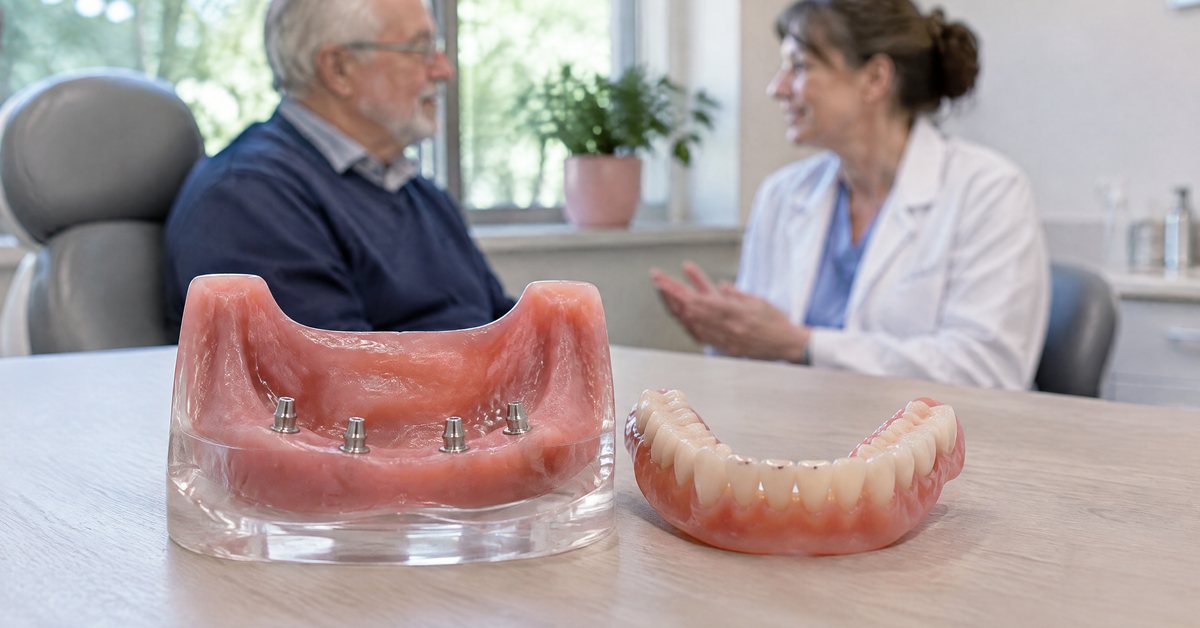
Implant supported dentures are full or partial dentures that attach to dental implants placed in the jawbone instead of resting only on the gums. They come in two main forms: removable “snap-in” overdentures that you take out to clean, and fixed bridges that only a dentist can remove. [1][2]
This guide explains how the two forms differ, how many implants are typically used, who may be a candidate, how healing and daily care work, which problems to expect, what drives the cost and how to plan the stages if you travel for treatment.
Key takeaways
- A dental implant is a small threaded post placed in the jawbone to replace a missing tooth root; several implants can hold a whole denture. [1]
- Removable snap in dentures clip onto the implants and come out for cleaning; fixed versions are screwed or cemented in place. [1][4]
- Research reviews recommend at least two implants for a lower overdenture and suggest at least four for an upper one. [3]
- Implants usually need about 3 to 6 months to bond with the bone before the final denture is fitted. [1]
- Attachments wear, the denture base may need relining, and yearly checks are advised. [4][5]
- Costs depend on the number of implants, the type of denture, bone grafting and long-term maintenance. [2]
What are implant supported dentures?
Implant supported dentures are replacement teeth for people missing most or all of their teeth, held in place by implants instead of by suction or adhesive alone. A traditional denture rests on the gums; a denture supported by implants is anchored to posts in the bone, so it does not slip, shift or wobble in the same way during eating and speaking. [1]
The American College of Prosthodontists notes that implants are most popularly used by people who already wear full or partial dentures, because attaching the denture improves stability and reduces the need for adhesive. [2] If you are comparing fixed full-arch treatment, Niva’s page on All-on-4 and All-on-6 dental implants in Turkey describes that option, and the guide to dental implants vs dentures compares conventional dentures with implant treatment more broadly.
Two terms are worth knowing:
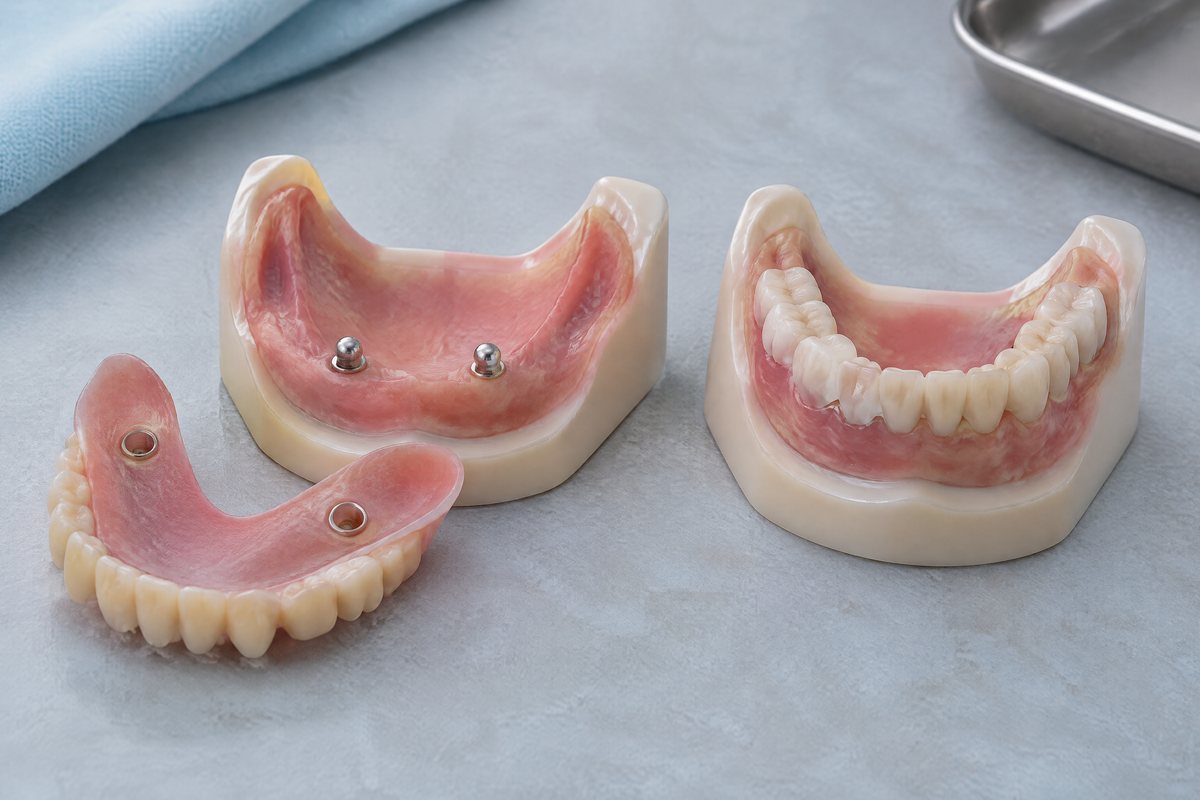
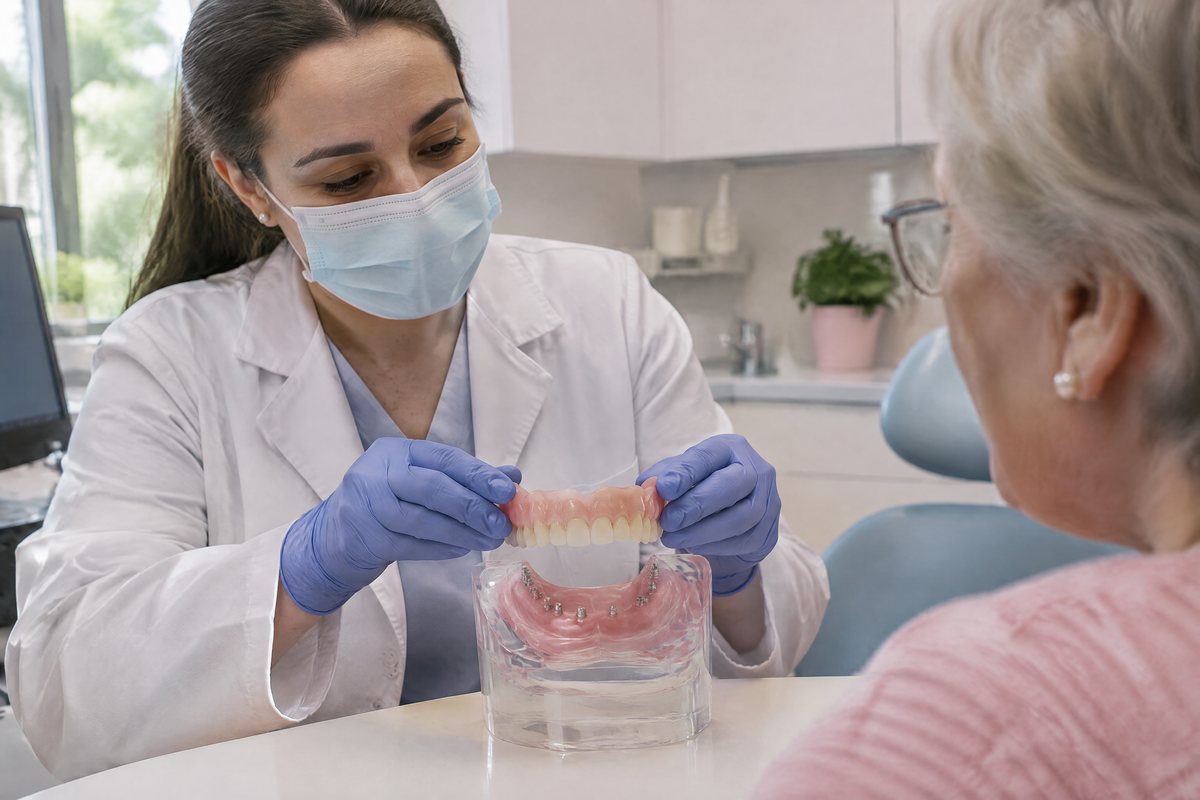
- Overdenture: a removable denture that fits over implants and attaches to them. “Snap-in dentures” and “implant-retained dentures” are everyday names for the same idea. [1]
- Fixed implant bridge (hybrid denture): a full arch of teeth attached to implants with screws or dental cement that the wearer cannot remove. Some people call these “permanent dentures”. [5]
Snap in dentures vs fixed implant supported dentures: how do they differ?
Snap in dentures are removable by the wearer, while fixed implant supported dentures stay in the mouth and are removed only by a dentist for maintenance. [1] The table compares the two.
| Feature | Removable snap-in overdenture | Fixed implant bridge (hybrid, All-on-4 style) |
|---|---|---|
| Who can remove it | You, every day [1][4] | Only a dentist [1][2] |
| How it attaches | Press-stud-like attachments or a bar on the implants [3][4] | Screws or dental cement [5] |
| Number of implants | At least two (lower jaw) and at least four (upper jaw) are described in reviews [3] | All-on-4 uses four implants per arch [1][2] |
| Daily cleaning | Take out, clean, soak overnight; clean around the implants [1] | Brush like natural teeth and clean underneath with floss threaders or interdental brushes [1] |
| Night-time | Can be removed at night [4] | Stays in place |
| Typical upkeep | Attachments wear and need replacing; base may need a reline [4][5] | Dentist removes it when maintenance is needed [1] |
Neither type is automatically the better one: the choice depends on jawbone health, medical history and personal preference. [1] Niva’s comparison of All-on-4 vs All-on-6 covers the fixed designs.
How many implants are needed?
The number depends on the jaw, the bone and the design, and no single figure applies to everyone. What the cited sources say:
- Lower jaw overdenture: a large body of evidence recommends at least two implants. [3]
- Upper jaw overdenture: several systematic reviews suggest at least four implants, and there are no current clinical guidelines that fix an ideal number. [3]
- Four or six in the upper jaw: a 2021 systematic review of bar-supported upper overdentures found no significant difference between four and six implants in patient satisfaction or survival (mean implant survival 97.7% with four and 98.3% with six). [3]
- Fixed full arch: the All-on-4 approach replaces all the teeth in one jaw on four implants, and is described as especially helpful where bone has been lost at the back of the mouth. [1][2]
Ask the dentist why a particular number is proposed for your jaw and what happens to the design if one implant does not integrate.
Who is a candidate, and how much bone is needed?
A possible candidate is an adult missing most or all teeth in a jaw who is in good general and oral health, has healthy gums and has enough jawbone to hold the implants. [1][6] Only an examination with imaging can confirm this.
Bone matters because it shrinks after teeth are removed. The American College of Prosthodontists explains that the jawbone slowly shrinks and changes shape once teeth are lost. [5] Where bone is insufficient, grafting can add volume, a sinus augmentation can build bone in the upper back jaw, and ridge modification can rebuild a deficient ridge; each adds time to treatment. [1][4][6] Niva’s guide to dental implants with bone loss explains these situations.
Factors that raise the risk of implant failure include smoking, poor oral hygiene, past gum disease, radiotherapy to the jaw, poorly controlled diabetes and certain medicines such as bisphosphonates. [4] Tell the dental team about all conditions and medicines before a plan is made.
What are the steps, and how long does healing take?
Treatment usually takes several months because the implants must bond with the bone before the final denture is attached. This bonding is called osseointegration. Cleveland Clinic describes about 3 to 6 months for it, Leeds Teaching Hospitals 2 to 6 months, and the Oral Health Foundation around four months. [1][4][7]
- Assessment and planning. Examination, imaging, medical history and a written plan.
- Preparatory surgery if needed. Extractions and any bone grafting; healing may take a few months before implants are placed. [1]
- Implant placement. Most people resume routine activities in two to three days and feel normal within about a week. [1]
- Healing period. A healing denture is worn that does not attach to the implants. [1] In some cases teeth can be fitted the same day; the implant dentist advises whether that is suitable. [7]
- Impressions and laboratory work. Taken after healing. [1]
- Fitting. The denture is attached and you are shown how to clean it. [1]
What you wear between stages is explained in Niva’s article on temporary teeth while dental implants heal.
How do you care for and maintain implant-supported dentures?
Implant-supported dentures need cleaning at least twice a day and regular professional checks, because plaque around implants can inflame the gum and bone. [1][7]
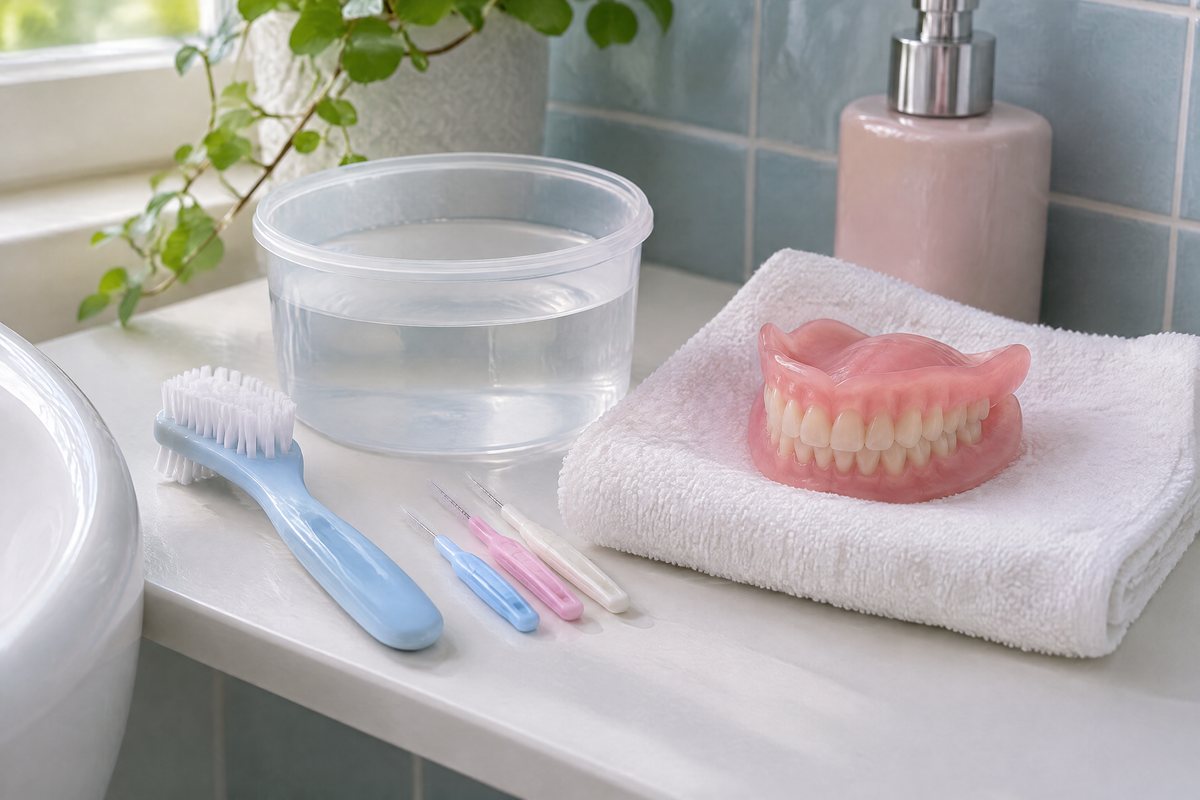
- Removable type: take the denture out, brush every surface gently, and soak it overnight in denture solution. Do not use ordinary toothpaste on a denture. [1][5]
- Fixed type: brush with a soft-bristled brush and non-abrasive toothpaste, and clean underneath with floss threaders or interdental brushes. [1]
- Around the implants: clean every day, using interdental brushes where advised. [7]
- At night: it is preferable to remove a removable denture at night so the gum tissues can rest. [5]
- Check-ups: dentures should be checked every year. [5]
Maintenance is part of ownership. Overdenture clips or attachments may wear over time and need replacing. [4] If the denture no longer fits as well as it did, the base may need a reline (a procedure to refit the base to the gums); over-the-counter reline kits are best avoided. [5] Cleveland Clinic states that the overdenture itself should be replaced every 15 to 20 years. [1]
What are common problems with snap-in dentures?
The most common problems with snap-in dentures are loosening as attachments wear, a changing fit as bone shrinks, and inflammation around the implants if cleaning is difficult. Most are manageable when they are found early.
- Loose fit. Worn clips or attachments reduce the “snap” and need replacement. [4]
- Rocking and sore spots. Bone under a denture shrinks over time, so even a denture on implants can start to slip and cause painful ulcers until it is relined or remade. [5]
- Gum inflammation and bone loss. Plaque around an implant can cause peri-implantitis, which may lead to bleeding, infection, loosening or loss of the implant. [7]
- Implant failure. An implant may fail to bond with the bone early on, or be lost later through inflammation and bone loss. [4]
- Surgical complications. Infection, nerve damage and sinus perforation are possible, though Cleveland Clinic describes the risks as usually minimal. [1]
Contact the dental team promptly for severe bleeding, pain that medication does not relieve, pus near the implants or a fever of 101°F (38.2°C) or higher. [1] Difficulty breathing or swallowing, or rapidly spreading facial swelling, needs emergency medical care.
What affects snap in dentures cost and implant supported dentures cost?
Snap in dentures cost and implant supported dentures cost vary with the patient’s needs, the amount of bone and the region, according to the American College of Prosthodontists. [2] No reliable single price exists. As a guide to one item, a dental implant at Niva Dental starts from €250 per implant; the denture, the attachments and any grafting are priced in an itemised written plan after an examination and imaging.
The main cost factors are:
- the number of implants and the implant system,
- removable overdenture or fixed bridge, and the materials of the teeth and framework,
- extractions, bone grafting or sinus surgery, [1][6]
- imaging, temporary or healing dentures, and laboratory work,
- long-term upkeep: replacement attachments, relines, yearly checks and eventual replacement of the denture. [1][4][5]
Ask for the expected upkeep in writing as well as the starting price.
What should you plan if you are travelling from abroad for implant supported dentures?
Travelling for this treatment usually means at least two stages several months apart: one trip for surgery and a later trip for the final denture once the implants have integrated, commonly after about 3 to 6 months. [1] Niva’s guide to how many trips to Turkey dental implants need explains the usual pattern.
- Before booking. The US Centers for Disease Control and Prevention (CDC) advises a pre-travel consultation at least 4 to 6 weeks before the trip and checking the qualifications of the clinician. [8] The UK General Dental Council (GDC) advises speaking to your own dentist first and being assessed by a qualified dentist before receiving a plan and cost estimate. [9]
- Documents to send. Recent X-rays or scans, a medication list and your medical history; bring copies of records and take copies of all treatment records home. [8]
- Flying. The CDC notes that flying after surgery raises the risk of blood clots, so ask the clinic how long to stay after implant placement. [8] See Niva’s article on flying after dental implant surgery.
- Care at home. Ask which attachment system is used, so that a dentist near you can obtain replacement parts, and confirm you can get follow-up care at home. [8]
- If something goes wrong. Ask who you contact, and whether further treatment for complications is included in the initial cost. [9]
What should a written treatment plan or quote include?
A written plan should make the design, the stages and the long-term costs clear before you commit. Ask for:
- Design. Removable overdenture or fixed bridge, for which jaw, and why.
- Implants. Number, positions, brand and system, and what happens if one fails to integrate.
- Attachments and materials. Attachment type (studs or bar), tooth and base materials.
- Preparatory treatment. Extractions, grafting or sinus surgery, priced separately.
- Stages and dates. Number of trips, days per trip and the healing interval.
- Temporary teeth. What you will wear during healing and any limits on eating.
- Maintenance. Expected replacement of attachments, relines and review visits, with prices.
- Exclusions and aftercare. Imaging, medication, complication treatment and who to contact from home.
Frequently asked questions
What are snap in dentures?
Snap in dentures are removable overdentures that clip onto dental implants in the jaw. The denture stays secure during eating and speaking until the wearer takes it out, usually every day for cleaning. They differ from fixed implant bridges, which are screwed or cemented in place and can be removed only by a dentist. [1][4]
How long do implant supported dentures last?
The implants and the denture age differently. Leeds Teaching Hospitals reports that about 90% of implants are still present and functional after 10 years in the studies it cites, while Cleveland Clinic states that the overdenture itself should be replaced every 15 to 20 years. Attachments may need replacing sooner as they wear. [1][4]
Can you sleep with snap-in dentures in?
The American College of Prosthodontists says dentures can be worn at night but that removing them is preferred, because the gum tissues beneath need rest and continual wear can irritate them. Removable overdentures can be taken out, cleaned and soaked overnight. Follow the instructions given for your own denture. [1][5]
Can my existing denture be attached to implants?
Sometimes. The American College of Prosthodontists explains that dentures cannot be “made into implants”, but implants may be placed beneath an existing denture to stabilise and support it if that denture is in excellent condition. A dentist needs to examine the denture and the jaw before deciding. [2]
Discuss implant supported dentures with Niva Dental
Niva Dental in Bakırköy, Istanbul provides implant supported dentures. If you are considering this treatment there, ask for an assessment with imaging and a written plan that states the design, the number of implants, the stages and the expected maintenance. Send your X-rays and medication list beforehand. You can read about full-arch implant treatment at Niva Dental before getting in touch.
This article provides general information and cannot determine your suitability, treatment plan or costs. Consult a dentist for an individual assessment.
Medically reviewed by Dt. Efsun Esen, dentist at Niva Dental. Last reviewed: November 2026.
Medical sources
- Cleveland Clinic: Implant-Supported Dentures.
- American College of Prosthodontists: Frequently Asked Questions about Dental Implants.
- BMC Oral Health (peer-reviewed): Patient satisfaction and survival of maxillary overdentures supported by four or six splinted implants: a systematic review with meta-analysis.
- Leeds Teaching Hospitals NHS Trust: Dental Implants.
- American College of Prosthodontists: Frequently Asked Questions about Dentures.
- American Academy of Periodontology: Dental Implant Procedures.
- Oral Health Foundation: Dental implants.
- US Centers for Disease Control and Prevention: Medical Tourism: Travel to Another Country for Medical Care.
- General Dental Council: Going abroad for dental treatment.