

How long between dental implant and crown? Learn why healing takes months, what happens at each stage, and when your dentist may fit the final tooth.

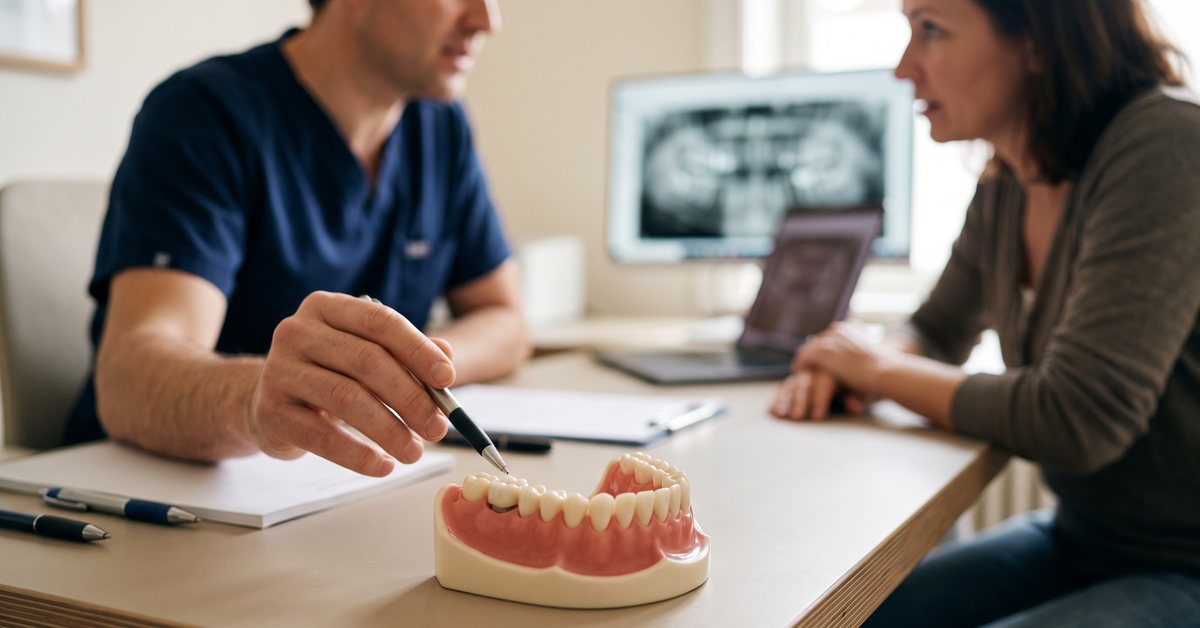
Expect several months between implant placement and the final crown in many conventional treatment plans. A common healing interval is around 3–6 months, but this can be longer, and the appointments to prepare and fit the crown may follow afterwards. Cambridge University Hospitals describes this distinction between implant healing and the restorative phase. [1]
If you are asking “how long between dental implant and crown?”, check what the quoted time actually covers: clearance to begin making the tooth, a temporary crown, or delivery of the final crown. These can be different dates.
Why does the implant need time before the final crown?
The implant needs a stable connection with the surrounding bone to support the replacement tooth. This process is called osseointegration. It develops after placement and can take several months. The implant replaces the root; the abutment connects it to the crown, which is the visible tooth. [2]
Feeling comfortable is encouraging, but it does not establish readiness for the final restoration. Gum healing and bone healing follow different timelines: Leeds Teaching Hospitals describes gum healing over roughly 1–2 weeks, while implants commonly remain unloaded for months in its conventional pathway. [5]
Ask your dentist what they will assess at the next review. A date on the calendar is an estimate until the clinical findings support the next step.
What happens between surgery and the crown appointment?
The sequence depends on whether the implant heals beneath the gum, whether a healing component is already attached, and how the replacement tooth is made. This table separates the stages so that their time estimates are not confused.
| Stage | Approximate timing or sequence | What it means |
|---|---|---|
| Implant placement | Starting point | The implant is inserted into the jawbone. [2] |
| Early review | Often around 7–14 days after surgery | The team checks the wound and removes stitches if needed. [3] |
| Bone healing | Commonly around 3–6 months in a conventional pathway; sometimes longer | The implant heals before the restorative phase. [1] |
| Uncovering and gum healing, if needed | After bone healing in a two-stage approach | Toronto’s patient pathway allows 2–6 weeks around a healing abutment before restoration begins. [4] |
| Crown preparation and fitting | After clinical readiness is established | Records, temporary restoration when needed, and final fitting may involve visits several weeks apart. [5] |
Do not automatically add every interval together. Some stages overlap or are combined, and not everyone requires implant uncovering or the same number of restorative visits. Request a timeline that matches your actual treatment plan.
How long after the healing abutment is the crown fitted?
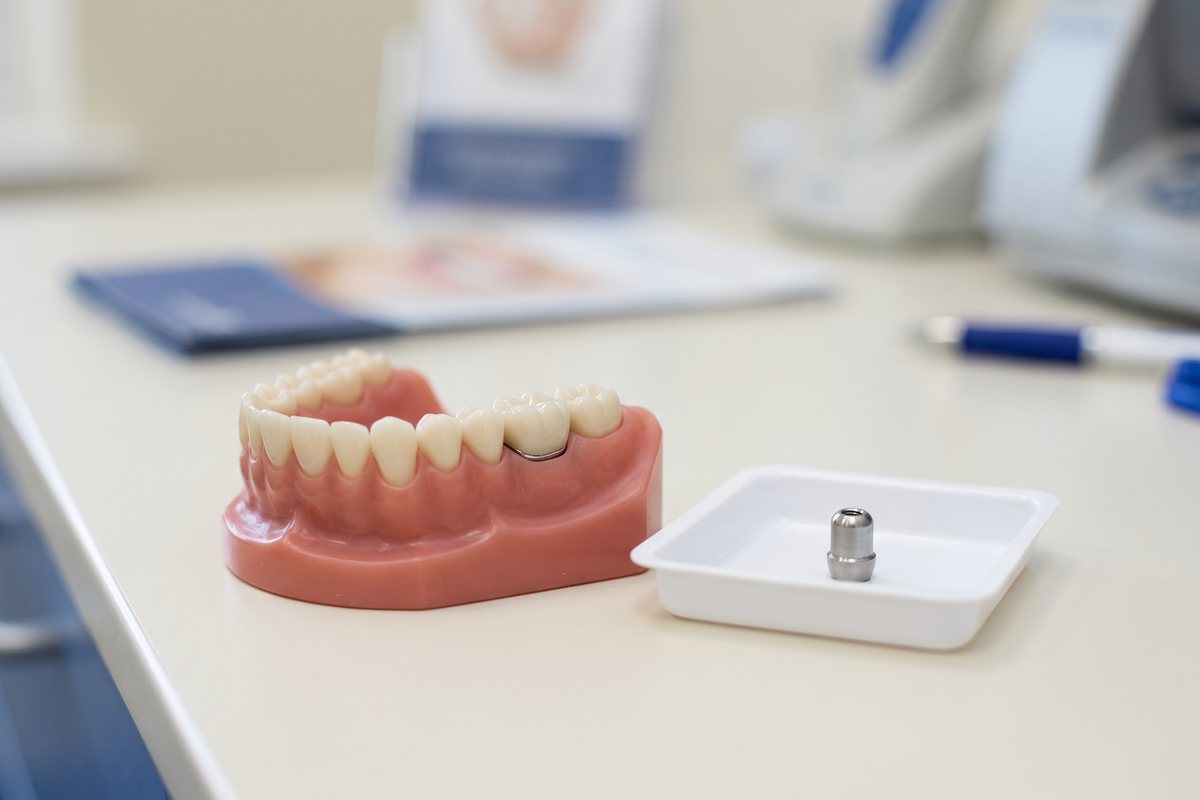
In a one-stage surgical approach, the healing abutment may be attached at implant placement, before bone healing. In a two-stage approach, the implant heals beneath the gum first and is later uncovered to attach the healing abutment. [4]
A healing abutment, sometimes called a healing cap, is not the final tooth. Ask whether your next appointment is for gum assessment, impressions or crown delivery. “The abutment is in” does not identify the remaining time on its own.
The University of Toronto describes checking tissue healing, oral hygiene, neighbouring teeth and the bite before proceeding with restorative work. These findings can affect the schedule. [4]
Can a temporary or final crown be fitted immediately?
Selected patients can receive an implant-supported restoration very early, but an early tooth is not automatically the final crown. The International Team for Implantology distinguishes:
- Immediate loading: a restoration connected within one week that contacts the opposing teeth.
- Immediate restoration: a restoration connected within one week but kept out of contact with opposing teeth.
- Early loading: connection between one week and two months.
- Conventional loading: a healing period exceeding two months before connection. [6]
These terms describe when the implant receives a restoration and how it functions. They do not, by themselves, tell you whether that restoration is temporary or definitive. Stability, the surrounding bone and the planned bite influence the choice. [6]
Before accepting an accelerated plan, ask which tooth you will leave with, what you may chew on it, and whether another crown is included later. Niva’s guide to what same-day dental implants mean explains the terminology further.
What can extend the wait for the final crown?
A longer interval can reflect additional treatment or a need to reassess healing. Ask the team to identify the reason and the next review point, rather than simply replacing one estimated date with another.
Bone grafting and additional surgery
A substantial graft may need several months of healing before implant placement; smaller grafts can sometimes be performed at the same operation. A graft completed earlier lengthens the overall course, but its healing time should not be counted again as though it began after implant placement. [2]
Cambridge University Hospitals also notes that grafting can lengthen the implant healing pathway. Ask which procedure is driving your current wait. [1]
General health and healing problems
Smoking can impair healing, and uncontrolled diabetes can increase infection-related implant failure risk. Overall health also affects healing time. These factors warrant individual assessment rather than a standard extra number of weeks for everyone. [7]
Gum shape and the restorative work
A temporary crown may be used to shape the gum and assess the restoration before the definitive tooth is made. Leeds Teaching Hospitals describes taking further records once the gum is stable. This can explain additional visits even after the implant has integrated. [5]
Ask whether you are waiting for biological healing, gum shaping, laboratory work or appointment availability. Those are different issues and need different explanations.
What happens when the final crown is fitted?
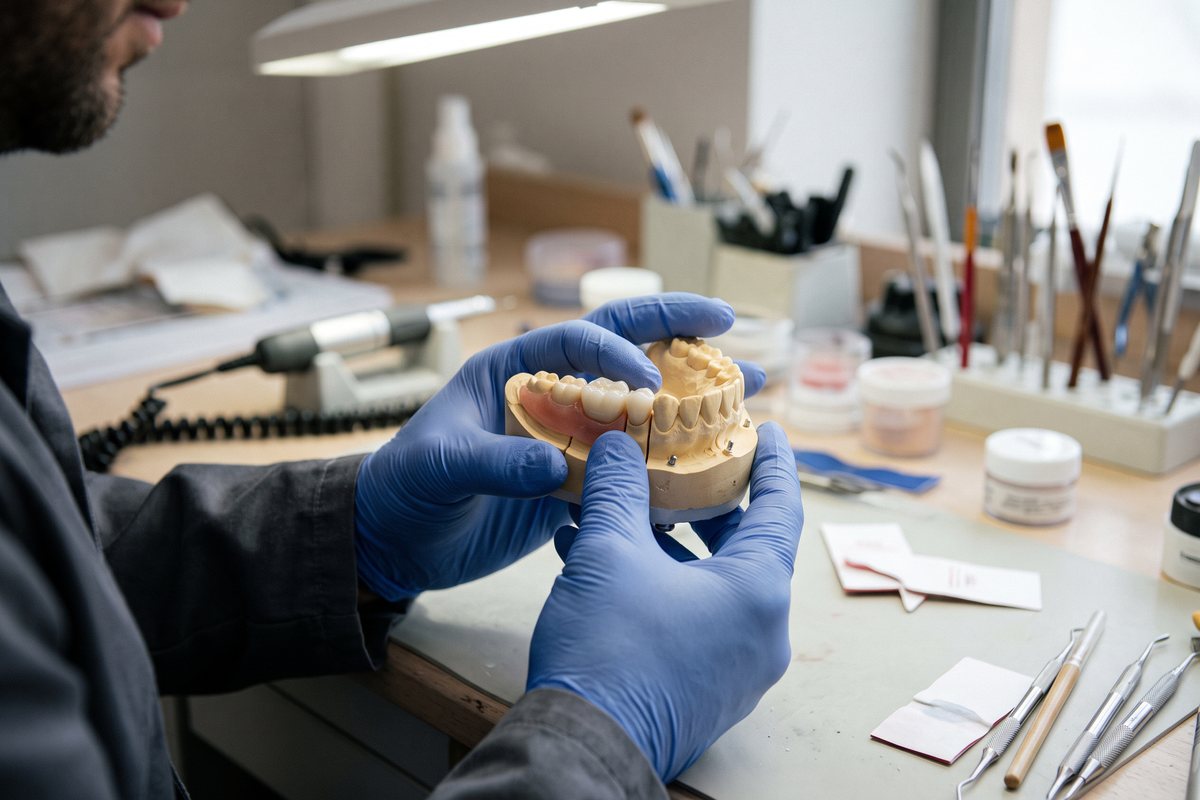
The dentist checks the crown’s fit, its contacts with nearby teeth, its appearance and the bite. The crown may be secured with a screw or attached to an abutment with dental cement, depending on the design. Imaging may be used to check the connection. [4]
Crown fitting can require several appointments to achieve the appropriate fit, according to the Canadian Dental Association. Ask which appointment is a trial fitting and which is expected to complete treatment. [8]
Use the fitting visit to mention anything that feels high, uncomfortable or difficult to clean. Before leaving, ask for a demonstration of cleaning around your particular crown and confirmation of the follow-up plan.
Can you wait longer before getting the crown?
Do not assume that six months is a universal deadline or that an indefinite delay is harmless. The sources above describe treatment pathways, not a maximum waiting period applicable to every implant. If finances, travel or scheduling mean postponing the crown, contact the treating team and agree a revised plan.
Ask whether an examination is needed before rescheduling, how the existing healing component or temporary tooth should be maintained, and when the site should next be reviewed. Keep follow-up appointments even while the final crown is deferred. Regular checks and the prescribed cleaning routine remain important during implant care. [7]
For treatment abroad, distinguish the date you can begin the restorative stage from the date you can travel home with the completed crown. Niva’s guide to dental implant treatment trips covers the travel sequence.
How should you care for the area while waiting?
Follow your team’s instructions for cleaning, food choices and any temporary appliance. Early postoperative instructions can differ from later maintenance. Guy’s and St Thomas’ advises that some patients need soft foods and may temporarily be unable to wear their dentures. Confirm what applies to you. [3]
Contact your dentist promptly for a loose or painful implant. [7] Increasing soreness or swelling after surgery also warrants contact with the surgical team. [2] Severe swelling with difficulty breathing or swallowing, or swelling affecting the eye, requires emergency medical attention. [9]
Frequently asked questions
Is three months always enough before the crown?
No. Three months may be a review point in a conventional pathway, but healing can require longer. Ask whether your appointment is for assessment or delivery of the final crown. [1]
Does an implant placed during extraction shorten the crown timeline?
Not automatically. Immediate implant placement describes insertion on the extraction day; restoration and loading are separate decisions. [6]
Is a healing cap the same as a temporary crown?
No. A healing cap helps manage the gum opening. A temporary crown is a tooth-shaped restoration. Ask which component you have and what function it is intended to provide. [4,5]
Does a delay mean the implant has failed?
No. Additional restorative visits or gum shaping can extend treatment. Ask for the specific reason; a delay alone cannot establish failure. [5]
What if the temporary tooth feels loose?
Contact your dentist promptly. A loose component needs assessment to establish what is moving; do not assume the implant itself has failed or try to tighten it at home. [7]
Plan the final crown stage with Niva Dental
If you are considering Niva Dental in Bakırköy, Istanbul, ask for a written timeline covering healing reviews, any temporary tooth and the final crown appointments. Explore Niva Dental’s implant treatment information and request clarification of which dates remain conditional on healing.
This article provides general information and does not determine when your implant is ready for a crown. Consult your treating dentist for an individual assessment.
Medical sources
- Cambridge University Hospitals NHS Foundation Trust: Dental Implants in Restorative Dentistry.
- Mayo Clinic: Dental Implant Surgery.
- Guy’s and St Thomas’ NHS Foundation Trust: After Having a Dental Implant.
- University of Toronto, Faculty of Dentistry: Implant for a Single Tooth.
- Leeds Teaching Hospitals NHS Trust: Dental Implants.
- International Team for Implantology: Implant Placement and Loading Protocols.
- US Food and Drug Administration: Dental Implants: What You Should Know.
- Canadian Dental Association: Dental Implants.
- NHS: Dental Abscess.